
Wood Duck Identification Guide
One of North America's most colorful waterfowl, with iridescent crested males and understated gray females that both nest in tree cavities near wooded water.
Read the full Wood Duck encyclopedia entry →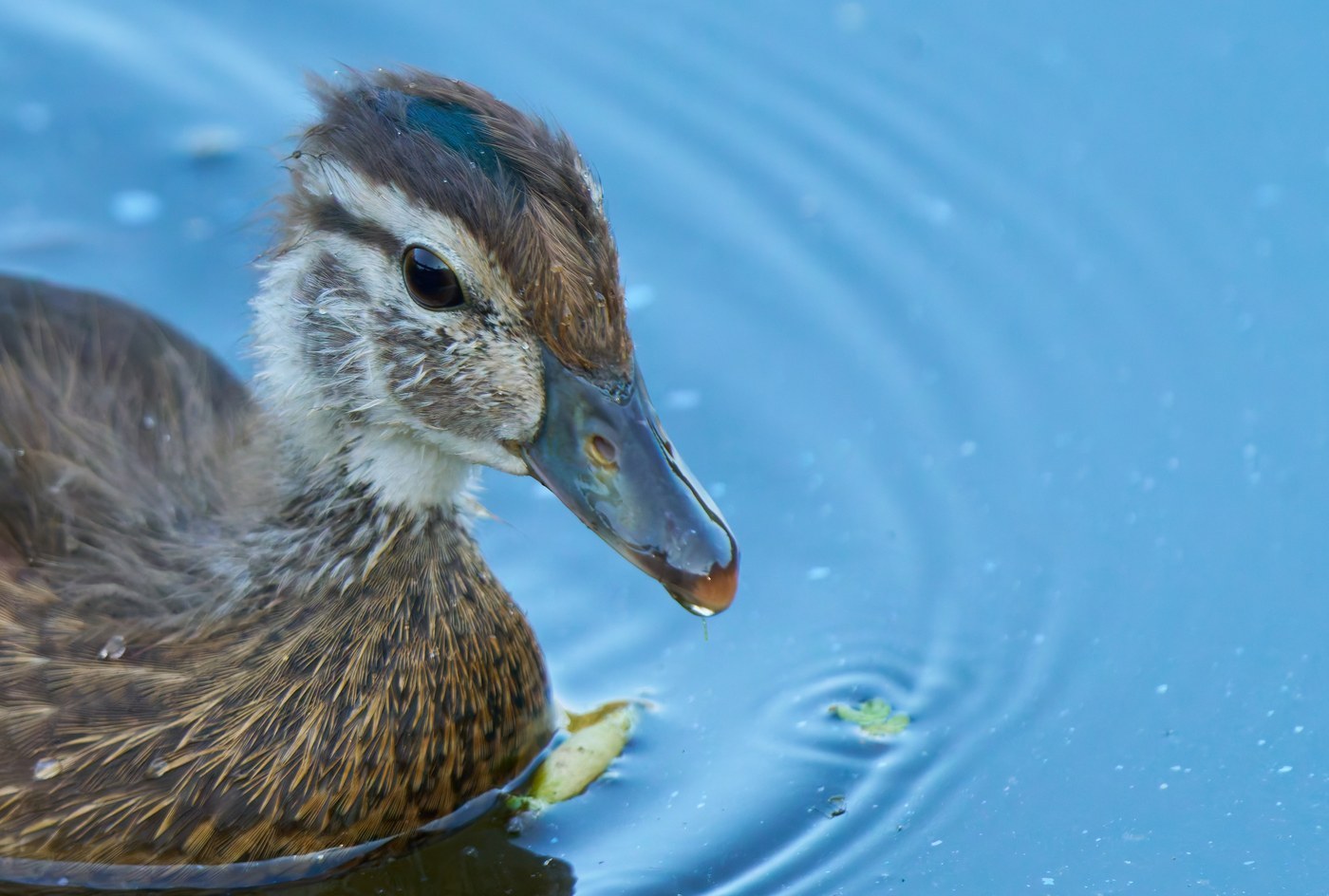
Key Field Marks
- Size & shape: A medium-sized duck (about 47–54 cm) with a boxy head, slim neck, long square-ish tail, and a distinctive sleek crest, especially obvious on drakes.
- Male plumage: Glossy iridescent green and purple head with a swept-back crest, bold white facial stripes, red eye and red-based bill, chestnut breast speckled with white, buffy-gold flanks, and a dark back with a thin white line separating breast from flanks.
- Female plumage: Grey-brown overall with a white teardrop-shaped eye-ring extending back from the eye, a shaggy blue-grey crest, and a speckled buffy breast — subtle but distinctive once learned.
- Bill: Short and relatively narrow compared to dabbling ducks like Mallards.
- Behavior: Perches readily on branches and snags overhanging water, unusual for a duck; flies fast and agile through timber, twisting between trunks.
Separating It From Similar Species
- Male Wood Ducks are essentially unmistakable due to their multicolored head pattern and crest.
- Female Wood Ducks are most often confused with female Hooded Mergansers, but the merganser has a thin, serrated bill and lacks the Wood Duck's white teardrop eye-ring.
- Eclipse-plumage males (late summer) resemble females but retain the red eye and red bill base, which females lack.
Where and When to Look
- Habitat: Wooded swamps, beaver ponds, slow rivers, and lake margins with overhanging trees; strongly tied to timbered wetlands rather than open water.
- Range: Widespread across North America east of the Rockies, plus a Pacific coast population; northern breeders migrate south for winter while southern populations are largely resident.
- Season: Best looked for spring through fall in the north; present year-round across much of the southeastern and Pacific coast United States.
- Nesting: Uses natural tree cavities and readily accepts nest boxes placed over or near water — a good clue to local presence.
- Best viewing: Check quiet backwaters and wooded pond edges early morning or late afternoon; ducklings leap from cavity nests within a day of hatching, an event sometimes observed near known nest sites.
Voice
- Females give a loud, rising, squealing "oo-eek, oo-eek," often uttered when flushed and very useful for locating birds in dense cover.
- Males give a softer, thin, upslurred whistle, much quieter than the female's alarm call.
Frequently asked questions
How do you tell a male and female Wood Duck apart?
Males show an unmistakable iridescent green-and-purple crested head with white stripes and a red eye; females are grey-brown with a distinctive white teardrop-shaped eye-ring and a shaggy blue-grey crest.
Why do Wood Ducks perch in trees?
They nest in tree cavities and are comfortable gripping bark and branches with their sharp-clawed feet, so they routinely perch on limbs overhanging water, unlike most ducks.
What is the Wood Duck's call?
The most distinctive sound is the female's loud, rising "oo-eek" squeal, often given in flight or when flushed; males give a quieter, thin whistle.
Where do Wood Ducks nest?
In natural tree cavities near water, and readily in artificial nest boxes mounted on poles or trees over or close to wetlands.