
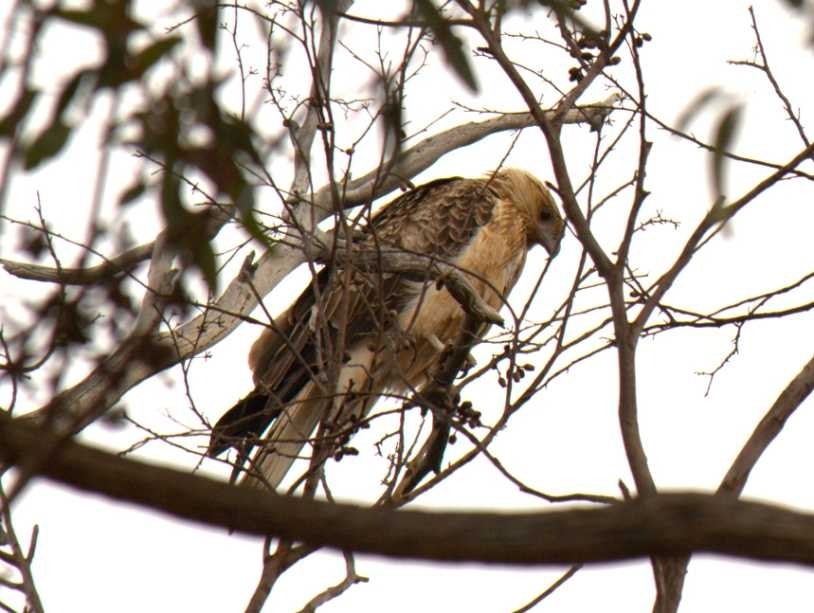
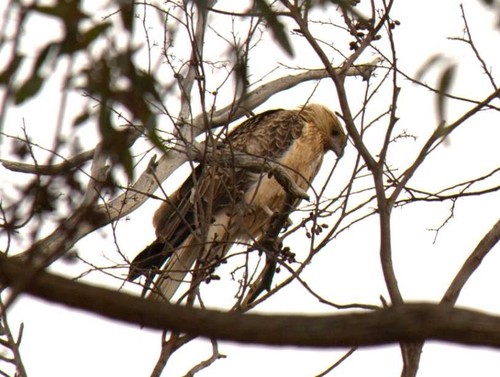
Whistling Kite
Haliastur sphenurus
A pale, long-winged raptor named for its distinctive whistling call, often seen soaring lazily over open country.
- Size
- 50-60 cm (20-24 in) long, 128-146 cm (50-57 in) wingspan
- Habitat
- open woodlands, grasslands, wetlands, and coastal areas across Australia
- Type
- raptor
Spotted a bird like this?
Identify any bird from a photo, free.
Overview
The Whistling Kite is a medium-sized, pale brown raptor with long, broad wings and a distinctively long, rounded tail that gives it a somewhat scruffy, loose-feathered appearance in flight. Its plumage is a warm sandy to buff-brown overall, with paler underwing coverts contrasting against darker flight feathers, visible as a pale wing patch when viewed from below in flight.
One of Australia's most vocal and readily identified raptors, it is named for its far-carrying, musical whistling call, which is often given while soaring and helps distinguish it from other similarly sized birds of prey at a distance, well before plumage details can be seen.
Whistling Kites are opportunistic and adaptable predators and scavengers, frequently seen soaring on flattened wings over open country, wetlands, and roadsides, and gathering in numbers at abundant food sources such as carrion, bushfires, or fish kills.
How to identify it
Key field marks
- Medium-large raptor with long, broad wings and a long, rounded, loose-looking tail
- Overall pale sandy-brown plumage, paler on the head and underparts
- Pale patch on the underwing coverts contrasting with darker flight feathers in flight
- Distinctive rising and falling whistling call often given while soaring
Similar species
The Brahminy Kite has a similar shape but adults show a bold white head and breast contrasting with rich chestnut body plumage, unlike the uniformly pale brown Whistling Kite. The Black Kite is darker overall with a shallowly forked tail and lacks the pale underwing patch. Juvenile Brown Goshawks and Little Eagles are more compact with shorter, broader tails and lack the kite's distinctive whistling call and loose, ragged flight silhouette.
Habitat & range
Habitat
Whistling Kites use a very wide range of open habitats, including grasslands, open woodlands, farmland, wetlands, rivers, and coastal areas, generally avoiding only dense forest.
Range
The species is widespread across mainland Australia, becoming scarcer in the most arid interior, and also occurs in New Guinea and New Caledonia.
Migration
Most populations are sedentary or locally nomadic, moving in response to food availability, though some seasonal movement occurs in southern Australia with birds shifting north in winter.
Behavior & voice
Behavior
This kite spends long periods soaring on flat or slightly raised wings, often at moderate height, and is frequently seen gathering with other raptors at abundant food sources such as carrion, roadkill, or the margins of grass fires.
Voice
Its call is a distinctive, far-carrying series of whistled notes rising then falling in pitch, often described as a musical, almost gull-like whistle, given both perched and in flight.
Feeding
It is an opportunistic feeder, taking carrion, small mammals, reptiles, insects, and injured or sick birds, and will also catch fish and take eggs and nestlings from other birds' nests.
Nesting and breeding
Pairs build a large stick nest high in a tree, often near water, reusing and adding to it in subsequent years; both parents share incubation and chick-rearing duties over an extended breeding season.
Frequently asked questions
Why is it called the Whistling Kite?
It is named for its distinctive, far-carrying whistling call, often given while soaring.
What does a Whistling Kite eat?
It is an opportunistic feeder taking carrion, small mammals, reptiles, fish, insects, and occasionally eggs or nestlings of other birds.
How can I tell a Whistling Kite from a Brahminy Kite?
The Whistling Kite is uniformly pale sandy-brown, while the adult Brahminy Kite has a contrasting white head and breast against rich chestnut body plumage.
Where are Whistling Kites found?
They occur across most of mainland Australia in open country, as well as in New Guinea and New Caledonia.
Do Whistling Kites migrate?
Most are sedentary or locally nomadic, though some southern Australian birds move north in winter.
Whistling Kite guides
In-depth guides for identifying, finding, and understanding Whistling Kite.
Other birds you may enjoy
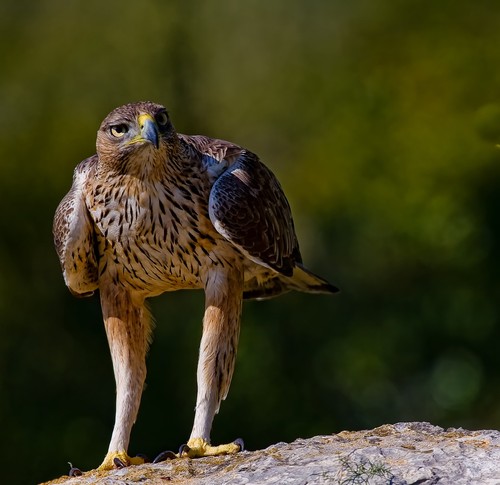
Bonelli's Eagle
Body 65–72 cm (26–28 in); wingspan 150–180 cm (59–71 in)
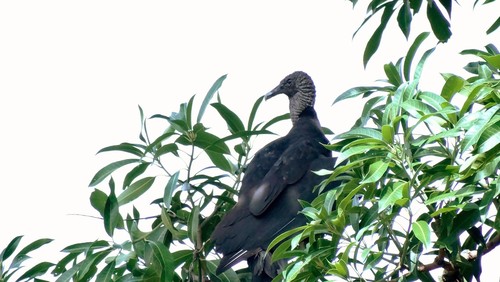
Black Vulture
56-68 cm (22-27 in) long, 137-165 cm wingspan
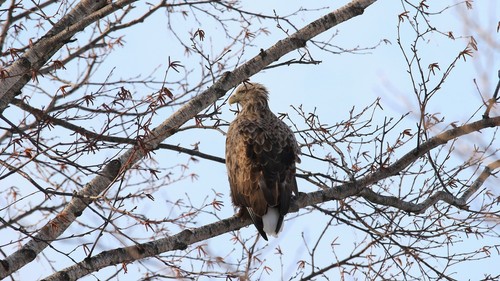
White-tailed Eagle
66-94 cm body length; wingspan 178-245 cm, among the largest eagles in the world
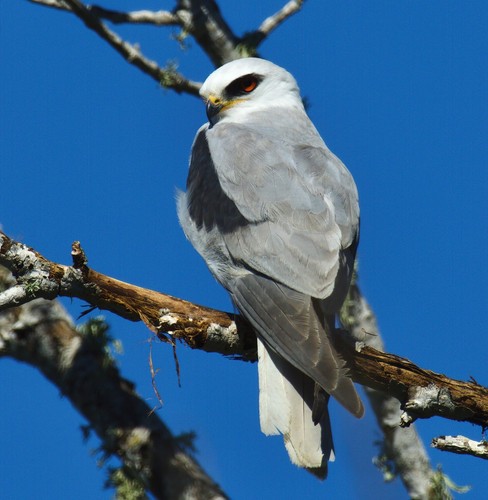
White-tailed Kite
35-43 cm (14-17 in) long, 88-102 cm (35-40 in) wingspan
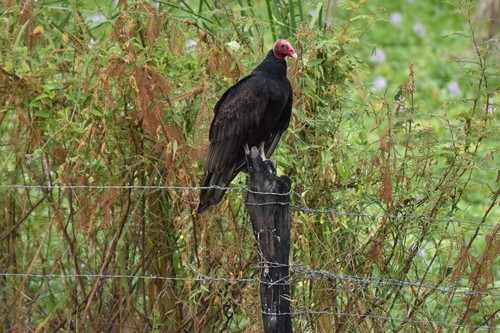
Turkey Vulture
64-81 cm (25-32 in) long, 160-183 cm wingspan
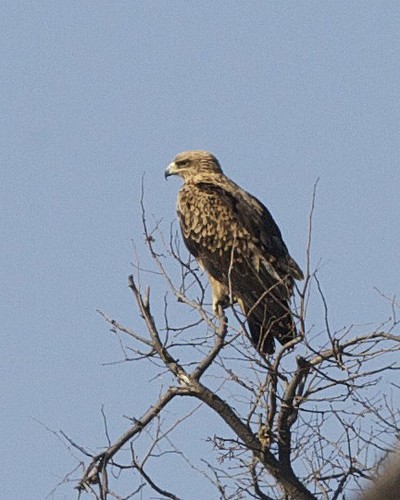
Tawny Eagle
62–75 cm long; wingspan 1.65–2.0 m
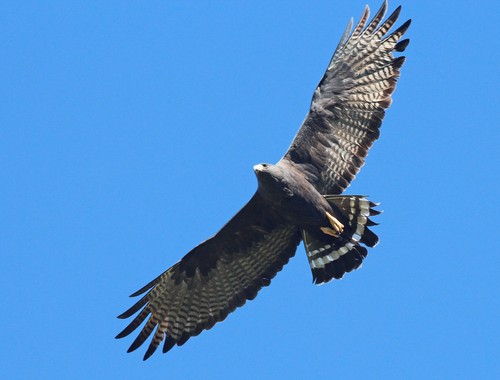
Zone-tailed Hawk
46-56 cm (18-22 in) long, 118-140 cm (46-55 in) wingspan
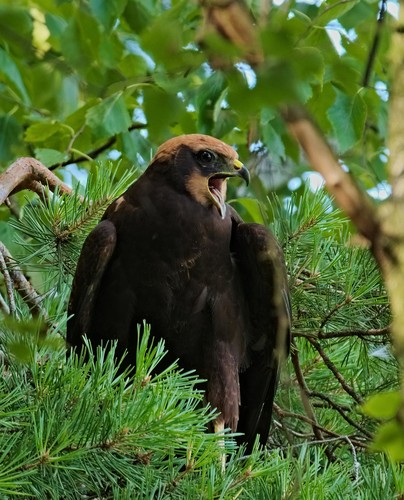
Western Marsh Harrier
Body 43-56 cm; wingspan 115-140 cm
Swallow-tailed Kite
48-68 cm (19-27 in) long including tail streamers, 112-136 cm (44-54 in) wingspan
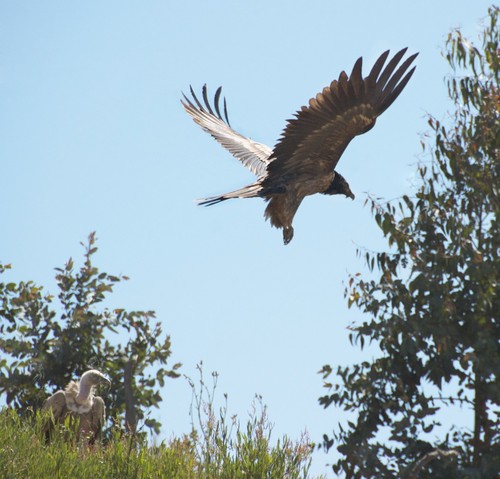
White-backed Vulture
78-98 cm long, wingspan 1.96-2.25 m
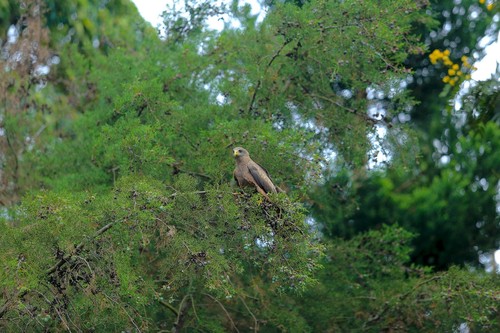
Yellow-billed Kite
55-60 cm long; wingspan 130-155 cm
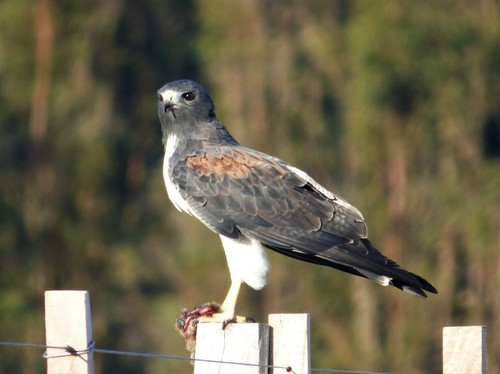
White-tailed Hawk
46-59 cm (18-23 in) long, 122-142 cm (48-56 in) wingspan