
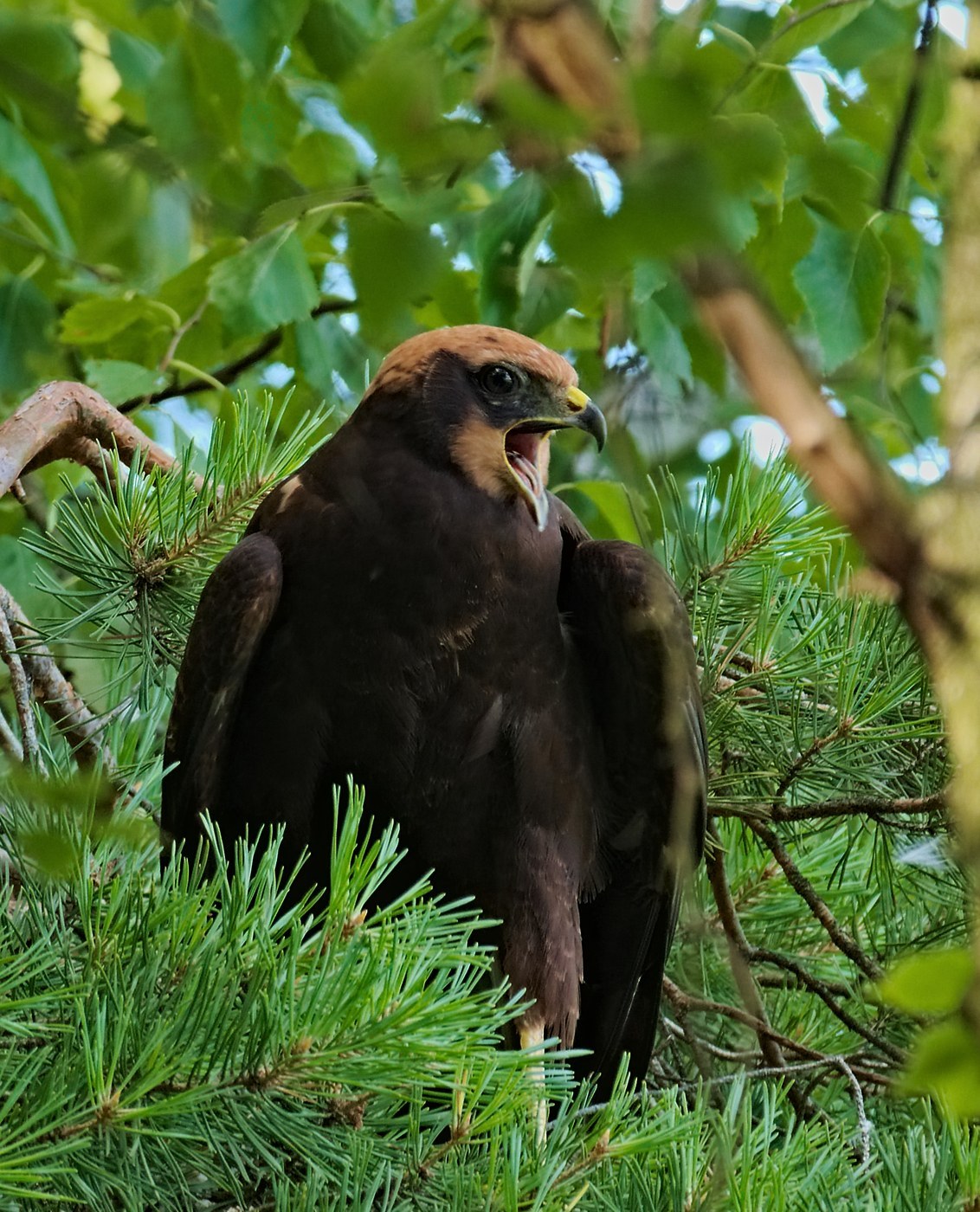
Western Marsh Harrier
Circus aeruginosus
The largest of the harriers, a broad-winged raptor that quarters low over reedbeds with wings held in a shallow V.
- Size
- Body 43-56 cm; wingspan 115-140 cm
- Habitat
- Reedbeds, marshes, wetlands, and adjacent farmland
- Type
- raptor
Spotted a bird like this?
Identify any bird from a photo, free.
Overview
The Western Marsh Harrier is the bulkiest of the Old World harriers, closely tied to wetland habitats where it hunts low and slow over reeds and marsh vegetation.
Appearance
- Adult males: warm brown body with contrasting grey wing panels, grey tail, and black wingtips, plus a pale creamy head and throat.
- Adult females: rich dark chocolate-brown overall with a distinctive creamy-buff crown, throat, and leading edge of the wing.
- Juveniles resemble females but are darker with less contrast.
- Broader-winged and heavier-bodied than other harriers, with a more buzzard-like build.
How to identify it
Key field marks
- Large size and broad wings compared to other harriers, with a heavier, less buoyant flight
- Females and juveniles show a creamy crown and throat contrasting with dark brown body
- Males show grey wing panels and tail against brown body and black wingtips
- Flies low over reedbeds with wings raised in a shallow V, occasionally gliding flat
Similar species
- Hen Harrier is smaller and slimmer with a more buoyant, moth-like flight; male Hen Harriers are pale grey overall, not brown.
- Montagu's Harrier is slimmer still with narrower, more pointed wings and a more graceful, floating flight; males show a black wing bar absent in Marsh Harrier.
- Common Buzzard has broader, more rounded wings and soars rather than quartering low over vegetation.
Habitat & range
Habitat
Strongly associated with extensive reedbeds, marshes, and wetland margins for breeding, but forages more widely over adjacent farmland, wet grassland, and open fields, especially outside the breeding season.
Range
Breeds across much of Europe and temperate Asia, with the highest densities around large wetland complexes. Absent as a breeder from the far north.
Migration
Northern and eastern European populations are migratory, wintering in southern Europe, the Middle East, and sub-Saharan Africa; southern and western populations are more sedentary, with some remaining year-round on breeding wetlands.
Behavior & voice
Behavior
Hunts by flying low and slow in a steady quartering pattern over reeds and fields, holding its wings in a shallow V and dropping suddenly onto prey detected by sight or sound.
Voice
Mostly quiet away from the nest; utters a repeated, harsh 'kweeo' or 'kyee-a' during display flights and nest exchanges.
Feeding
Takes a wide range of prey including small mammals, young or injured waterbirds, amphibians, and eggs, often surprising prey by appearing suddenly over the top of reeds.
Nesting & breeding
Builds a bulky nest of reeds and sticks on the ground within dense reedbed or marsh vegetation; lays 3-8 eggs; performs spectacular aerial food passes between mates during courtship.
Frequently asked questions
How do you identify a Western Marsh Harrier?
Look for a large, broad-winged harrier flying low over reedbeds with wings in a shallow V; females and juveniles show a distinctive creamy crown and throat against dark brown plumage.
What is the difference between a Marsh Harrier and a Hen Harrier?
The Marsh Harrier is larger, browner, and bulkier with heavier flight, while the Hen Harrier is smaller and slimmer with a more buoyant flight, and males are pale grey rather than brown.
Where do Western Marsh Harriers nest?
They build a bulky ground nest of reeds and sticks concealed within dense reedbeds or marsh vegetation.
What do Western Marsh Harriers eat?
They prey on small mammals, waterbirds and their young, amphibians, and eggs, hunted while quartering low over wetlands.
Do Western Marsh Harriers migrate?
Northern and eastern populations migrate to southern Europe and Africa for winter, while southern and western populations tend to be more resident.
Western Marsh Harrier guides
In-depth guides for identifying, finding, and understanding Western Marsh Harrier.
Other birds you may enjoy
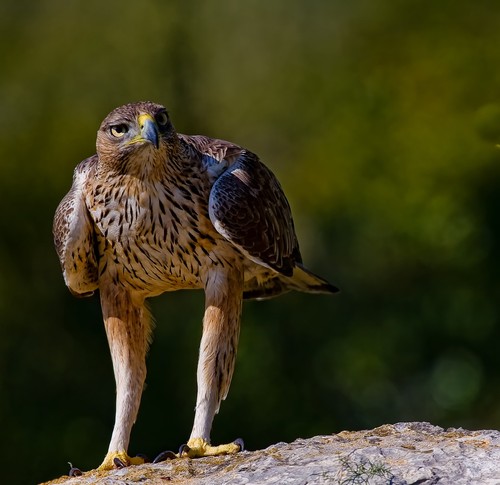
Bonelli's Eagle
Body 65–72 cm (26–28 in); wingspan 150–180 cm (59–71 in)
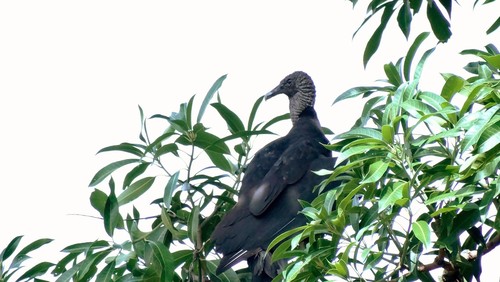
Black Vulture
56-68 cm (22-27 in) long, 137-165 cm wingspan
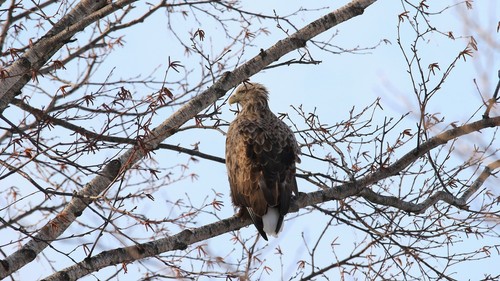
White-tailed Eagle
66-94 cm body length; wingspan 178-245 cm, among the largest eagles in the world
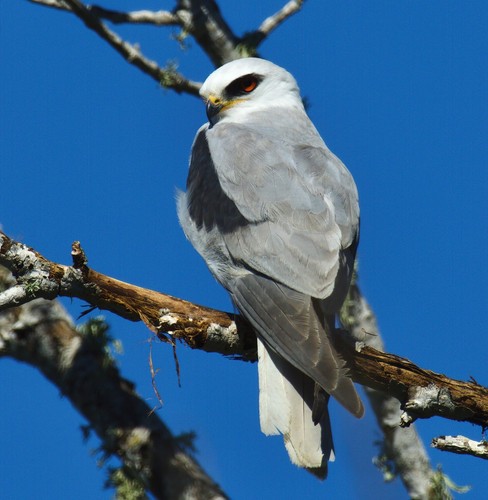
White-tailed Kite
35-43 cm (14-17 in) long, 88-102 cm (35-40 in) wingspan
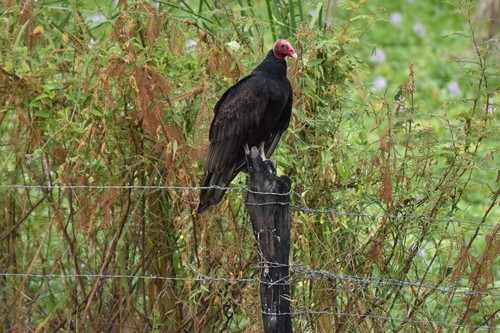
Turkey Vulture
64-81 cm (25-32 in) long, 160-183 cm wingspan
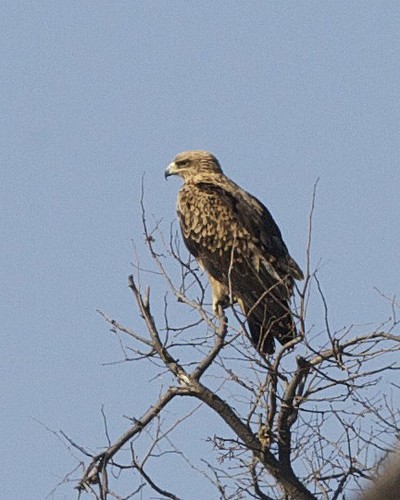
Tawny Eagle
62–75 cm long; wingspan 1.65–2.0 m
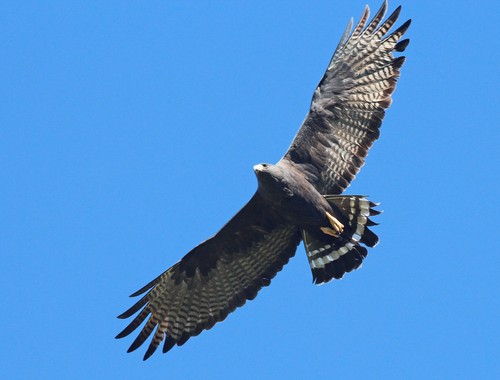
Zone-tailed Hawk
46-56 cm (18-22 in) long, 118-140 cm (46-55 in) wingspan
Swallow-tailed Kite
48-68 cm (19-27 in) long including tail streamers, 112-136 cm (44-54 in) wingspan
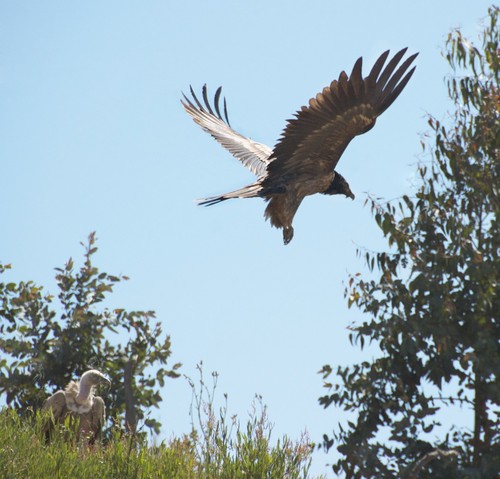
White-backed Vulture
78-98 cm long, wingspan 1.96-2.25 m
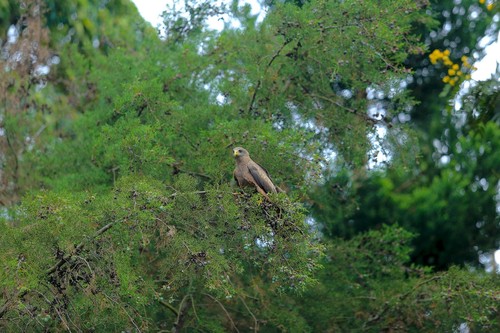
Yellow-billed Kite
55-60 cm long; wingspan 130-155 cm
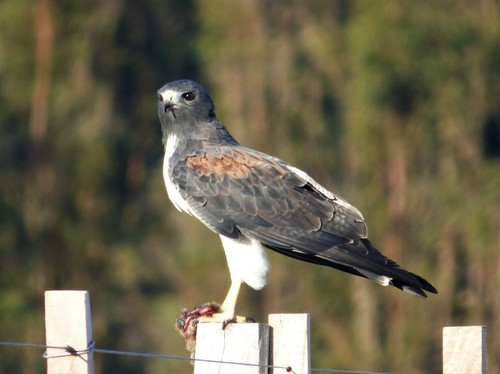
White-tailed Hawk
46-59 cm (18-23 in) long, 122-142 cm (48-56 in) wingspan
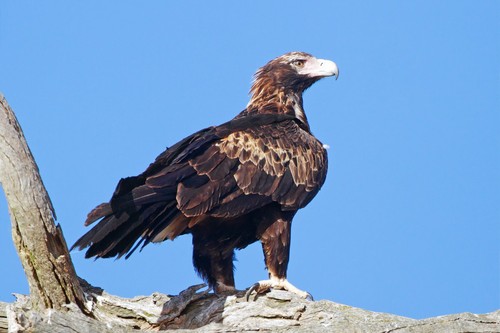
Wedge-tailed Eagle
Body 85–106 cm (33–42 in); wingspan up to 232 cm (7.6 ft); Australia's largest bird of prey