
Western Marsh Harrier Identification Guide
The Western Marsh Harrier is Europe's largest harrier, a broad-winged raptor of reedbeds identified by its buoyant, V-winged glide low over marshes and the male's tricolored grey, brown, and black plumage.
Read the full Western Marsh Harrier encyclopedia entry →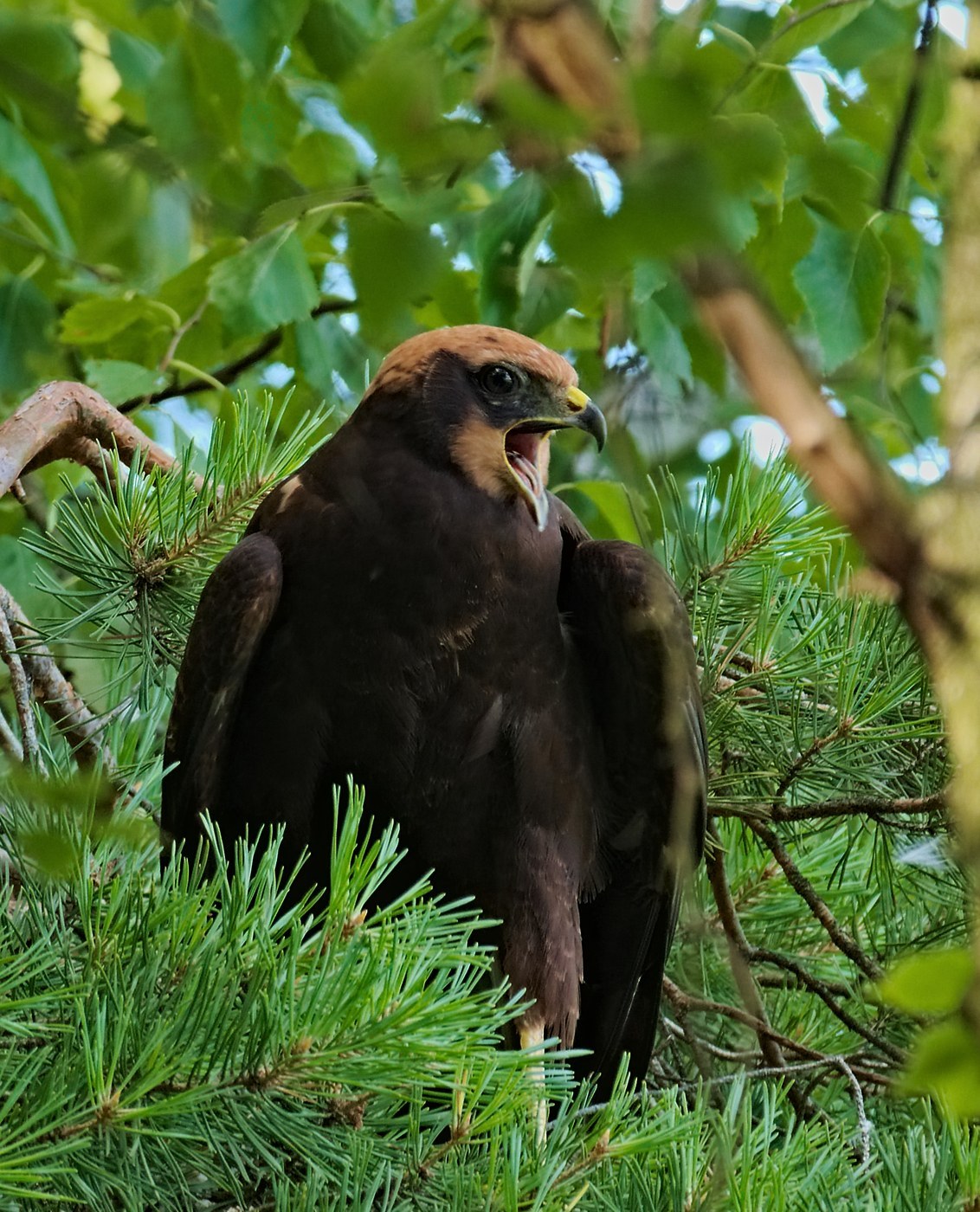
Key Field Marks
- Size and shape: The bulkiest of the harriers, with long, broad wings, a longish tail, and a heavier build than Hen or Montagu's Harrier. Flight is slow, buoyant, and low, wings held in a shallow V (dihedral) while quartering over reeds and fields.
- Male plumage: Distinctive tricolored pattern — warm chestnut-brown body and covert, grey flight feathers and tail, and black wingtips, giving a striking contrast in flight.
- Female plumage: Overall chocolate-brown with a creamy-buff crown, throat, and leading edge of the wing — the palest parts concentrated on the head and shoulder, unlike the more diffusely patterned female Hen Harrier.
- Juveniles: Resemble females but often even darker chocolate-brown with a more solidly cream-buff cap and throat.
- Behavior: Hunts low and slow over reedbeds, marshes, and adjacent farmland, dropping onto prey (small mammals, birds, amphibians) with a sudden pounce. Roosts communally in reeds outside the breeding season.
Similar Species
- Hen Harrier / Northern Harrier: Smaller and slimmer with a conspicuous white rump patch in both sexes (Marsh Harrier lacks a bold white rump), and males are pale grey overall rather than tricolored.
- Montagu's Harrier: Smaller and slimmer still, more buoyant and tern-like in flight, with males showing a black wing bar and rufous streaking on the flanks absent in Marsh Harrier.
- Buzzard (Buteo species): Broader, shorter-winged, and soars with wings flat or slightly raised, lacking the harrier's low, tilting quartering flight over marsh vegetation.
Where and When to Look
Breeds in extensive reedbeds and marshes across much of Europe, temperate Asia, and North Africa, nesting on platforms built low in dense reeds. Many populations are migratory, wintering in sub-Saharan Africa and southern Asia, while some southern European and resident populations stay put year-round. Best looked for by scanning reedbeds and adjacent wetlands or farmland at dawn and dusk, when hunting activity peaks; migration passage concentrates birds at coastal watchpoints in spring and autumn.
Voice
Generally quiet away from the nest. Near the breeding site gives a thin, repeated "kweeoo" or "pee-ah" display call, and a chattering alarm rattle when disturbed near the nest; largely silent in winter.
Frequently asked questions
How can I recognize a male Western Marsh Harrier in flight?
Look for the tricolored pattern: chestnut-brown body and coverts, pale grey flight feathers and tail, and black wingtips, combined with a slow, low, V-winged glide over marshland.
How do I tell a female Marsh Harrier from a female Hen Harrier?
Marsh Harrier is larger and uniformly dark chocolate-brown with a creamy cap and throat, and lacks the bold white rump patch that both sexes of Hen Harrier show.
What habitat is best for finding Western Marsh Harriers?
Extensive reedbeds and marshes, though they also hunt over adjacent farmland and wet grassland, especially in winter.
Is the Western Marsh Harrier migratory?
Many northern and eastern populations migrate to sub-Saharan Africa or southern Asia for winter, while resident populations persist in milder parts of southern Europe and North Africa year-round.
What flight style distinguishes harriers like the Marsh Harrier from buteos?
Harriers fly low and slow with wings held in a shallow V, tilting and quartering over vegetation, quite unlike a buzzard's higher, flatter-winged soaring.