
Whistling Kite Identification Guide
A pale-headed Australian raptor with long, fingered wings and a rounded tail, often heard giving its loud, descending whistle before it comes into view.
Read the full Whistling Kite encyclopedia entry →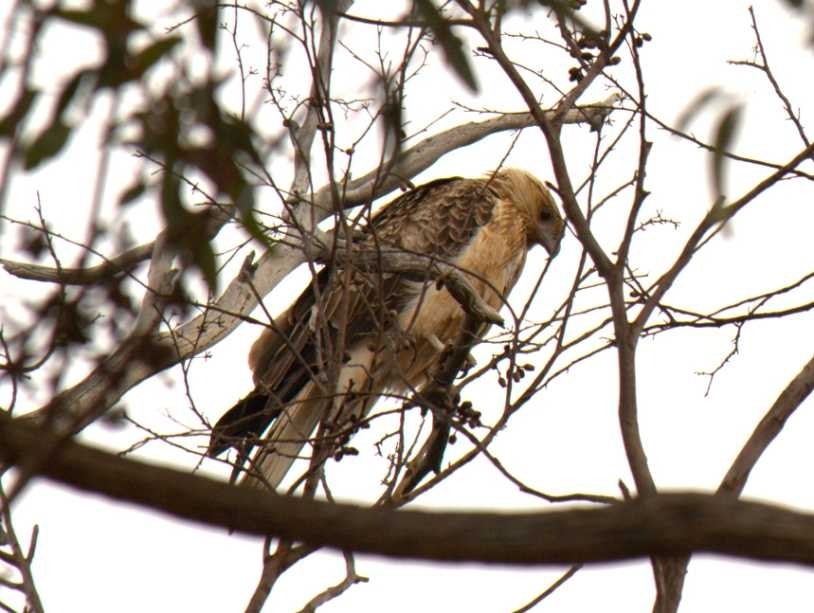
Key Field Marks
- Medium-sized raptor, about 50-60 cm (20-24 in), with a pale, finely streaked brown head and breast that contrast with noticeably darker brown wings and back.
- Long wings with distinctly "fingered" primary tips, and a rounded (not forked) tail, unlike many other kites.
- In flight, shows a pale underwing with a dark trailing edge and dark wingtips.
Separating It From Similar Species
- Black Kite: Overall darker plumage with a distinctly forked tail, versus the Whistling Kite's paler head/breast and rounded tail.
- Brahminy Kite: Adult has a chestnut body and a clean white head, a very different color pattern, and is more strictly associated with coastal and estuarine habitats.
Habitat, Range & Season
- Found in open woodlands, grasslands, farmland, and wetlands, often near rivers, lakes, or the coast; also regularly seen around towns, rubbish tips, and abattoirs where food is available.
- Widespread and common across Australia, with populations also in New Guinea and parts of nearby Indonesia.
- Resident in much of its range, though some populations move seasonally in response to food availability.
Voice
- Extremely vocal for a raptor - its loud, far-carrying whistling call, a descending series of notes followed by an upward lilt, is often the first clue to its presence and has earned it a reputation as one of the most vocal Australian birds of prey.
Behavior
- Soars with wings held flat or in a shallow V, frequently circling over open ground or grass fires to catch fleeing prey and insects.
- An opportunistic feeder that takes carrion, fish, insects, reptiles, and small mammals, and will also pirate food from other birds.
- Builds a large stick nest in a tall tree, often reused and added to over multiple seasons.
Frequently asked questions
What does a Whistling Kite sound like?
It gives a loud, distinctive whistling call - a descending series of notes followed by an upward lilt - often heard well before the bird is seen, making it one of the most vocal raptors in Australia.
How do you tell a Whistling Kite from a Black Kite?
Whistling Kite has a paler, streaked head and breast contrasting with darker wings, plus a rounded tail, while Black Kite is darker overall with a forked tail.
What does a Whistling Kite eat?
It is an opportunistic feeder taking carrion, fish, insects, reptiles, and small mammals, and often follows grass fires to catch fleeing prey.
Where is the Whistling Kite found?
It is widespread across Australia, with additional populations in New Guinea and parts of nearby Indonesia, in open woodland, grassland, farmland, and wetland habitats.