
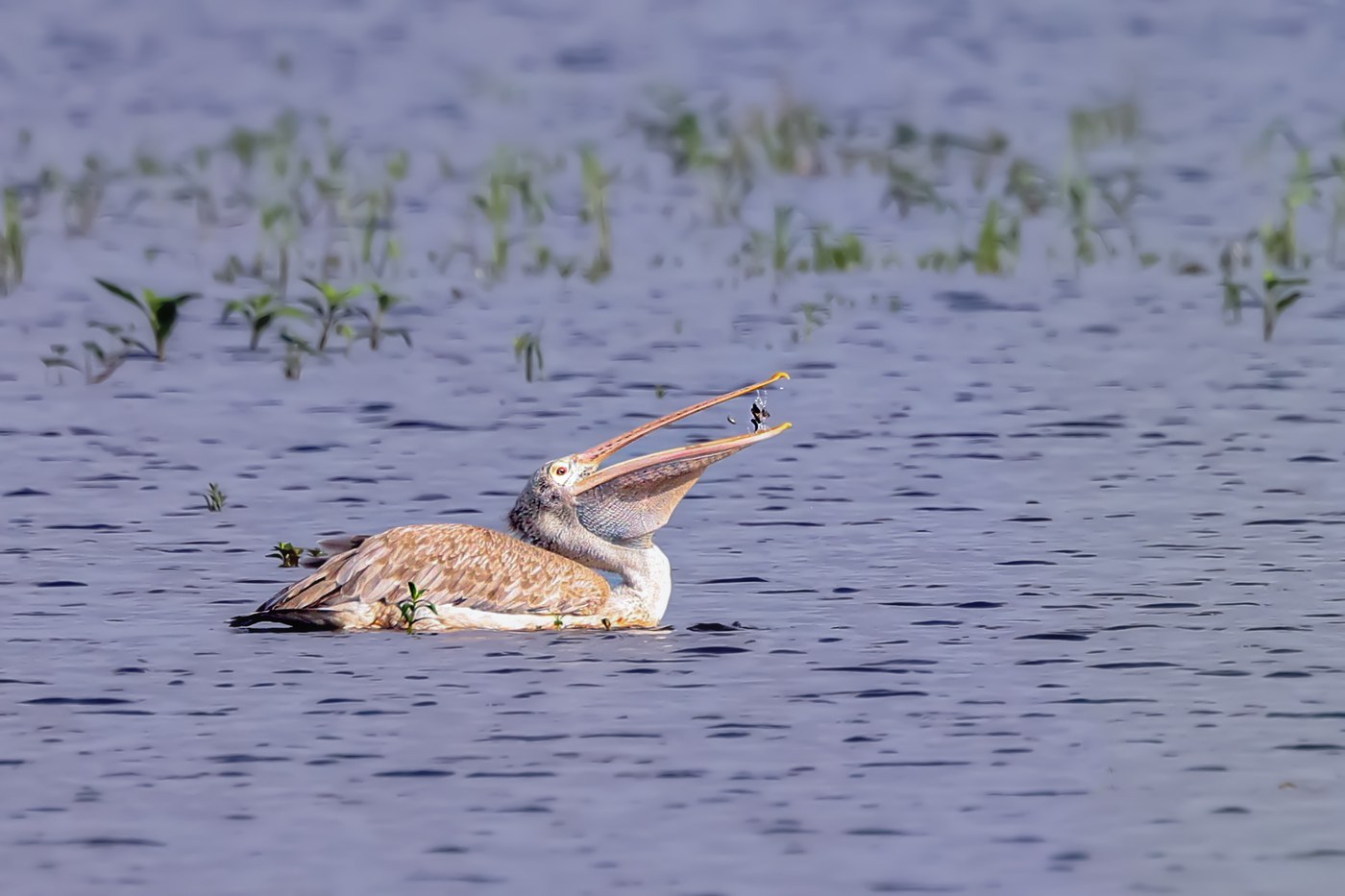
Spot-billed Pelican
Pelecanus philippensis
A greyish Asian pelican named for the dark spots that appear on its bill during the breeding season, with strongholds in protected wetlands of India, Sri Lanka, and Cambodia.
- Size
- 127-152 cm (50-60 in) long, about 250 cm wingspan
- Habitat
- freshwater lakes, marshes, and large rivers of South and Southeast Asia
- Type
- seabird
Spotted a bird like this?
Identify any bird from a photo, free.
Overview
The Spot-billed Pelican is a medium-large pelican of South and Southeast Asian wetlands, named for the dark speckling that develops on its bill during the breeding season. Its population has declined substantially across much of its historic range, though it remains locally common in a few protected strongholds.
Appearance
Adults are greyish-white overall with a shaggy nape crest, a pale grey-blue bill marked with dark spots on the upper mandible during breeding, and a pale pinkish or bluish pouch.
How to identify it
Key field marks
- Overall greyish-white plumage, duller than some other pelican species
- Dark spots on the upper bill during the breeding season
- Shaggy crest on the nape
- Pale pouch, sometimes with a bluish or pinkish tinge
Similar species
Within its Asian range it can be confused with the Great White Pelican in non-breeding plumage, but the Spot-billed Pelican is generally greyer, smaller-billed, and shows the diagnostic bill spotting when breeding.
Habitat & range
Habitat and range
Spot-billed Pelicans inhabit freshwater lakes, marshes, and large rivers across South and Southeast Asia, with important breeding populations in India, Sri Lanka, and Cambodia. Historic breeding colonies in Southeast Asia have been greatly reduced, with Cambodia now hosting one of the most significant remaining strongholds.
The species is largely resident or makes only local movements tied to seasonal water availability, rather than undertaking long-distance migration.
Behavior & voice
Behavior
Spot-billed Pelicans forage mainly by swimming and scooping fish into their pouches, sometimes fishing individually or in loose groups rather than the tightly coordinated lines seen in some other pelican species.
Voice
Adults are largely silent, with low grunting calls given occasionally near nesting colonies.
Nesting and breeding
They typically nest in trees in mixed colonies with storks, herons, and cormorants, building stick platform nests. Two to three eggs are usually laid, and breeding success is closely tied to protection of remaining large wetland habitats.
Frequently asked questions
Why is it called the Spot-billed Pelican?
During the breeding season it develops distinctive dark spots on its upper bill, which give the species its name.
Why is the Spot-billed Pelican Near Threatened?
Widespread loss and degradation of freshwater wetlands across South and Southeast Asia have caused significant declines and the disappearance of many former breeding colonies.
Where does the Spot-billed Pelican breed?
In trees within mixed waterbird colonies at freshwater lakes and marshes, with important remaining populations in India, Sri Lanka, and Cambodia.
What does the Spot-billed Pelican eat?
Fish, caught mainly while swimming and scooping prey into its pouch.
Spot-billed Pelican guides
In-depth guides for identifying, finding, and understanding Spot-billed Pelican.
Other birds you may enjoy
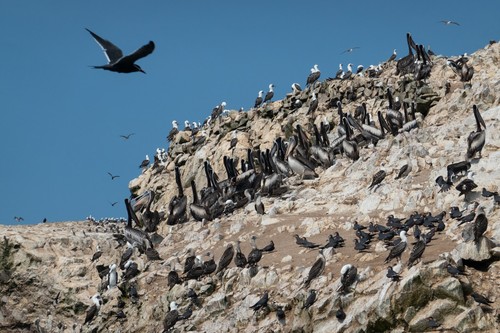
Peruvian Pelican
137-152 cm (54-60 in) long, up to 228 cm wingspan
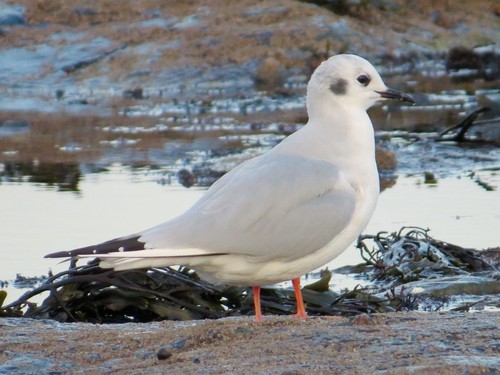
Bonaparte's Gull
28-33 cm (11-13 in) long, 76-84 cm wingspan
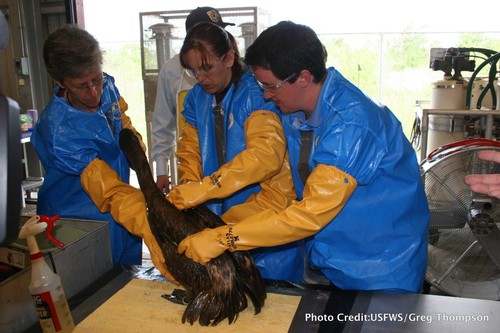
Brown Pelican
106-137 cm (42-54 in) long, 200-230 cm wingspan
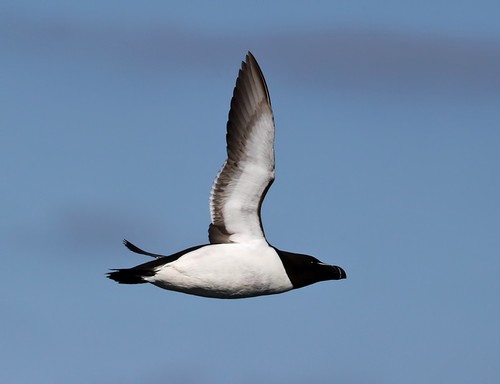
Razorbill
37-39 cm (15-15.5 in) long, 63-68 cm wingspan
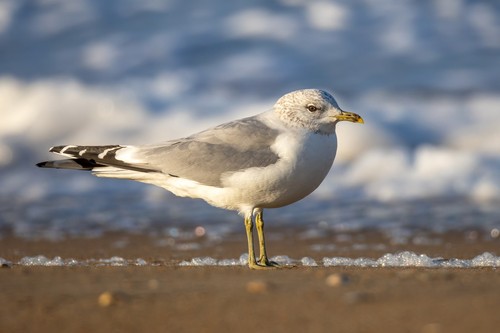
Common Gull
40-46 cm (16-18 in) long, 110-130 cm wingspan
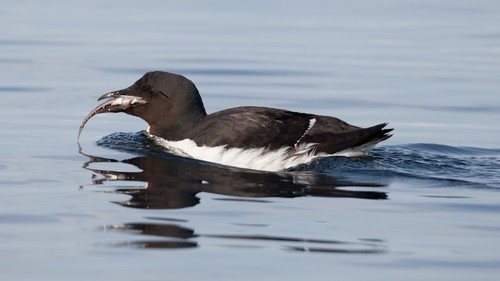
Thick-billed Murre
40-48 cm (16-19 in) long, 65-75 cm wingspan
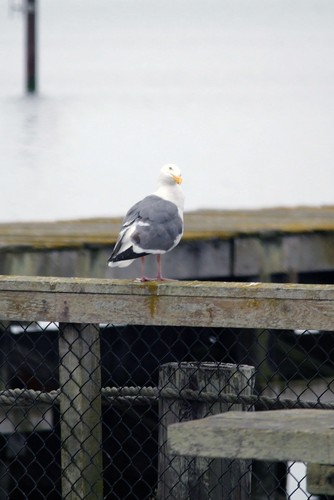
Western Gull
55-68 cm (22-27 in) long, 130-144 cm wingspan
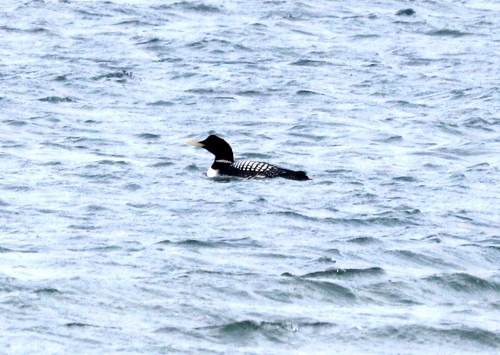
Yellow-billed Loon
76-97 cm (30-38 in) long, 135-152 cm wingspan
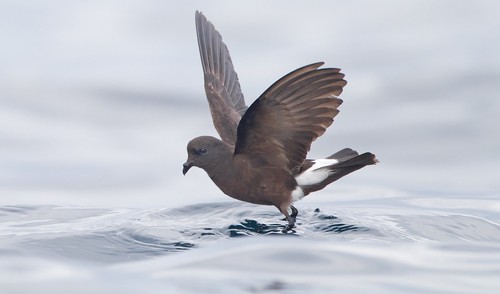
Wilson's Storm-Petrel
15-19 cm (6-7.5 in) long, wingspan 38-42 cm (15-16.5 in)
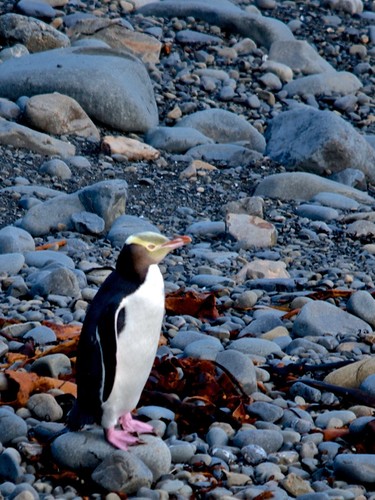
Yellow-eyed Penguin
62-79 cm (24-31 in) tall, 3-8.5 kg (6.6-18.7 lb)
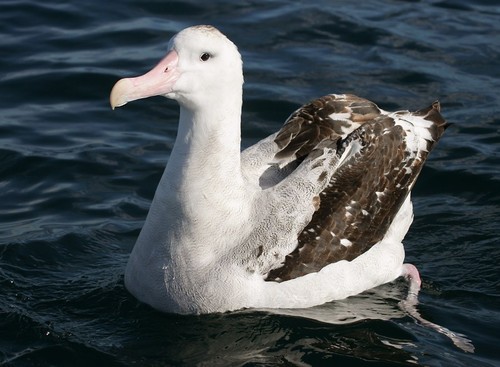
Wandering Albatross
107-135 cm (42-53 in) long, wingspan up to 3.5 m (11.5 ft)

Tufted Puffin
35-41 cm (14-16 in) long, about 63-70 cm wingspan