
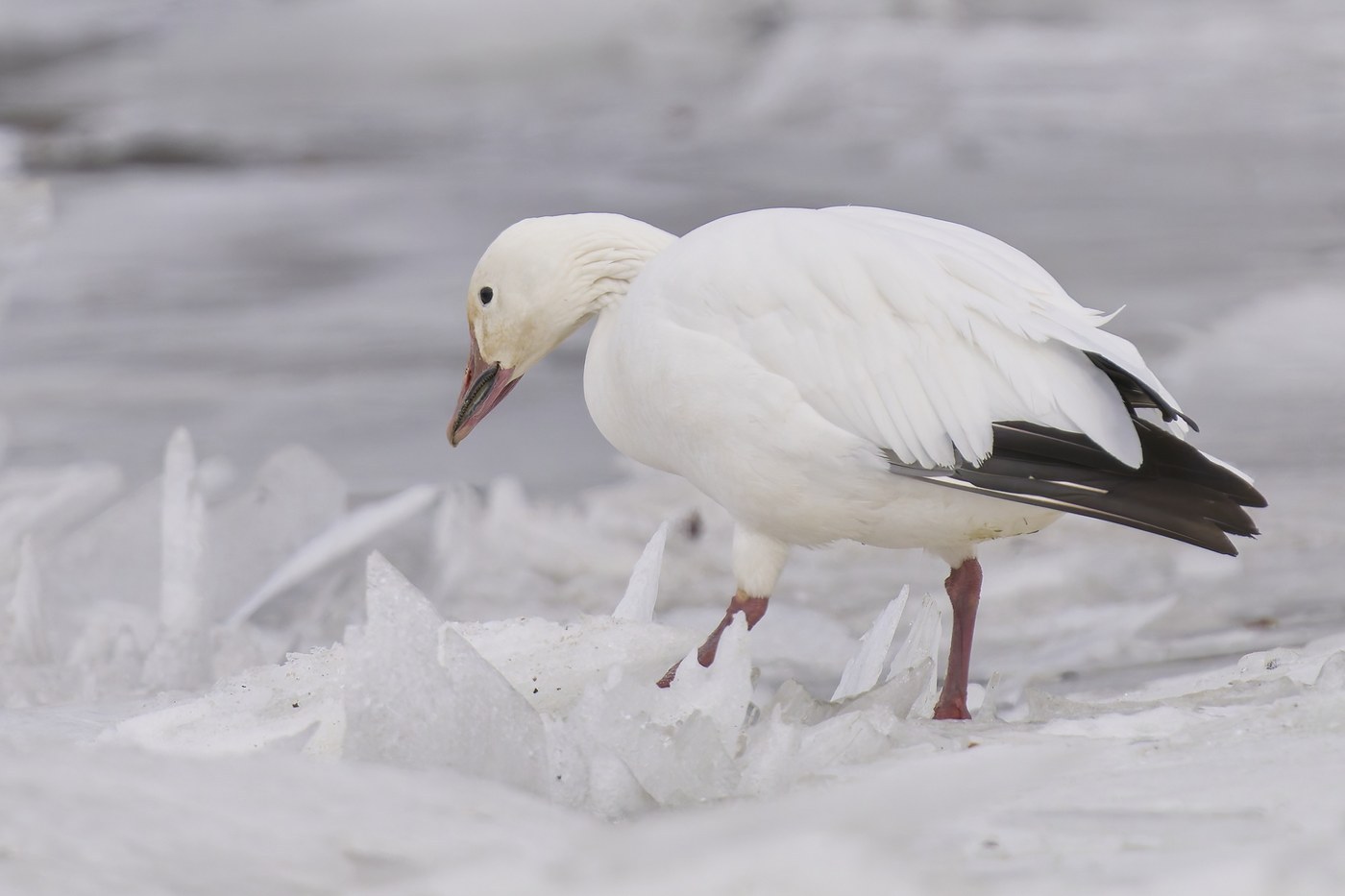
Snow Goose
Anser caerulescens
A bright white goose with black wingtips, often traveling in enormous flocks; a dark 'blue' color morph also exists.
- Size
- 64-79 cm (25-31 in) long, 135-165 cm wingspan
- Habitat
- Arctic tundra (breeding), marshes and agricultural fields (winter)
- Type
- waterfowl
Spotted a bird like this?
Identify any bird from a photo, free.
Overview
The Snow Goose is a striking white goose with crisp black wingtips, best known for forming enormous, densely packed flocks that can number in the tens or even hundreds of thousands during migration. A less common dark form, historically called the "Blue Goose," has a mostly slate-gray body with a white head, and both color morphs can occur within the same flock and even the same family.
Snow Geese breed on Arctic tundra and undertake long migrations to wintering grounds on marshes and agricultural fields farther south, where their arrival in vast, noisy flocks is one of the great spectacles of North American birding.
How to identify it
Key field marks
- White body with black wingtips (visible in flight), pink bill with a dark 'grinning patch' along the edge, pink legs
- Dark ('blue') morph: mostly gray-brown body with a white head, same bill and leg color
- Travels in large, dense flocks, often flying in long, wavering lines or masses rather than tight Vs
Similar species
The Ross's Goose is smaller with a shorter, stubbier bill lacking the obvious dark grinning patch, and a more rounded head; the two species can occur together and require careful size and bill comparison to separate. Adult Snow Geese are much larger and bulkier than Ross's Goose.
Habitat & range
Snow Geese breed in dense colonies on Arctic tundra across northern Canada, Alaska, Greenland, and parts of Russia, nesting on the ground near wetlands. They are highly migratory, wintering in huge flocks on coastal marshes, agricultural fields, and wetlands across the central and coastal United States and parts of Mexico, often staging in large numbers at key stopover wetlands along the way.
Behavior & voice
Behavior
Extremely gregarious, Snow Geese form some of the largest flocks of any North American bird, feeding, roosting, and migrating together in dense masses; explosive mass takeoffs are a dramatic spectacle at major wintering sites.
Voice
Loud and constant in large flocks, giving a nasal, barking 'houk' call that creates a continuous chorus when thousands of birds are together.
Feeding
Grasses, sedges, roots, and waste grain in agricultural fields; flocks can significantly alter marsh vegetation through intensive grubbing for roots and rhizomes.
Nesting
Nests in dense colonies on Arctic tundra; clutches typically hold 3-5 eggs, and goslings are led to feeding areas soon after hatching.
Frequently asked questions
What is a 'Blue Goose'?
It is the dark color morph of the Snow Goose, with a mostly slate-gray body and a white head, genetically determined and occurring within the same populations and even families as the white morph.
How do you tell Snow Goose from Ross's Goose?
Snow Geese are larger with a longer bill showing an obvious dark 'grinning patch' along the edge, while Ross's Goose is smaller with a shorter, stubbier bill and a more rounded head.
Why do Snow Geese form such huge flocks?
Flocking offers protection from predators and helps geese find food and navigate long migrations; wintering concentrations at rich feeding areas can reach into the hundreds of thousands.
What do Snow Geese eat?
Grasses, sedges, roots, and waste grain, often grubbing for roots and rhizomes in marshes and fields.
Snow Goose guides
In-depth guides for identifying, finding, and understanding Snow Goose.
Other birds you may enjoy
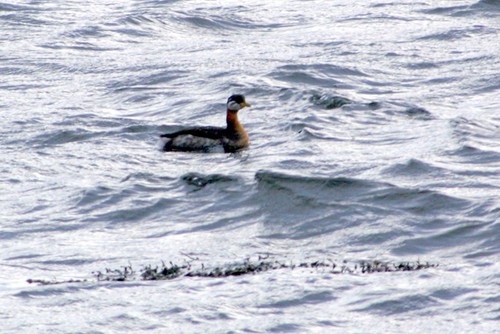
Red-necked Grebe
40-55 cm (16-22 in) long, 77-85 cm wingspan
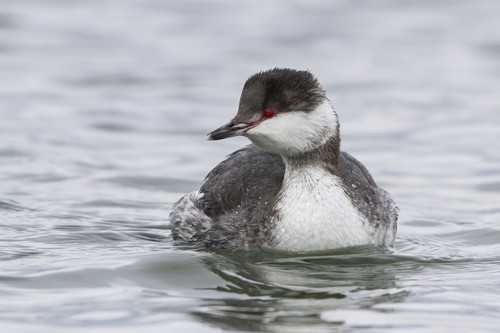
Horned Grebe
31-38 cm (12-15 in) long, 46-55 cm wingspan
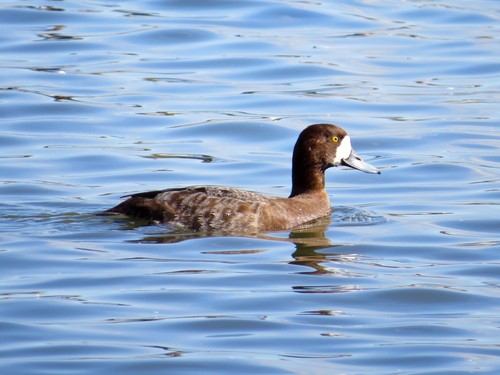
Greater Scaup
42-51 cm (16.5-20 in) long, 71-84 cm wingspan
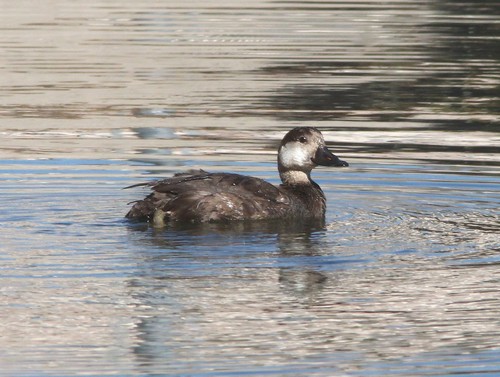
Black Scoter
43-54 cm (17-21 in) long, 79-90 cm wingspan
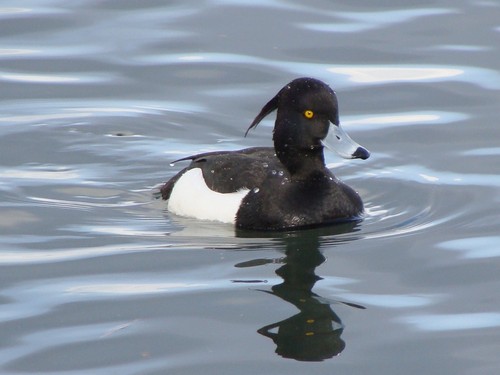
Tufted Duck
40-47 cm (16-18.5 in) long, 67-73 cm wingspan
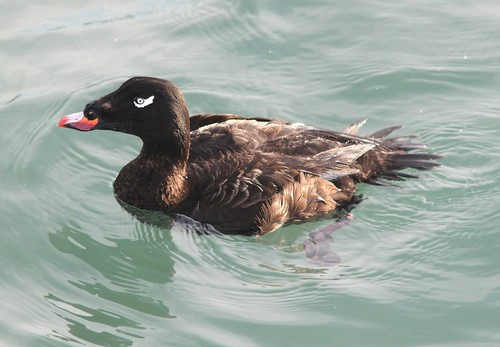
White-winged Scoter
48-58 cm (19-23 in) long, 86-99 cm wingspan
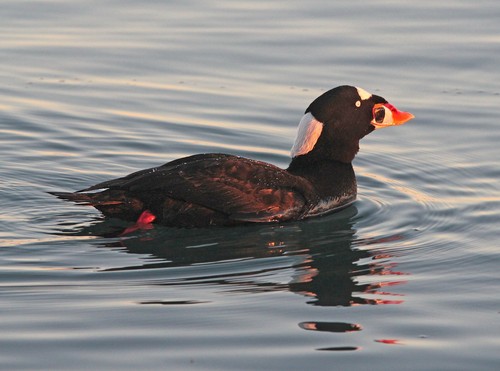
Surf Scoter
45-56 cm (18-22 in) long, 78-92 cm wingspan
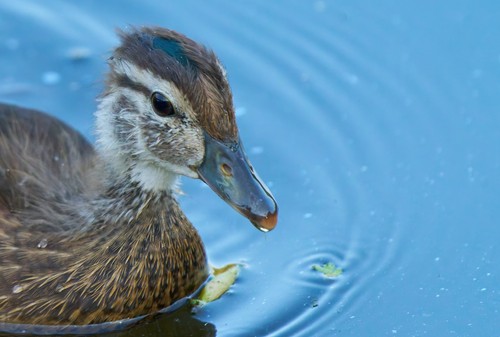
Wood Duck
47-54 cm (18.5-21 in) long, 66-73 cm wingspan
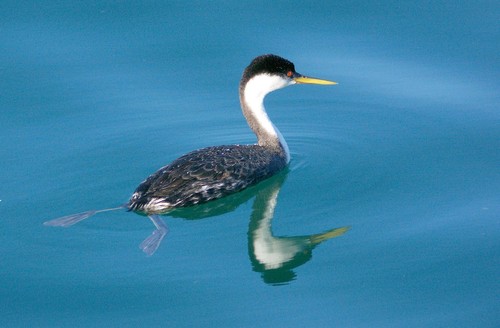
Western Grebe
56-74 cm (22-29 in) long, 79-102 cm wingspan
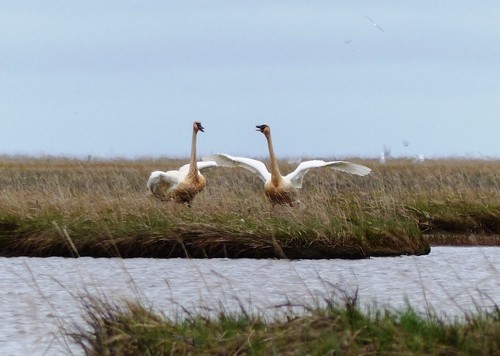
Tundra Swan
115-150 cm (45-59 in) long, about 180 cm wingspan
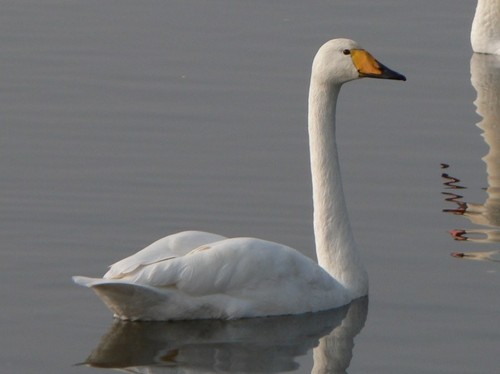
Whooper Swan
140-165 cm (55-65 in) long, 205-235 cm wingspan
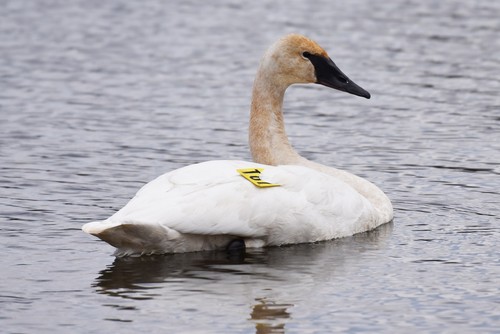
Trumpeter Swan
150-180 cm (59-71 in) long, up to 300 cm wingspan