
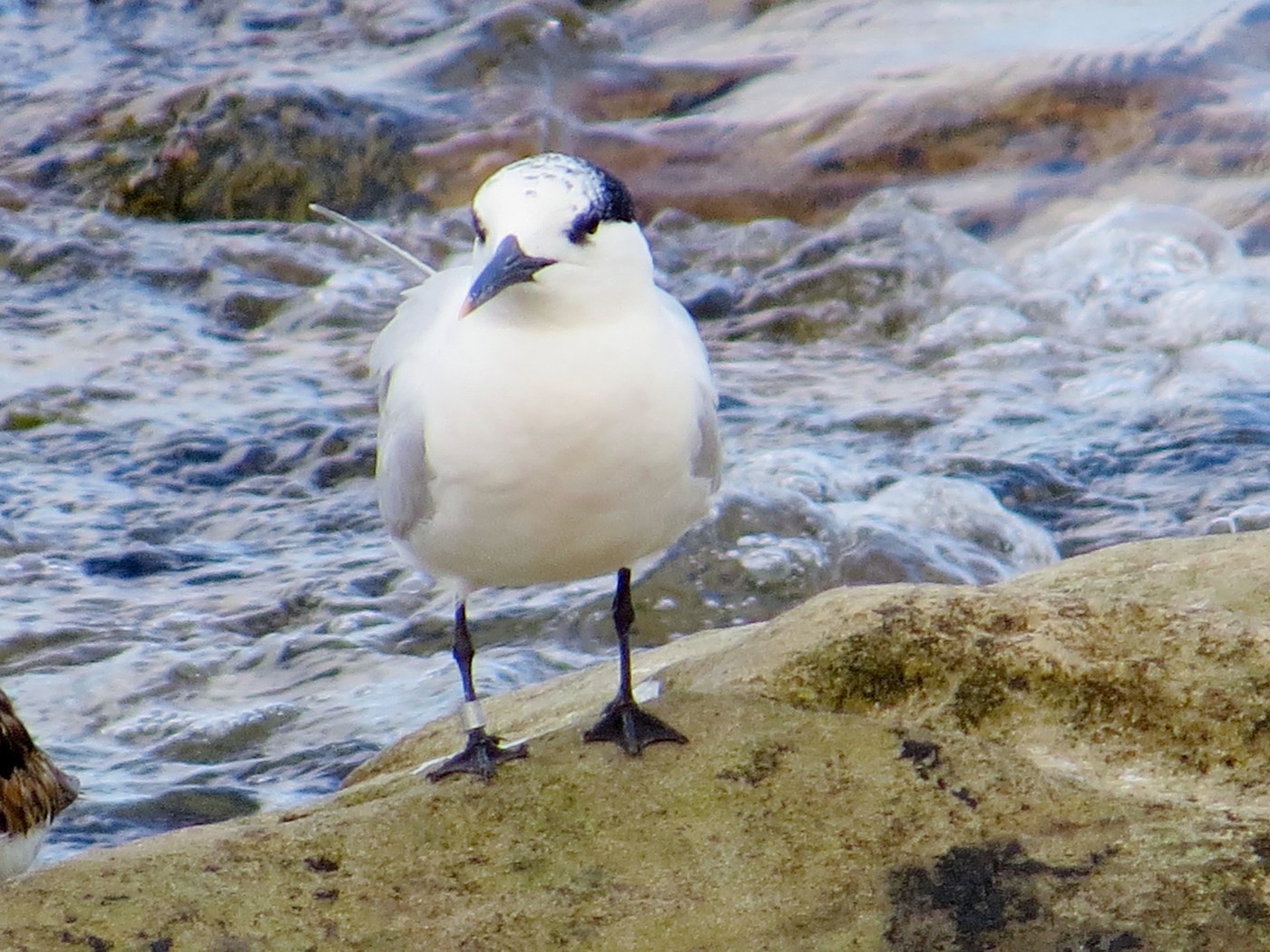
Sandwich Tern
Thalasseus sandvicensis
A slender, crested tern easily told from relatives by its long black bill with a distinctive yellow tip, named for the English town of Sandwich, Kent.
- Size
- 37-43 cm (15-17 in) long, 85-97 cm wingspan
- Habitat
- sandy and shingle coastal beaches and islands
- Type
- seabird
Spotted a bird like this?
Identify any bird from a photo, free.
Overview
The Sandwich Tern is a slim, medium-large tern readily distinguished from other terns by its bill: long, thin, and black with a neat yellow tip, as though dipped in paint. Adults have a shaggy black crest, pale gray upperparts, white underparts, and black legs.
As with several crested terns, the forehead whitens outside the core breeding period, leaving a black cap restricted to the crown and a ragged crest trailing behind the head. In flight, the wingtips show a pale, frosty appearance similar to some other crested terns.
The species takes its English name from Sandwich, a coastal town in Kent, England, where it was first scientifically described; in the Americas it is sometimes referred to by the name Cabot's Tern, reflecting a formerly recognized subspecies or, by some authorities, a separate species.
How to identify it
Key field marks
- Long, slender black bill with a distinct yellow tip
- Shaggy black crest
- Black legs
- Pale gray upperparts, white underparts
Similar species
- Royal Tern: larger with an entirely orange bill lacking a yellow tip.
- Elegant Tern: longer, more slender, drooping orange-yellow bill without the sharply demarcated yellow tip.
- Common Tern: much smaller with a red-orange (not black) bill.
Habitat & range
Habitat
A coastal species nesting on sandy or shingle beaches and islands, foraging over nearshore and offshore waters.
Range and migration
Breeds along the Atlantic coast of the Americas, coasts of Europe, and parts of Africa and western Asia. Northern populations are strongly migratory, wintering along warmer coasts of the Gulf of Mexico, the Caribbean, South America, and Africa.
Behavior & voice
Behavior
Sandwich Terns are highly colonial, often nesting in dense association with other terns, and forage by making steep plunge-dives into the water from a hovering position.
Voice
Gives a distinctive, grating, rolled "kir-rick" or "kear-ick" call, often the first clue to its presence at a distance.
Feeding
Feeds mainly on small fish, caught by plunge-diving, along with some marine invertebrates.
Nesting and breeding
Nests in dense colonies on open, sparsely vegetated sand or shingle, often intermixed with other tern species. Clutches typically contain one to two eggs, incubated by both parents for roughly three to four weeks.
Frequently asked questions
Why is it called the Sandwich Tern?
It is named after Sandwich, a coastal town in Kent, England, where the species was first scientifically described.
How do you identify a Sandwich Tern?
Look for its long, slender black bill with a distinctive yellow tip, paired with a shaggy black crest and black legs.
What is a Cabot's Tern?
It is a name sometimes used for the American population of the Sandwich Tern, historically treated as a subspecies and by some authorities considered a separate species.
What does the Sandwich Tern eat?
Mainly small fish caught by plunge-diving, along with some marine invertebrates.
Sandwich Tern guides
In-depth guides for identifying, finding, and understanding Sandwich Tern.
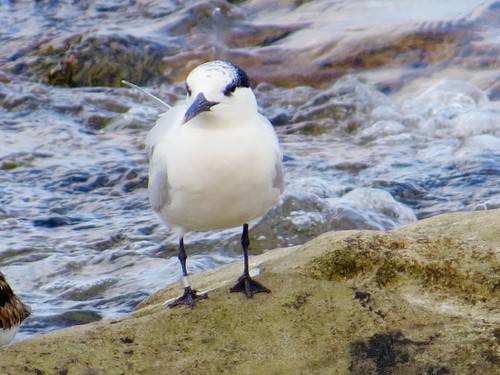
Other birds you may enjoy
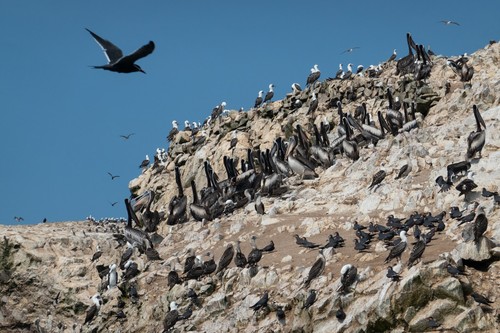
Peruvian Pelican
137-152 cm (54-60 in) long, up to 228 cm wingspan
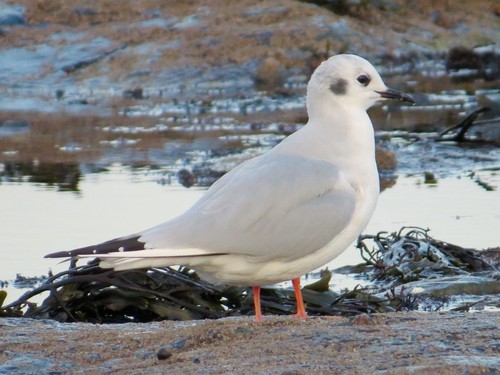
Bonaparte's Gull
28-33 cm (11-13 in) long, 76-84 cm wingspan
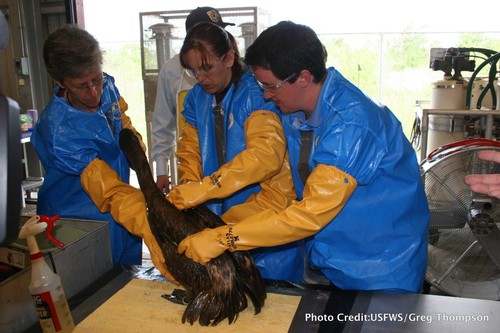
Brown Pelican
106-137 cm (42-54 in) long, 200-230 cm wingspan
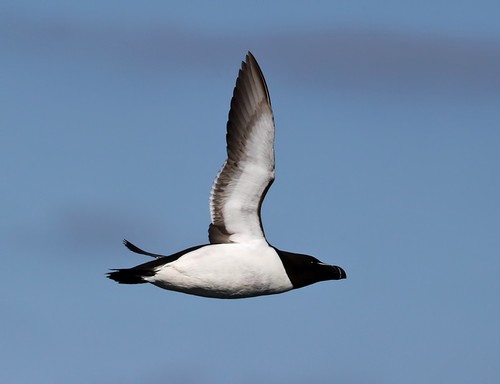
Razorbill
37-39 cm (15-15.5 in) long, 63-68 cm wingspan
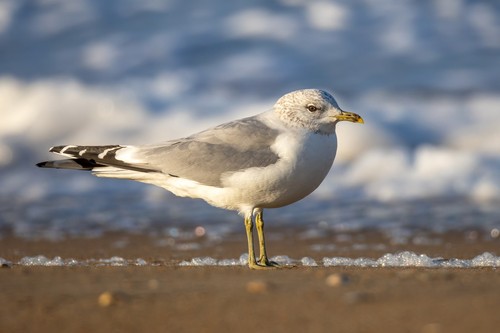
Common Gull
40-46 cm (16-18 in) long, 110-130 cm wingspan
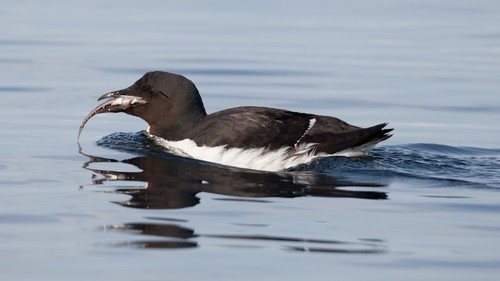
Thick-billed Murre
40-48 cm (16-19 in) long, 65-75 cm wingspan
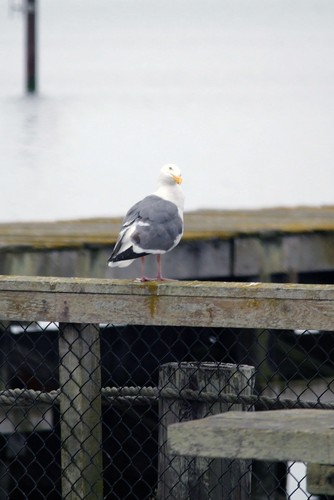
Western Gull
55-68 cm (22-27 in) long, 130-144 cm wingspan
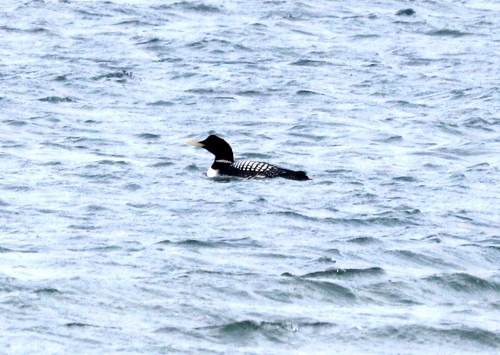
Yellow-billed Loon
76-97 cm (30-38 in) long, 135-152 cm wingspan
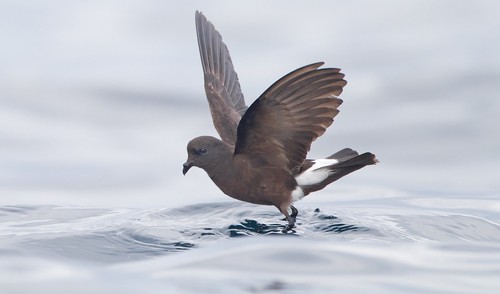
Wilson's Storm-Petrel
15-19 cm (6-7.5 in) long, wingspan 38-42 cm (15-16.5 in)
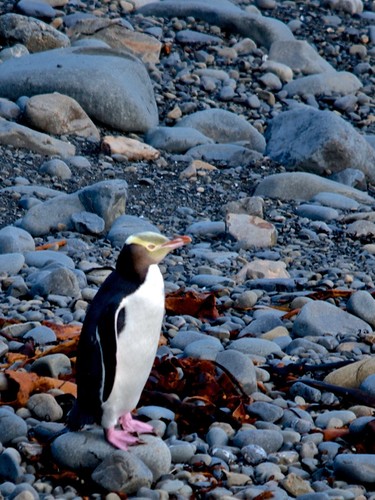
Yellow-eyed Penguin
62-79 cm (24-31 in) tall, 3-8.5 kg (6.6-18.7 lb)
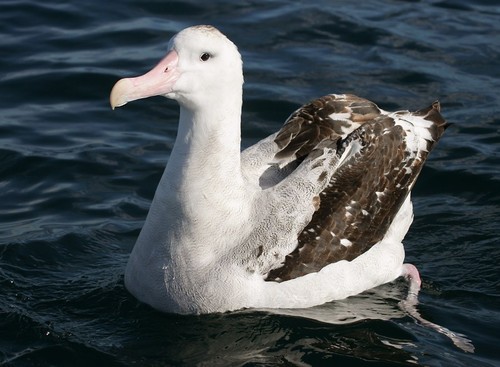
Wandering Albatross
107-135 cm (42-53 in) long, wingspan up to 3.5 m (11.5 ft)

Tufted Puffin
35-41 cm (14-16 in) long, about 63-70 cm wingspan