
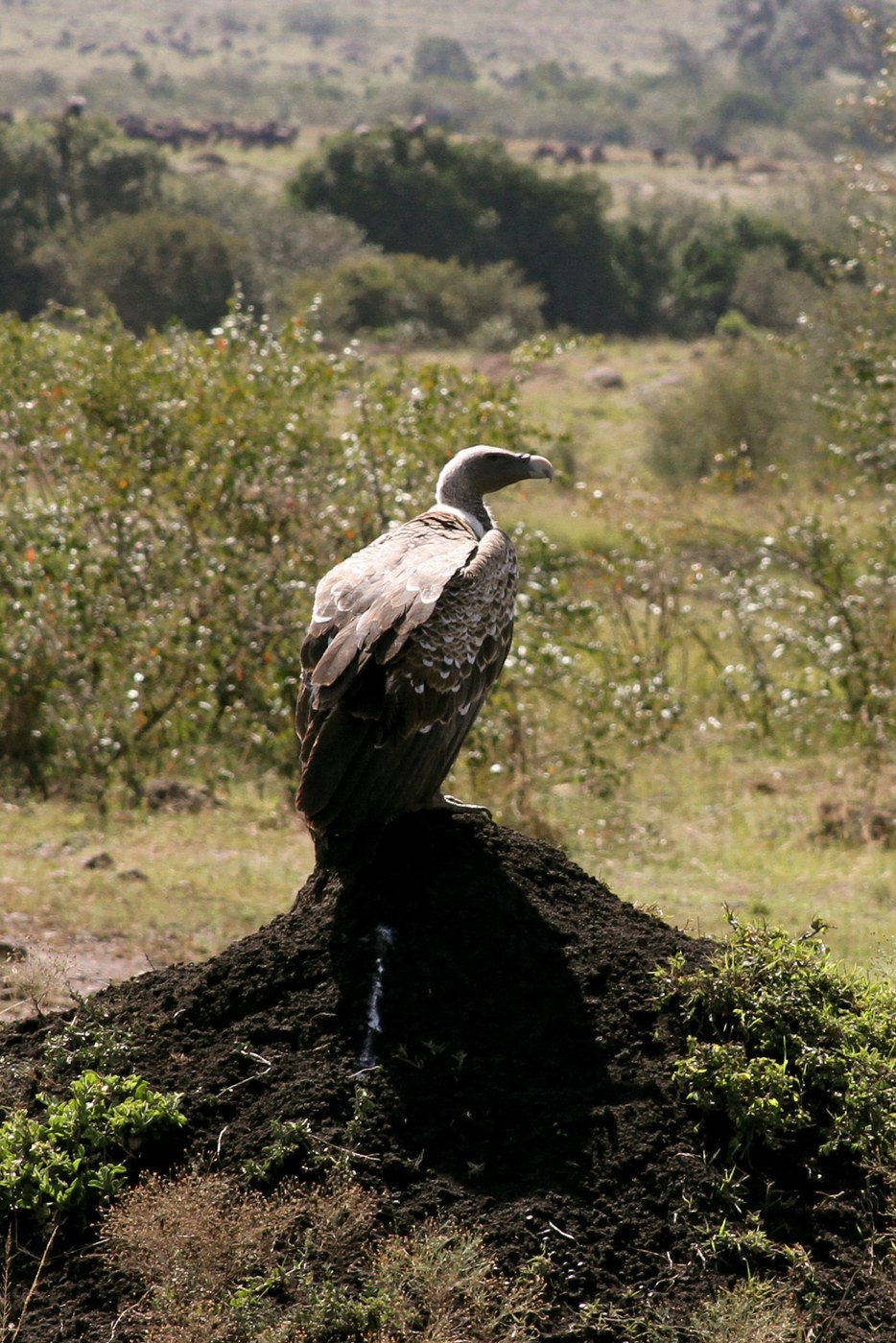
Rüppell's Vulture
Gyps rueppellii
A large, mottled griffon vulture of Africa's savannas famed for flying higher than any other bird on record.
- Size
- 85-103 cm long; wingspan 226-260 cm
- Habitat
- Savanna, semi-arid grassland, and mountains with cliffs for nesting across the Sahel and East Africa
- Type
- raptor
Spotted a bird like this?
Identify any bird from a photo, free.
Overview
Rüppell's Vulture is a large Old World vulture of the genus Gyps, closely related to the White-backed Vulture but slightly larger and heavier. It is named after the German naturalist Eduard Rüppell.
Appearance
Adults show a distinctive scaly, mottled pattern of dark brown feathers broadly edged in pale buff or whitish across the body and wing coverts, giving a spangled look. The head and neck are covered in sparse whitish down over grayish skin, and the eye is yellow to amber. The bill is heavy and pale horn-colored, built for tearing tough carcass hide.
Juveniles are more uniformly dark brown with narrower pale streaking that develops into the adult scaled pattern over several years.
How to identify it
Key field marks
- Large, bulky Gyps vulture with a scaly, spangled brown-and-buff pattern on the body and coverts
- Sparse whitish down on the head and neck over gray skin
- Pale yellow to amber eye
- Heavy pale bill
Similar species
The White-backed Vulture is similarly built but shows a more uniform dark plumage with a contrasting pale/white lower back visible in flight, and lacks the strong scaled pattern. Lappet-faced Vultures are larger still with bare pink skin on the head and prominent facial folds, and dark plumage without scaling. In flight, Rüppell's Vulture shows a pale line along the leading and trailing edges of the underwing coverts against darker flight feathers.
Habitat & range
Habitat
The species inhabits open savanna, semi-arid grassland, and Sahelian scrub, nesting colonially on cliffs and rock faces in mountainous or escarpment terrain, often far from feeding grounds.
Range
Rüppell's Vulture occurs in a band across the Sahel and East Africa, including countries such as Senegal, Mali, Niger, Chad, Sudan, Ethiopia, Kenya, and Tanzania, with the largest populations concentrated in East Africa.
Migration
Largely resident, though immature and non-breeding birds can range widely, sometimes hundreds of kilometers, in search of carcasses.
Behavior & voice
Behavior
Highly social, Rüppell's Vultures forage in flocks and gather in large numbers at carcasses, often dominating smaller vulture species through sheer numbers and aggressive posturing. They are renowned for soaring to extraordinary altitudes; a Rüppell's Vulture was documented colliding with an aircraft at roughly 11,300 meters (37,000 feet), the highest confirmed flight altitude of any bird.
Voice
Mostly silent in flight; at carcasses and nesting cliffs they produce hissing, grunting, and cackling calls during competitive interactions.
Feeding
Exclusively a carrion feeder, using keen eyesight and observation of other scavengers to locate large mammal carcasses, which it can strip quickly in large communal groups.
Nesting and breeding
Nests colonially on cliff ledges, sometimes in colonies of hundreds of pairs. A single egg is laid and incubated by both parents; chicks fledge after an extended nestling period of around four months.
Frequently asked questions
How high can Rüppell's Vulture fly?
It holds the record for the highest confirmed flight of any bird, with one individual struck by an aircraft at about 11,300 meters (37,000 feet) over West Africa.
Why is Rüppell's Vulture endangered?
Populations have crashed due to poisoning, loss of wild ungulate carcasses, habitat degradation, and collisions with power infrastructure, leading to a Critically Endangered listing.
How do you identify a Rüppell's Vulture?
Look for its large size, scaly brown-and-buff spangled plumage, sparse whitish-downed head, and pale yellow eye, distinguishing it from the more uniformly colored White-backed Vulture.
Where does Rüppell's Vulture nest?
It nests colonially on cliffs and rocky escarpments, often in large colonies, across the Sahel and East Africa.
Rüppell's Vulture guides
In-depth guides for identifying, finding, and understanding Rüppell's Vulture.
Other birds you may enjoy
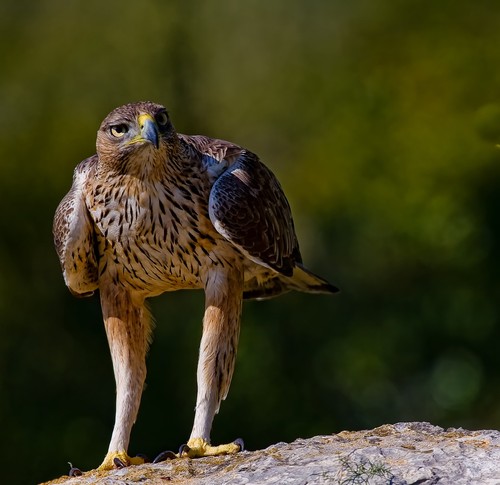
Bonelli's Eagle
Body 65–72 cm (26–28 in); wingspan 150–180 cm (59–71 in)
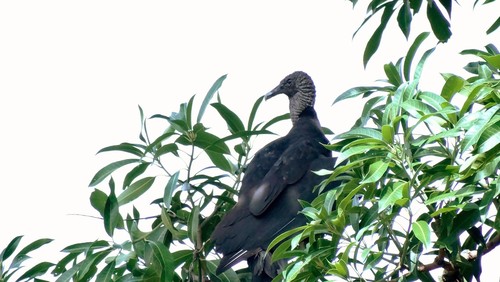
Black Vulture
56-68 cm (22-27 in) long, 137-165 cm wingspan
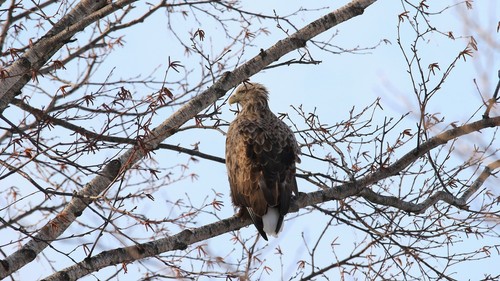
White-tailed Eagle
66-94 cm body length; wingspan 178-245 cm, among the largest eagles in the world
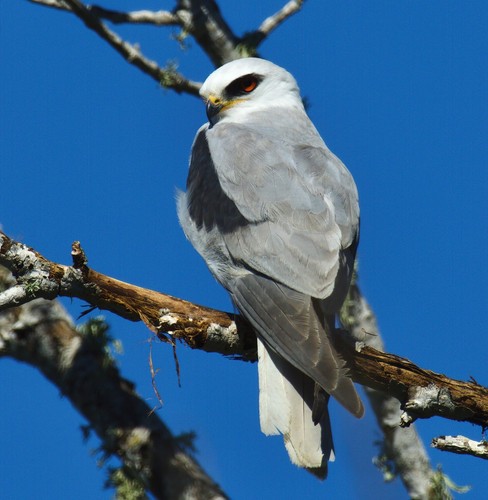
White-tailed Kite
35-43 cm (14-17 in) long, 88-102 cm (35-40 in) wingspan
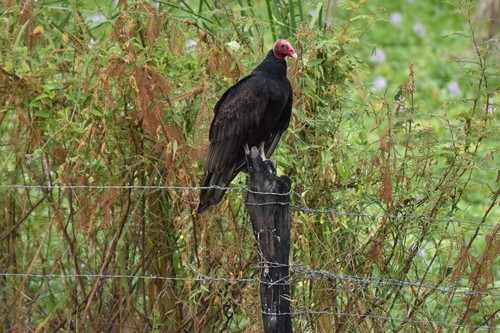
Turkey Vulture
64-81 cm (25-32 in) long, 160-183 cm wingspan
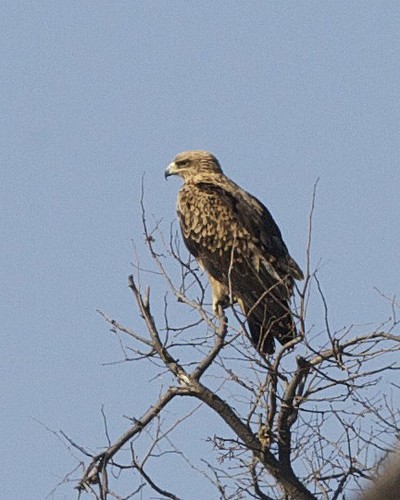
Tawny Eagle
62–75 cm long; wingspan 1.65–2.0 m
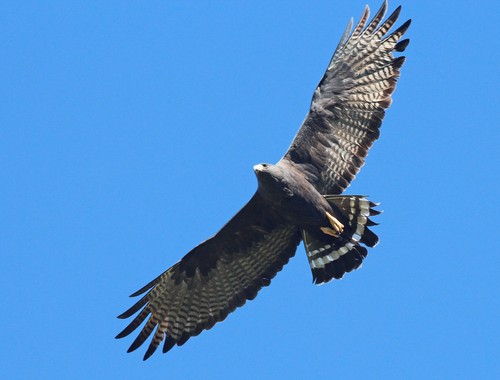
Zone-tailed Hawk
46-56 cm (18-22 in) long, 118-140 cm (46-55 in) wingspan
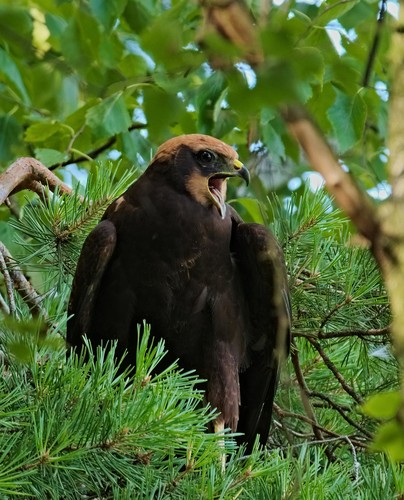
Western Marsh Harrier
Body 43-56 cm; wingspan 115-140 cm
Swallow-tailed Kite
48-68 cm (19-27 in) long including tail streamers, 112-136 cm (44-54 in) wingspan
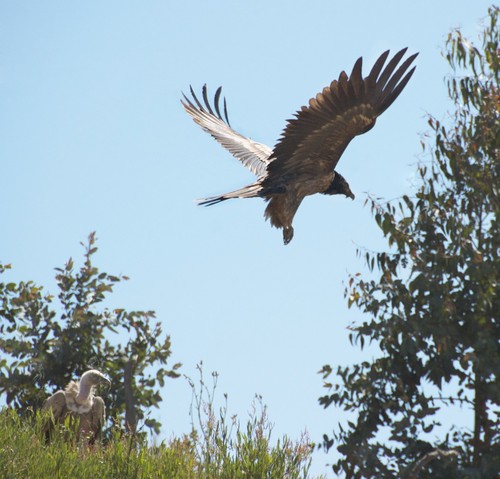
White-backed Vulture
78-98 cm long, wingspan 1.96-2.25 m
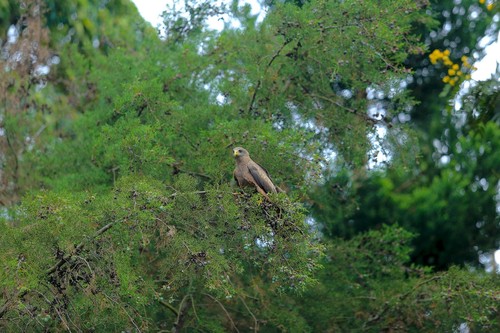
Yellow-billed Kite
55-60 cm long; wingspan 130-155 cm
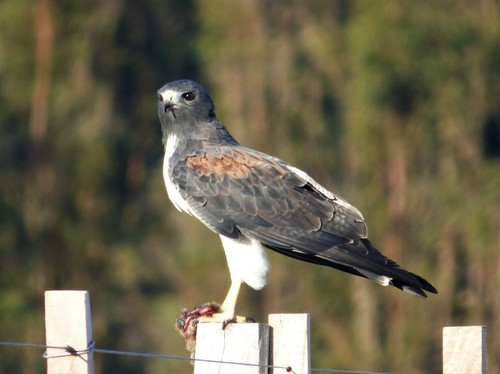
White-tailed Hawk
46-59 cm (18-23 in) long, 122-142 cm (48-56 in) wingspan