
Ruddy Duck
Oxyura jamaicensis
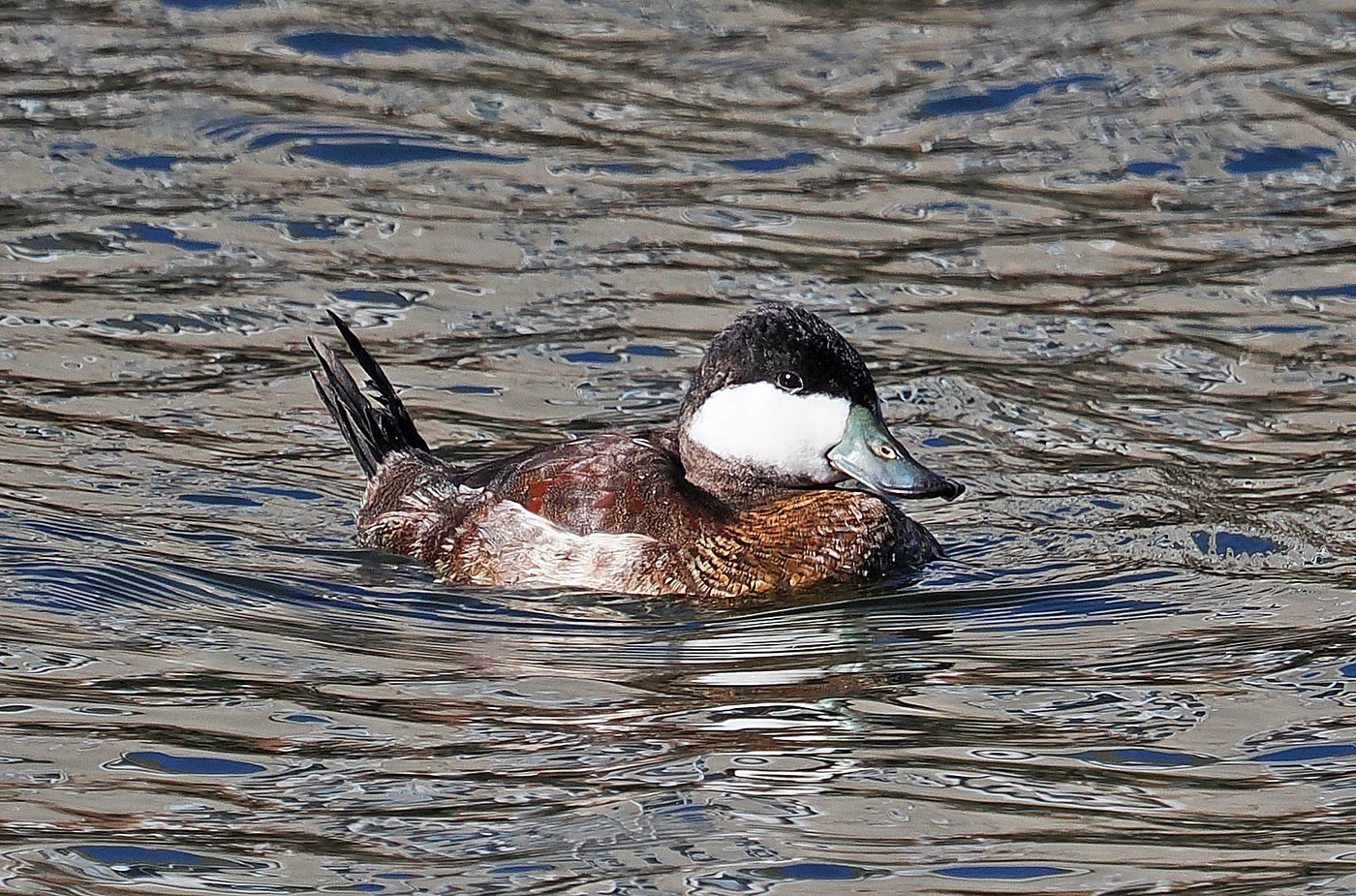
A small, chunky stiff-tailed diving duck; breeding males show a chestnut body, black cap, white cheeks, and a bright blue bill.
- Size
- 35-43 cm (14-17 in) long, 47-62 cm wingspan
- Habitat
- freshwater marshes, ponds, and lakes with dense emergent vegetation
- Type
- waterfowl
Spotted a bird like this?
Identify any bird from a photo, free.
Overview
The Ruddy Duck is a small, chunky diving duck best known for the breeding male's vivid combination of a rich chestnut body, a jet-black cap, bright white cheeks, and an electric-blue bill. Its stiff tail feathers are often held cocked upright, a signature posture shared by other members of the stiff-tailed duck group. Females and non-breeding males are dull brown with a dark cheek stripe crossing a paler face.
Ruddy Ducks are compact, large-headed, and short-necked, riding low in the water and diving frequently, and are widespread on ponds and marshes across the Americas.
How to identify it
Key field marks
- Small, stocky body with a large head, short thick neck, and a tail often cocked upward
- Breeding male: chestnut body, black cap, white cheek patch, sky-blue bill
- Female/non-breeding male: brown overall with a dark horizontal cheek stripe across a pale face, dull gray bill
Similar species
No other North American duck combines the stiff, often upright tail with the male's bright blue bill and white cheek patch. Female Ruddy Ducks can be told from other small brown ducks by the distinctive dark cheek stripe and stiff-tailed shape.
Habitat & range
Ruddy Ducks breed on freshwater marshes, ponds, and lakes with dense emergent vegetation across much of North America, favoring prairie potholes in the core of their breeding range. They winter on ice-free lakes, ponds, and coastal lagoons across the southern United States, Mexico, and Central America, often gathering in large rafts.
Behavior & voice
Behavior
Ruddy Ducks dive frequently for food and are also capable of slowly sinking below the surface rather than diving. Males perform an elaborate courtship display, slapping their bill against an inflated neck pouch to produce a drumming sound accompanied by bubbles on the water.
Voice
Mostly quiet; displaying males produce a soft popping/drumming sound rather than a true vocal call, along with occasional grunts.
Feeding
Aquatic invertebrates such as midge larvae, along with seeds and aquatic plant material, gleaned by diving in shallow water.
Nesting
Builds a woven platform nest anchored in dense marsh vegetation over water; clutches are relatively large, often 6-10 eggs, and females sometimes lay eggs in the nests of other ducks.
Frequently asked questions
Why does the Ruddy Duck hold its tail up?
It is a stiff-tailed duck, and both sexes often cock the tail upright, a posture especially pronounced in displaying males.
How can I tell a male from a female Ruddy Duck?
Breeding males have a chestnut body, black cap, white cheeks, and a bright blue bill, while females and non-breeding males are brown with a dark stripe across a pale cheek.
What is the Ruddy Duck's courtship display?
Males slap their bill rapidly against an inflated neck pouch, producing a drumming sound and a ring of bubbles on the water, known as a 'bubbling' display.
What do Ruddy Ducks eat?
Mostly aquatic invertebrates like midge larvae, plus some seeds and aquatic plants, obtained by diving.
Ruddy Duck guides
In-depth guides for identifying, finding, and understanding Ruddy Duck.
Other birds you may enjoy
Red-necked Grebe
40-55 cm (16-22 in) long, 77-85 cm wingspan
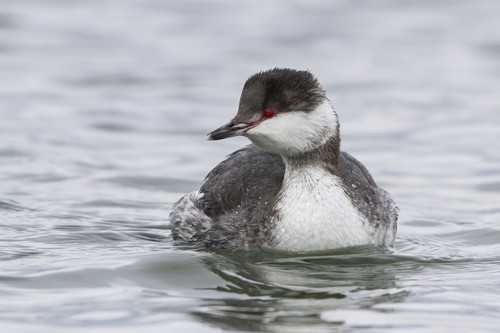
Horned Grebe
31-38 cm (12-15 in) long, 46-55 cm wingspan
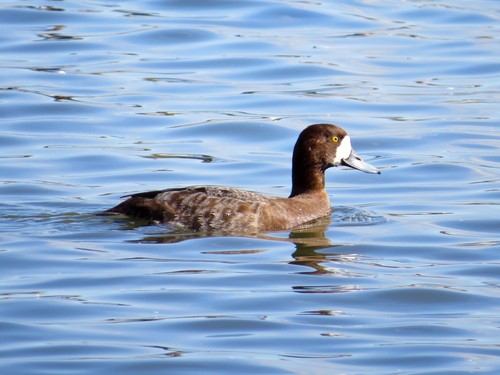
Greater Scaup
42-51 cm (16.5-20 in) long, 71-84 cm wingspan
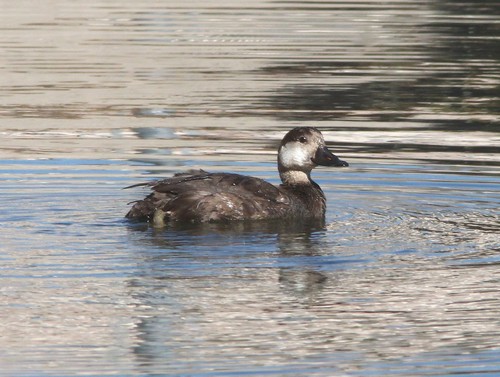
Black Scoter
43-54 cm (17-21 in) long, 79-90 cm wingspan
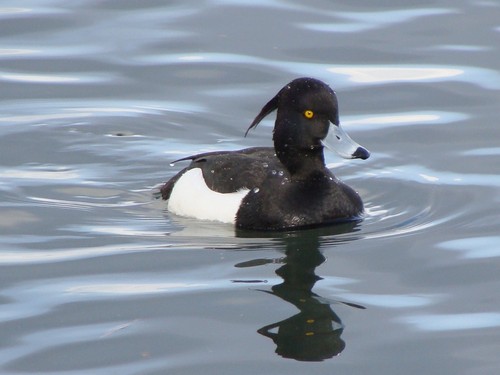
Tufted Duck
40-47 cm (16-18.5 in) long, 67-73 cm wingspan
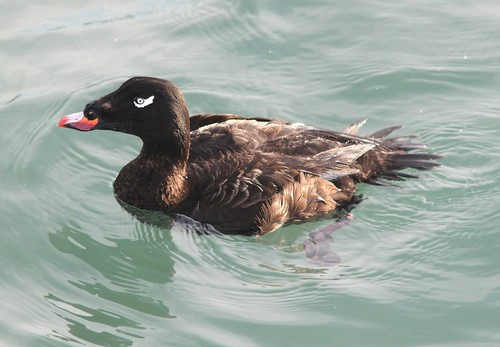
White-winged Scoter
48-58 cm (19-23 in) long, 86-99 cm wingspan
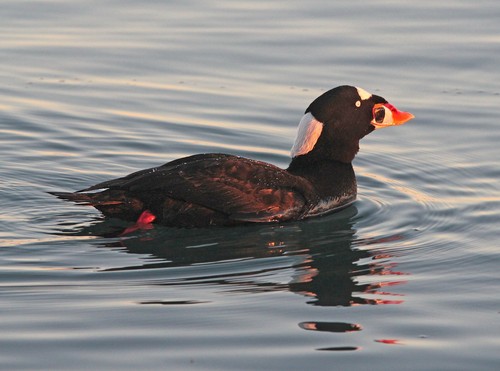
Surf Scoter
45-56 cm (18-22 in) long, 78-92 cm wingspan
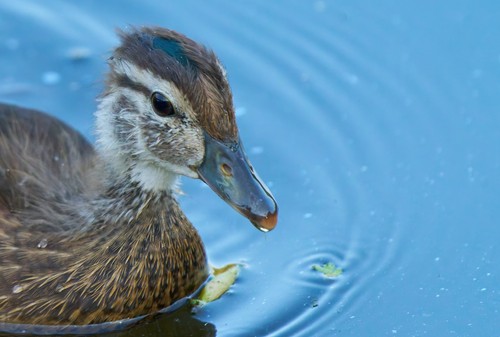
Wood Duck
47-54 cm (18.5-21 in) long, 66-73 cm wingspan
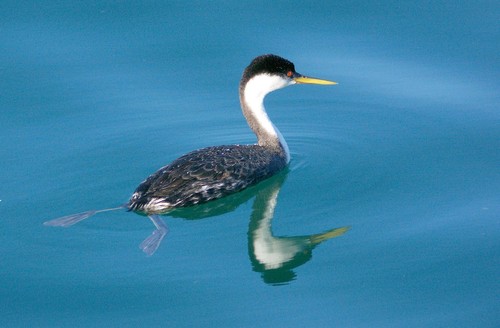
Western Grebe
56-74 cm (22-29 in) long, 79-102 cm wingspan
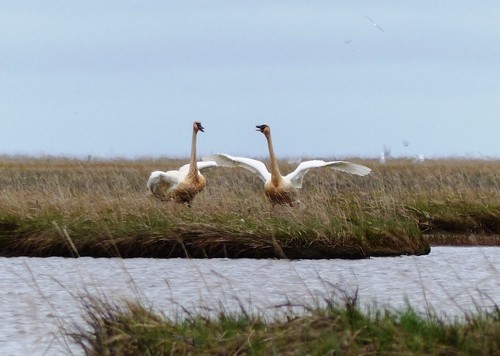
Tundra Swan
115-150 cm (45-59 in) long, about 180 cm wingspan
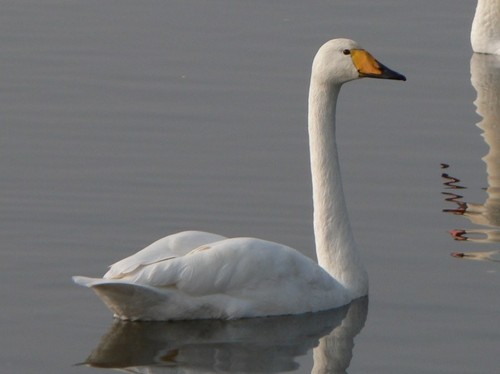
Whooper Swan
140-165 cm (55-65 in) long, 205-235 cm wingspan
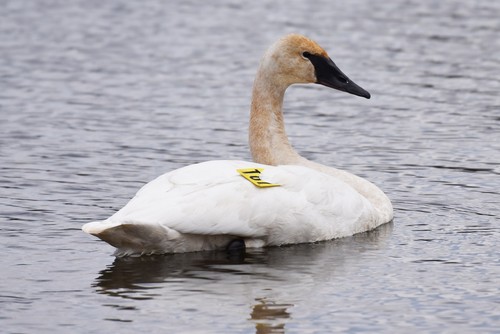
Trumpeter Swan
150-180 cm (59-71 in) long, up to 300 cm wingspan