
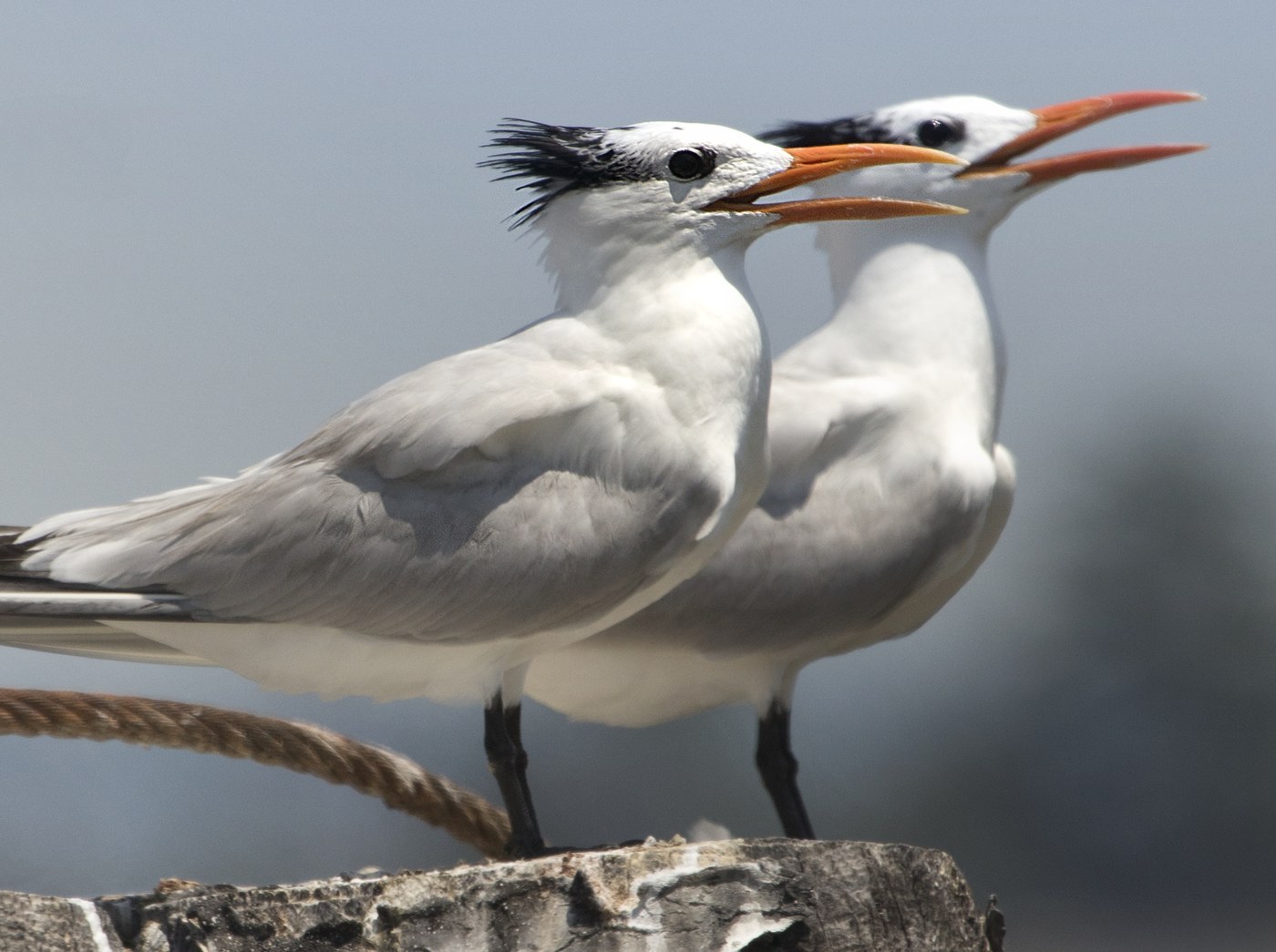
Royal Tern
Thalasseus maximus
A large, orange-billed tern of sandy beaches and estuaries, second in size only to the Caspian Tern, often seen with a shaggy black crest streaming in the wind.
- Size
- 45-50 cm (18-20 in) long, 125-135 cm wingspan
- Habitat
- coastal beaches, estuaries, and sandbars
- Type
- seabird
Spotted a bird like this?
Identify any bird from a photo, free.
Overview
The Royal Tern is a large, elegant tern found along warm-temperate and tropical coastlines of the Americas and West Africa, second in size only to the Caspian Tern among the world's terns. Adults have a long, slender orange bill, pale gray upperparts, white underparts, and black legs.
In full breeding plumage, the black cap covers the entire crown and extends into a shaggy crest at the back of the head, but for much of the year the forehead is white, leaving only a black band across the nape and a ragged crest, giving the bird a distinctive "receding hairline" look.
Royal Terns typically forage well offshore or along open beaches, plunge-diving from height for fish, and form dense, often massive nesting colonies on isolated sandy islands and beaches.
How to identify it
Key field marks
- Large size, second only to Caspian Tern
- Long, slender orange bill (thinner than Caspian Tern's thicker, more red-orange bill)
- Shaggy black crest, often reduced to a black nape band outside full breeding condition
- Black legs
Similar species
- Caspian Tern: larger and bulkier with a thicker, more coral-red bill and a solid black cap rather than a shaggy crest with white forehead.
- Elegant Tern: smaller, with a longer, more slender, drooping bill, often more orange-yellow.
- Sandwich Tern: notably smaller with a black bill tipped yellow.
Habitat & range
Habitat
A coastal species found on sandy beaches, sandbars, estuaries, and lagoons, rarely straying inland.
Range and migration
Breeds along the Atlantic and Gulf coasts of the Americas, from the mid-Atlantic United States south through the Caribbean and parts of South America, as well as along the coast of West Africa. Northern populations migrate south for winter, while populations in warmer regions may be largely resident.
Behavior & voice
Behavior
Royal Terns nest in extremely dense colonies, sometimes packed shoulder to shoulder on open sand, and chicks quickly form large groups called crèches that huddle together while parents forage.
Voice
Calls include a rolling, bugling "keer-reet" or "kree" note, distinctive among the larger terns.
Feeding
Feeds mainly on fish, caught by plunge-diving from moderate height into shallow coastal waters, supplemented by crustaceans.
Nesting and breeding
Nests in dense colonies on open sand or shell beaches with little vegetation, often alongside other terns and skimmers. Clutches typically contain one egg, incubated by both parents for about a month; chicks join large crèches soon after hatching.
Frequently asked questions
How do you tell a Royal Tern from a Caspian Tern?
Royal Tern is smaller with a thinner, more slender orange bill, while Caspian Tern is bulkier with a thicker, more coral-red bill and a fuller black cap.
Why does the Royal Tern have a 'receding hairline' look?
Outside of full breeding condition, the forehead turns white while a black band and shaggy crest remain across the back of the head, creating this distinctive pattern.
What is a tern crèche?
A crèche is a large group formed by tern chicks, including Royal Tern chicks, that huddle together for protection while their parents forage for food.
What does the Royal Tern eat?
Mainly fish, caught by plunge-diving into coastal waters, along with some crustaceans.
Royal Tern guides
In-depth guides for identifying, finding, and understanding Royal Tern.
Other birds you may enjoy

Peruvian Pelican
137-152 cm (54-60 in) long, up to 228 cm wingspan
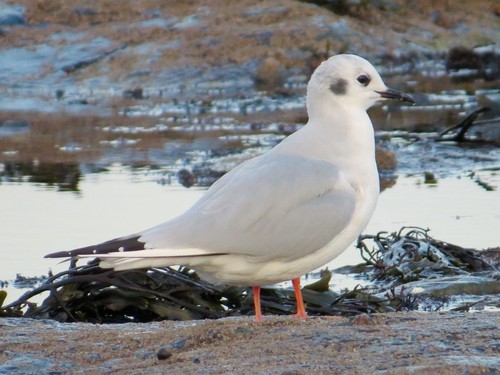
Bonaparte's Gull
28-33 cm (11-13 in) long, 76-84 cm wingspan
Brown Pelican
106-137 cm (42-54 in) long, 200-230 cm wingspan
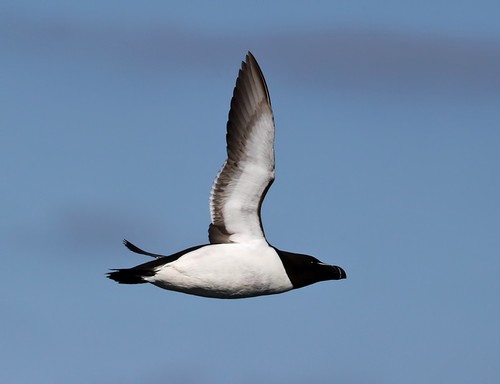
Razorbill
37-39 cm (15-15.5 in) long, 63-68 cm wingspan
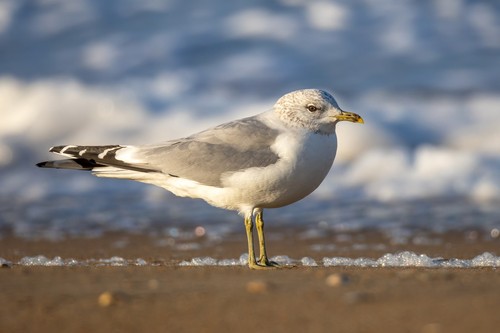
Common Gull
40-46 cm (16-18 in) long, 110-130 cm wingspan
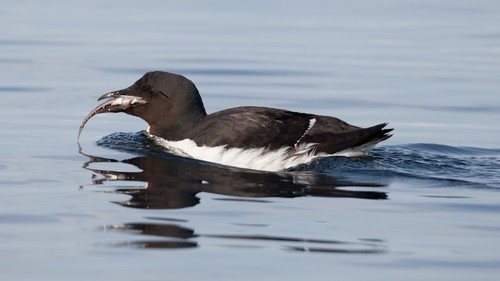
Thick-billed Murre
40-48 cm (16-19 in) long, 65-75 cm wingspan
Western Gull
55-68 cm (22-27 in) long, 130-144 cm wingspan
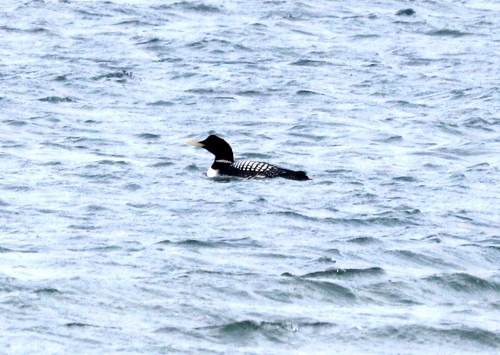
Yellow-billed Loon
76-97 cm (30-38 in) long, 135-152 cm wingspan
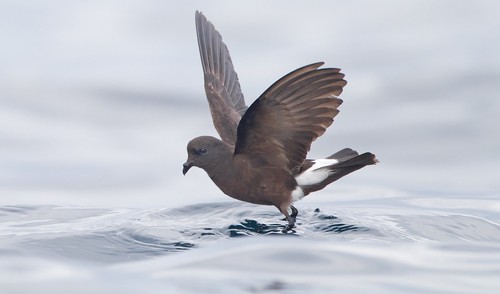
Wilson's Storm-Petrel
15-19 cm (6-7.5 in) long, wingspan 38-42 cm (15-16.5 in)

Yellow-eyed Penguin
62-79 cm (24-31 in) tall, 3-8.5 kg (6.6-18.7 lb)
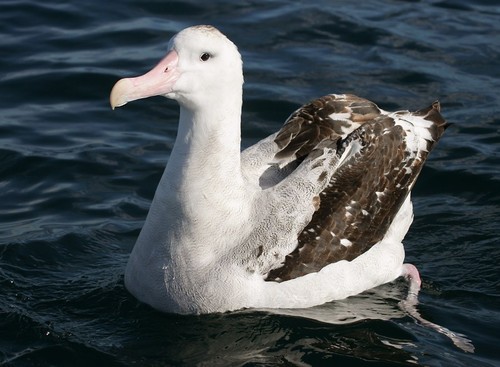
Wandering Albatross
107-135 cm (42-53 in) long, wingspan up to 3.5 m (11.5 ft)

Tufted Puffin
35-41 cm (14-16 in) long, about 63-70 cm wingspan