
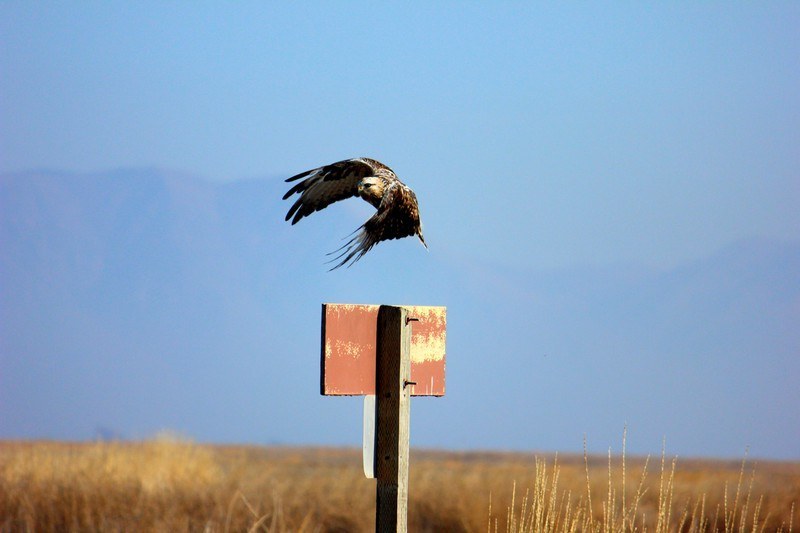
Rough-legged Hawk
Buteo lagopus
A large arctic-breeding hawk with feathered legs, seen across open fields and marshes farther south in winter, known for its habit of hovering while hunting.
- Size
- 46-59 cm (18-23 in) long, 120-153 cm (47-60 in) wingspan
- Habitat
- arctic and subarctic tundra for breeding; open fields and marshes farther south in winter
- Type
- raptor
Spotted a bird like this?
Identify any bird from a photo, free.
Overview
The Rough-legged Hawk is a large buteo of the far north, breeding on arctic and subarctic tundra and moving south to spend winters over open fields, marshes, and prairies across much of North America. Its name refers to its legs, which are feathered all the way down to the toes, an adaptation to the cold climate it breeds in.
Plumage is variable, with light and dark morphs, but most light-morph birds show a dark belly band, dark carpal (wrist) patches on the underwing, and a pale tail with a dark terminal band.
How to identify it
Key field marks
- Feathered legs down to the toes
- Dark belly band contrasting with a paler chest (light morph)
- Dark carpal patches at the wrist, visible from below in flight
- Pale tail base with a dark band near the tip
- Frequently hovers on beating wings while hunting, unusual among large buteos
Similar species
Red-tailed Hawk lacks feathered legs and the strong dark carpal patches, and its adult tail is solid red rather than pale with a dark band. Ferruginous Hawk is paler overall with rusty (not dark) leg feathering and lacks the sharp dark belly band and carpal patches.
Habitat & range
Habitat
Breeds on open arctic and subarctic tundra, nesting on cliff ledges or rocky outcrops. In winter, occupies open lowland habitats farther south: agricultural fields, prairies, and marshes.
Range
A circumpolar species, breeding across the Arctic regions of North America, Europe, and Asia. North American birds winter across the northern and central United States and southern Canada, with numbers varying year to year in response to lemming population cycles on the breeding grounds.
Behavior & voice
Behavior
Unusually among large hawks, Rough-legged Hawk frequently hunts by hovering on rapidly beating wings over open ground before dropping onto prey, in addition to hunting from an exposed perch.
Voice
Gives a loud, descending scream on the breeding grounds, generally silent in winter range.
Feeding and nesting
Diet is dominated by small mammals, especially lemmings and voles, with breeding success closely tied to the boom-and-bust population cycles of these prey species. Nests are built on cliff ledges or rocky outcrops on open tundra, constructed of sticks and lined with grass and moss.
Frequently asked questions
Why is it called the Rough-legged Hawk?
For its legs, which are feathered all the way down to the toes, an adaptation for the cold arctic and subarctic climate where it breeds.
Where can you see a Rough-legged Hawk?
It breeds on arctic tundra and winters over open fields, prairies, and marshes across the northern and central United States and southern Canada.
How does a Rough-legged Hawk hunt?
It often hovers on rapidly beating wings above open ground to spot prey, a technique less common among other large North American buteos, in addition to hunting from a perch.
What does the Rough-legged Hawk eat?
Mostly small mammals, especially lemmings and voles, with breeding success tied to the natural population cycles of these prey animals.
How do you tell a Rough-legged Hawk from a Red-tailed Hawk?
Rough-legged Hawk has feathered legs to the toes, dark carpal patches on the underwing, and a pale tail with a dark terminal band, while Red-tailed Hawk has bare lower legs and a solid red adult tail.
Rough-legged Hawk guides
In-depth guides for identifying, finding, and understanding Rough-legged Hawk.
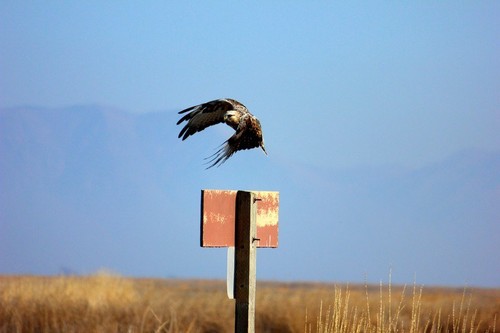
Other birds you may enjoy
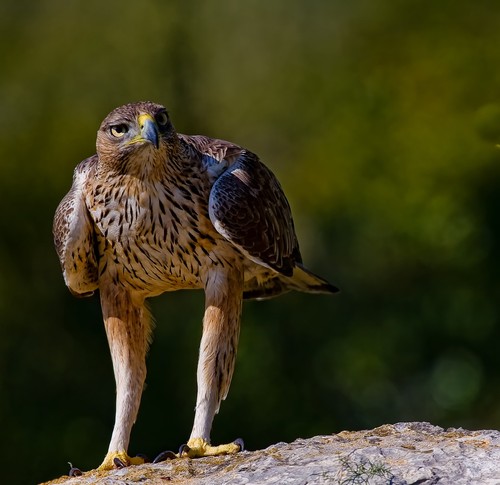
Bonelli's Eagle
Body 65–72 cm (26–28 in); wingspan 150–180 cm (59–71 in)
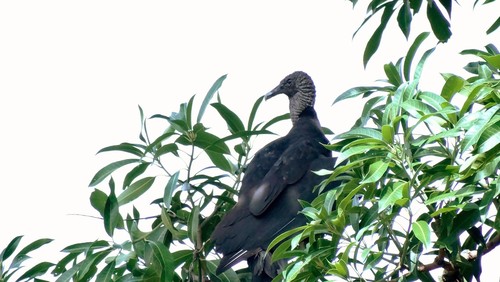
Black Vulture
56-68 cm (22-27 in) long, 137-165 cm wingspan
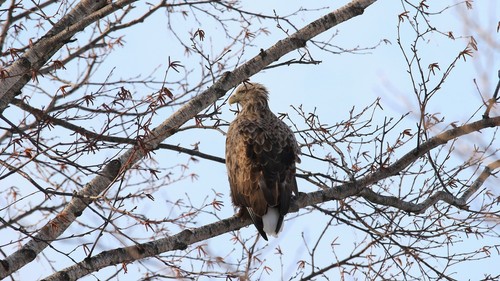
White-tailed Eagle
66-94 cm body length; wingspan 178-245 cm, among the largest eagles in the world
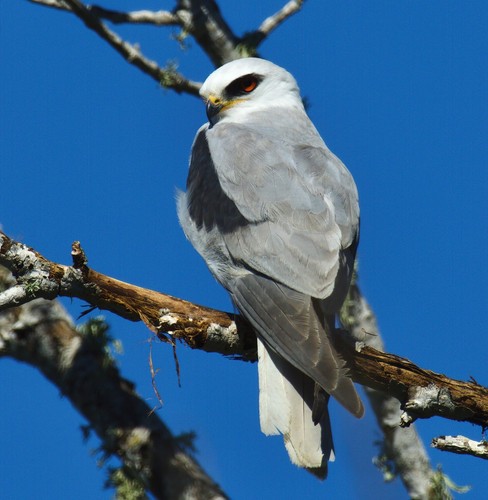
White-tailed Kite
35-43 cm (14-17 in) long, 88-102 cm (35-40 in) wingspan
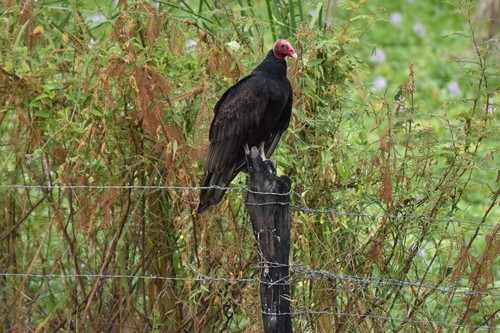
Turkey Vulture
64-81 cm (25-32 in) long, 160-183 cm wingspan
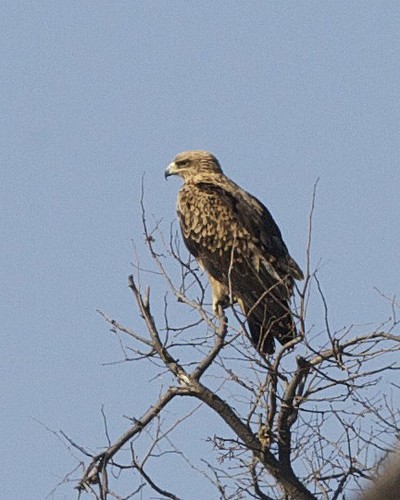
Tawny Eagle
62–75 cm long; wingspan 1.65–2.0 m
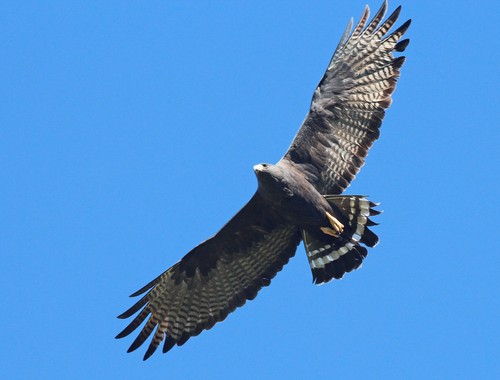
Zone-tailed Hawk
46-56 cm (18-22 in) long, 118-140 cm (46-55 in) wingspan
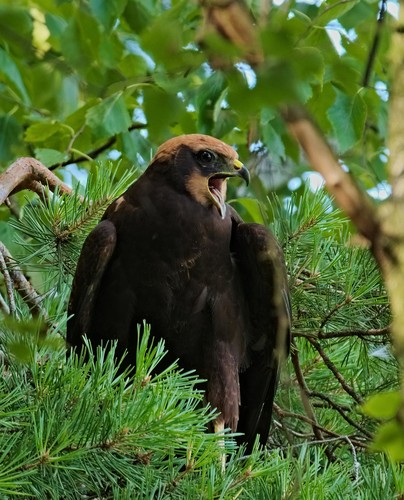
Western Marsh Harrier
Body 43-56 cm; wingspan 115-140 cm
Swallow-tailed Kite
48-68 cm (19-27 in) long including tail streamers, 112-136 cm (44-54 in) wingspan
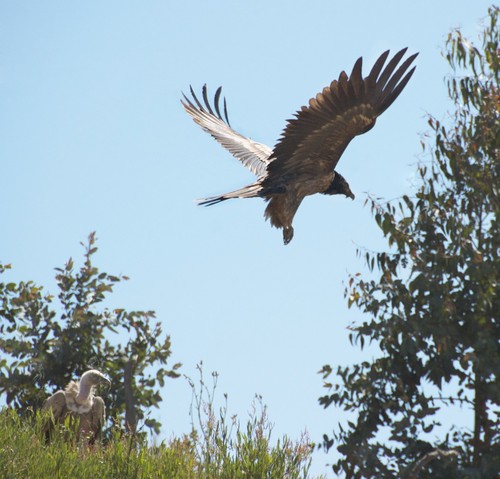
White-backed Vulture
78-98 cm long, wingspan 1.96-2.25 m
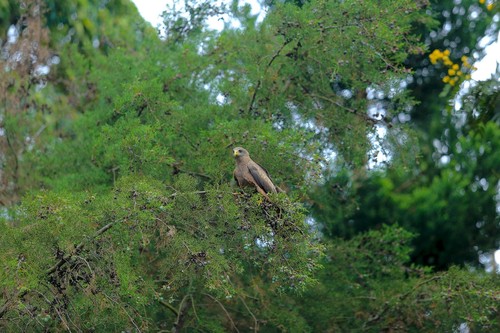
Yellow-billed Kite
55-60 cm long; wingspan 130-155 cm
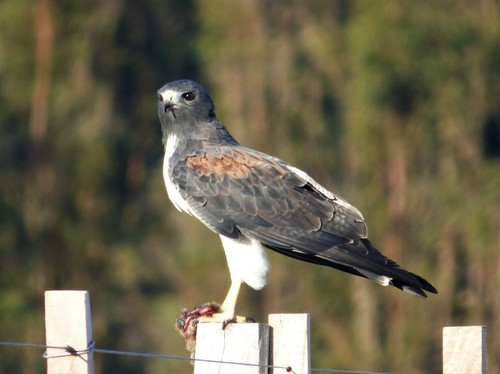
White-tailed Hawk
46-59 cm (18-23 in) long, 122-142 cm (48-56 in) wingspan