
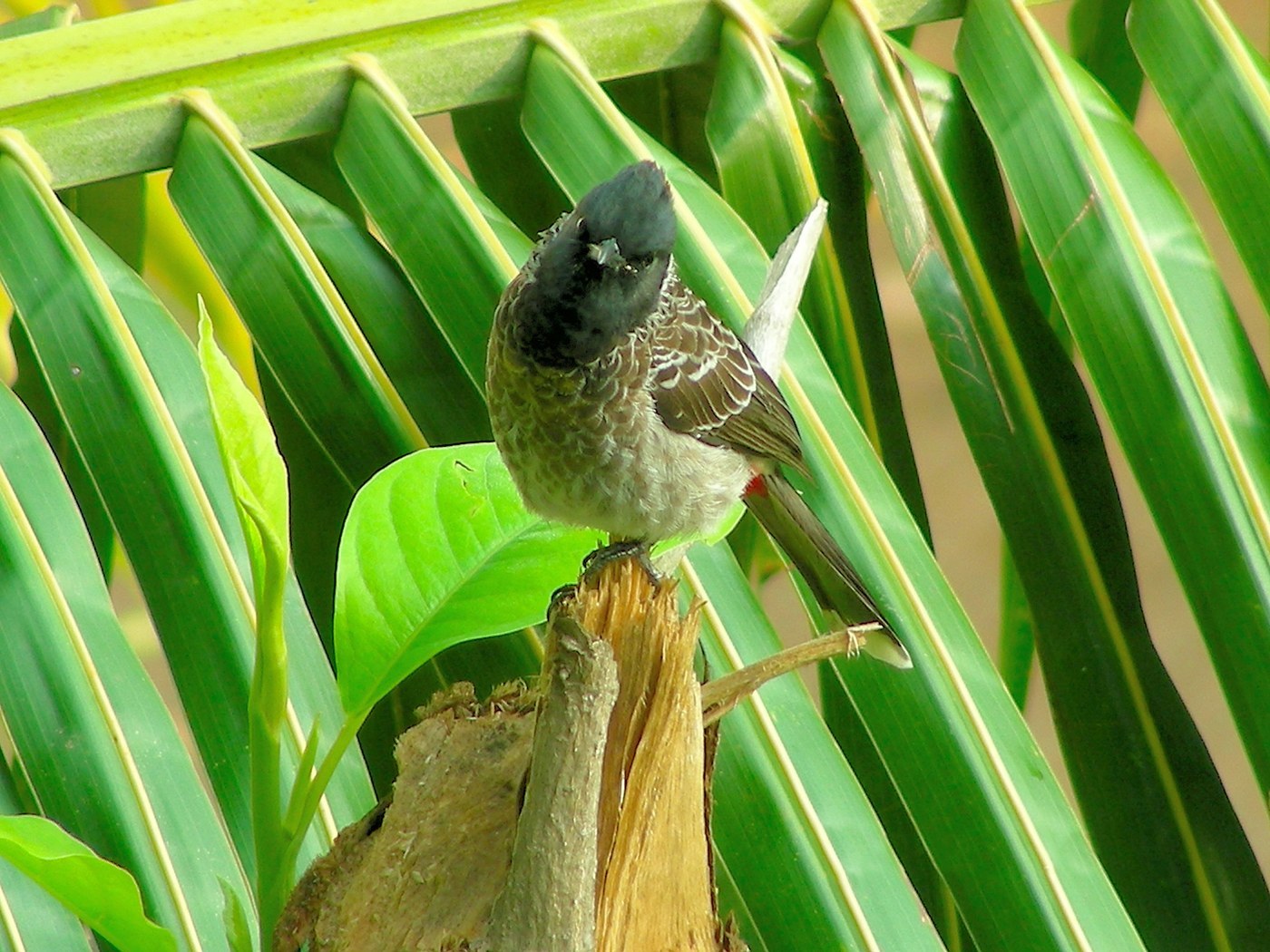
Red-vented Bulbul
Pycnonotus cafer
A dark-hooded, scaly-bodied bulbul with a bright red patch under the tail, a familiar and vocal garden bird across South Asia.
- Size
- 20-24 cm (8-9.5 in) long, 28-32 cm wingspan
- Habitat
- gardens, scrub, forest edges, and urban areas
- Type
- songbird
Spotted a bird like this?
Identify any bird from a photo, free.
Overview
The Red-vented Bulbul is a lively, familiar songbird across much of South Asia, easily recognized by its dark, almost black head with a short crest, and a body finely scaled with pale feather edges giving a scaly appearance. The most diagnostic feature, and the source of its name, is the bright crimson-red patch of feathers beneath the tail (the vent), which contrasts strikingly with the otherwise dark plumage. The rump is white, visible as the bird flies away.
Highly adaptable, it thrives in gardens, parks, scrubland, and cities, often perching prominently and calling loudly, and it has also become established as an invasive species in parts of the Pacific and Middle East.
How to identify it
Key field marks
- Blackish-brown head with a short crest, body finely scaled with pale edges
- Bright red vent (undertail coverts), white rump visible in flight
- Slender build with a moderately long tail tipped white
- Often perches conspicuously and cocks its tail
Similar species
The Red-whiskered Bulbul has a tall pointed crest and a red patch behind the eye (not just under the tail), plus white cheeks. The White-eared Bulbul has a yellow vent and a white ear patch rather than a red vent.
Habitat & range
Range
Widespread across the Indian subcontinent and parts of Southeast Asia; introduced and established in Fiji, parts of the Middle East, and various Pacific islands.
Habitat
Highly adaptable, found in gardens, city parks, scrubland, forest edges, and agricultural land; thrives in close proximity to humans.
Migration
Generally resident, with some local, food-driven movements rather than long-distance migration.
Behavior & voice
Behavior
Bold, active, and often conspicuous, frequently seen perched on wires, bushes, or rooftops, sometimes in small noisy groups.
Voice
A cheerful, bubbly, chattering song and a range of sharp call notes, frequently heard around gardens and towns.
Feeding
Feeds mainly on fruit, berries, and nectar, supplemented with insects, and readily visits gardens with fruiting or flowering shrubs.
Nesting and breeding
Builds a cup nest of twigs and grass in a bush or low tree. Lays 2-3 eggs, with both parents helping to feed the chicks.
Frequently asked questions
How do you identify a Red-vented Bulbul?
Look for a dark, scaly-scaled body, a short crest, a white rump, and a bright red patch of feathers under the tail.
Is the Red-vented Bulbul an invasive species anywhere?
Yes, it has become established outside its native range in places such as Fiji and parts of the Middle East, where it can impact local ecosystems.
What does the Red-vented Bulbul eat?
Primarily fruit, berries, and nectar, supplemented with insects.
How does the Red-vented Bulbul differ from the Red-whiskered Bulbul?
The Red-vented Bulbul lacks the tall pointed crest and red eye-patch of the Red-whiskered Bulbul, instead showing only a short crest and a red patch under the tail.
Red-vented Bulbul guides
In-depth guides for identifying, finding, and understanding Red-vented Bulbul.
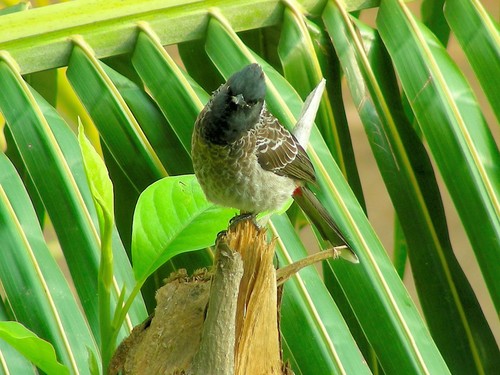
Red-vented Bulbul identified by the community
Real birds identified with Bird Identifier.

Other birds you may enjoy
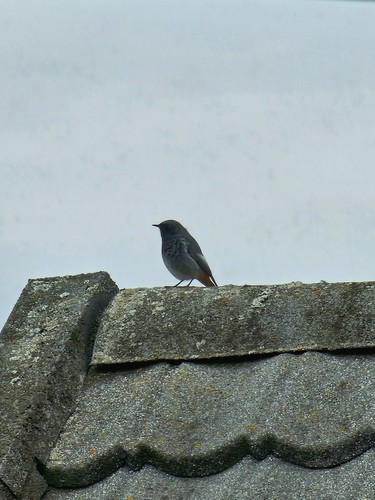
Black Redstart
13-14.5 cm (5.1-5.7 in) long, 23-26 cm wingspan
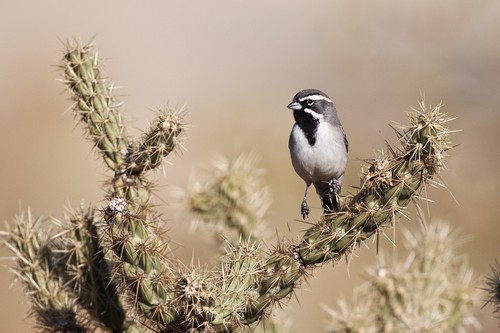
Black-throated Sparrow
12-14 cm (4.7-5.5 in) long, about 19-20 cm (7.5-8 in) wingspan
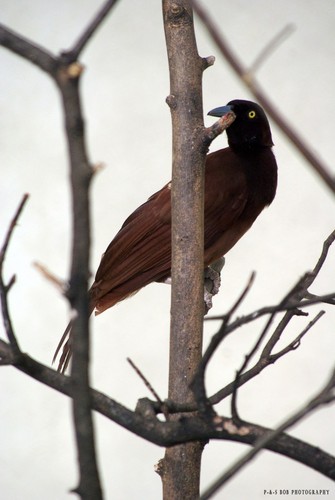
Greater Bird-of-paradise
Body about 43 cm; males with additional flank plumes up to 50 cm and long tail wires
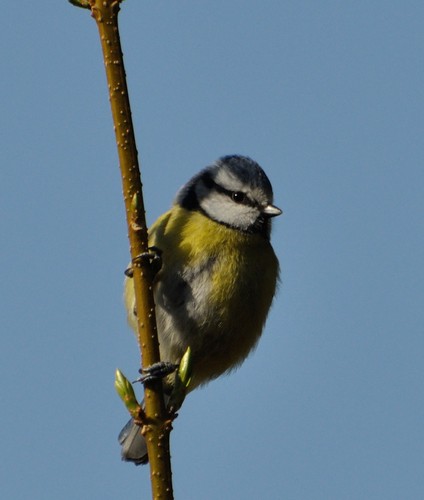
Blue Tit
11-12 cm (4.3-4.7 in) long, 17-20 cm wingspan
Red-billed Quelea
11.5–13 cm long, wingspan about 20–22 cm
White-plumed Antbird
13-14 cm (5-5.5 in) long
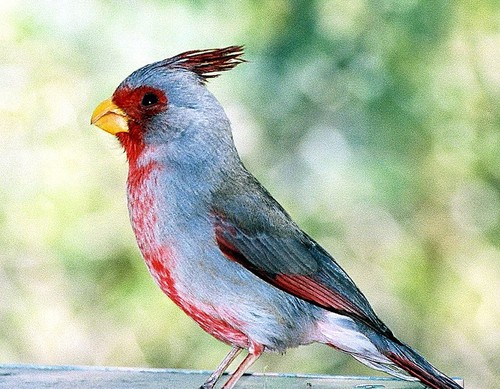
Pyrrhuloxia
19-22 cm (7.5-8.7 in) long, 30 cm wingspan
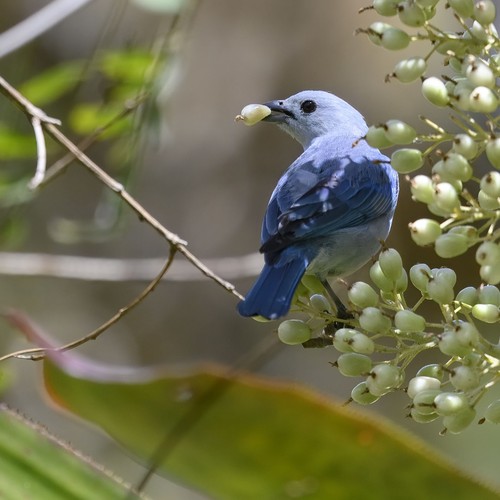
Blue-gray Tanager
16-18 cm (6-7 in) long
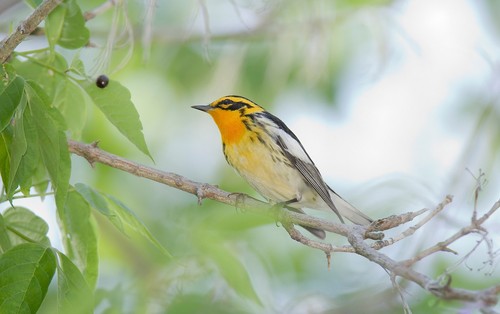
Blackburnian Warbler
11-13 cm (4.3-5.1 in) long, 20-22 cm wingspan
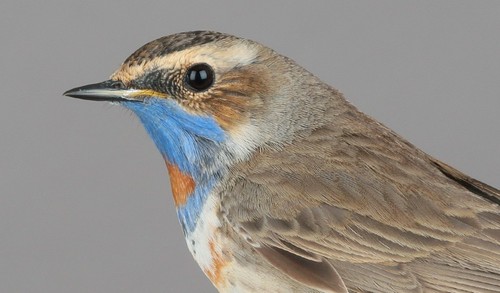
Bluethroat
13-14 cm (5.1-5.5 in) long, 20-22 cm wingspan
Eurasian Nuthatch
12-14.5 cm (4.7-5.7 in) long, 22.5-27 cm wingspan
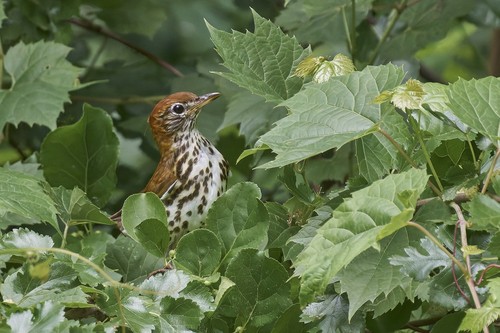
Wood Thrush
19-21 cm (7.5-8.3 in) long, about 33 cm (13 in) wingspan