
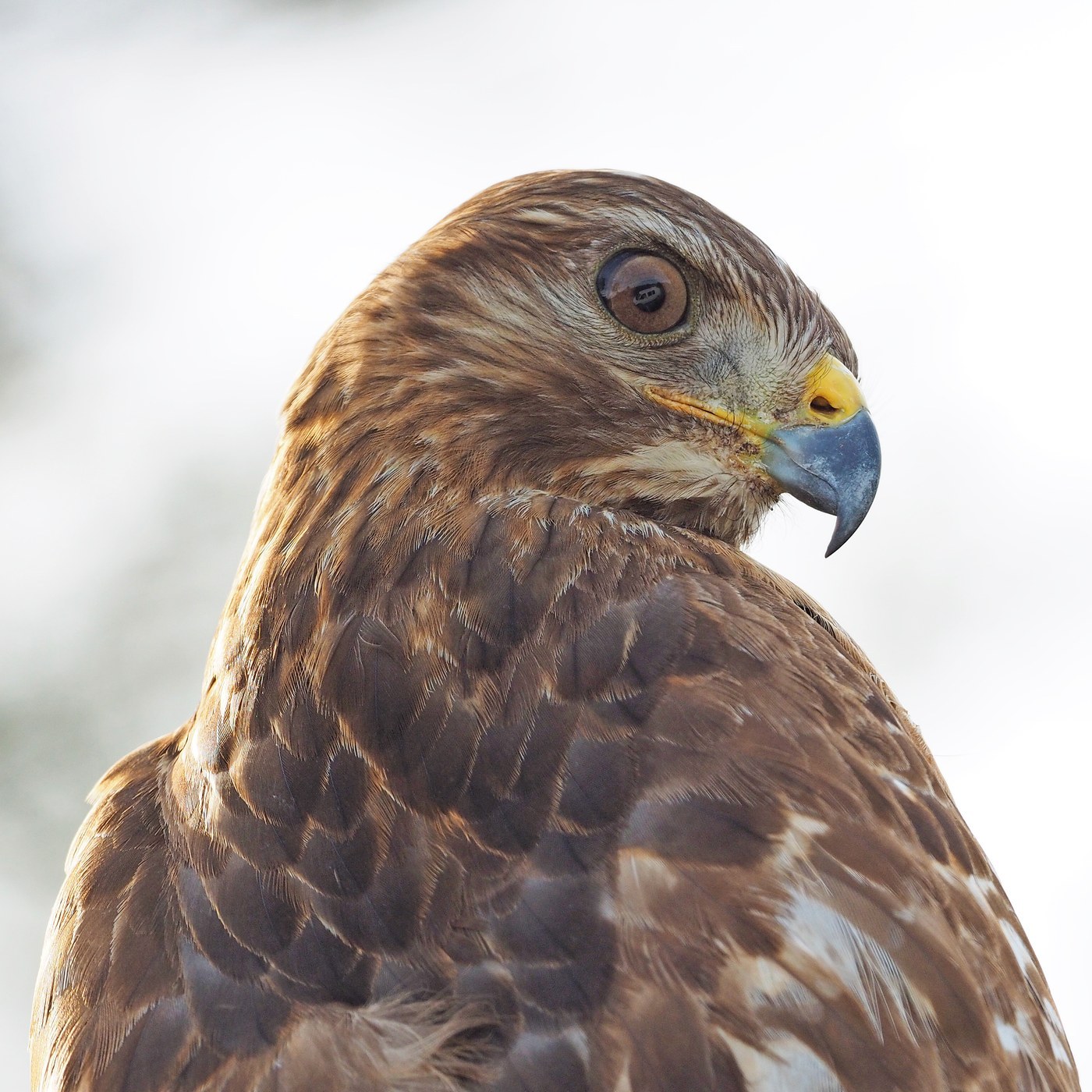
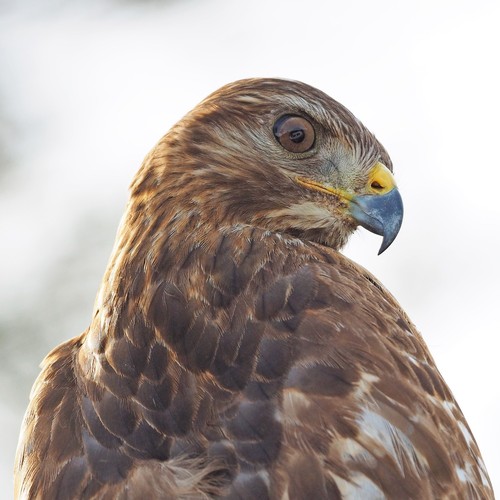
Red-shouldered Hawk
Buteo lineatus
A colorful woodland buteo with rich rufous shoulders and underparts, closely tied to river bottoms and swampy forest.
- Size
- 43-61 cm (17-24 in) long, 94-102 cm (37-40 in) wingspan
- Habitat
- moist deciduous and mixed forests, often near rivers, swamps, or wetlands
- Type
- raptor
Spotted a bird like this?
Identify any bird from a photo, free.
Overview
The Red-shouldered Hawk is a strikingly patterned, medium-sized buteo of moist woodlands, especially river bottoms and swamp forest in the eastern United States, with a distinct population along the California coast. Adults show warm reddish shoulder patches (the source of the name), barred rufous underparts, and a boldly black-and-white banded tail.
In flight, a pale, translucent crescent near the tip of each wing (the "wing window") is a particularly useful and distinctive field mark, glowing when backlit.
How to identify it
Key field marks
- Reddish shoulder patches visible at rest
- Rich rufous barring across the breast and belly
- Black tail with several narrow white bands
- Pale, translucent crescent near the wingtips in flight (the wing window)
Similar species
Red-tailed Hawk lacks the banded tail (adults have a solid red tail) and the pale wing crescent, and shows a streaked belly band rather than fully barred underparts. Broad-winged Hawk is smaller and stockier with fewer, broader white tail bands and lacks the rufous shoulders.
Habitat & range
Habitat
Strongly associated with moist, mature deciduous and mixed forest, especially bottomland hardwoods, river corridors, and swamps, though it also occurs in wooded suburbs within its range.
Range
Found across the eastern United States, from the Great Lakes and New England south to Florida and Texas, plus a distinct, non-migratory population along the coast of California. Eastern populations are partially migratory, with northern breeders moving south in winter, while southern and California birds are largely year-round residents.
Behavior & voice
Behavior
Red-shouldered Hawks typically hunt from a perch within or at the edge of forest, watching quietly for prey below before dropping down to seize it; they are highly vocal and territorial, especially in spring.
Voice
Gives a loud, distinctive, repeated "kee-yah, kee-yah, kee-yah" call, frequently heard year-round and often imitated (and sometimes mimicked) by Blue Jays.
Feeding and nesting
Diet includes small mammals, amphibians, reptiles (including snakes), and crayfish, reflecting its affinity for wet, wooded habitats. Builds a bulky stick nest high in a tree, typically in a fork close to water, reused and refurbished by the same pair across years.
Frequently asked questions
How do you identify a Red-shouldered Hawk?
Look for reddish shoulder patches, rufous barring across the breast, a black tail with narrow white bands, and a pale translucent crescent near the wingtips in flight.
Why do Blue Jays imitate Red-shouldered Hawks?
Blue Jays frequently mimic the Red-shouldered Hawk's loud "kee-yah" call, possibly to clear feeders of competitors or warn of a nearby hawk, making call identification sometimes tricky.
What habitat do Red-shouldered Hawks prefer?
Moist, mature forest, especially river bottoms, swamps, and other wetland-associated woodlands.
What do Red-shouldered Hawks eat?
Small mammals, amphibians, reptiles such as snakes, and crayfish, reflecting their preference for wet woodland habitats.
Do Red-shouldered Hawks migrate?
Northern populations migrate south for winter, but birds in the southeastern U.S. and the separate California population are largely non-migratory.
Red-shouldered Hawk guides
In-depth guides for identifying, finding, and understanding Red-shouldered Hawk.
Other birds you may enjoy
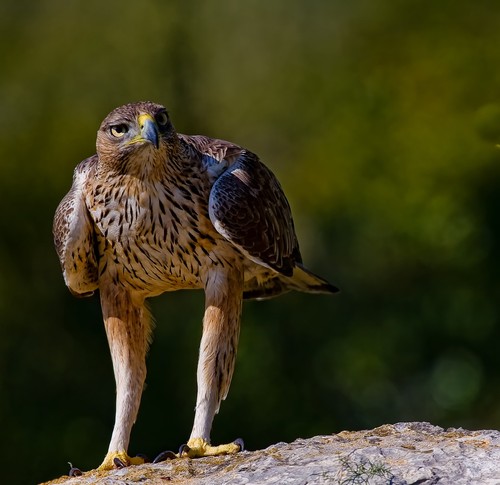
Bonelli's Eagle
Body 65–72 cm (26–28 in); wingspan 150–180 cm (59–71 in)
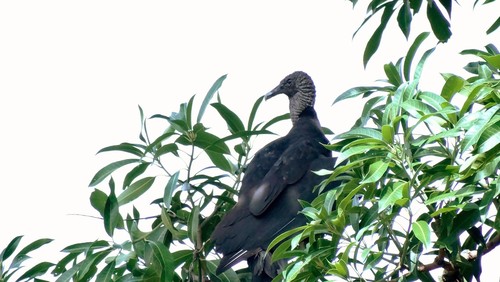
Black Vulture
56-68 cm (22-27 in) long, 137-165 cm wingspan
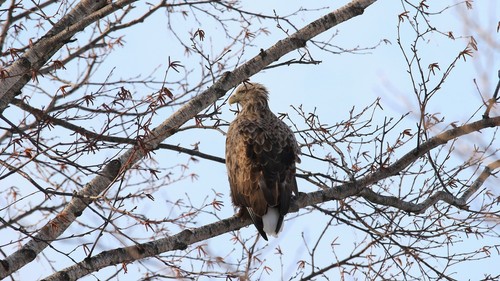
White-tailed Eagle
66-94 cm body length; wingspan 178-245 cm, among the largest eagles in the world
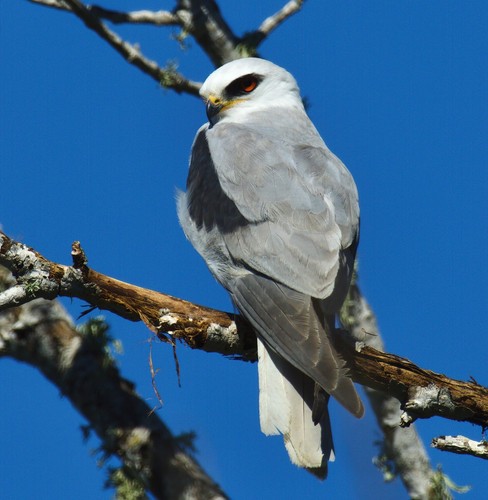
White-tailed Kite
35-43 cm (14-17 in) long, 88-102 cm (35-40 in) wingspan
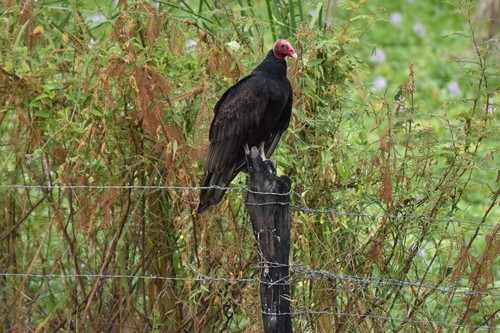
Turkey Vulture
64-81 cm (25-32 in) long, 160-183 cm wingspan
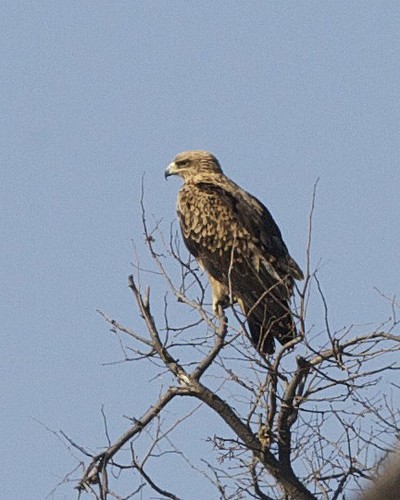
Tawny Eagle
62–75 cm long; wingspan 1.65–2.0 m
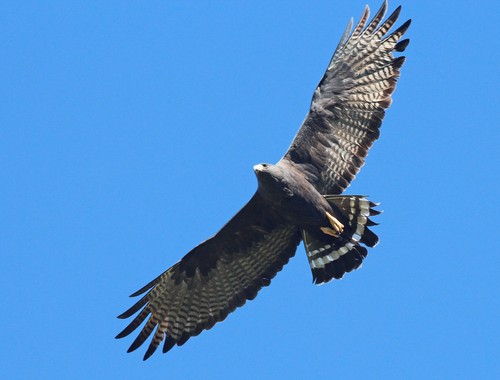
Zone-tailed Hawk
46-56 cm (18-22 in) long, 118-140 cm (46-55 in) wingspan
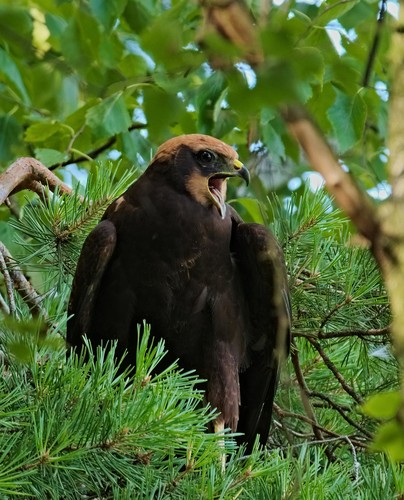
Western Marsh Harrier
Body 43-56 cm; wingspan 115-140 cm
Swallow-tailed Kite
48-68 cm (19-27 in) long including tail streamers, 112-136 cm (44-54 in) wingspan
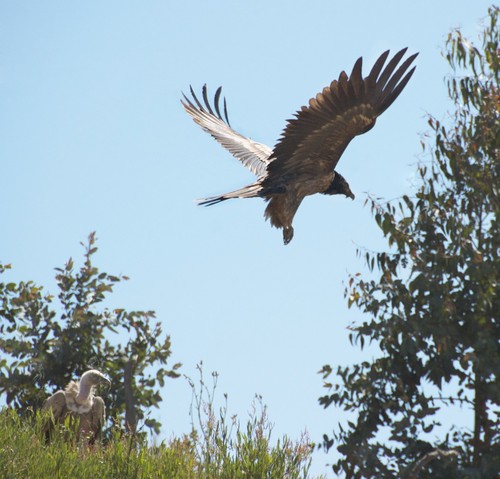
White-backed Vulture
78-98 cm long, wingspan 1.96-2.25 m
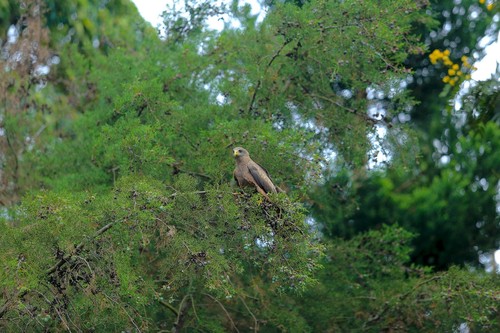
Yellow-billed Kite
55-60 cm long; wingspan 130-155 cm
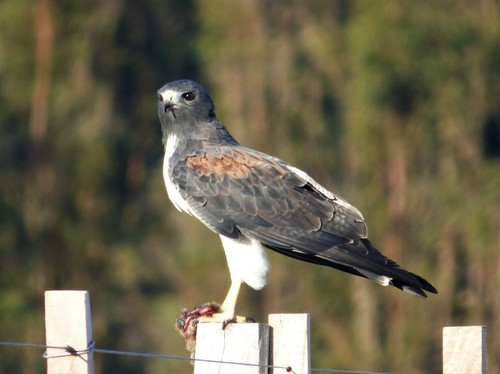
White-tailed Hawk
46-59 cm (18-23 in) long, 122-142 cm (48-56 in) wingspan