
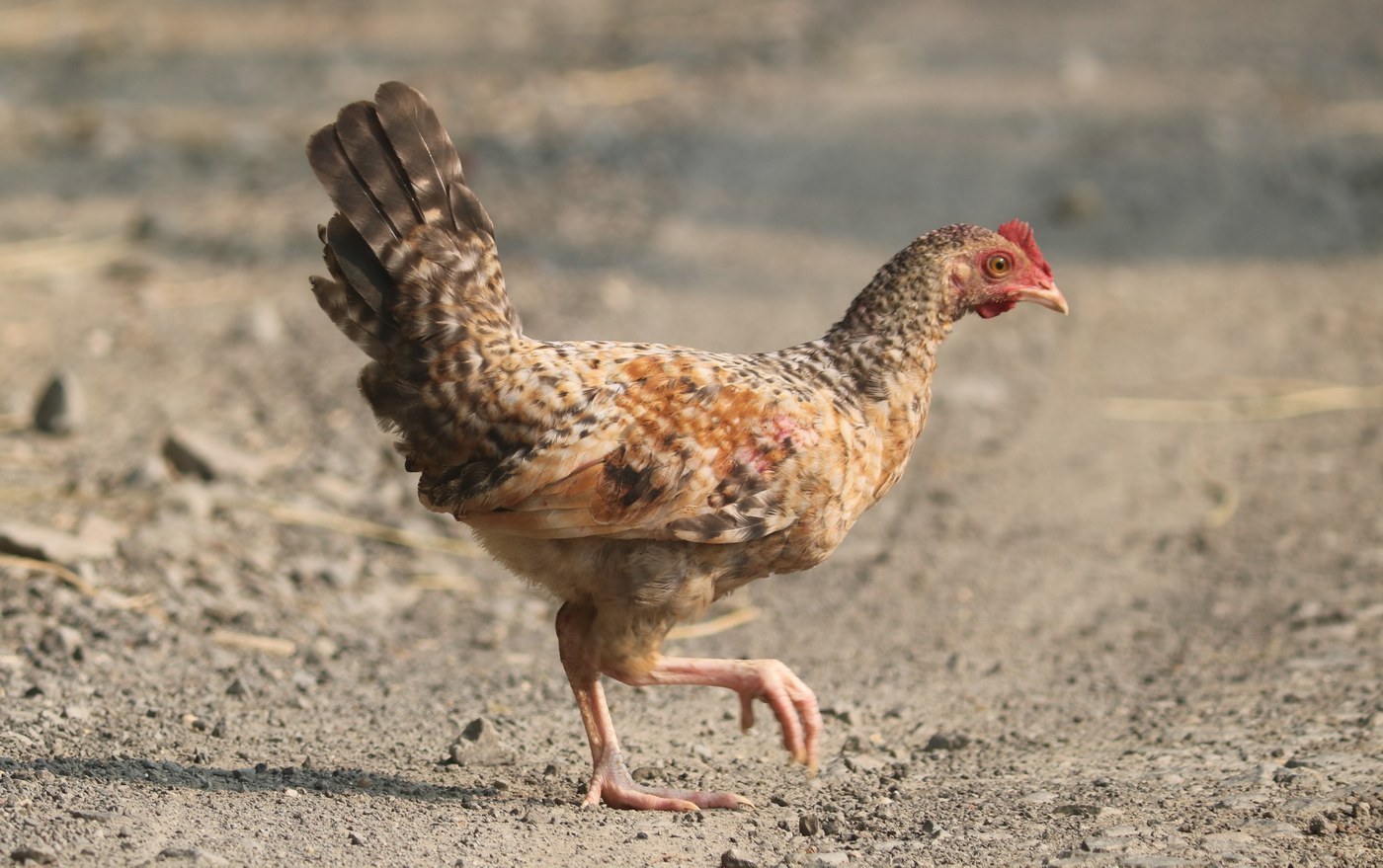
Red Junglefowl
Gallus gallus
The wild ancestor of the domestic chicken, sporting a fiery orange-red neck, glossy dark tail, and bold red comb.
- Size
- 42-73 cm (17-29 in) long depending on sex and subspecies
- Habitat
- tropical and subtropical forest, forest edge, and scrub across South and Southeast Asia
- Type
- gamebird
Spotted a bird like this?
Identify any bird from a photo, free.
Overview
The Red Junglefowl is a wild pheasant-family bird best known as the primary wild ancestor of the domestic chicken. The male is strikingly colorful, with golden-orange and red hackle feathers cascading over the neck and back, a bright red fleshy comb and wattles, glossy greenish-black tail feathers that arch elegantly, and a mix of dark green, maroon, and orange body plumage.
The female is far more subdued, with mottled brown and buff plumage providing camouflage for incubating eggs on the forest floor, and only a small comb. Though clearly resembling farmyard chickens, wild Red Junglefowl are typically slimmer, more wary, and better fliers than their domestic descendants.
How to identify it
Key field marks
- Male: golden-orange neck hackles, red comb and wattles, glossy dark green-black arching tail, red-orange saddle feathers
- Female: mottled brown, buff, and black plumage, smaller comb, no ornamental tail
- Overall chicken-like shape and gait, but slimmer and more upright than domestic breeds
- Often flushes explosively from cover when disturbed
Similar species
Feral or free-ranging domestic chickens, which descend largely from this species, can look extremely similar and often hybridize with wild birds where ranges overlap, making pure wild populations difficult to distinguish in some areas without close observation of build and behavior.
Habitat & range
Red Junglefowl range across South and Southeast Asia, from northern India, Nepal, and Bangladesh through Myanmar, Indochina, southern China, and the Malay Peninsula to Sumatra, Java, and other Indonesian islands. They inhabit tropical and subtropical forest, bamboo thickets, forest edges, and scrub, often near clearings, cultivation, or water, generally avoiding deep unbroken canopy.
The species is non-migratory and tends to stay within a fairly limited home range, using dense cover for roosting and escape.
Behavior & voice
Voice
The male's crow is a familiar "cock-a-doodle-doo"-like call, shorter and more abrupt than a domestic rooster's, used to declare territory; both sexes give various clucks and alarm calls.
Feeding
Red Junglefowl forage on the ground by scratching through leaf litter for seeds, grain, fallen fruit, and invertebrates, moving in small family groups led by a dominant male.
Nesting and breeding
The female builds a simple scrape nest concealed in dense undergrowth and incubates the eggs alone. Males are polygynous, mating with multiple females within a loose social group, and chicks are precocial, following the hen and feeding themselves soon after hatching.
Frequently asked questions
Is the Red Junglefowl the ancestor of the chicken?
Yes, genetic and historical evidence shows it is the primary wild ancestor of the domestic chicken, though some interbreeding with other junglefowl species also occurred.
How can you tell a wild Red Junglefowl from a feral chicken?
Wild birds tend to be slimmer, more wary, and better fliers, but extensive interbreeding in many areas makes pure wild populations hard to distinguish visually.
Where do Red Junglefowl live?
They range through forests and forest edges of South and Southeast Asia, from India and Nepal to Indonesia.
What sound does a Red Junglefowl make?
The male gives a crow similar to but shorter and more abrupt than a domestic rooster's call.
Red Junglefowl guides
In-depth guides for identifying, finding, and understanding Red Junglefowl.
Other birds you may enjoy
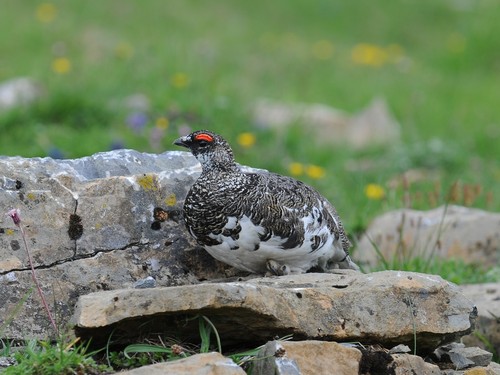
Rock Ptarmigan
34-36 cm (13-14 in) long
Congo Peafowl
Males about 64-70 cm long; females slightly smaller; no elaborate train
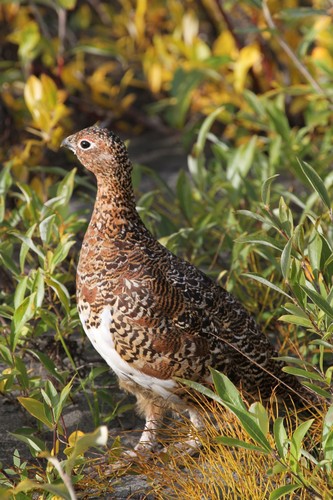
Willow Ptarmigan
37-42 cm (15-16.5 in) long
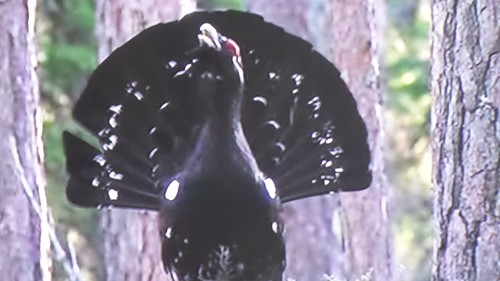
Western Capercaillie
male 74-90 cm (29-35 in), female 54-64 cm; male wingspan up to 125-130 cm
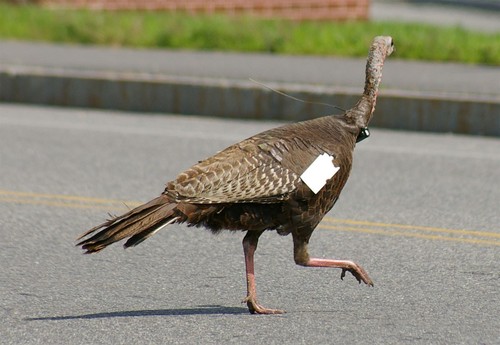
Wild Turkey
males 100-125 cm (39-49 in) long; females smaller, around 76-95 cm (30-37 in)
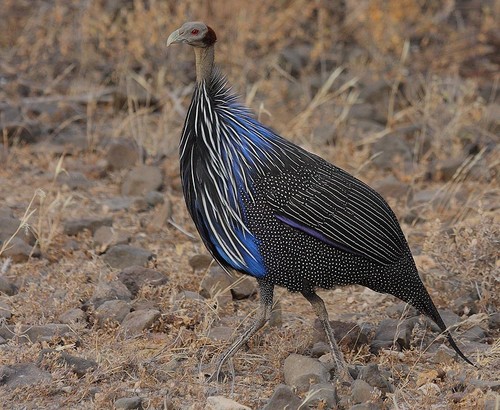
Vulturine Guineafowl
Length 61-71 cm, the largest guineafowl species, with a notably long neck and tail
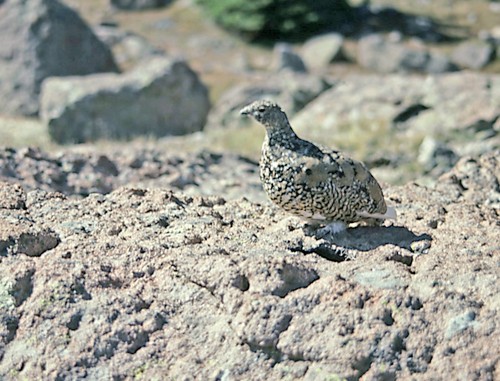
White-tailed Ptarmigan
30-33 cm (12-13 in) long; the smallest ptarmigan species
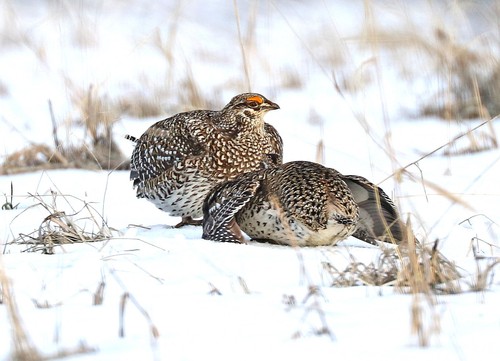
Sharp-tailed Grouse
38-48 cm (15-19 in) long
Ring-necked Pheasant
males 76-90 cm (30-35 in) long including a long tail; females smaller, 55-65 cm (22-26 in)
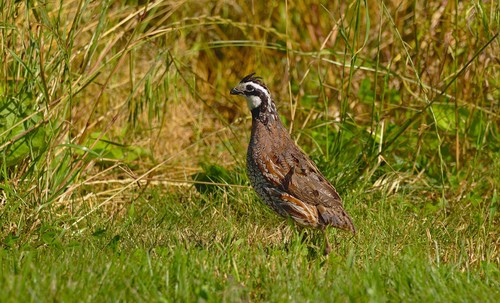
Northern Bobwhite
24-28 cm (9.5-11 in) long, 33-38 cm wingspan
Red-legged Partridge
32-34 cm (13 in) long, 47-50 cm wingspan
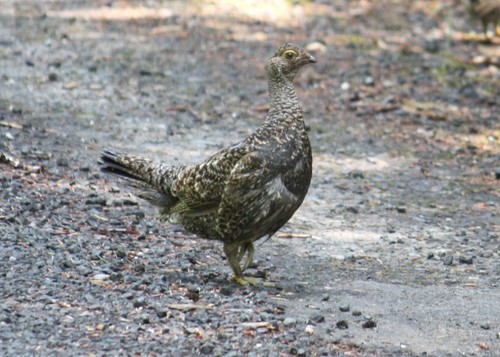
Sooty Grouse
43-48 cm (17-19 in) long; males larger than females