
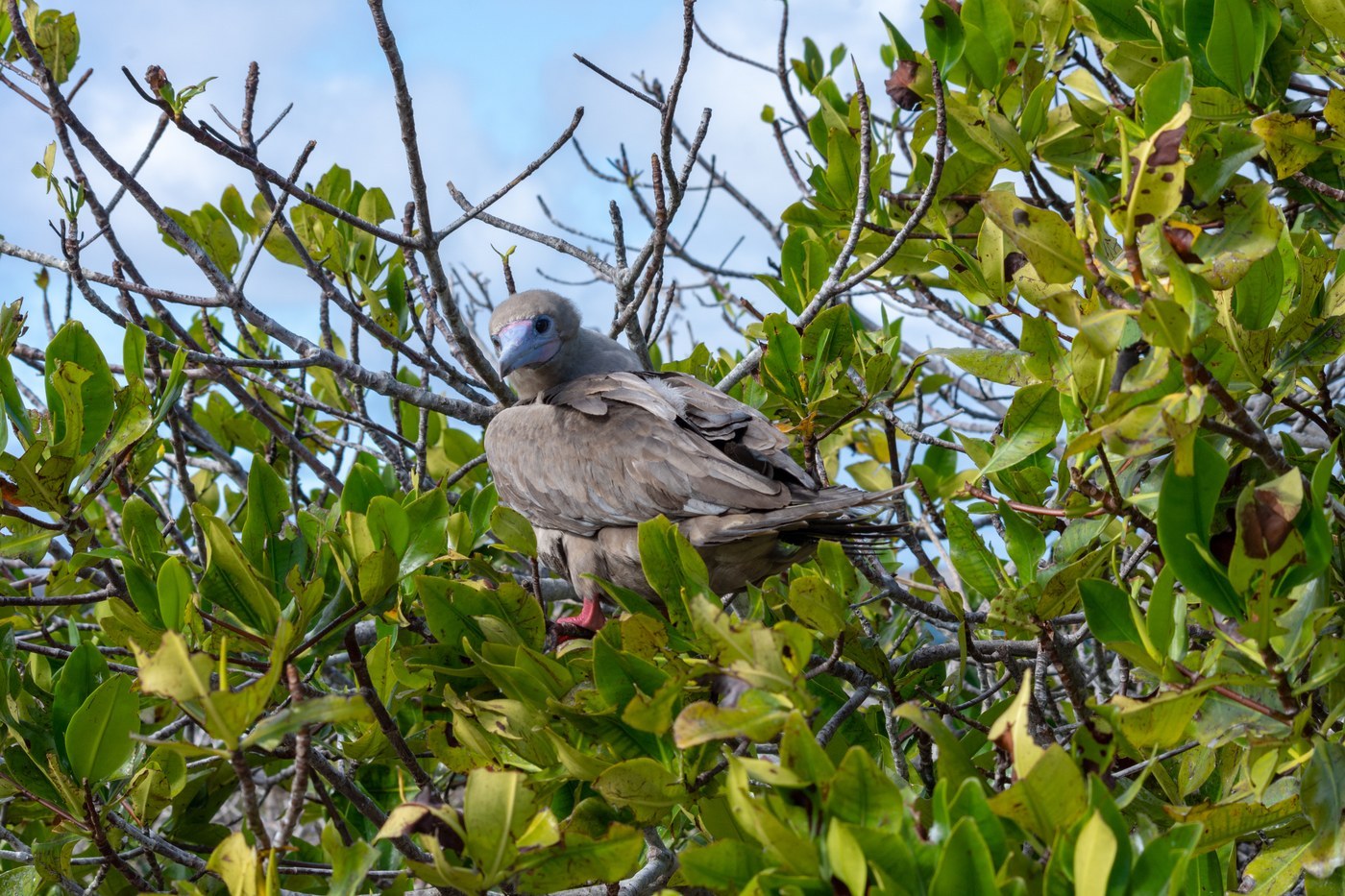
Red-footed Booby
Sula sula
The smallest and most variably plumaged booby, easily told by its bright red feet and habit of nesting in trees on remote tropical islands.
- Size
- 66-77 cm (26-30 in) long, about 91-101 cm wingspan
- Habitat
- remote tropical oceanic islands, nesting in trees and shrubs, foraging over open ocean
- Type
- seabird
Spotted a bird like this?
Identify any bird from a photo, free.
Overview
The Red-footed Booby is the smallest member of the booby family and the most variable in plumage, occurring in several distinct color morphs ranging from all-white to brown and everything in between, though all forms share the diagnostic bright red feet and a pale blue-and-pink bill base. This variability can make identification tricky, but the small size, red feet, and typically pale bill tip help confirm the species.
Unlike other boobies, which nest on open ground, Red-footed Boobies are unusual in nesting in trees or shrubs, sometimes forming large mixed colonies with frigatebirds on remote tropical islands far from continental coasts.
How to identify it
Key field marks
- Bright red or coral-pink legs and feet, all morphs
- Small size relative to other boobies
- Variable plumage: white morph, brown morph, and intermediate forms
- Pale, bicolored bill with a blue-grey base and pink tip
Similar species
- Brown Booby is larger, with dark brown upperparts sharply cut off from white underparts, and has yellow-green (not red) feet.
- White-morph birds can suggest Masked Booby or Nazca Booby, but those species are larger, have black flight feathers extending further, and lack red feet.
- Juveniles are uniformly brownish with dark or dull pink feet, gaining red coloration with maturity.
Habitat & range
Red-footed Boobies breed on remote, often predator-free tropical and subtropical islands across the Pacific, Indian, Atlantic, and Caribbean, favoring islands with trees or shrubs for nesting. Outside the breeding season, they are highly pelagic, ranging widely over open tropical and subtropical seas far from land.
Because suitable nesting habitat is limited to isolated islands, colonies can be extremely dense, and the species is largely absent from continental coastlines, distinguishing it ecologically from the more coastal Brown and Blue-footed Boobies.
Behavior & voice
Behavior
Agile fliers, Red-footed Boobies often forage far from the colony, sometimes at night, and are capable of both plunge-diving and aerial pursuit of flying fish that leap from the water.
Voice
Generally quiet at sea, they give harsh grunting and quacking calls at breeding colonies during greeting and courtship interactions.
Feeding
Flying fish and squid are important prey, often captured on the wing as they break the surface, in addition to fish taken by shallow plunge-dives.
Nesting and breeding
Pairs build stick nests in trees or dense shrubs, unusual among boobies, and typically raise a single chick per attempt, with both parents sharing incubation and feeding duties over an extended nesting period.
Frequently asked questions
Why does the Red-footed Booby nest in trees?
Unlike other boobies that nest on open ground, Red-footed Boobies build stick nests in trees and shrubs, likely reducing predation and overheating risk on their island colonies.
What color are Red-footed Boobies?
They occur in several color morphs, from all-white to brown, but all share bright red feet and a pale blue-and-pink bill.
How is a Red-footed Booby different from a Brown Booby?
Red-footed Boobies are smaller, have red (not yellow-green) feet, and show more variable plumage than the uniformly dark-backed Brown Booby.
Where do Red-footed Boobies live?
They breed on remote tropical islands across the Pacific, Indian, Atlantic, and Caribbean, and spend much of their time far out at sea.
What do Red-footed Boobies eat?
Mainly flying fish and squid, caught either by plunge-diving or by snatching prey as it leaps from the water.
Red-footed Booby guides
In-depth guides for identifying, finding, and understanding Red-footed Booby.
Other birds you may enjoy
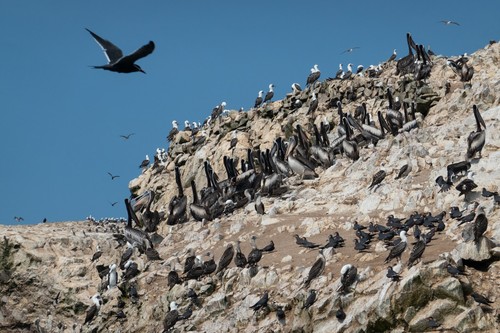
Peruvian Pelican
137-152 cm (54-60 in) long, up to 228 cm wingspan
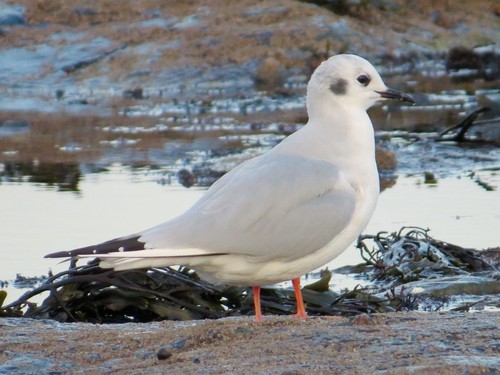
Bonaparte's Gull
28-33 cm (11-13 in) long, 76-84 cm wingspan
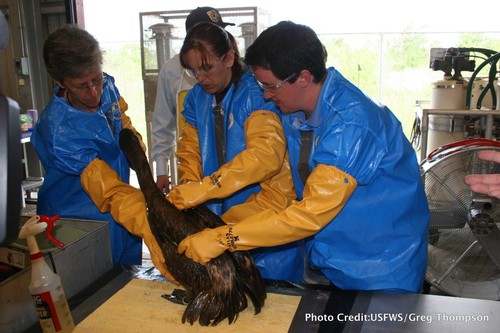
Brown Pelican
106-137 cm (42-54 in) long, 200-230 cm wingspan
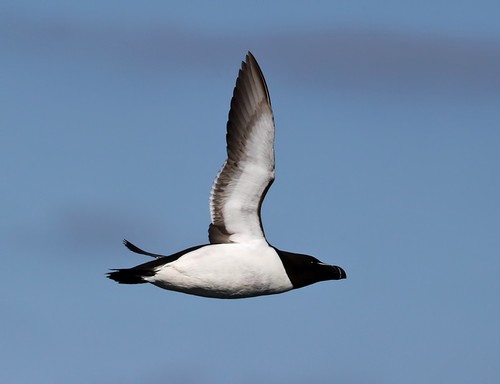
Razorbill
37-39 cm (15-15.5 in) long, 63-68 cm wingspan
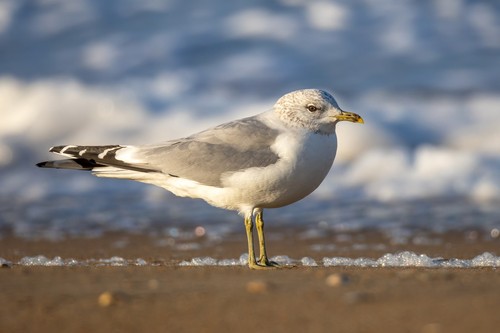
Common Gull
40-46 cm (16-18 in) long, 110-130 cm wingspan
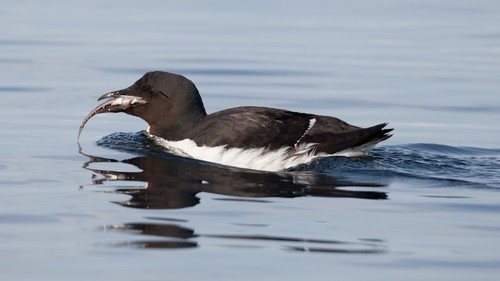
Thick-billed Murre
40-48 cm (16-19 in) long, 65-75 cm wingspan
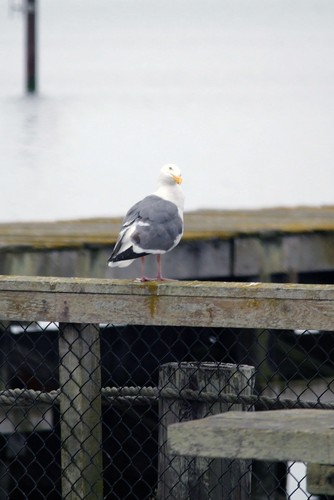
Western Gull
55-68 cm (22-27 in) long, 130-144 cm wingspan
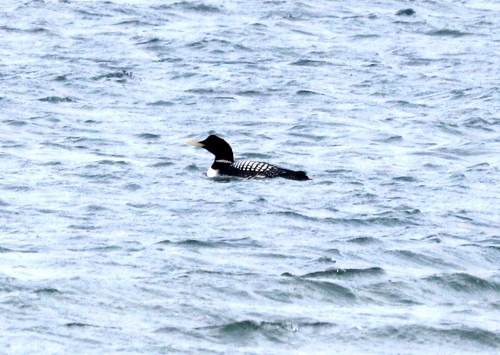
Yellow-billed Loon
76-97 cm (30-38 in) long, 135-152 cm wingspan
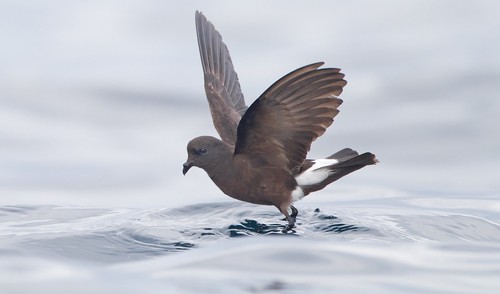
Wilson's Storm-Petrel
15-19 cm (6-7.5 in) long, wingspan 38-42 cm (15-16.5 in)
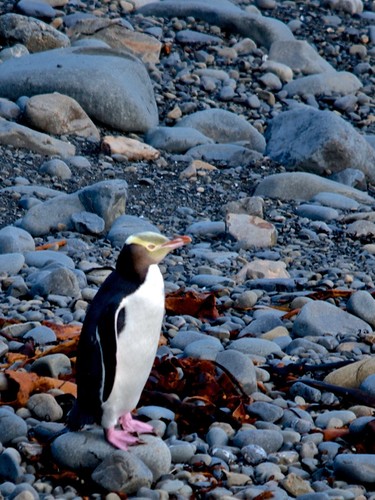
Yellow-eyed Penguin
62-79 cm (24-31 in) tall, 3-8.5 kg (6.6-18.7 lb)
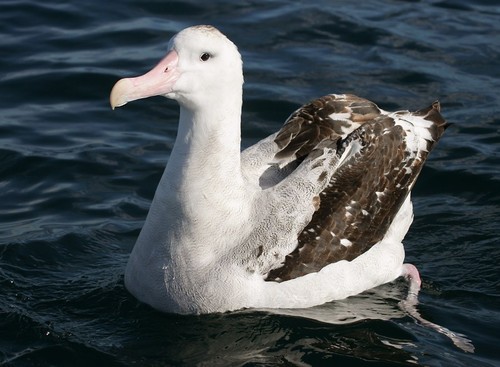
Wandering Albatross
107-135 cm (42-53 in) long, wingspan up to 3.5 m (11.5 ft)
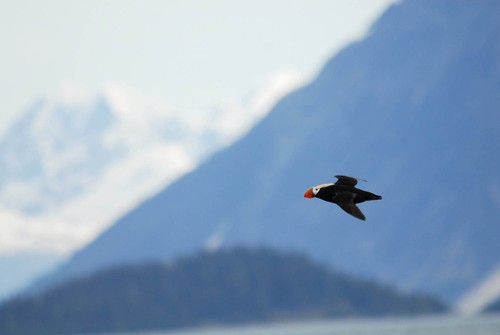
Tufted Puffin
35-41 cm (14-16 in) long, about 63-70 cm wingspan