
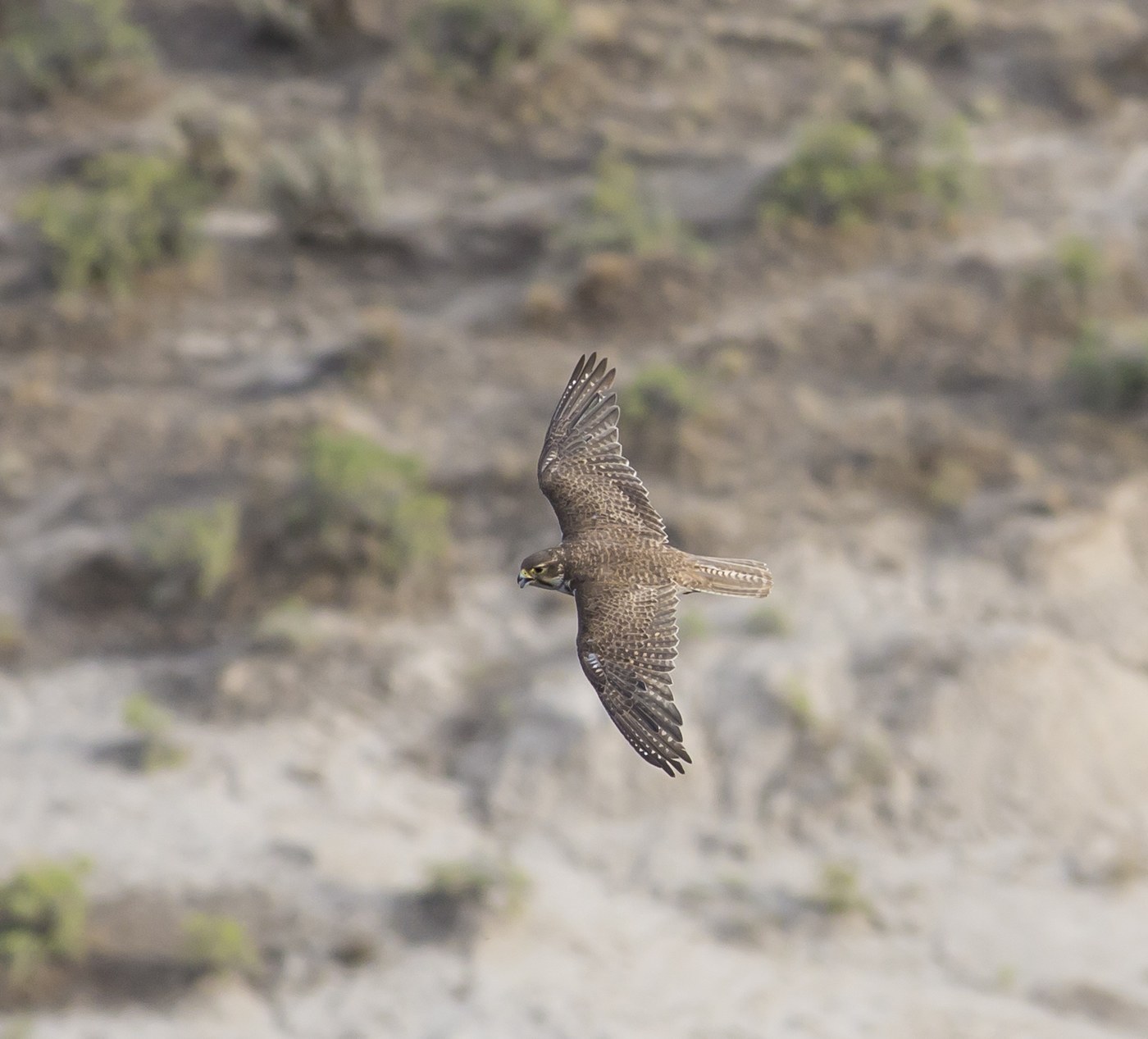
Prairie Falcon
Falco mexicanus
A pale, sandy-brown falcon of the arid West, identified in flight by dark patches under the wings near the body.
- Size
- 37-47 cm (15-18.5 in) long, 90-113 cm (35-44 in) wingspan
- Habitat
- arid grasslands, prairies, and canyon country
- Type
- raptor
Spotted a bird like this?
Identify any bird from a photo, free.
Overview
The Prairie Falcon is a medium-large falcon adapted to the arid grasslands and canyon country of the western United States. It is sandy brown above and pale, lightly marked below, giving it a washed-out appearance compared to the darker, more boldly marked Peregrine Falcon. Its facial moustache mark is present but narrower and less bold than the Peregrine's.
The most reliable field mark is visible in flight: dark blackish patches in the "wingpits" (axillaries and underwing coverts) that contrast against otherwise pale underwings, a pattern unique among North American falcons.
How to identify it
Key Field Marks
- Sandy brown upperparts and pale, lightly spotted underparts
- Dark blackish patches at the base of the underwing (axillaries), visible in flight
- Narrower, less bold facial moustache mark than a Peregrine Falcon
- Fast, powerful flight over open, arid terrain
Similar Species
- Peregrine Falcon: darker slate-gray above with a bolder black moustache and finely barred underparts, lacking the dark wingpit patches.
- Gyrfalcon: larger and bulkier, typically found in far northern regions rather than arid western grasslands.
Habitat & range
Range
Prairie Falcons are found throughout the arid interior of western North America, from southern Canada through the western United States into northern Mexico.
Habitat
They favor open grasslands, sagebrush steppe, desert, and canyon country with cliffs for nesting, often near colonies of ground squirrels or other burrowing rodents that make up a large part of their diet.
Behavior & voice
Hunting
Prairie Falcons hunt over open ground, often flying low and fast to surprise ground squirrels and other rodents, or pursuing birds in flight with rapid, powerful wingbeats.
Voice
The call is a harsh, repeated "kree-kree-kree," similar in structure to other falcons but often described as slightly more nasal.
Nesting
No nest is built; eggs are laid in a scrape on a protected cliff ledge, often on canyon walls overlooking open hunting grounds. Clutches typically contain three to five eggs.
Frequently asked questions
How do you identify a Prairie Falcon in flight?
Look for dark blackish patches in the wingpits (axillaries) against otherwise pale underwings, combined with sandy brown upperparts, a pattern unique among North American falcons.
Where do Prairie Falcons live?
They are found in arid grasslands, sagebrush steppe, and canyon country across the western United States, southern Canada, and northern Mexico.
What do Prairie Falcons eat?
Mainly ground squirrels and other small mammals, along with birds caught in fast pursuit flight.
Prairie Falcon guides
In-depth guides for identifying, finding, and understanding Prairie Falcon.
Other birds you may enjoy
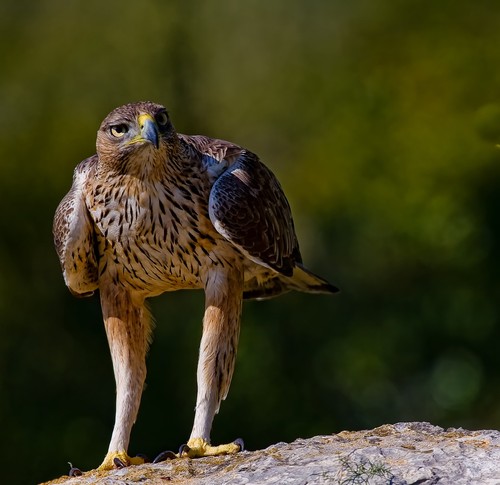
Bonelli's Eagle
Body 65–72 cm (26–28 in); wingspan 150–180 cm (59–71 in)
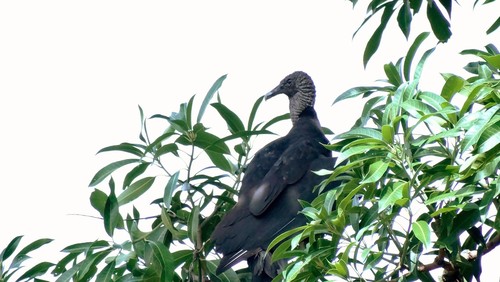
Black Vulture
56-68 cm (22-27 in) long, 137-165 cm wingspan
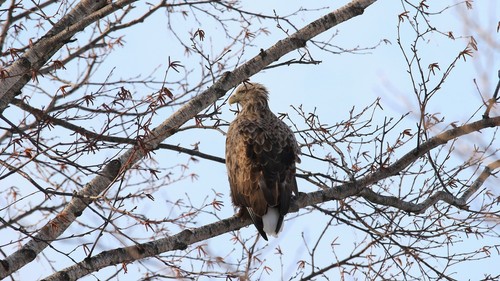
White-tailed Eagle
66-94 cm body length; wingspan 178-245 cm, among the largest eagles in the world
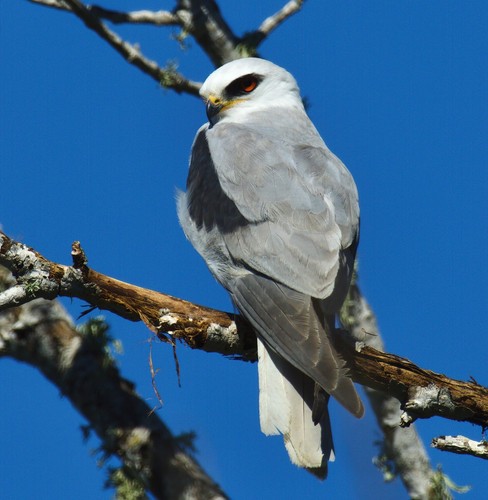
White-tailed Kite
35-43 cm (14-17 in) long, 88-102 cm (35-40 in) wingspan
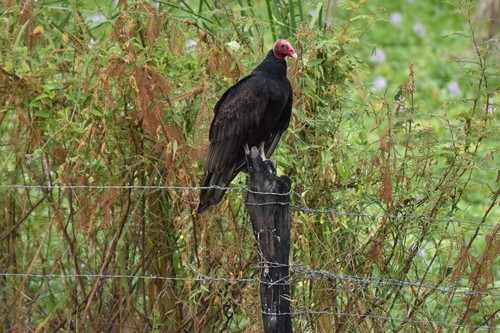
Turkey Vulture
64-81 cm (25-32 in) long, 160-183 cm wingspan
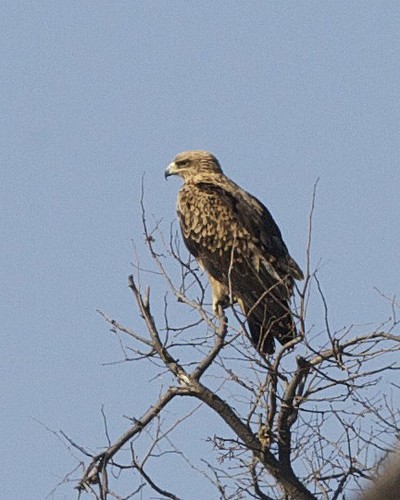
Tawny Eagle
62–75 cm long; wingspan 1.65–2.0 m
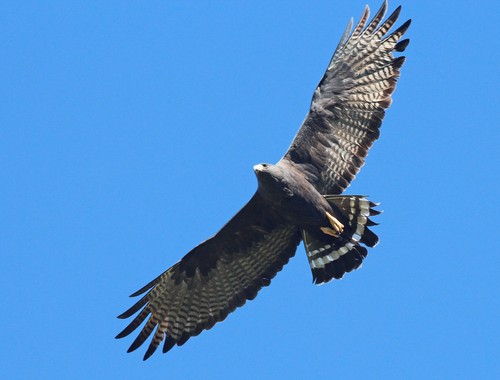
Zone-tailed Hawk
46-56 cm (18-22 in) long, 118-140 cm (46-55 in) wingspan
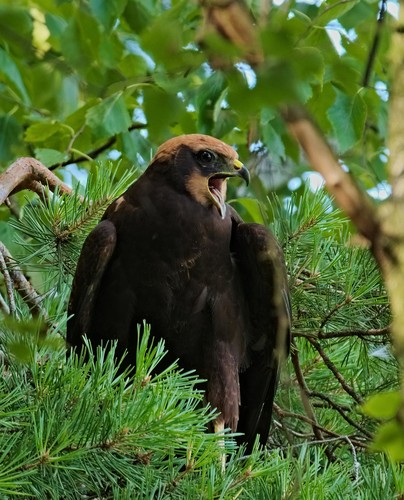
Western Marsh Harrier
Body 43-56 cm; wingspan 115-140 cm
Swallow-tailed Kite
48-68 cm (19-27 in) long including tail streamers, 112-136 cm (44-54 in) wingspan
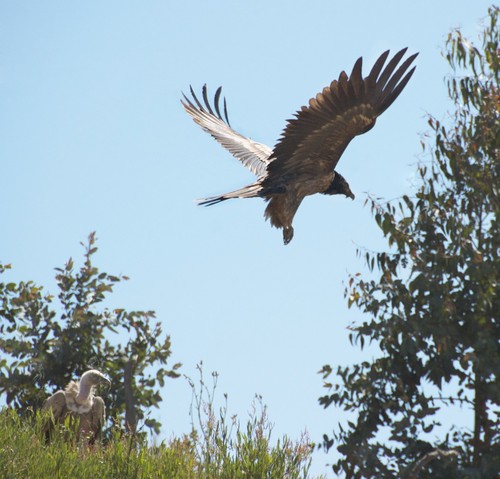
White-backed Vulture
78-98 cm long, wingspan 1.96-2.25 m
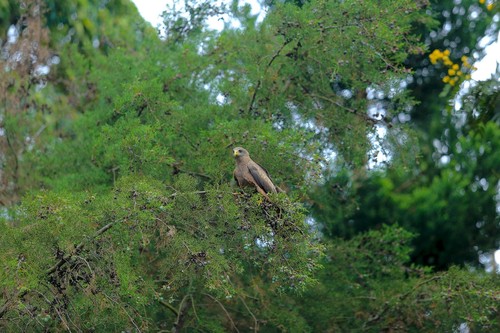
Yellow-billed Kite
55-60 cm long; wingspan 130-155 cm
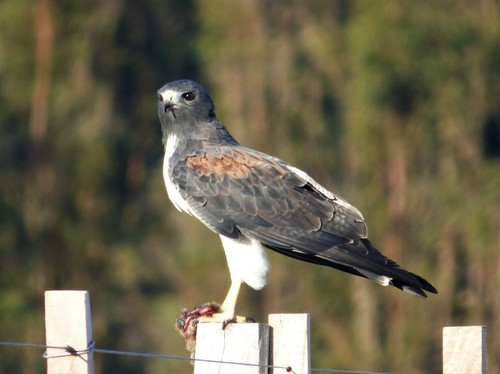
White-tailed Hawk
46-59 cm (18-23 in) long, 122-142 cm (48-56 in) wingspan