
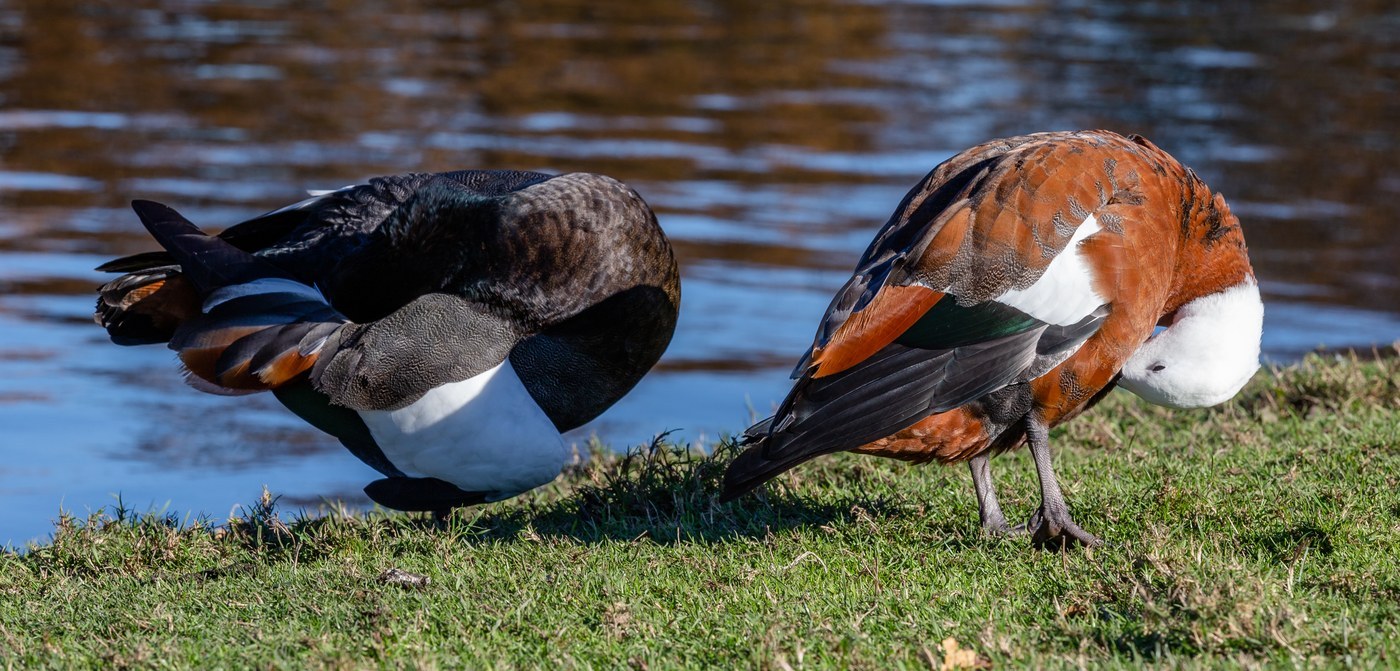
Paradise Shelduck
Tadorna variegata
A large, strikingly dimorphic New Zealand duck, the female with a bright white head and chestnut body and the male mostly black with a grey-flecked back, commonly seen grazing on farmland.
- Size
- 63-71 cm (25-28 in) long
- Habitat
- pasture, wetlands, rivers, and lakes throughout New Zealand
- Type
- waterfowl
Spotted a bird like this?
Identify any bird from a photo, free.
Overview
The Paradise Shelduck, known in Maori as putangitangi, is a large, distinctive duck endemic to New Zealand, unusual among ducks for its striking difference in appearance between the sexes. The female has a pure white head and neck contrasting with a rich chestnut body, while the male is mostly blackish overall with a finely vermiculated grey back and a dark green-glossed head.
Once more confined to wetlands, the species has adapted remarkably well to farmland, and pairs or small flocks are now a familiar sight grazing on grassy paddocks well away from water across much of New Zealand. Pairs mate for life and are usually seen together, often giving loud honking calls, particularly when disturbed or in flight.
How to identify it
Key field marks
- Female: bright white head and neck, chestnut-orange body
- Male: dark blackish-green head, finely vermiculated grey back, blackish underparts
- Large size for a duck, with a fairly long neck
- Loud, honking calls in flight, especially from the female
- Often seen grazing on open pasture well away from water
Similar species
- No other New Zealand waterfowl shares the female's combination of a solid white head and chestnut body; the male's dark plumage could suggest a goose at a distance, but its shelduck shape and typical pairing with a white-headed female confirm identification.
Habitat & range
Range
Endemic to New Zealand, found throughout the North and South Islands, having greatly expanded its range and numbers since the conversion of forest to farmland.
Habitat
Uses a wide range of habitats including farm pasture, wetlands, rivers, lakes, and estuaries, often grazing on grass far from open water.
Migration
Mostly sedentary, though large post-breeding flocks gather at traditional molting sites on lakes and rivers.
Behavior & voice
Behavior
Usually seen in pairs, which mate for life and defend a shared territory, or in larger non-breeding flocks outside the nesting season, especially at molting grounds.
Voice
Loud, distinctive calls: the female gives a sharp, repeated honking "zeek-zeek," while the male's call is a deeper, harsher note.
Feeding
Grazes mainly on grasses and clover in pasture, and also feeds on aquatic plants and invertebrates in and around wetlands and waterways.
Nesting
Nests on the ground in a hollow, under vegetation, or sometimes in a tree cavity, often well away from water; the female incubates the eggs while the male stands guard nearby, and both parents accompany the ducklings after hatching.
Frequently asked questions
Why do male and female Paradise Shelducks look so different?
The species shows unusually strong sexual dimorphism for a duck, with females having a bright white head and chestnut body while males are mostly dark blackish overall.
Why are Paradise Shelducks often seen far from water?
They graze extensively on grass and clover in farm pasture, having adapted well to New Zealand's agricultural landscape, and only return to water to rest, molt, or nest.
Do Paradise Shelducks mate for life?
Yes, pairs form long-term monogamous bonds and are typically seen together year-round.
What is the Maori name for the Paradise Shelduck?
Putangitangi.
Paradise Shelduck guides
In-depth guides for identifying, finding, and understanding Paradise Shelduck.
Other birds you may enjoy
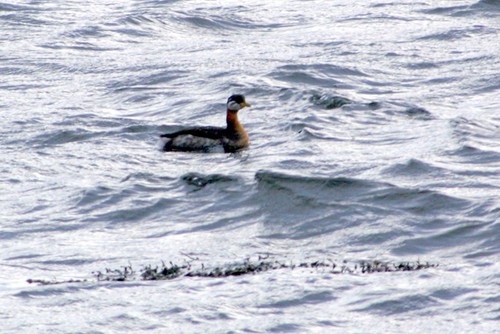
Red-necked Grebe
40-55 cm (16-22 in) long, 77-85 cm wingspan
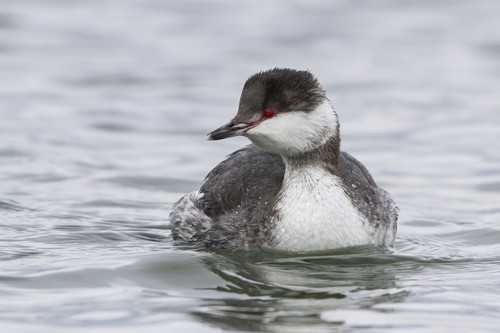
Horned Grebe
31-38 cm (12-15 in) long, 46-55 cm wingspan
Greater Scaup
42-51 cm (16.5-20 in) long, 71-84 cm wingspan
Black Scoter
43-54 cm (17-21 in) long, 79-90 cm wingspan
Tufted Duck
40-47 cm (16-18.5 in) long, 67-73 cm wingspan
White-winged Scoter
48-58 cm (19-23 in) long, 86-99 cm wingspan
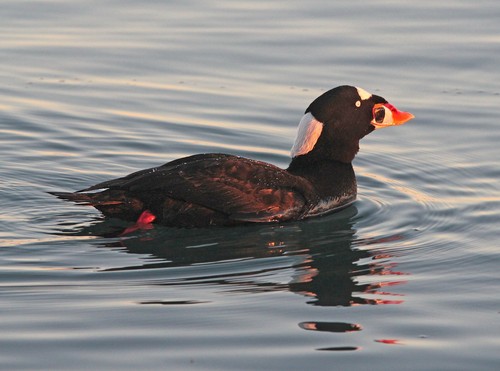
Surf Scoter
45-56 cm (18-22 in) long, 78-92 cm wingspan
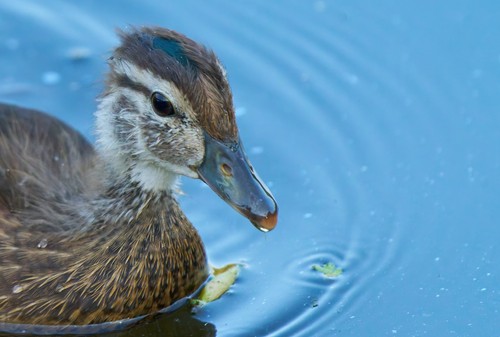
Wood Duck
47-54 cm (18.5-21 in) long, 66-73 cm wingspan
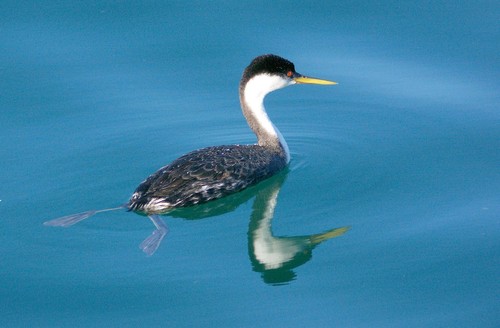
Western Grebe
56-74 cm (22-29 in) long, 79-102 cm wingspan
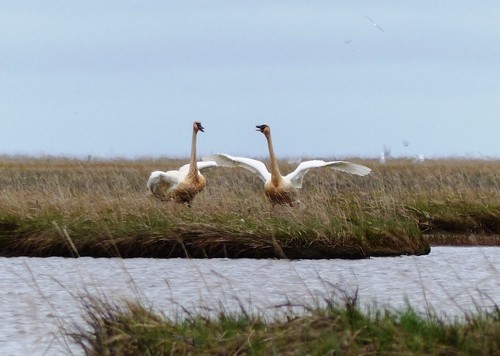
Tundra Swan
115-150 cm (45-59 in) long, about 180 cm wingspan
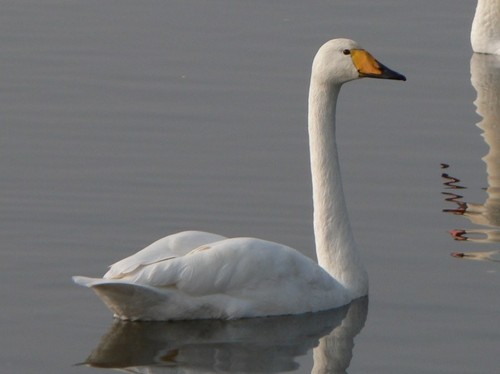
Whooper Swan
140-165 cm (55-65 in) long, 205-235 cm wingspan
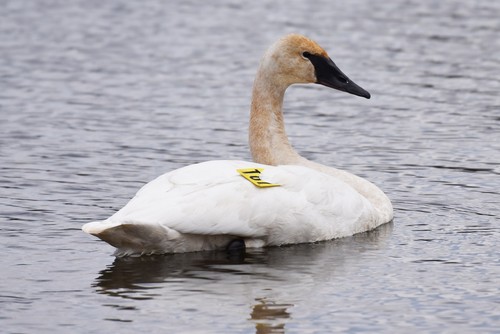
Trumpeter Swan
150-180 cm (59-71 in) long, up to 300 cm wingspan