
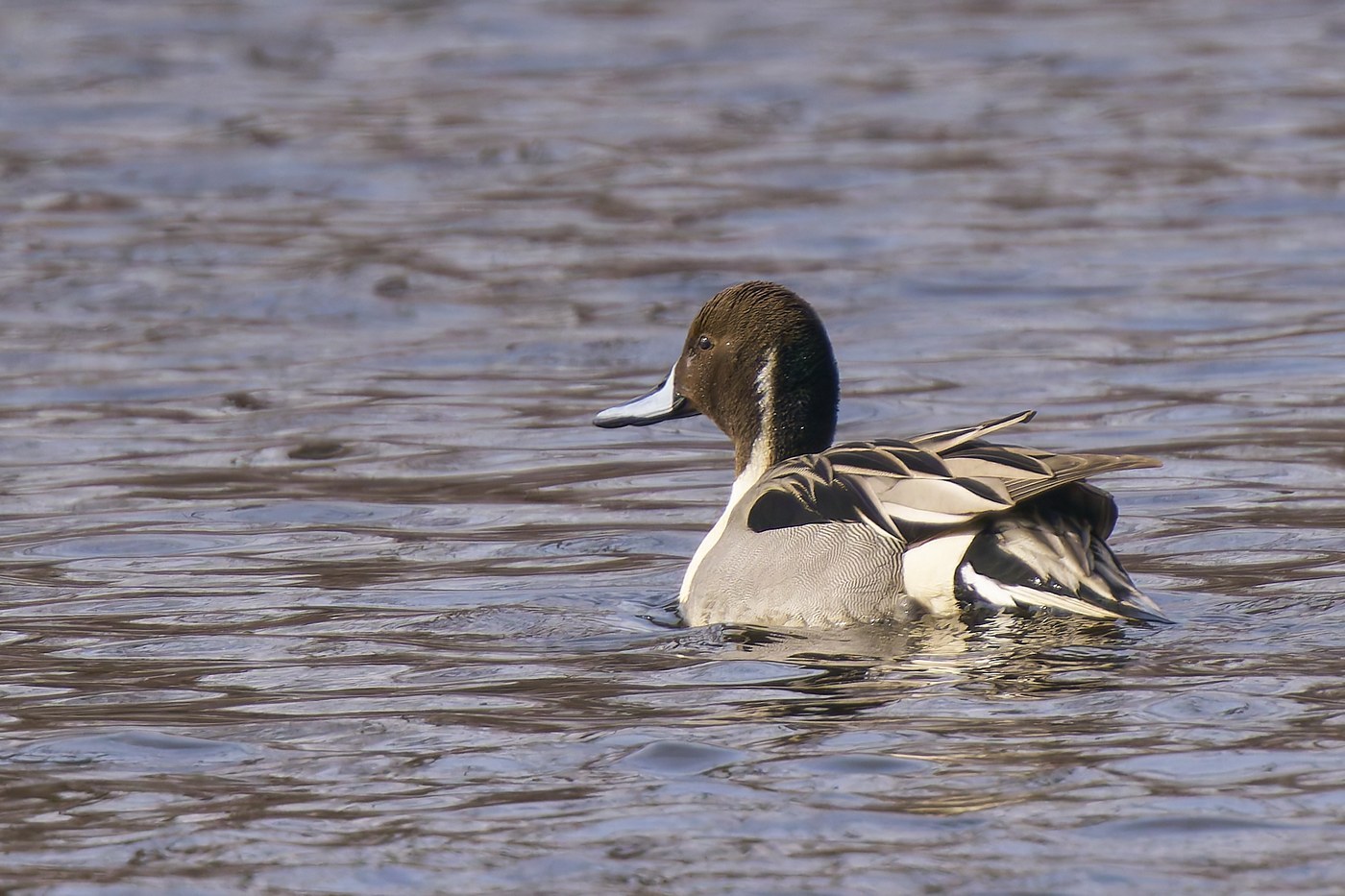
Northern Pintail
Anas acuta
An elegant, slender dabbling duck named for the male's long, needle-like tail, marked by a chocolate-brown head and a crisp white neck stripe.
- Size
- 51-76 cm (20-30 in) long including tail, 80-95 cm wingspan
- Habitat
- open wetlands, shallow marshes, flooded fields, and prairie potholes across the Northern Hemisphere
- Type
- waterfowl
Spotted a bird like this?
Identify any bird from a photo, free.
Overview
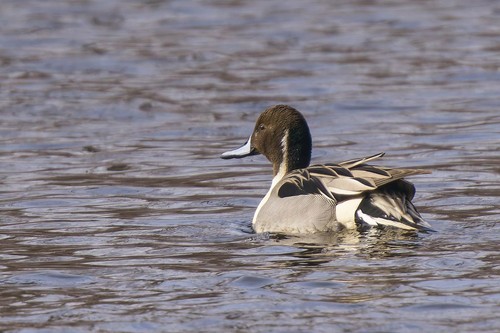
The Northern Pintail is one of the most elegant of the dabbling ducks, with a slim, long-necked profile that sets it apart from the stockier Mallard. The breeding drake has a rich chocolate-brown head, a white breast that extends up the neck in a thin stripe, gray flanks, and, most distinctively, a long, thin, black central tail feather that gives the species its name.
Females are mottled brown like other dabbling duck hens but share the same slender build, pointed (though shorter) tail, and graceful long neck, making the species identifiable by shape even without the male's bold pattern.
How to identify it
Key Field Marks
- Slim, long-necked profile with a small head
- Breeding drake: chocolate-brown head, white breast with a thin white stripe running up the neck, gray body, long pointed black tail
- Female: mottled brown with a pointed (shorter) tail and slender shape
- Both sexes show a bronze-and-green speculum bordered in white/buff
Similar Species
Female Mallards are bulkier with a more rounded tail and a different bill pattern; the pintail's slender build and pointed tail are the best distinguishing features. No other regularly occurring duck combines the pintail drake's long tail spike with its clean white neck stripe.
Habitat & range
Northern Pintails breed across open wetlands, prairie potholes, and Arctic tundra throughout much of North America, Europe, and Asia, favoring shallow, open water with minimal cover. They are highly migratory, undertaking some of the longest migrations of any North American duck, and winter across a broad swath of the southern United States, Mexico, and coastal wetlands, as well as similar latitudes in the Old World.
During migration and winter, large flocks gather in flooded agricultural fields, shallow marshes, and coastal estuaries, often mixing with other dabbling duck species.
Behavior & voice
Pintails are dabbling ducks that feed by tipping up in shallow water to reach submerged vegetation and invertebrates, and they also forage extensively on waste grain in agricultural fields, especially in winter. Their long necks allow them to reach food in slightly deeper water than many other dabblers.
The male's call is a soft, wheezy, whistled note, quite different from a Mallard's quack, while females give a lower, hoarse quack. Nests are shallow scrapes lined with grass and down, typically placed on the ground in open or lightly vegetated areas, sometimes considerable distances from water, which can leave nests vulnerable to predation.
Frequently asked questions
Why is it called a Pintail?
The breeding male has a long, thin, needle-like central tail feather that projects well beyond the rest of the tail.
How do you identify a female Northern Pintail?
Look for her slender, long-necked shape, pointed (though shorter) tail, and overall mottled brown plumage compared to the bulkier female Mallard.
How far do Northern Pintails migrate?
They undertake some of the longest migrations of any North American duck, breeding in the Arctic and prairies and wintering as far south as Central America.
What do Northern Pintails eat?
They eat seeds, aquatic plants, waste grain in flooded fields, and various invertebrates.
Where do Northern Pintails nest?
They nest on the ground in open or sparsely vegetated areas near wetlands, prairie potholes, and Arctic tundra.
Northern Pintail guides
In-depth guides for identifying, finding, and understanding Northern Pintail.
Other birds you may enjoy
Red-necked Grebe
40-55 cm (16-22 in) long, 77-85 cm wingspan
Horned Grebe
31-38 cm (12-15 in) long, 46-55 cm wingspan
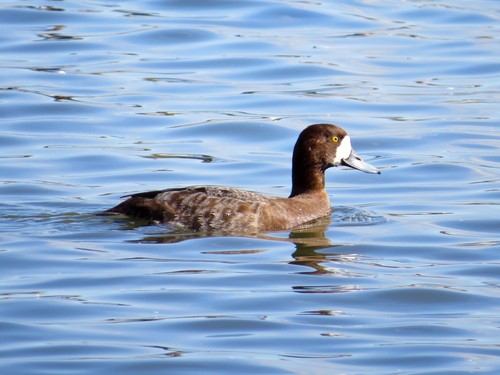
Greater Scaup
42-51 cm (16.5-20 in) long, 71-84 cm wingspan
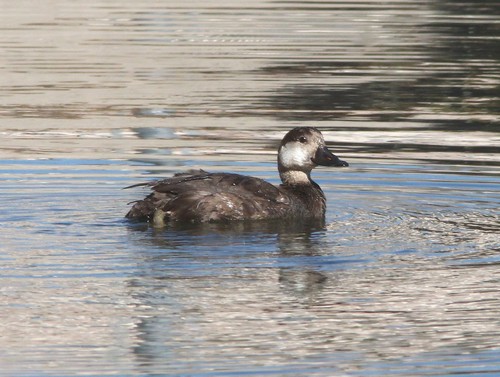
Black Scoter
43-54 cm (17-21 in) long, 79-90 cm wingspan
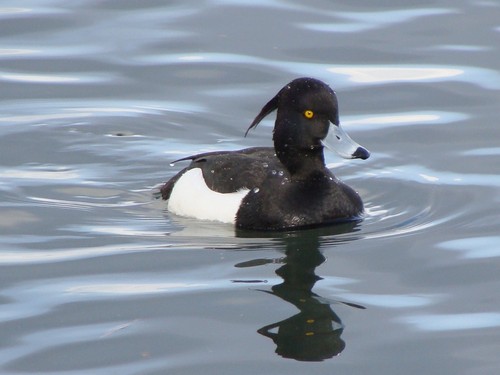
Tufted Duck
40-47 cm (16-18.5 in) long, 67-73 cm wingspan
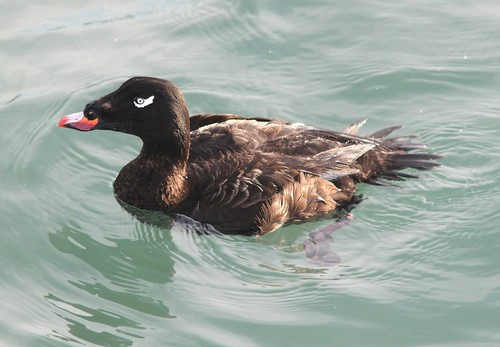
White-winged Scoter
48-58 cm (19-23 in) long, 86-99 cm wingspan
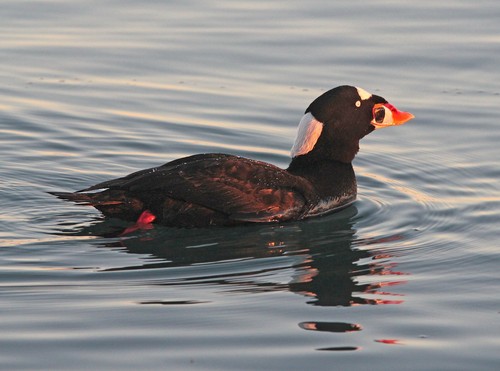
Surf Scoter
45-56 cm (18-22 in) long, 78-92 cm wingspan
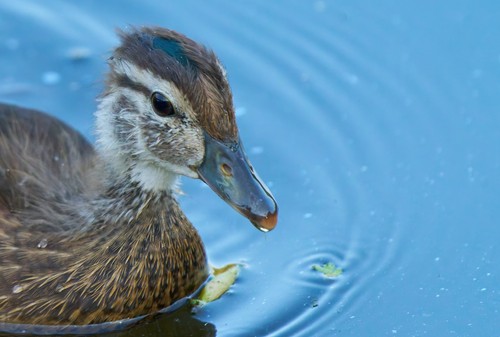
Wood Duck
47-54 cm (18.5-21 in) long, 66-73 cm wingspan
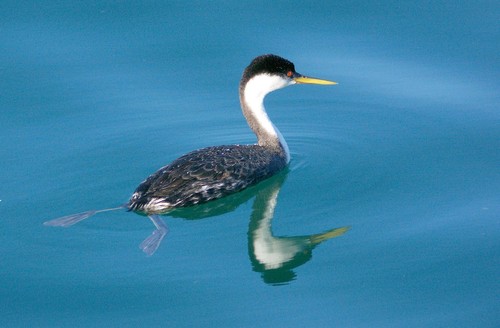
Western Grebe
56-74 cm (22-29 in) long, 79-102 cm wingspan
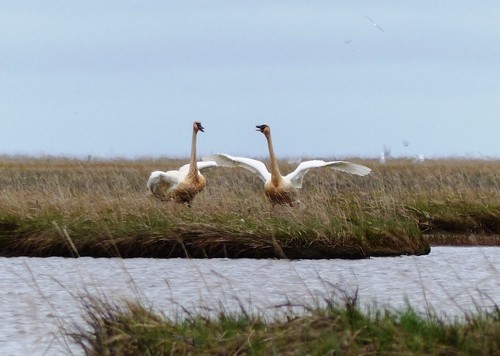
Tundra Swan
115-150 cm (45-59 in) long, about 180 cm wingspan
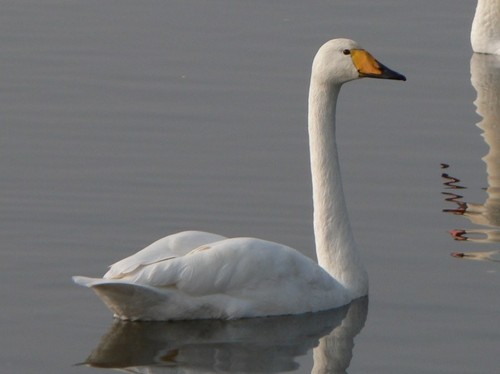
Whooper Swan
140-165 cm (55-65 in) long, 205-235 cm wingspan
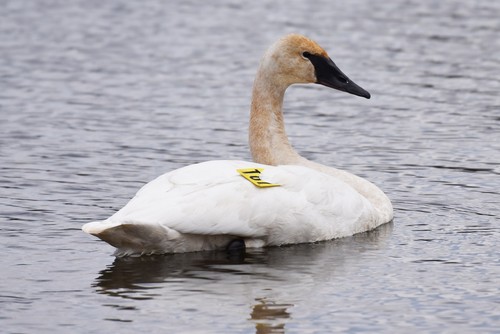
Trumpeter Swan
150-180 cm (59-71 in) long, up to 300 cm wingspan