
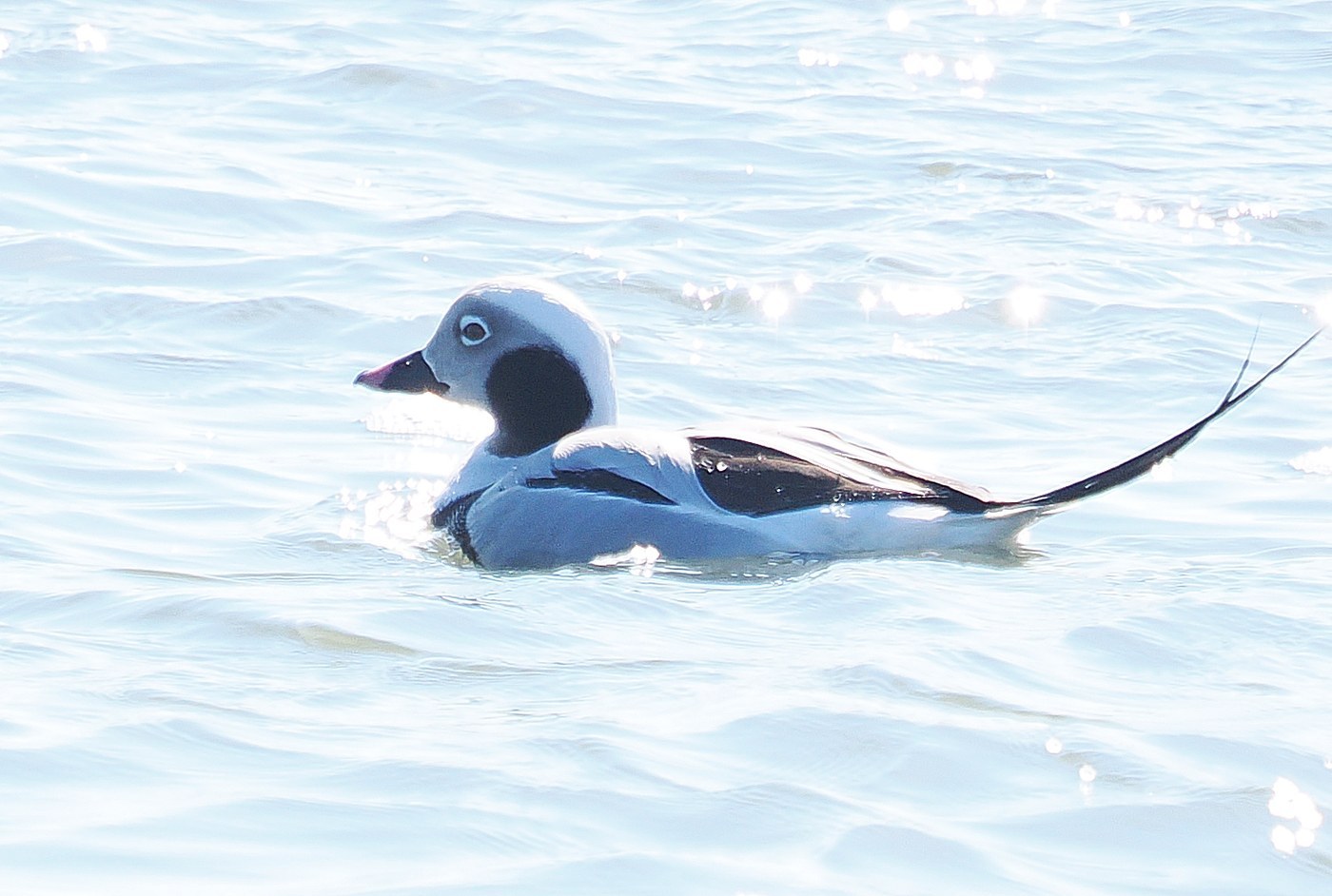
Long-tailed Duck
Clangula hyemalis
An Arctic sea duck known for the male's long slender tail streamers and unusually complex seasonal plumages.
- Size
- 40-47 cm (16-19 in) body, males with elongated tail streamers; about 73 cm wingspan
- Habitat
- Arctic tundra pools (breeding), open sea (winter)
- Type
- waterfowl
Spotted a bird like this?
Identify any bird from a photo, free.
Overview
The Long-tailed Duck is a distinctive Arctic sea duck known for the male's exceptionally long, slender tail streamers and for having more plumage variations through the year than almost any other duck. Breeding males are dark brown and white with a rounded pink-banded bill and dramatically elongated central tail feathers; winter males become mostly white with a dark cheek patch and breast. Females lack the long tail and show a more subdued brown-and-white pattern that also shifts seasonally.
This compact, round-headed duck is a deep and agile diver, capable of reaching considerable depths in pursuit of food, and often forms large rafts on open water.
How to identify it
Key field marks
- Small, round head; short, stubby bill
- Male: long, thin, pointed tail feathers visible year-round, giving the species its name
- Winter male: mostly white with dark cheek patch and breast band
- Female: brown-mottled crown and cheek patch, lacking the long tail
- Complex molt cycle produces up to three (rather than the usual two) distinct plumages per year
Similar species
No other North American or Eurasian duck combines the small round head, stubby bill, and long tail streamers of the male. Females can suggest small scoters but are paler and more patchily marked on the face.
Habitat & range
Long-tailed Ducks breed on Arctic tundra pools and coastal wetlands across the high Arctic of North America and Eurasia. In winter they move to open sea, favoring shallow continental shelf waters, bays, and the Great Lakes, sometimes gathering in large, dense flocks well offshore.
Behavior & voice
Behavior
Among the deepest-diving ducks, Long-tailed Ducks can descend tens of meters underwater to forage, using their wings to swim.
Voice
Vocal on breeding and wintering grounds alike; males give a musical, yodeling "ow-owdle-ow" call that carries far over water.
Feeding
Mollusks, crustaceans, and small fish, obtained through deep diving in open water.
Nesting
Nests on the ground near tundra pools, well concealed in vegetation; females incubate 6-9 eggs and lead ducklings to water shortly after hatching.
Frequently asked questions
Why does the Long-tailed Duck have three plumages a year instead of two?
Unlike most ducks, it undergoes an unusual molt cycle with an extra partial molt, producing distinct breeding, 'supplemental,' and winter plumages.
How deep can Long-tailed Ducks dive?
They are among the deepest-diving ducks, capable of reaching tens of meters below the surface to forage for mollusks and small fish.
What is the male Long-tailed Duck's call like?
A musical, far-carrying yodeling call, often described as 'ow-owdle-ow,' frequently heard from wintering flocks.
Is the Long-tailed Duck endangered?
It is classified as Vulnerable by the IUCN due to population declines, even though it remains widespread across Arctic and northern waters.
Long-tailed Duck guides
In-depth guides for identifying, finding, and understanding Long-tailed Duck.
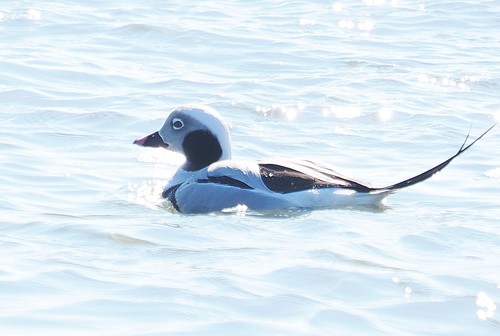
Other birds you may enjoy
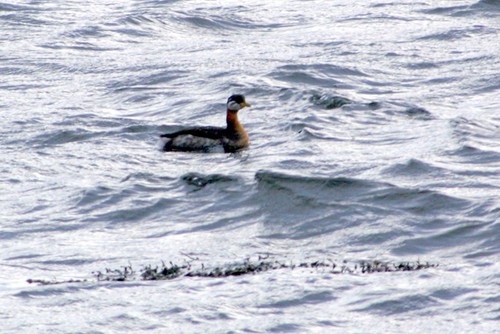
Red-necked Grebe
40-55 cm (16-22 in) long, 77-85 cm wingspan
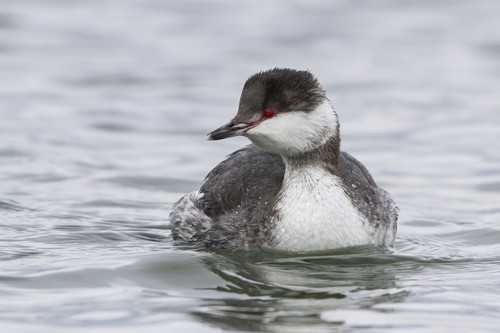
Horned Grebe
31-38 cm (12-15 in) long, 46-55 cm wingspan
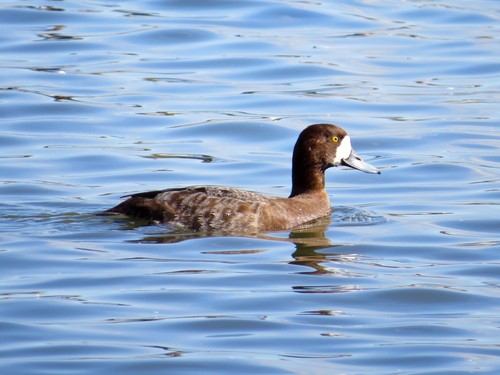
Greater Scaup
42-51 cm (16.5-20 in) long, 71-84 cm wingspan
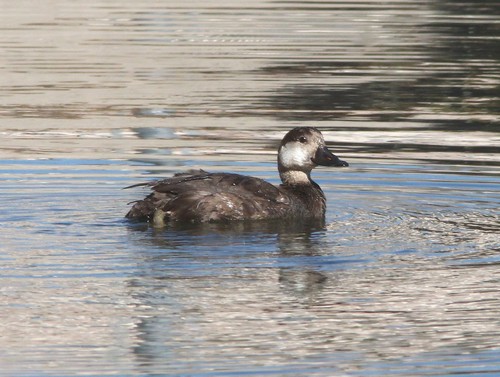
Black Scoter
43-54 cm (17-21 in) long, 79-90 cm wingspan
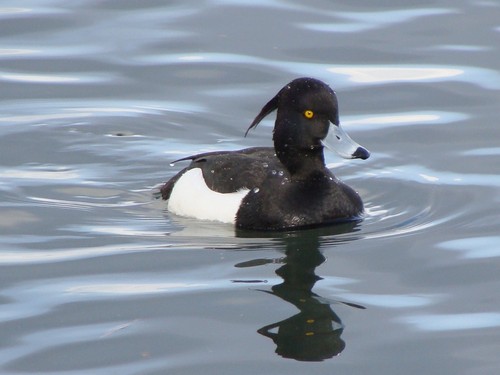
Tufted Duck
40-47 cm (16-18.5 in) long, 67-73 cm wingspan
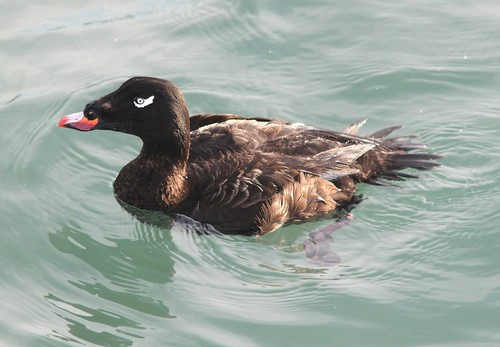
White-winged Scoter
48-58 cm (19-23 in) long, 86-99 cm wingspan
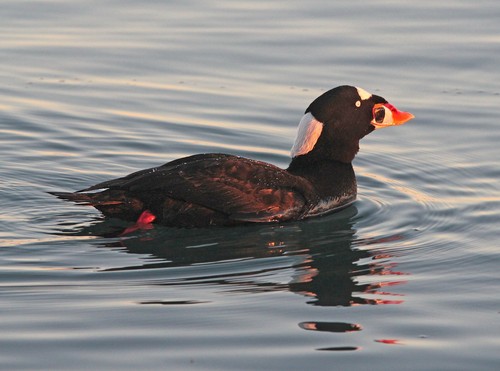
Surf Scoter
45-56 cm (18-22 in) long, 78-92 cm wingspan
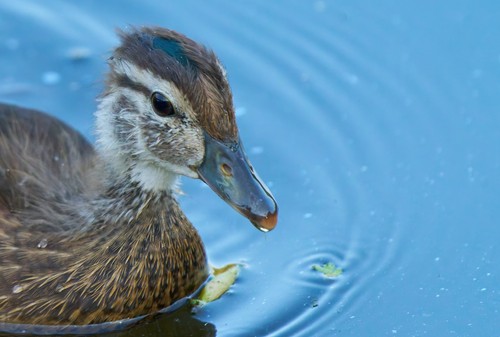
Wood Duck
47-54 cm (18.5-21 in) long, 66-73 cm wingspan
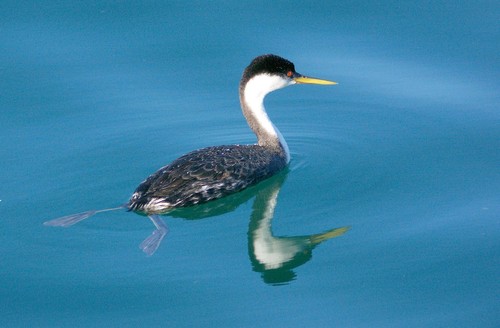
Western Grebe
56-74 cm (22-29 in) long, 79-102 cm wingspan
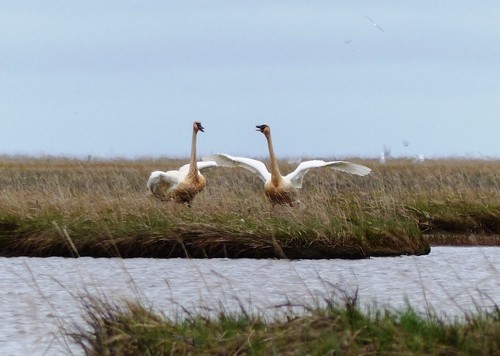
Tundra Swan
115-150 cm (45-59 in) long, about 180 cm wingspan
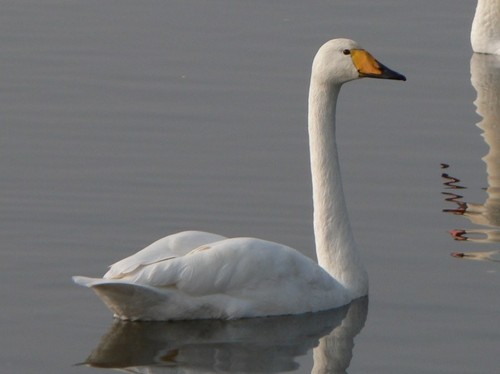
Whooper Swan
140-165 cm (55-65 in) long, 205-235 cm wingspan
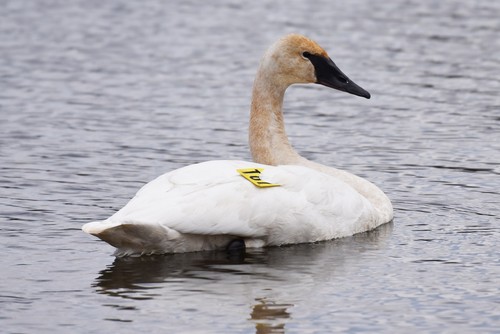
Trumpeter Swan
150-180 cm (59-71 in) long, up to 300 cm wingspan