
Long-tailed Duck Identification Guide
A small, buoyant Arctic sea duck known for its long tail streamers, complex seasonal plumages, and yodeling calls on winter waters.
Read the full Long-tailed Duck encyclopedia entry →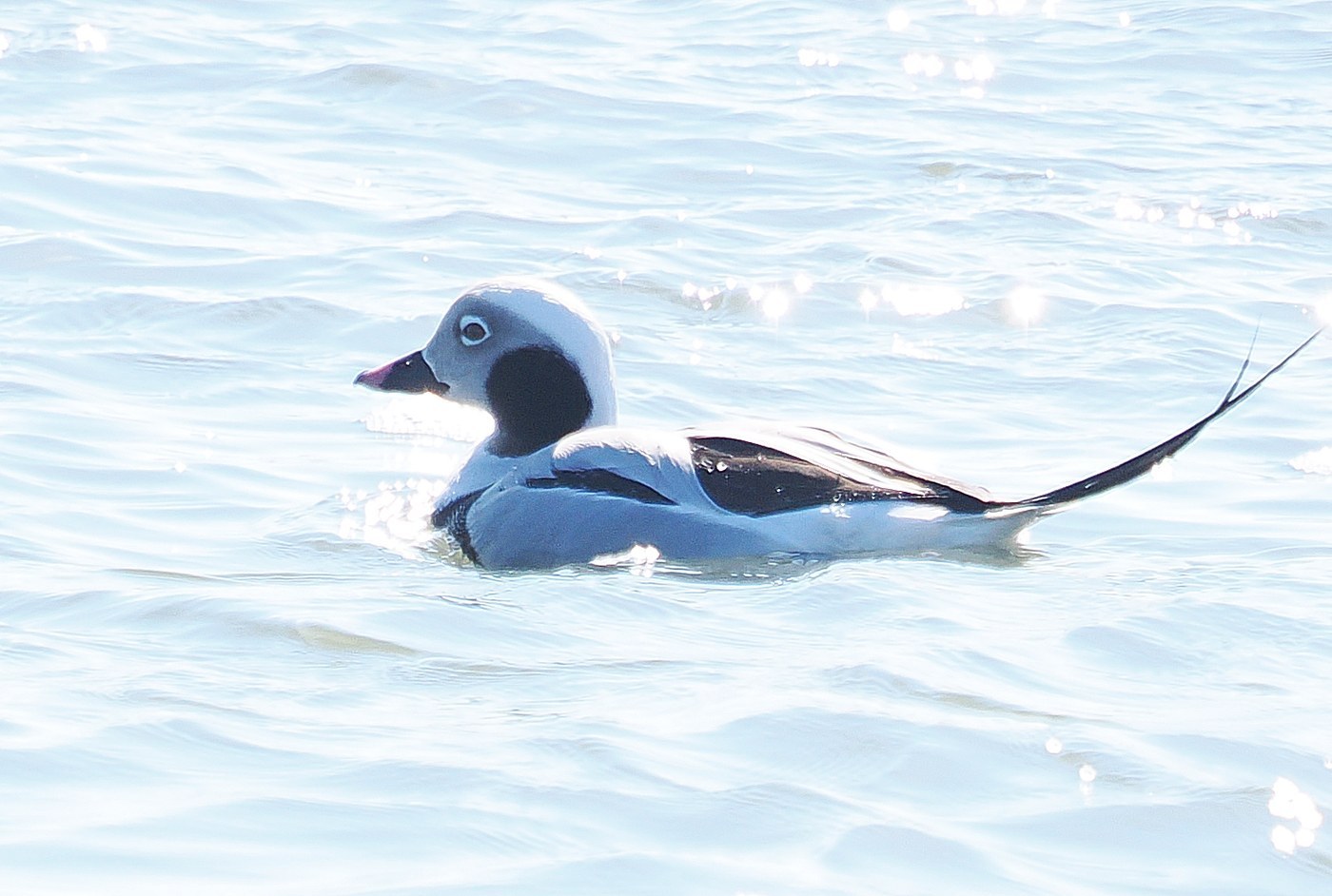
Key Field Marks
- Size & shape: A small, compact, buoyant sea duck with a round head, small stubby bill, and — in males — long, pointed central tail feathers that give the species its name.
- Breeding male (seen mainly on the Arctic breeding grounds): Predominantly dark chocolate-brown head, neck, and breast, with a pale gray face patch, and long black tail streamers.
- Winter male (the plumage most birders encounter): Largely white head and neck with a dark cheek patch, dark breast contrasting with a white body, and long dark tail streamers; bill is dark with a pink band.
- Female/immature: Shorter-tailed and duller, mottled brown-and-white head and body, lacking the male's long tail plumes; pattern varies seasonally and by age.
- Molt: Long-tailed Ducks undergo more distinct plumages through the year than any other duck species, so head and body pattern can look quite different from fall through spring.
Separating from Other Sea Ducks
- Scoters: Larger and darker overall, lacking the Long-tailed Duck's extensive white body and long tail streamers; scoters also have heavier, more swollen bills.
- Eiders: Much bulkier with wedge-shaped heads and heavy bills; Long-tailed Duck is notably smaller and more delicate-looking, riding high and buoyant on the water.
- Overall: The combination of small size, stubby bill, buoyant posture, and (in males) long tail streamers is distinctive among sea ducks once learned.
Where & When to See It
Breeds on Arctic tundra ponds and coastal wetlands across the high Arctic of North America and Eurasia. Winters offshore on northern oceans and large inland lakes (including the Great Lakes), where it dives to considerable depths for mollusks and crustaceans, often forming rafts with other sea ducks. Most birders in temperate latitudes encounter it only in its nonbreeding winter plumage.
Voice
Notably vocal for a sea duck, especially in flocks: a yodeling, far-carrying ow-ow-owdle-ow call is frequently given by males on wintering grounds and is a helpful clue to locating flocks even before they are seen.
Frequently asked questions
What is the easiest way to recognize a Long-tailed Duck in winter?
Look for a small, buoyant sea duck with a mostly white head and neck, a dark cheek patch, a dark breast against a white body, and long, thin tail streamers on males.
Why do Long-tailed Ducks look so different at different times of year?
They molt more times per year than any other duck species, cycling through several distinct plumages, so head and body patterns change noticeably from breeding season to winter.
How do you tell a Long-tailed Duck from a scoter?
Long-tailed Duck is smaller, more buoyant, has a stubby bill, and shows much more white in the plumage along with long tail streamers on males; scoters are larger, darker, and heavier-billed.
What does a Long-tailed Duck sound like?
A distinctive yodeling ow-ow-owdle-ow call, often given repeatedly by wintering flocks and useful for locating birds by ear.