
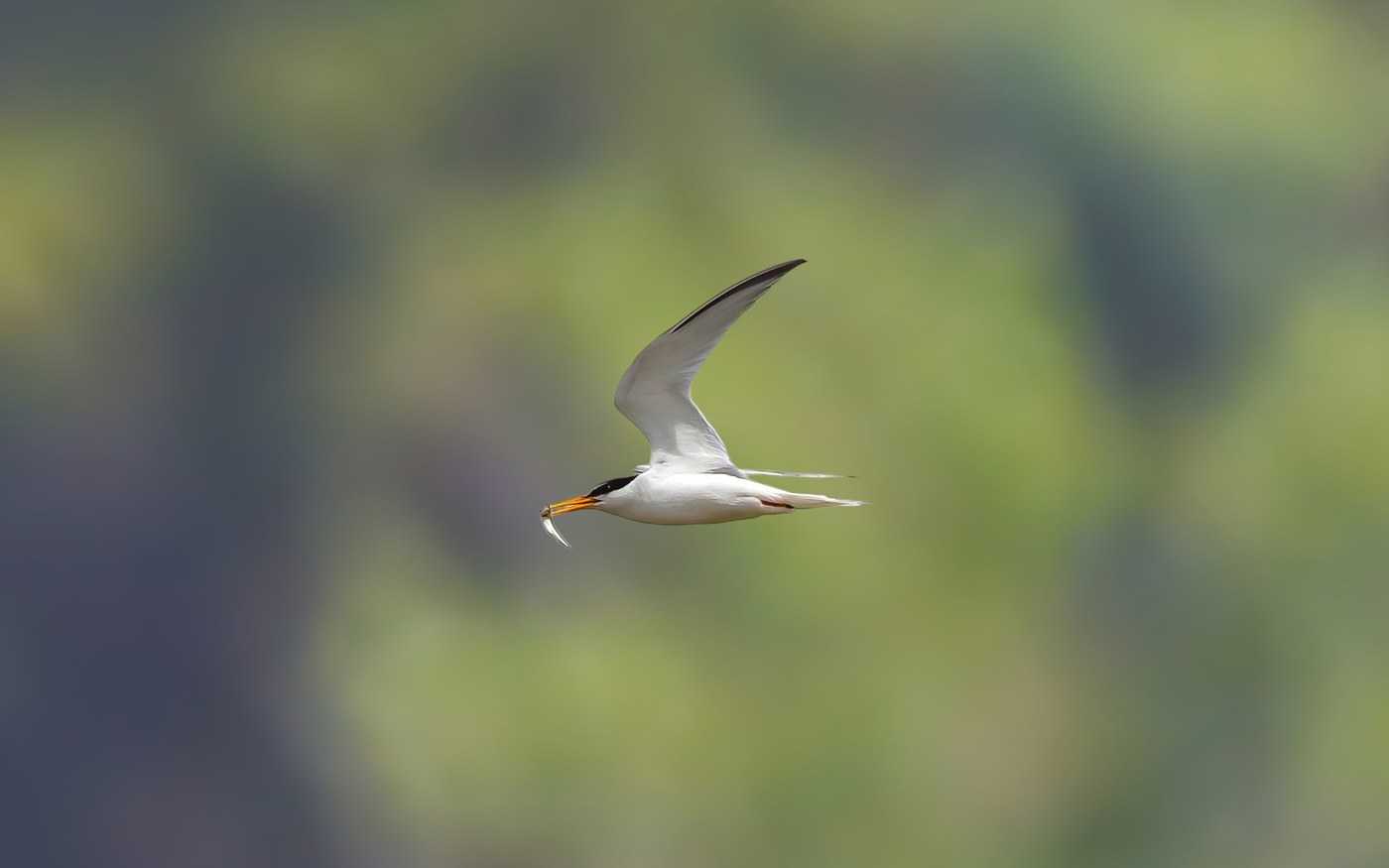
Little Tern
Sternula albifrons
A tiny, fast-flying tern with a black-tipped yellow bill and white forehead patch that hovers before plunge-diving for small fish along sandy coastlines.
- Size
- 22-24 cm (9 in) long, 41-47 cm wingspan
- Habitat
- sandy and shingle beaches, estuaries, and coastal lagoons
- Type
- seabird
Spotted a bird like this?
Identify any bird from a photo, free.
Overview
The Little Tern is one of the smallest members of the tern family, a delicate seabird found breeding along coasts of Europe, Asia, Africa, and Australia. Despite its diminutive size, it is a bold and energetic flier, beating its narrow wings rapidly as it patrols the shallows in search of fish.
Appearance
Breeding adults show pale grey upperparts, white underparts, a black cap, and a distinctive white forehead patch that separates the cap from a black eye-stripe. The bill is yellow with a crisp black tip, and the legs are orange-yellow. In non-breeding plumage the black cap becomes patchy and the bill darkens.
How to identify it
Key field marks
- Very small size, noticeably smaller than most other terns
- Yellow bill with a black tip
- White forehead patch bordered by a black cap and eye-stripe
- Orange-yellow legs
- Rapid, fluttering wingbeats and frequent hovering before diving
Similar species
The Little Tern is easily confused with the New World Least Tern (a separate species), but the two do not overlap in range. It can also be told from larger terns such as the Common Tern by its much smaller size, quicker wingbeats, and habit of hovering conspicuously before each dive.
Habitat & range
Habitat and range
Little Terns nest colonially on open sand, shingle, or shell beaches, as well as gravel bars along rivers and salt pans, usually close to shallow water where they can fish. The species breeds widely across coastal Europe, parts of Africa, and Asia, extending to Australia (where a resident and migratory population occurs).
Most populations are migratory, with European and Asian breeders wintering along tropical African and South Asian coastlines. Because they nest in the open on beaches, colonies are vulnerable to disturbance, flooding, and predation.
Behavior & voice
Behavior
Little Terns feed by hovering a few meters above the water and then plunge-diving to snatch small fish and invertebrates near the surface. They often forage in small groups over shallow bays, lagoons, and river mouths.
Voice
The call is a sharp, high-pitched "kirri-kirri" or rasping "kik-kik" given in flight, especially when alarmed near the colony.
Nesting and breeding
Pairs nest in loose colonies, scraping a shallow depression directly in sand or shingle with little or no lining. Typically two to three eggs are laid, camouflaged to match the substrate. Both parents incubate and defend the nest, dive-bombing intruders that approach too closely.
Frequently asked questions
How can I tell a Little Tern from other small terns?
Look for its very small size, yellow bill with a black tip, white forehead patch, and habit of hovering conspicuously before diving.
Is the Little Tern the same as the Least Tern?
No, they are closely related but separate species. The Little Tern occurs in Europe, Africa, Asia, and Australia, while the Least Tern is its New World counterpart in the Americas.
Where do Little Terns nest?
They nest in loose colonies on open sand, shingle, or shell beaches and gravel bars, laying camouflaged eggs directly on the ground.
What do Little Terns eat?
Mainly small fish and aquatic invertebrates, which they catch by hovering and then plunge-diving into shallow water.
Are Little Terns endangered?
Globally the species is listed as Least Concern, though local populations can decline due to beach disturbance, predation, and habitat loss.
Little Tern guides
In-depth guides for identifying, finding, and understanding Little Tern.
Other birds you may enjoy
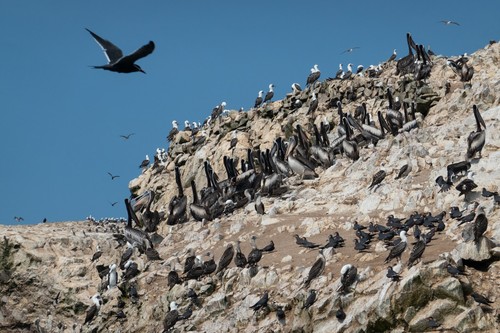
Peruvian Pelican
137-152 cm (54-60 in) long, up to 228 cm wingspan
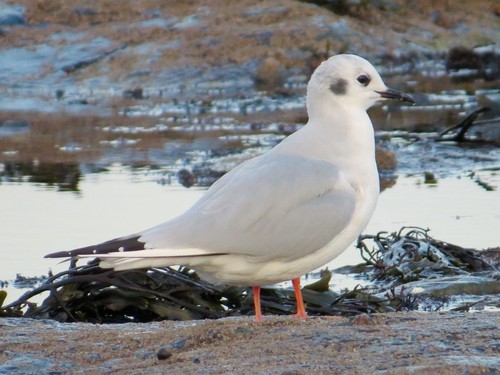
Bonaparte's Gull
28-33 cm (11-13 in) long, 76-84 cm wingspan
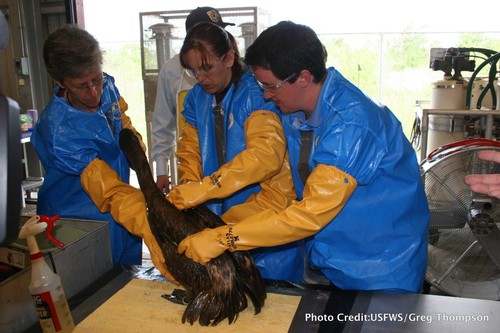
Brown Pelican
106-137 cm (42-54 in) long, 200-230 cm wingspan
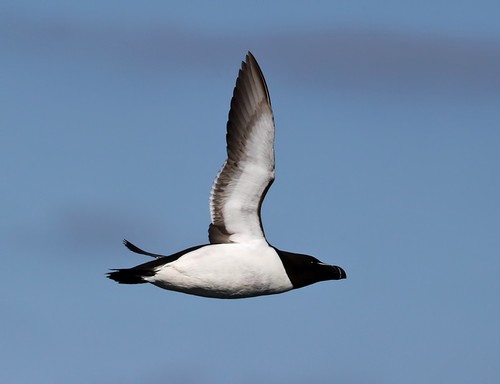
Razorbill
37-39 cm (15-15.5 in) long, 63-68 cm wingspan
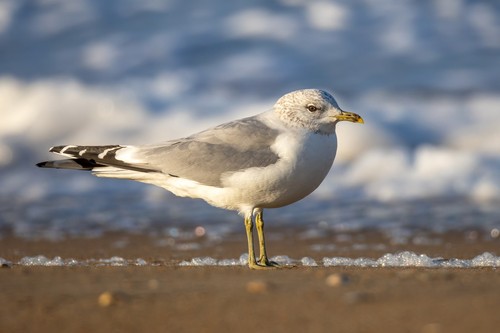
Common Gull
40-46 cm (16-18 in) long, 110-130 cm wingspan
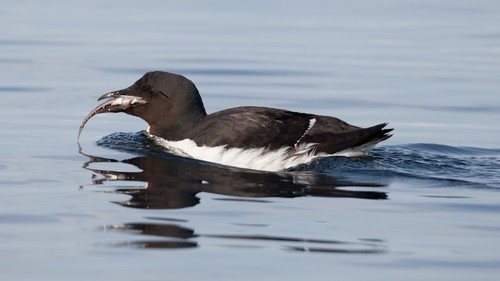
Thick-billed Murre
40-48 cm (16-19 in) long, 65-75 cm wingspan
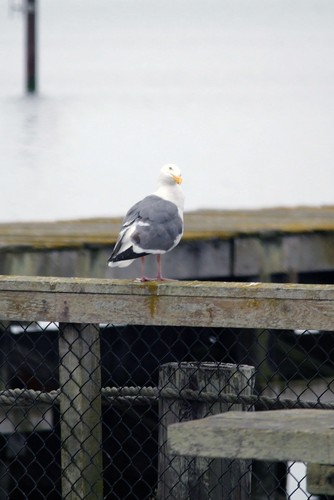
Western Gull
55-68 cm (22-27 in) long, 130-144 cm wingspan
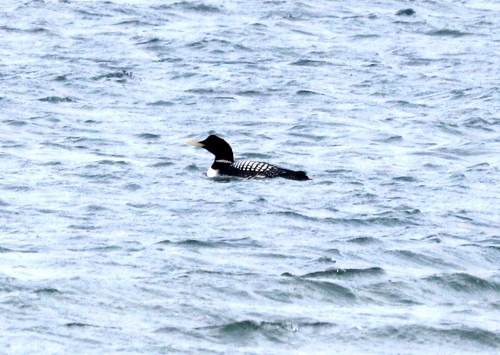
Yellow-billed Loon
76-97 cm (30-38 in) long, 135-152 cm wingspan
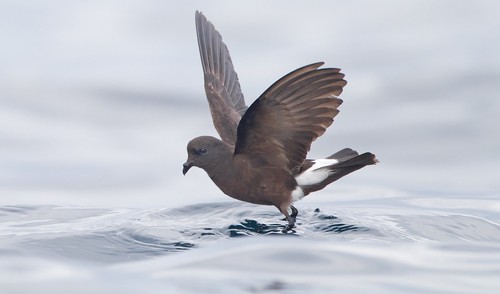
Wilson's Storm-Petrel
15-19 cm (6-7.5 in) long, wingspan 38-42 cm (15-16.5 in)
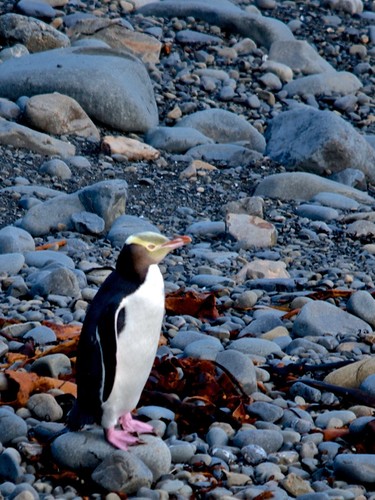
Yellow-eyed Penguin
62-79 cm (24-31 in) tall, 3-8.5 kg (6.6-18.7 lb)
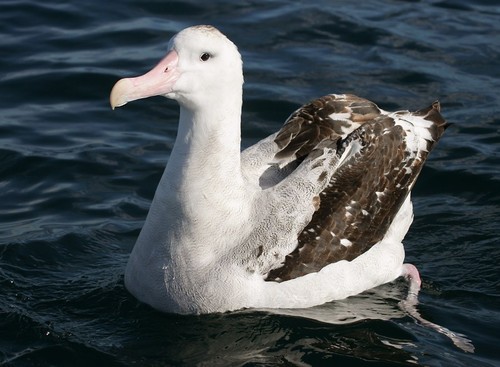
Wandering Albatross
107-135 cm (42-53 in) long, wingspan up to 3.5 m (11.5 ft)

Tufted Puffin
35-41 cm (14-16 in) long, about 63-70 cm wingspan