

Little Blue Heron
Egretta caerulea
A small heron of American wetlands, slate-blue as an adult but confusingly all-white as a juvenile, undergoing a mottled transition in its second year.
- Size
- 60-70 cm (24-28 in) long, 90-102 cm wingspan
- Habitat
- freshwater and coastal marshes, swamps, and ponds in the Americas
- Type
- wading-bird
Spotted a bird like this?
Identify any bird from a photo, free.
Overview
The Little Blue Heron is a small, slender heron with adult plumage of deep slate-blue overall, with a maroon-purple wash on the head and neck, and a bicolored bill that is pale blue-grey with a black tip. Uniquely among herons, juveniles are entirely white, closely resembling small egrets, and only gradually acquire blue feathers in a blotchy, piebald pattern during their first year before becoming fully blue as adults.
This white juvenile plumage is thought to help young birds mix safely with flocks of Snowy Egrets, reducing aggression from adults of other species and possibly improving foraging success.
How to identify it
Key field marks
- Adults: deep slate-blue body with a maroon head and neck, greenish legs, and a bicolored bill (pale base, black tip)
- Juveniles: entirely white with greenish-yellow legs and a pale bill, easily confused with egrets
- Transitional birds: patchy blue-and-white "calico" plumage
- Slow, deliberate walking gait while foraging
Similar species
- Snowy Egret: white juvenile Little Blue Herons resemble Snowy Egrets, but Snowy Egrets have black legs with bright yellow feet, while young Little Blue Herons have dull greenish legs
- Tricolored Heron: adult has a white belly, unlike the uniformly dark underparts of the Little Blue Heron
Leg and foot color is the best way to separate a white juvenile Little Blue Heron from a similar-looking Snowy Egret.
Habitat & range
Range and habitat
Little Blue Herons are found across the southeastern and south-central United States, Mexico, Central America, the Caribbean, and much of South America, inhabiting freshwater marshes, swamps, mangroves, and shallow coastal wetlands.
Migration
Northern populations in the United States migrate south for winter, while populations in tropical and subtropical parts of the range are generally resident; post-breeding dispersal, especially by young white-plumaged birds, can carry individuals well north of the usual breeding range.
Behavior & voice
Behavior
Little Blue Herons forage slowly and deliberately, walking gradually through shallow water and pausing to strike at prey, in contrast to the more active, dashing feeding style of egrets like the Snowy Egret.
Voice
Calls include low croaks and harsh squawks, typically given during interactions at breeding colonies or when disturbed.
Feeding
They eat a varied diet of small fish, aquatic insects, crustaceans, and amphibians, hunted with slow stalking rather than the active running and wing-flicking used by some other small herons.
Nesting and breeding
Little Blue Herons nest colonially, often alongside other wading bird species, building stick platform nests in trees or shrubs near water; both parents share incubation of typically three to five pale blue eggs.
Frequently asked questions
Why are young Little Blue Herons white?
Juveniles are entirely white, likely as camouflage that lets them mix safely with flocks of white egrets, reducing aggression and possibly improving feeding opportunities, before molting into adult blue plumage over about a year.
How do you tell a young Little Blue Heron from a Snowy Egret?
Young Little Blue Herons have dull greenish-yellow legs and a pale bill, while Snowy Egrets have black legs with contrasting bright yellow feet.
What color is an adult Little Blue Heron?
Adults are slate-blue overall with a maroon-purple head and neck and a bicolored bill that is pale at the base and black at the tip.
What does the Little Blue Heron eat?
It eats small fish, aquatic insects, crustaceans, and amphibians caught by slow, deliberate wading and stalking.
Little Blue Heron guides
In-depth guides for identifying, finding, and understanding Little Blue Heron.

Other birds you may enjoy
Demoiselle Crane
85-100 cm (33-39 in) long, 155-180 cm wingspan
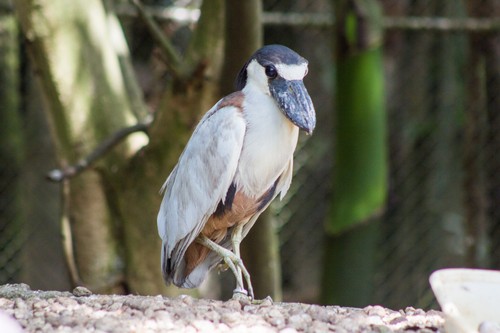
Boat-billed Heron
41-56 cm (16-22 in) long
Purple Heron
78-90 cm (31-35 in) long, 120-152 cm wingspan
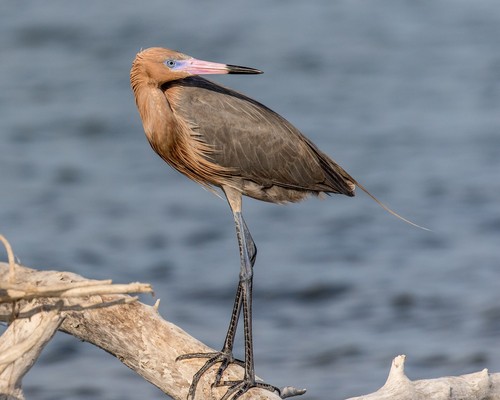
Reddish Egret
68-82 cm (27-32 in) long, 116-125 cm wingspan
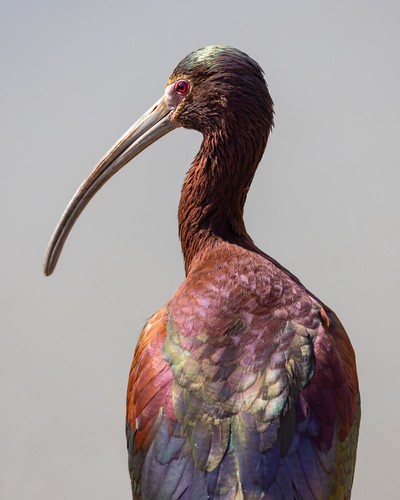
White-faced Ibis
46-56 cm (18-22 in) long, 88-93 cm wingspan
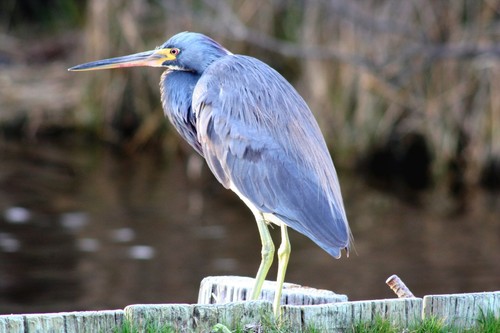
Tricolored Heron
61-76 cm (24-30 in) long, about 96 cm wingspan
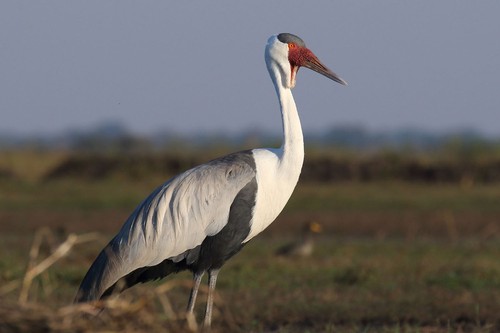
Wattled Crane
120-175 cm (47-69 in) tall, one of the tallest cranes, wingspan up to about 230 cm (7.5 ft)
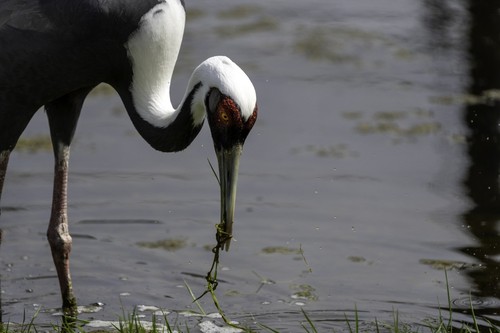
White-naped Crane
112-125 cm (44-49 in) long, 195-210 cm wingspan
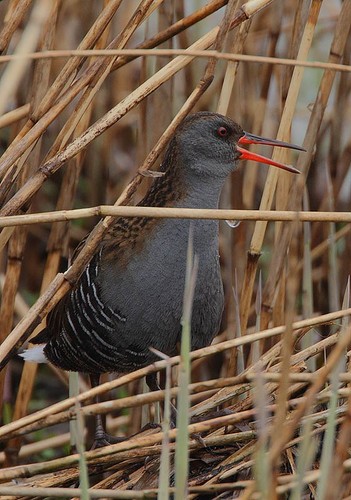
Water Rail
23-28 cm (9-11 in) long, wingspan 38-45 cm
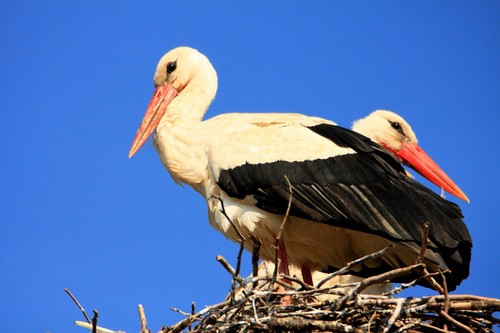
White Stork
100-125 cm (39-49 in) long, 155-215 cm wingspan
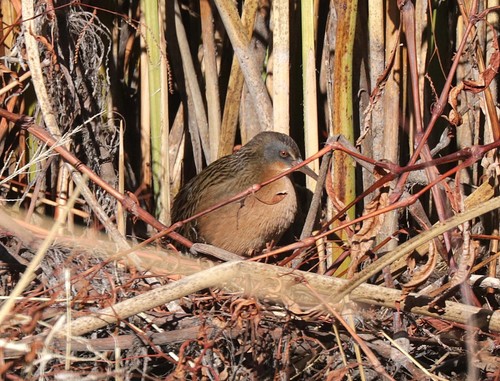
Virginia Rail
20-27 cm (8-11 in) long, wingspan 32-38 cm
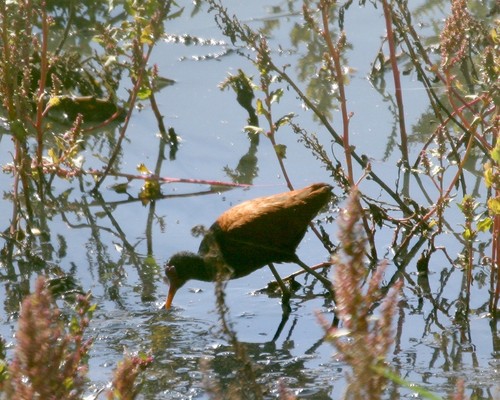
Wattled Jacana
17-23 cm (7-9 in) long