
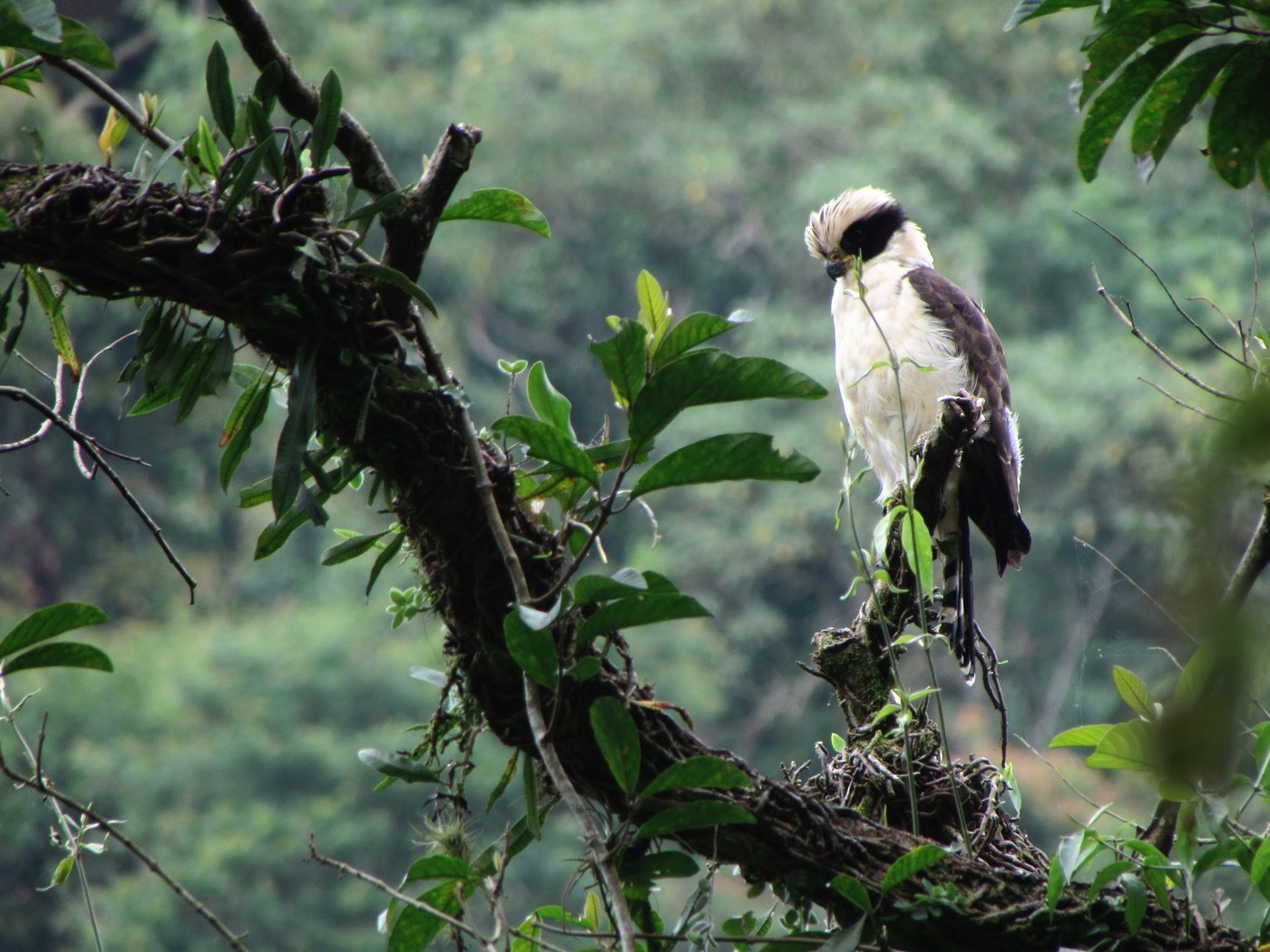
Laughing Falcon
Herpetotheres cachinnans
A cream-headed, masked falcon specialized in hunting snakes, famous for its loud, laughing duets that ring across Neotropical woodlands.
- Size
- 45-56 cm (18-22 in) long
- Habitat
- forest edge, savanna woodland, and semi-open country
- Type
- raptor
Spotted a bird like this?
Identify any bird from a photo, free.
Overview
The Laughing Falcon is a distinctive, large-headed falcon best known for two things: its striking appearance and its remarkably loud vocalizations. It has a creamy-buff head and underparts set off by a bold black facial mask that wraps around the head like a bandit's disguise, contrasting brown upperparts, and a barred tail. Locally known by names such as "guaco" that echo its call, this species is a snake specialist, one of the few raptors adapted to regularly hunt venomous snakes.
How to identify it
Key field marks
- Large, rounded head with a bold black facial mask encircling the head.
- Creamy-buff underparts and head.
- Brown upperparts; barred tail.
- Often perches upright and conspicuously on exposed branches or wires.
Similar species
No other Neotropical falcon shows this combination of a creamy head with a complete black facial mask; its distinctive shape, coloring, and loud calls make it readily identifiable.
Habitat & range
Laughing Falcons favor forest edge, savanna woodland, gallery forest, and semi-open country with scattered trees, avoiding both dense unbroken forest and completely open habitat. The species ranges from Mexico through Central America and across much of South America to northern Argentina. It is a non-migratory resident, generally found at lower to middle elevations.
Behavior & voice
Voice
One of the most recognizable calls of Neotropical woodlands: a loud, far-carrying series of notes often rendered as "wah-co, wah-co" or a laughing cackle, frequently given in duet by paired birds, giving rise to local names like "guaco."
Feeding
This species is a snake specialist, capturing snakes — including venomous pit vipers — by pouncing from a perch and dispatching them with bites to the head before swallowing them, often headfirst; it also takes lizards and, less often, other small vertebrates.
Nesting and breeding
Laughing Falcons do not build their own nest, instead using natural tree cavities, broken-off snags, or old nests of other birds. A single egg is typically laid, and both parents help provision the chick, feeding it largely on snakes brought back to the nest site.
Frequently asked questions
Why is it called the Laughing Falcon?
Its loud, far-carrying call, often given as a duet between paired birds, has a laughing or cackling quality that gives the species its name.
What does a Laughing Falcon eat?
Primarily snakes, including venomous species, which it kills with bites to the head; it also eats lizards and occasionally other small vertebrates.
Is the Laughing Falcon immune to snake venom?
It is not known to have special venom immunity; instead, it relies on hunting skill and quickly incapacitating snakes with precise bites to avoid being bitten itself.
Where does the Laughing Falcon nest?
It does not build its own nest, instead using tree cavities, broken snags, or old nests built by other birds.
Laughing Falcon guides
In-depth guides for identifying, finding, and understanding Laughing Falcon.
Other birds you may enjoy
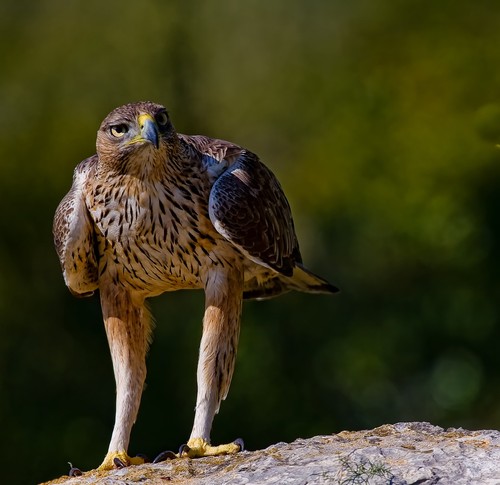
Bonelli's Eagle
Body 65–72 cm (26–28 in); wingspan 150–180 cm (59–71 in)
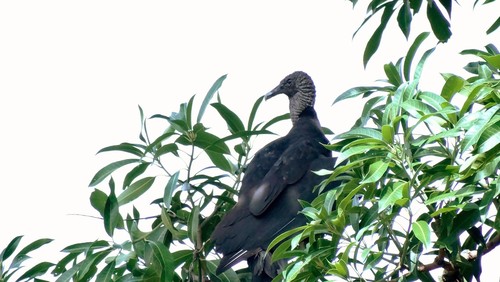
Black Vulture
56-68 cm (22-27 in) long, 137-165 cm wingspan
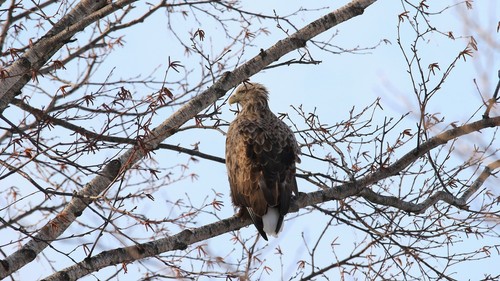
White-tailed Eagle
66-94 cm body length; wingspan 178-245 cm, among the largest eagles in the world
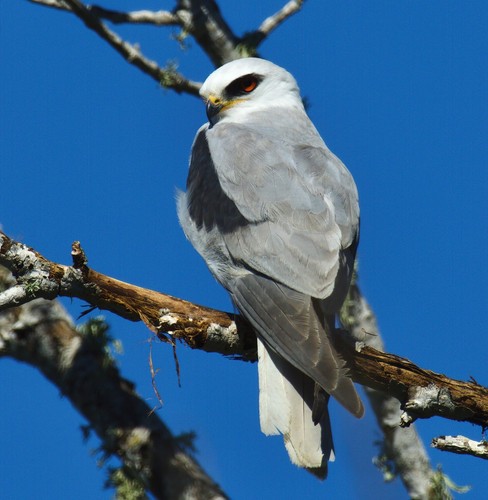
White-tailed Kite
35-43 cm (14-17 in) long, 88-102 cm (35-40 in) wingspan
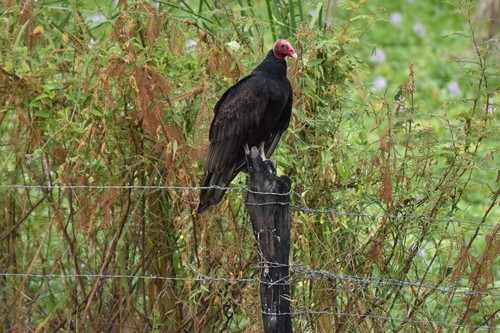
Turkey Vulture
64-81 cm (25-32 in) long, 160-183 cm wingspan
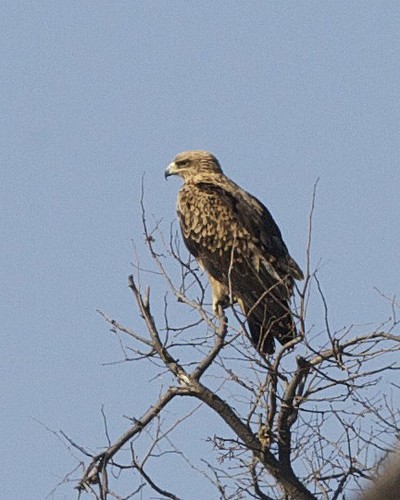
Tawny Eagle
62–75 cm long; wingspan 1.65–2.0 m
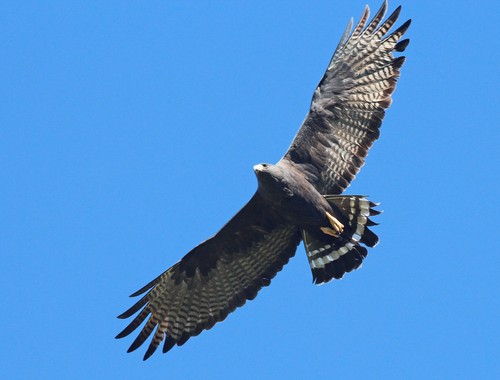
Zone-tailed Hawk
46-56 cm (18-22 in) long, 118-140 cm (46-55 in) wingspan
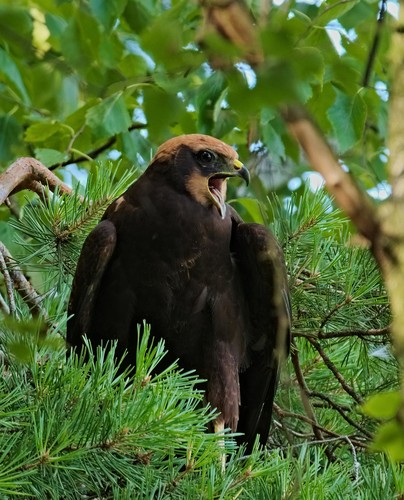
Western Marsh Harrier
Body 43-56 cm; wingspan 115-140 cm
Swallow-tailed Kite
48-68 cm (19-27 in) long including tail streamers, 112-136 cm (44-54 in) wingspan
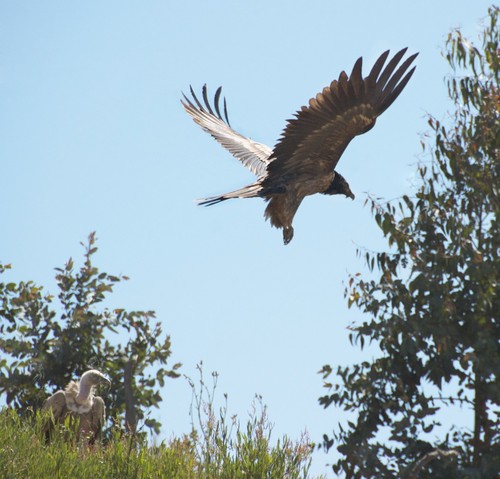
White-backed Vulture
78-98 cm long, wingspan 1.96-2.25 m
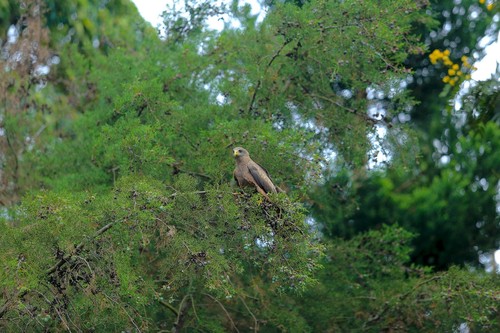
Yellow-billed Kite
55-60 cm long; wingspan 130-155 cm
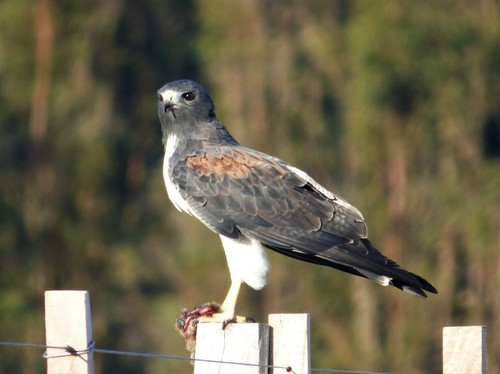
White-tailed Hawk
46-59 cm (18-23 in) long, 122-142 cm (48-56 in) wingspan