
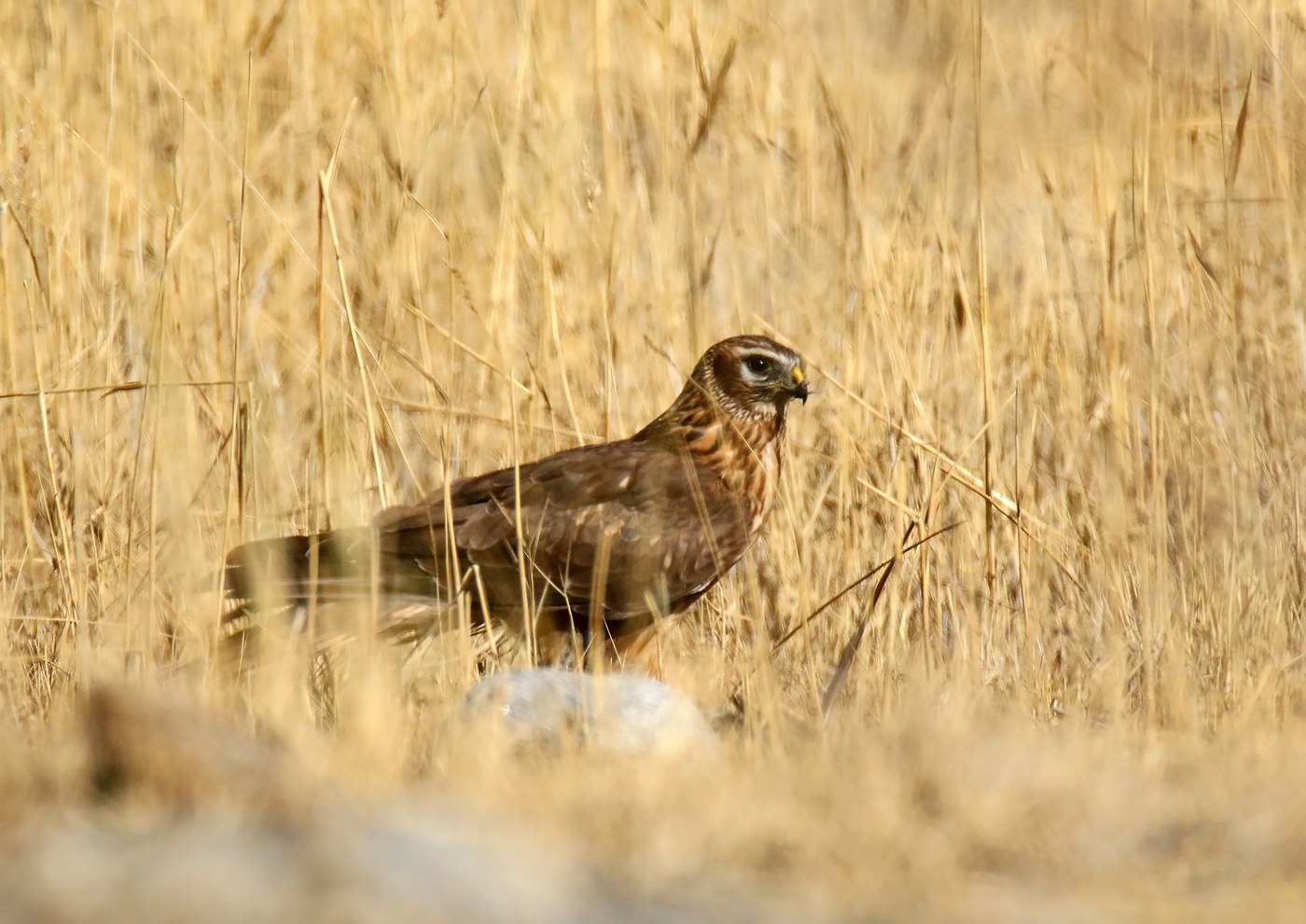
Hen Harrier
Circus cyaneus
A slim, long-winged harrier of open moorland; the pale grey male is nicknamed the 'grey ghost', while the streaky brown female is known as a 'ringtail'.
- Size
- Body 41-52 cm; wingspan 100-121 cm
- Habitat
- Open moorland, heathland, grassland, and marshes; winters on farmland and coastal grazing marsh
- Type
- raptor
Spotted a bird like this?
Identify any bird from a photo, free.
Overview
The Hen Harrier is a slender, long-winged, long-tailed raptor of open country, showing one of the most striking examples of plumage difference between the sexes among European birds of prey.
Appearance
- Adult males: pale silvery-grey above and white below, with black wingtips and a white rump - earning the nickname 'grey ghost'.
- Adult females and juveniles ('ringtails'): streaky brown above and below with a conspicuous white rump and a banded tail.
- Owl-like facial disc aids in locating prey by sound as well as sight.
- Long wings and tail give a distinctly buoyant, floating flight.
How to identify it
Key field marks
- White rump patch, obvious in both sexes and a key distant identification feature
- Male: pale grey overall with black wingtips (only visible on the outer few primaries, forming a small 'dipped in ink' look)
- Female/juvenile: brown with heavy streaking and a banded tail ('ringtail')
- Low, floating, tilting flight with wings held in a shallow V, close to the ground
Similar species
- Montagu's Harrier male has grey wings but with a black bar across the secondaries and rufous streaking on the flanks, absent in Hen Harrier; female Montagu's is slimmer with narrower wings.
- Western Marsh Harrier is larger, bulkier, and browner with a heavier flight, lacking the bold white rump.
- Pallid Harrier male is very pale with a narrower black wedge on the wingtip; females are very similar to Montagu's and require careful comparison.
Habitat & range
Habitat
Breeds on open moorland, upland heather, young conifer plantations, and rough grassland; in winter moves to lowland farmland, coastal marshes, and rough grazing land, often roosting communally on the ground.
Range
Breeds across northern and upland Europe and Asia; in North America the equivalent form is now generally treated as a separate species, the Northern Harrier (Circus hudsonius).
Migration
Northern populations are migratory, moving south to lowland Europe and around the Mediterranean for winter; some upland breeders make only short altitudinal movements to lowlands.
Behavior & voice
Behavior
Hunts by flying low and slow over open ground in a searching, quartering flight, using both sight and hearing to detect prey before dropping onto it feet-first; roosts communally on the ground, sometimes in large numbers, in winter.
Voice
Mostly silent outside the breeding season; gives a fast, chattering 'chek-chek-chek' near the nest and during the male's spectacular tumbling 'sky-dancing' display flight.
Feeding
Preys mainly on small mammals such as voles, and small to medium-sized birds, especially meadow pipits and other ground-nesting species caught by surprise low over vegetation.
Nesting & breeding
Nests on the ground, typically hidden in heather or long grass; lays 4-6 eggs; males may be polygynous, mating with more than one female, and perform dramatic aerial food-pass displays to their mates.
Frequently asked questions
Why is the male Hen Harrier called the 'grey ghost'?
Its pale silvery-grey plumage and habit of appearing and disappearing low over open moorland give rise to this evocative nickname.
What is a 'ringtail' harrier?
'Ringtail' refers to the brown female and juvenile Hen Harriers (and similar harrier species), named for their banded tail pattern, which look quite different from the grey adult male.
How do you tell a Hen Harrier from a Montagu's Harrier?
Male Hen Harriers lack the black wing bar and rufous flank streaking shown by male Montagu's Harriers; females and juveniles are best separated by wing shape and proportions, which takes practice.
Where do Hen Harriers nest?
They nest on the ground, typically well hidden in heather, long grass, or young conifer plantations on open moorland.
What do Hen Harriers eat?
They mainly hunt small mammals like voles and small to medium-sized birds, especially ground-nesting species such as meadow pipits.
Hen Harrier guides
In-depth guides for identifying, finding, and understanding Hen Harrier.
Other birds you may enjoy
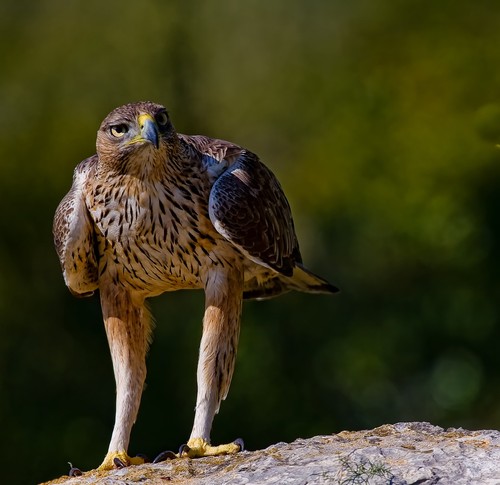
Bonelli's Eagle
Body 65–72 cm (26–28 in); wingspan 150–180 cm (59–71 in)
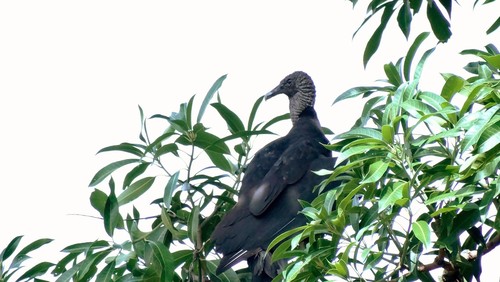
Black Vulture
56-68 cm (22-27 in) long, 137-165 cm wingspan
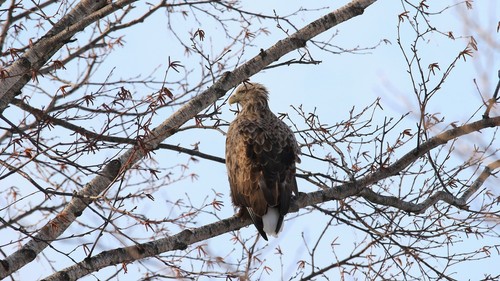
White-tailed Eagle
66-94 cm body length; wingspan 178-245 cm, among the largest eagles in the world
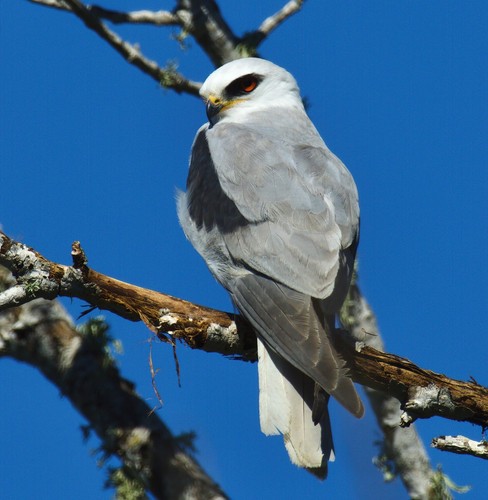
White-tailed Kite
35-43 cm (14-17 in) long, 88-102 cm (35-40 in) wingspan
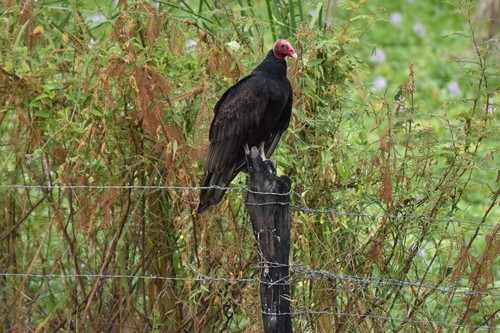
Turkey Vulture
64-81 cm (25-32 in) long, 160-183 cm wingspan
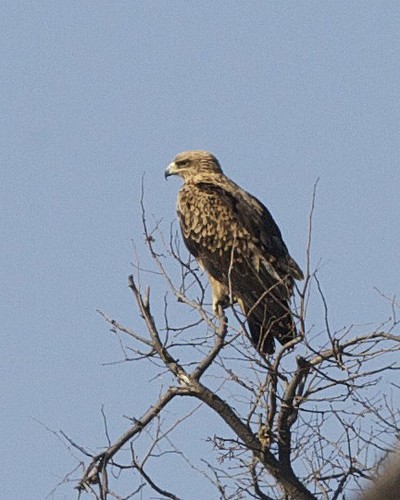
Tawny Eagle
62–75 cm long; wingspan 1.65–2.0 m
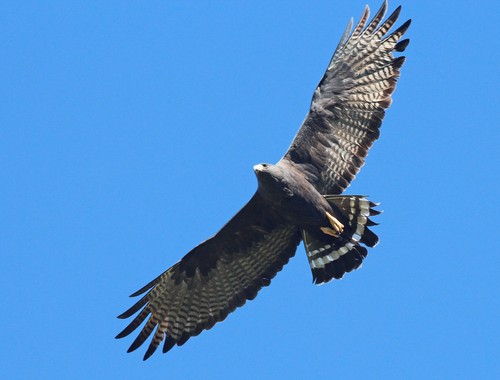
Zone-tailed Hawk
46-56 cm (18-22 in) long, 118-140 cm (46-55 in) wingspan
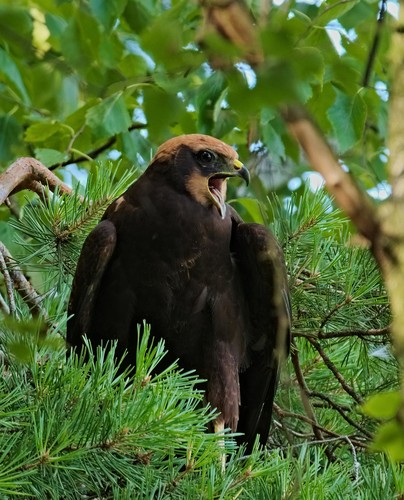
Western Marsh Harrier
Body 43-56 cm; wingspan 115-140 cm
Swallow-tailed Kite
48-68 cm (19-27 in) long including tail streamers, 112-136 cm (44-54 in) wingspan
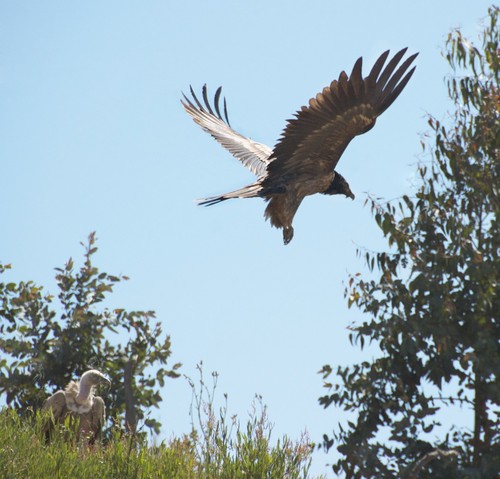
White-backed Vulture
78-98 cm long, wingspan 1.96-2.25 m
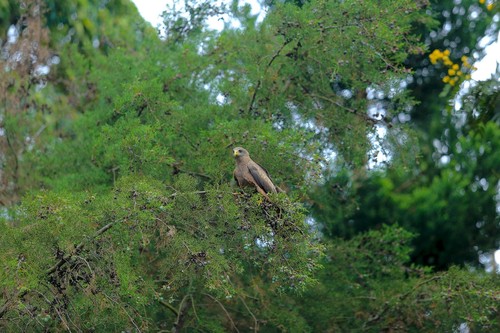
Yellow-billed Kite
55-60 cm long; wingspan 130-155 cm
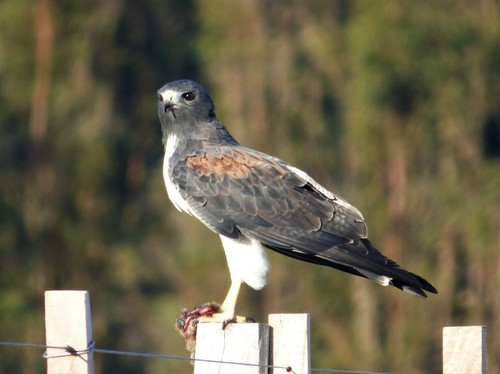
White-tailed Hawk
46-59 cm (18-23 in) long, 122-142 cm (48-56 in) wingspan