
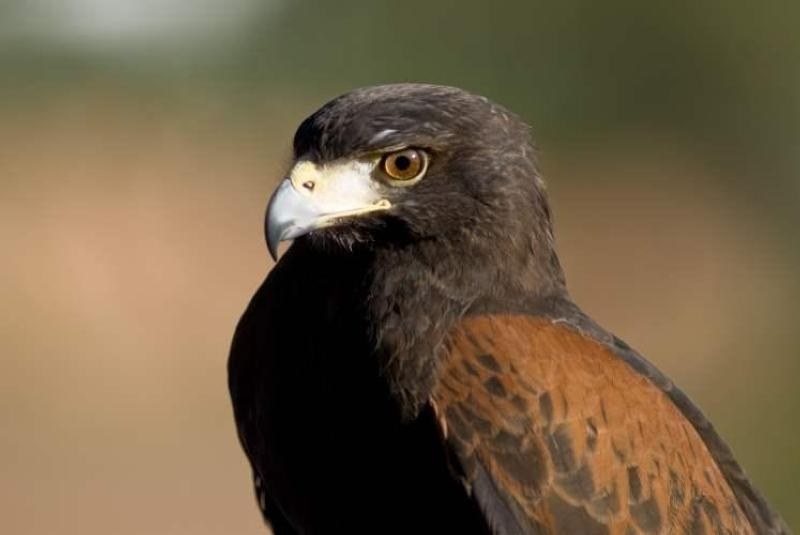
Harris's Hawk
Parabuteo unicinctus
A dark chocolate-brown desert hawk famous for hunting cooperatively in family groups, unlike almost any other raptor.
- Size
- 46-59 cm (18-23 in) long, 103-120 cm (41-47 in) wingspan
- Habitat
- desert scrub, mesquite grasslands, and semi-arid brushland
- Type
- raptor
Spotted a bird like this?
Identify any bird from a photo, free.
Overview
The Harris's Hawk is a medium-large raptor of arid and semi-arid landscapes, instantly recognizable by its dark chocolate-brown body, chestnut shoulder patches ("bay wings"), and a long black tail crossed with a broad white band at the base and tip. Its legs are long and yellow, and the cere and facial skin are also yellow, giving it a distinctive look among American hawks.
What truly sets this species apart is its social behavior. Harris's Hawks live and hunt in family groups of two to seven birds, a highly unusual trait among diurnal raptors, most of which are solitary hunters. This cooperative strategy allows them to take down prey too large or fast for a single hawk, and has made the species a favorite subject of behavioral researchers.
How to identify it
Key Field Marks
- Overall dark brown body with rich chestnut-red patches on the shoulders (lesser wing coverts) and thighs
- Long, black tail with a broad white band at the base and a narrow white tip
- Long yellow legs and a yellow cere/face
- Broad, rounded wings often held in a shallow V while soaring
Similar Species
- Red-tailed Hawk: much bulkier, lacks chestnut shoulder patches, and shows a rufous (not banded black-and-white) tail in adults.
- Common Black Hawk: overall blacker with a single broad white tail band and no chestnut shoulders.
- Zone-tailed Hawk: appears all-black in flight but lacks chestnut patches and has a different tail pattern; also soars in vulture-like flocks rather than family groups.
Habitat & range
Range
Harris's Hawks are year-round residents from the southwestern United States (Arizona, New Mexico, Texas) south through Mexico and Central America into much of South America.
Habitat
They favor open desert with scattered saguaro cacti, mesquite brushland, and semi-arid scrub, often near washes or riparian corridors that provide taller perches and nest sites. They have also adapted well to suburban desert edges in cities like Tucson and Phoenix. This species is largely non-migratory, remaining on territory year-round.
Behavior & voice
Cooperative Hunting
Harris's Hawks are best known for hunting in coordinated groups, sometimes flushing prey by relay-chasing it from perch to perch, or surrounding a rabbit from multiple angles at once. Group members also share kills and take turns as sentinels, and several birds may help incubate and feed young at a single nest in a system called cooperative breeding.
Voice
Calls include a harsh, grating scream or wail, often given when defending territory or communicating within the family group.
Nesting
Nests are bulky platforms of sticks built in trees, cacti (including saguaros), or on utility structures. Clutch size is typically two to four eggs, and helpers beyond the breeding pair frequently assist in raising the young.
Frequently asked questions
Why do Harris's Hawks hunt in groups?
Group hunting lets them take larger prey like jackrabbits, share the workload of flushing and chasing quarry, and increases hunting success, especially in sparse desert habitat where prey is hard to catch alone.
How can I tell a Harris's Hawk from a Red-tailed Hawk?
Look for the Harris's Hawk's dark brown body with chestnut shoulder and leg patches and a black tail with a white base and tip, versus the bulkier Red-tailed Hawk's pale breast and rufous tail.
Where do Harris's Hawks live?
They are resident in desert and semi-arid scrub from the southwestern United States through Mexico, Central America, and much of South America.
Do Harris's Hawks migrate?
No, they are largely non-migratory and stay on their territories year-round.
What do Harris's Hawks eat?
Primarily rabbits, hares, ground squirrels, and other small mammals, supplemented with birds and lizards.
Harris's Hawk guides
In-depth guides for identifying, finding, and understanding Harris's Hawk.
Other birds you may enjoy
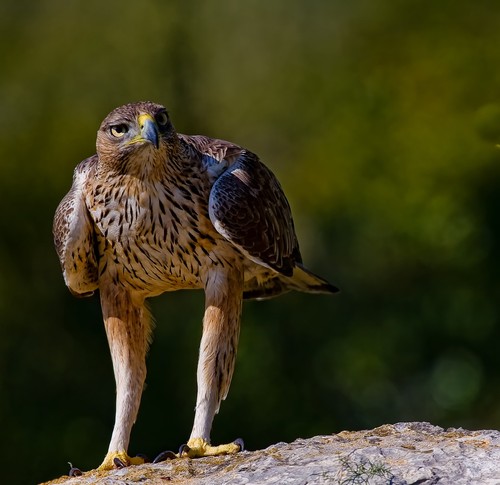
Bonelli's Eagle
Body 65–72 cm (26–28 in); wingspan 150–180 cm (59–71 in)
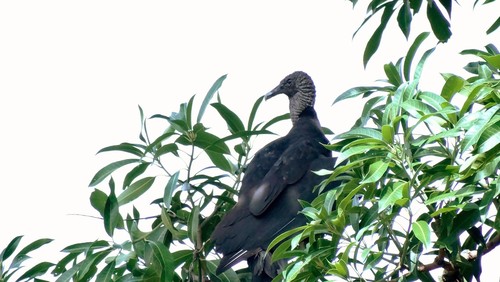
Black Vulture
56-68 cm (22-27 in) long, 137-165 cm wingspan
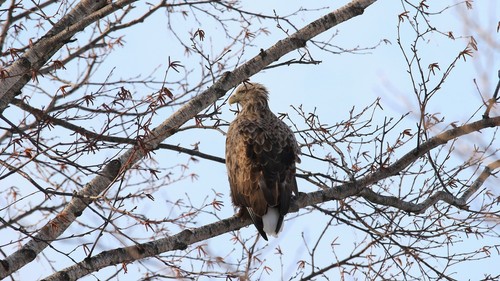
White-tailed Eagle
66-94 cm body length; wingspan 178-245 cm, among the largest eagles in the world
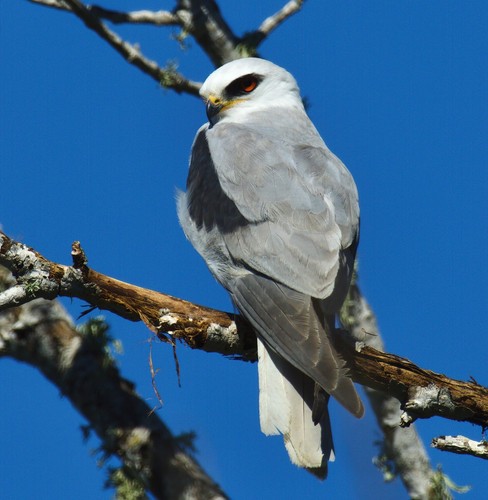
White-tailed Kite
35-43 cm (14-17 in) long, 88-102 cm (35-40 in) wingspan
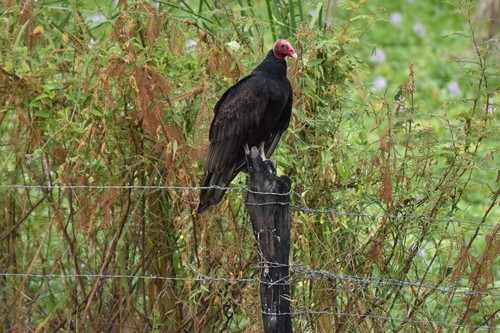
Turkey Vulture
64-81 cm (25-32 in) long, 160-183 cm wingspan
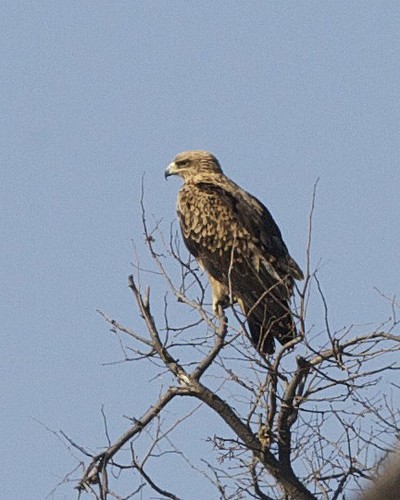
Tawny Eagle
62–75 cm long; wingspan 1.65–2.0 m
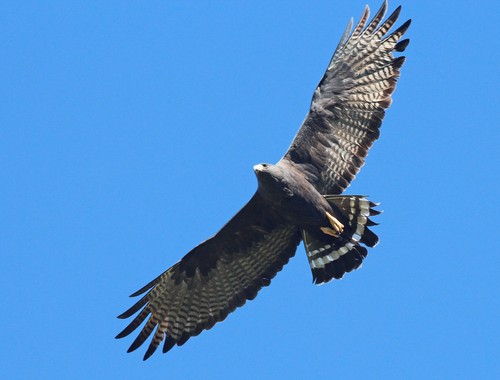
Zone-tailed Hawk
46-56 cm (18-22 in) long, 118-140 cm (46-55 in) wingspan
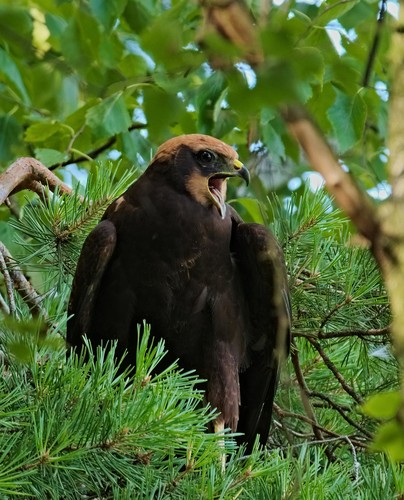
Western Marsh Harrier
Body 43-56 cm; wingspan 115-140 cm
Swallow-tailed Kite
48-68 cm (19-27 in) long including tail streamers, 112-136 cm (44-54 in) wingspan
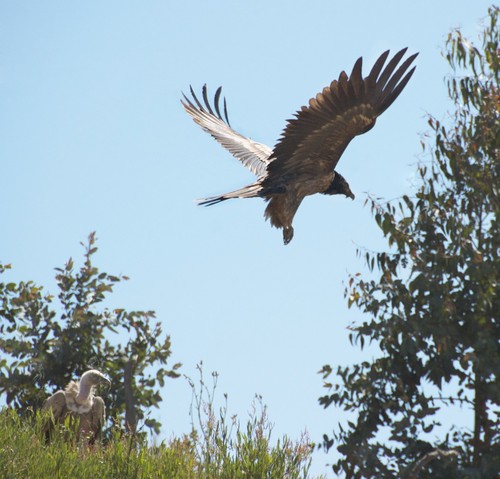
White-backed Vulture
78-98 cm long, wingspan 1.96-2.25 m
Yellow-billed Kite
55-60 cm long; wingspan 130-155 cm
White-tailed Hawk
46-59 cm (18-23 in) long, 122-142 cm (48-56 in) wingspan