
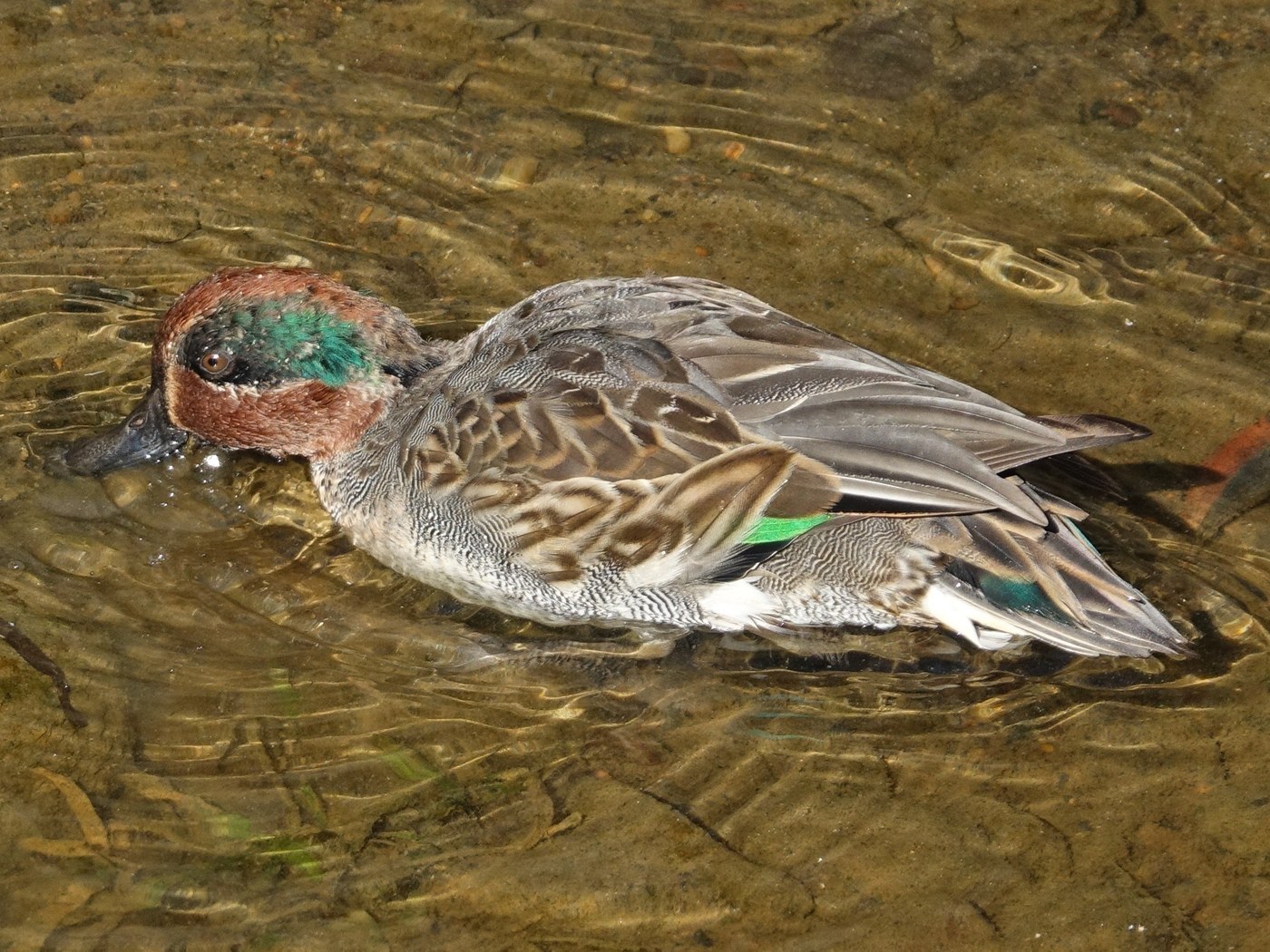
Green-winged Teal
Anas crecca
North America's smallest dabbling duck, with the male showing a chestnut head, an iridescent green eye patch, and a vertical white shoulder stripe.
- Size
- 31-39 cm (12-15.5 in) long, 53-59 cm wingspan
- Habitat
- marshes, ponds, flooded fields, and shallow wetlands across North America, Europe, and Asia
- Type
- waterfowl
Spotted a bird like this?
Identify any bird from a photo, free.
Overview
The Green-winged Teal is a small, compact dabbling duck, the smallest regularly occurring species in North America. The breeding drake has a rich chestnut head with a bold, iridescent green patch sweeping back from the eye to the nape, a gray body finely marked with fine vermiculations, and a distinctive vertical white stripe on the side of the breast.
Females are mottled brown, similar to other small dabbling duck hens, but their tiny size and a bright green speculum (visible in flight or when the wing is exposed) help with identification. The species flies in fast, tight, agile flocks, twisting and turning in unison.
How to identify it
Key Field Marks
- Small size, noticeably smaller than a Mallard
- Breeding drake: chestnut head with an iridescent green eye patch, gray body, vertical white shoulder stripe, cream-colored patch under the tail
- Female: mottled brown, compact shape, green speculum
- Fast, erratic flight in tight flocks
Similar Species
Blue-winged and Cinnamon Teal are similarly small but males show a pale blue (not green) wing patch and different head patterns; female Blue-winged/Cinnamon Teal have a pale blue shoulder patch versus the Green-winged Teal's green speculum. The Green-winged Teal's small size and fast, twisting flock flight are also distinctive.
Habitat & range
Green-winged Teal breed widely across northern North America, Europe, and Asia, favoring shallow marshes, ponds, and wetland edges with dense cover. They are highly migratory, wintering across the southern United States, Mexico, and Central America, as well as comparable latitudes in the Old World, often in large flocks on shallow wetlands, mudflats, and flooded fields.
Their small size and agility allow them to use very shallow and even ephemeral wetlands unsuitable for larger ducks, giving them broad habitat flexibility during migration and winter.
Behavior & voice
Green-winged Teal feed by dabbling in shallow water and mud, taking seeds, aquatic plant material, and invertebrates, and often forage along muddy edges and flooded fields in tightly packed groups. Their small size lets them exploit very shallow water other ducks cannot use.
The male's call is a sharp, high, whistled or bell-like note, quite different from a Mallard's quack, while females give a thin, high-pitched quack. Nests are built on the ground in dense grass or shrub cover, often well concealed and sometimes located surprisingly far from open water, with females incubating 6-11 eggs alone.
Frequently asked questions
Is the Green-winged Teal the smallest North American duck?
Yes, it is generally considered the smallest dabbling duck regularly occurring in North America.
How do you identify a male Green-winged Teal?
Look for a chestnut head with an iridescent green eye patch, a gray body, and a vertical white stripe on the side of the breast.
Why is it called 'green-winged'?
Both sexes show a bright green speculum (wing patch), visible in flight or when the wing is exposed at rest.
What do Green-winged Teal eat?
They eat seeds, aquatic vegetation, and invertebrates found in shallow water and mud.
How do Green-winged Teal fly?
They fly fast and erratically in tight, coordinated flocks that twist and turn in unison, a behavior often used to help identify the species at a distance.
Green-winged Teal guides
In-depth guides for identifying, finding, and understanding Green-winged Teal.
Other birds you may enjoy
Red-necked Grebe
40-55 cm (16-22 in) long, 77-85 cm wingspan
Horned Grebe
31-38 cm (12-15 in) long, 46-55 cm wingspan
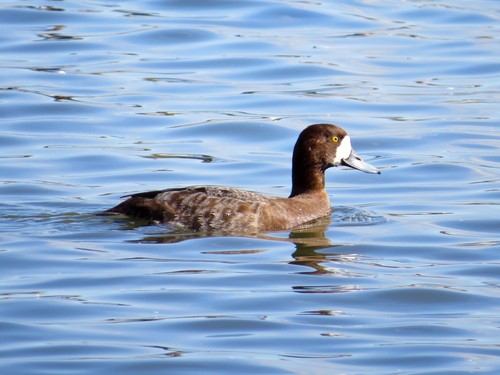
Greater Scaup
42-51 cm (16.5-20 in) long, 71-84 cm wingspan
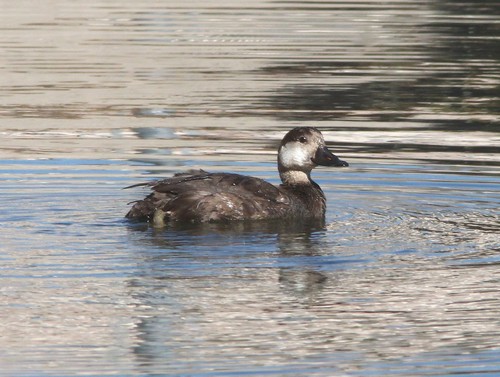
Black Scoter
43-54 cm (17-21 in) long, 79-90 cm wingspan
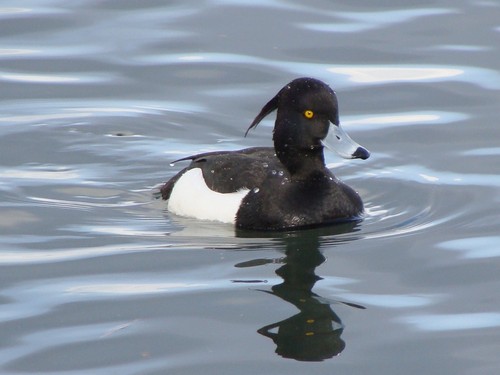
Tufted Duck
40-47 cm (16-18.5 in) long, 67-73 cm wingspan
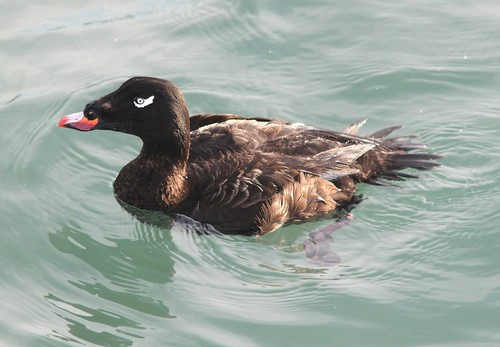
White-winged Scoter
48-58 cm (19-23 in) long, 86-99 cm wingspan
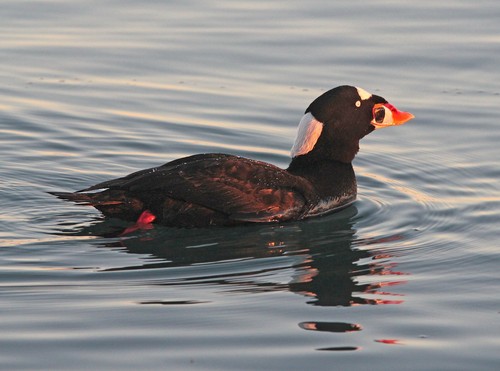
Surf Scoter
45-56 cm (18-22 in) long, 78-92 cm wingspan
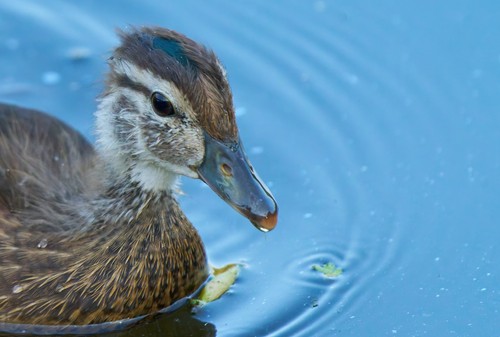
Wood Duck
47-54 cm (18.5-21 in) long, 66-73 cm wingspan
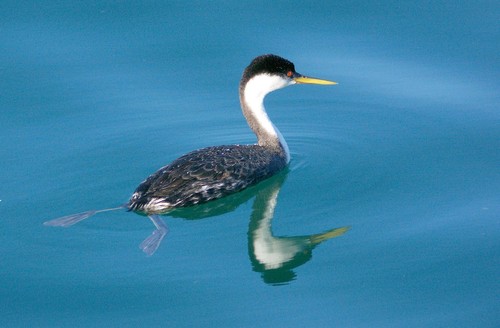
Western Grebe
56-74 cm (22-29 in) long, 79-102 cm wingspan
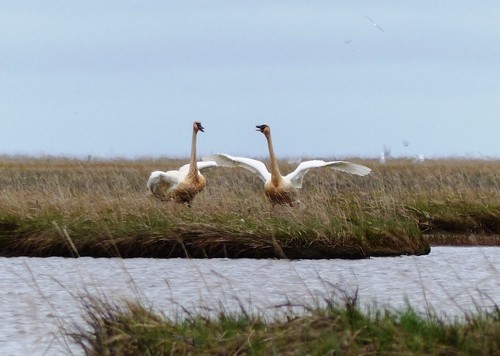
Tundra Swan
115-150 cm (45-59 in) long, about 180 cm wingspan
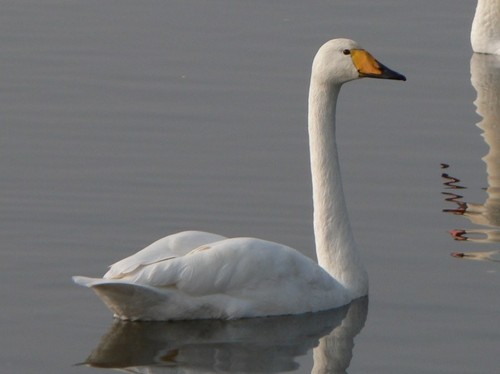
Whooper Swan
140-165 cm (55-65 in) long, 205-235 cm wingspan
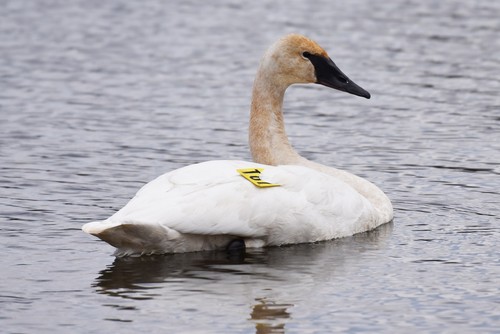
Trumpeter Swan
150-180 cm (59-71 in) long, up to 300 cm wingspan