
Green Heron
Butorides virescens
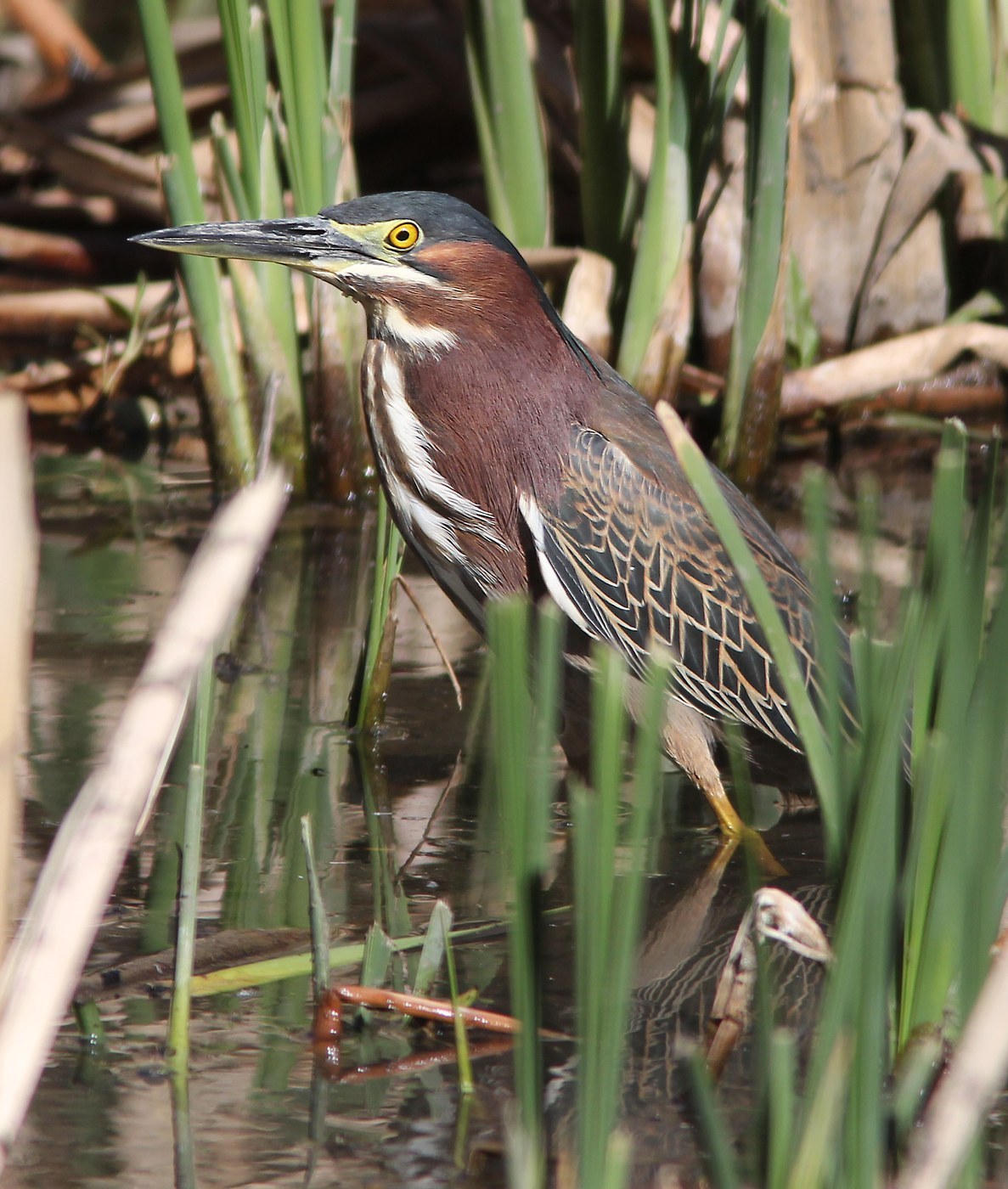
A small, stocky, secretive heron with a dark greenish back, chestnut neck, and a reputation as one of the few birds known to use tools to catch fish.
- Size
- 40-48 cm (16-19 in) long, 64-70 cm wingspan
- Habitat
- wooded wetlands, ponds, streams, and marshes across the Americas
- Type
- wading-bird
Spotted a bird like this?
Identify any bird from a photo, free.
Overview
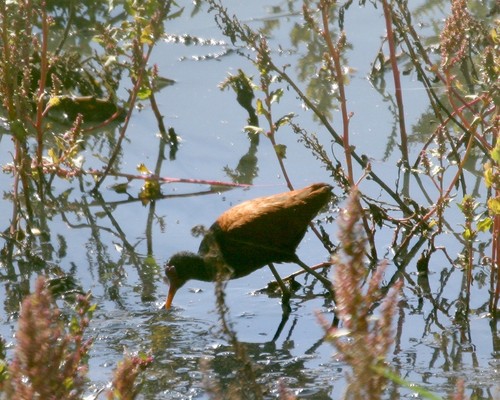
The Green Heron is a small, compact heron with a dark, glossy greenish-black cap and back, a rich chestnut neck and face, and a greyish belly. It often appears hunched, with a short neck drawn in close to the body, though it can extend its neck surprisingly far when striking at prey.
One of the most remarkable behaviors documented in this species is tool use: Green Herons have been observed dropping bait, such as small twigs, insects, or bread, onto the water's surface to lure fish within striking range, a rare example of tool use among birds.
How to identify it
Key field marks
- Small, stocky build with a short neck typically held drawn in
- Dark, glossy greenish cap and back
- Rich chestnut neck and face
- Bright orange-yellow legs, especially vivid in breeding adults
Similar species
- Black-crowned Night-Heron (juvenile): larger and more heavily streaked brown, lacking the Green Heron's solid chestnut neck
- American Bittern: larger, streaky brown overall, and lacks the glossy green-black cap
Small size, chestnut neck, and a hunched, secretive posture near water's edge are the best clues to identifying a Green Heron.
Habitat & range
Range and habitat
Green Herons are found across much of the eastern and central United States, parts of the West Coast, Mexico, Central America, and the Caribbean, favoring shaded, wooded edges of ponds, streams, marshes, and mangroves rather than open wetlands.
Migration
Northern breeding populations migrate south to Mexico, Central America, and the Caribbean for winter, while populations in the southern United States, Mexico, and points farther south are generally resident year-round.
Behavior & voice
Behavior
Green Herons are solitary and somewhat secretive, typically hunting alone from a low perch or crouched position at the water's edge rather than wading in open water like larger herons; they are notable among birds for occasionally using bait, such as insects or small objects, to lure fish.
Voice
The most familiar call is a sharp, loud "skeow" or "kyow" often given when the bird is flushed or in flight.
Feeding
They feed by patiently waiting, often crouched low on a branch or bank overhanging water, then striking rapidly at small fish, insects, crustaceans, and amphibians; the species' documented use of bait to attract fish is considered a form of tool use.
Nesting and breeding
Green Herons typically nest solitarily or in small loose groups, building a simple stick platform nest in a tree or shrub near water; both parents share incubation of three to five pale greenish-blue eggs.
Frequently asked questions
Do Green Herons really use tools?
Yes, Green Herons have been documented dropping bait such as twigs, feathers, or insects onto the water to attract fish within striking range, one of the clearest examples of tool use in birds.
How big is a Green Heron?
It is a small heron, only about 40-48 cm (16-19 in) long, much smaller than familiar large herons like the Great Blue Heron.
What does a Green Heron's call sound like?
It gives a sharp, loud 'skeow' or 'kyow' call, often heard when the bird is startled into flight.
Where do Green Herons like to hunt?
They typically hunt alone from a low perch or crouched position along shaded pond, stream, or marsh edges, rather than wading in open water.
Green Heron guides
In-depth guides for identifying, finding, and understanding Green Heron.
Other birds you may enjoy
Demoiselle Crane
85-100 cm (33-39 in) long, 155-180 cm wingspan
Boat-billed Heron
41-56 cm (16-22 in) long
Purple Heron
78-90 cm (31-35 in) long, 120-152 cm wingspan
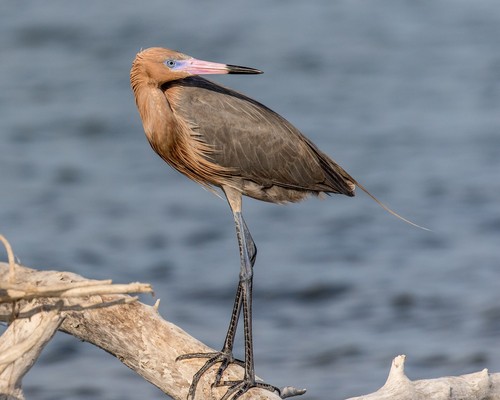
Reddish Egret
68-82 cm (27-32 in) long, 116-125 cm wingspan
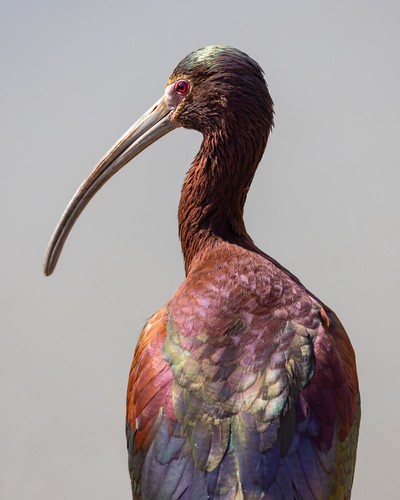
White-faced Ibis
46-56 cm (18-22 in) long, 88-93 cm wingspan
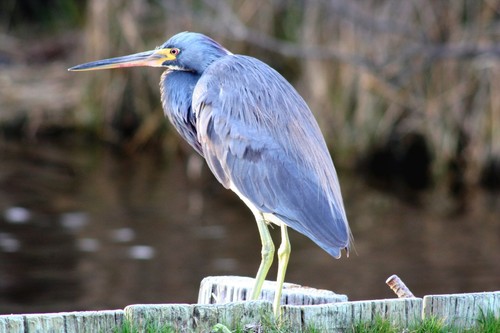
Tricolored Heron
61-76 cm (24-30 in) long, about 96 cm wingspan
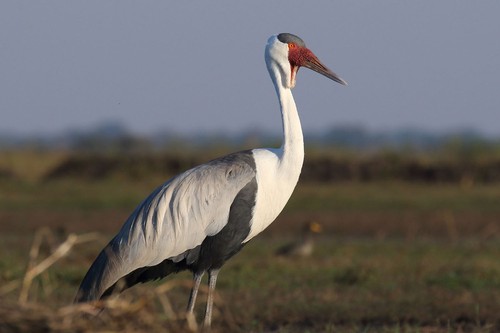
Wattled Crane
120-175 cm (47-69 in) tall, one of the tallest cranes, wingspan up to about 230 cm (7.5 ft)
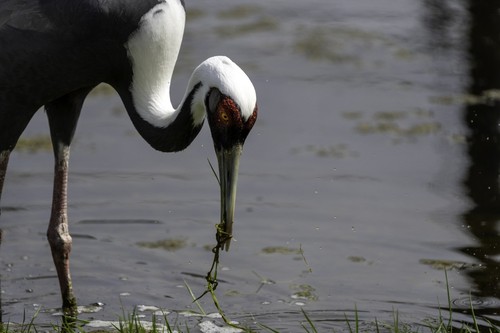
White-naped Crane
112-125 cm (44-49 in) long, 195-210 cm wingspan
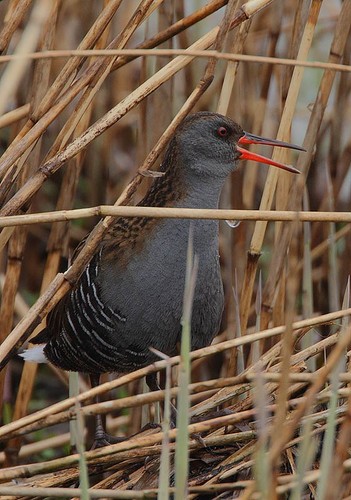
Water Rail
23-28 cm (9-11 in) long, wingspan 38-45 cm
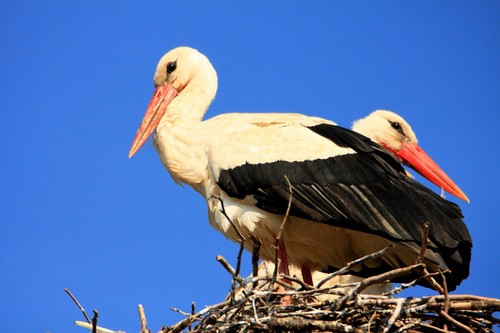
White Stork
100-125 cm (39-49 in) long, 155-215 cm wingspan
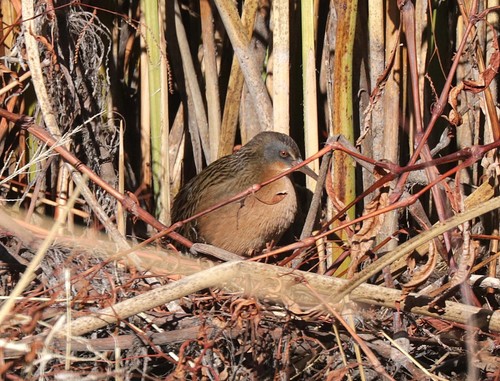
Virginia Rail
20-27 cm (8-11 in) long, wingspan 32-38 cm
Wattled Jacana
17-23 cm (7-9 in) long