
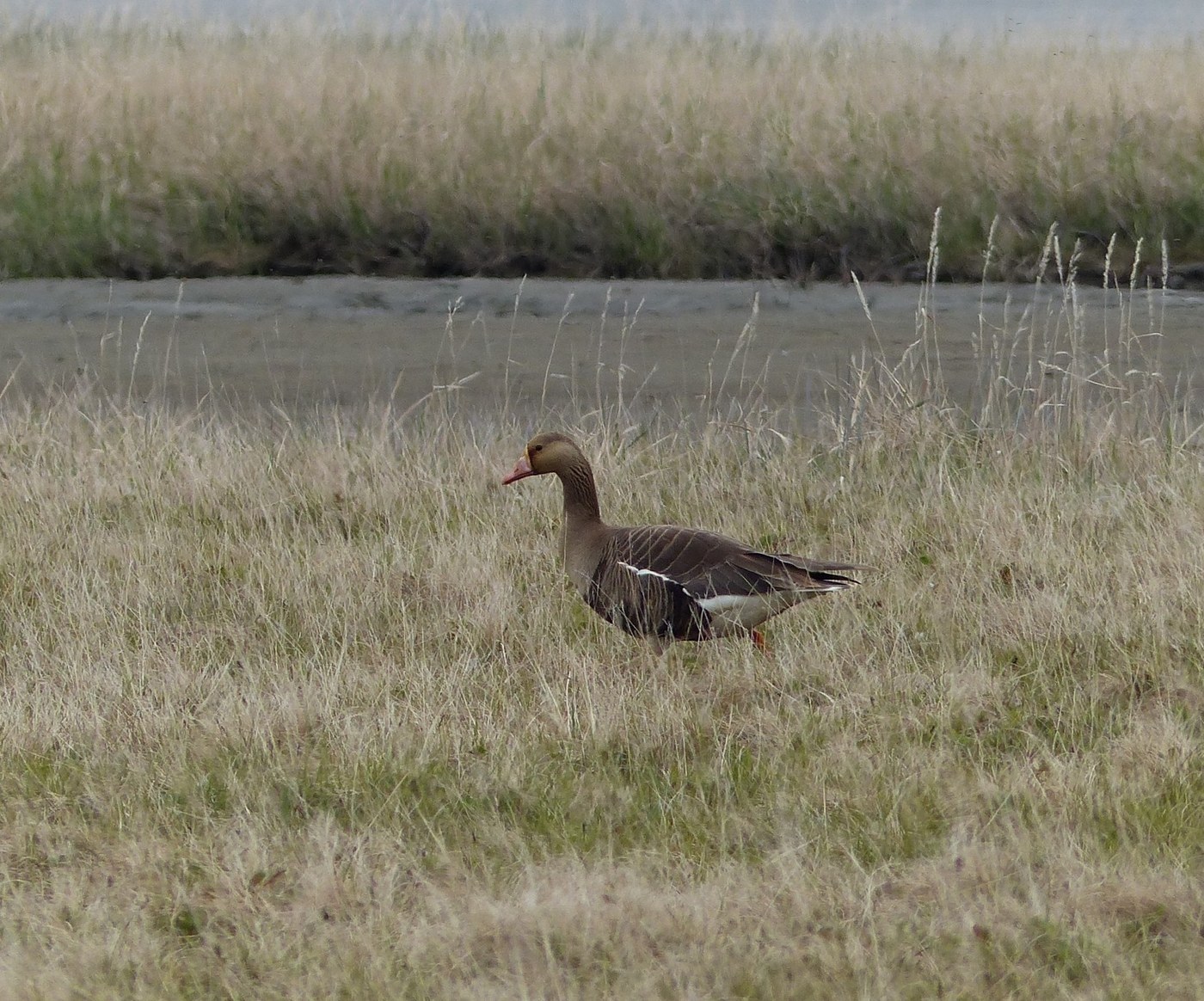
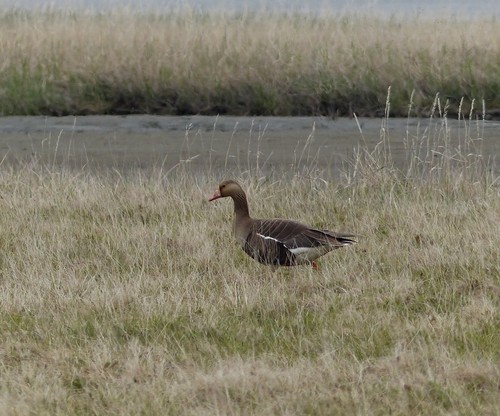
Greater White-fronted Goose
Anser albifrons
A brown goose with a white patch around the base of the bill and irregular black barring on the belly.
- Size
- 64-81 cm (25-32 in) long, 130-165 cm wingspan
- Habitat
- Arctic tundra (breeding), wetlands and agricultural fields (winter)
- Type
- waterfowl
Spotted a bird like this?
Identify any bird from a photo, free.
Overview
The Greater White-fronted Goose is a medium-sized brown goose named for the white patch of feathers surrounding the base of its bill, which contrasts with its otherwise grayish-brown body. Adults show bold, irregular black barring across the belly (giving rise to the nickname 'specklebelly'), a pink or orange bill, and orange legs.
This goose breeds on Arctic tundra across North America and Eurasia and winters in large flocks on wetlands, marshes, and agricultural fields well to the south, often mixing with other goose species.
How to identify it
Key field marks
- Grayish-brown body with a white patch surrounding the base of the bill (absent in juveniles)
- Irregular black barring across the belly, especially bold in older adults
- Pink or orange bill, orange legs and feet
Similar species
Juvenile birds lack the white face patch and belly barring, and can be confused with immature Greylag or other gray geese, but the orange legs and overall structure help identify them. The Bar-headed Goose is much paler gray overall with distinct black head bars rather than a white face patch, and lacks belly barring.
Habitat & range
Greater White-fronted Geese breed on Arctic tundra across northern North America, Greenland, and Eurasia, nesting on the ground near wetlands. They are highly migratory, wintering on marshes, rice fields, and agricultural land across the southern United States, parts of Mexico, Europe, and Asia, often forming large, vocal flocks at traditional wintering sites.
Behavior & voice
Behavior
Gregarious outside the breeding season, forming flocks that graze extensively on agricultural fields and wetlands; pairs and family groups remain together within larger flocks.
Voice
Gives a distinctive, high-pitched, laughing or yelping call, often rendered as 'kah-lah-aluck,' quite different from the deeper honk of Canada Goose.
Feeding
Grasses, sedges, grains, and roots, obtained by grazing in fields and wetlands.
Nesting
Nests on the ground on Arctic tundra, often near small lakes or wetlands; clutches typically hold 4-6 eggs.
Frequently asked questions
Why is it called the White-fronted Goose?
The name refers to the white patch of feathers around the base of the bill, present on adults but absent on juveniles.
What does 'specklebelly' mean?
It is a common nickname for the Greater White-fronted Goose, referring to the irregular black barring across the belly of adult birds.
What is the call of the Greater White-fronted Goose like?
A distinctive high, laughing or yelping call, quite different from the deeper honk of a Canada Goose.
Where do Greater White-fronted Geese winter?
On marshes, rice fields, and agricultural land across the southern United States, parts of Mexico, Europe, and Asia.
Greater White-fronted Goose guides
In-depth guides for identifying, finding, and understanding Greater White-fronted Goose.
Other birds you may enjoy
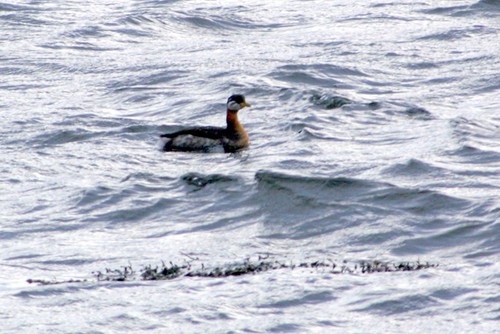
Red-necked Grebe
40-55 cm (16-22 in) long, 77-85 cm wingspan
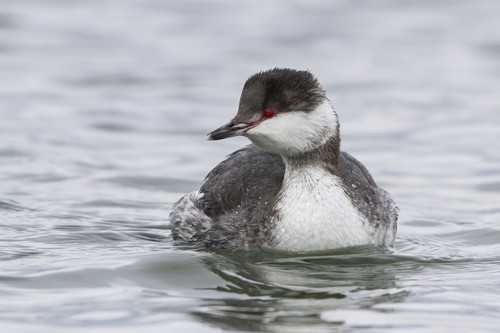
Horned Grebe
31-38 cm (12-15 in) long, 46-55 cm wingspan
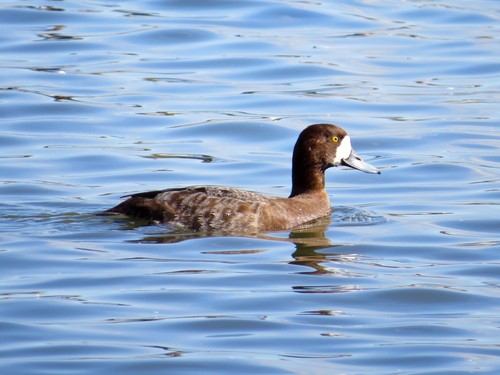
Greater Scaup
42-51 cm (16.5-20 in) long, 71-84 cm wingspan
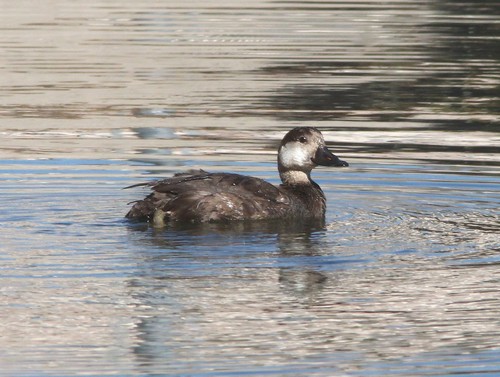
Black Scoter
43-54 cm (17-21 in) long, 79-90 cm wingspan
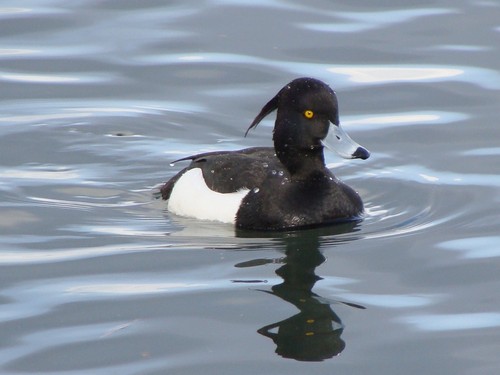
Tufted Duck
40-47 cm (16-18.5 in) long, 67-73 cm wingspan
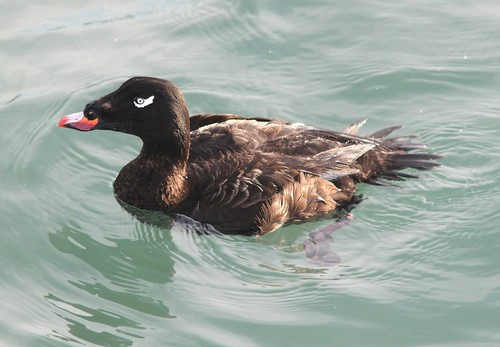
White-winged Scoter
48-58 cm (19-23 in) long, 86-99 cm wingspan
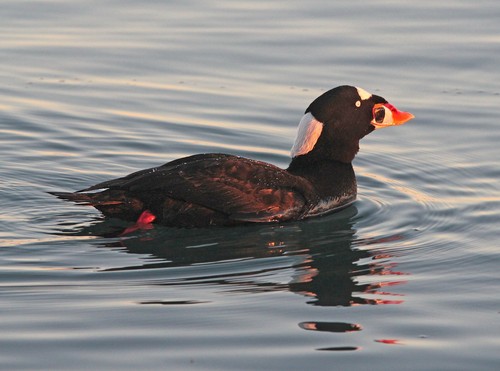
Surf Scoter
45-56 cm (18-22 in) long, 78-92 cm wingspan
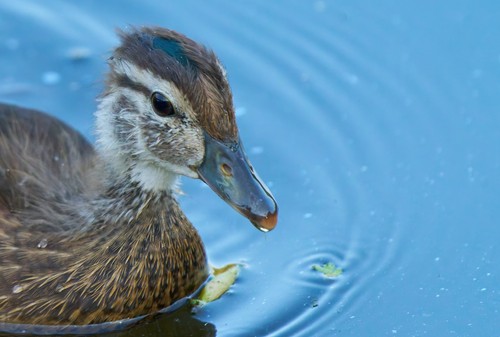
Wood Duck
47-54 cm (18.5-21 in) long, 66-73 cm wingspan
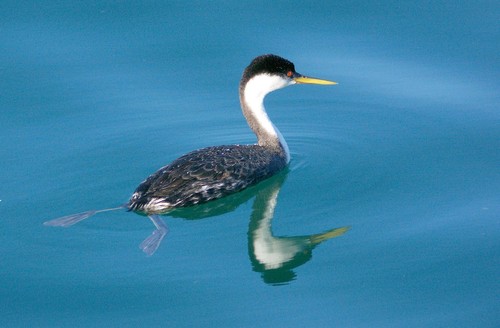
Western Grebe
56-74 cm (22-29 in) long, 79-102 cm wingspan
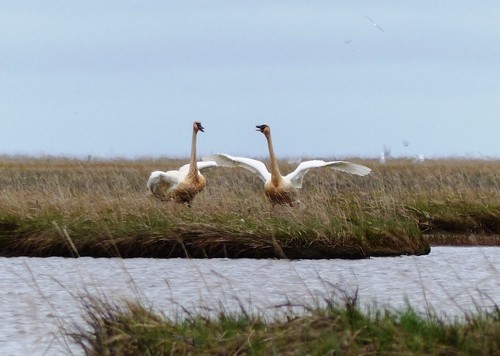
Tundra Swan
115-150 cm (45-59 in) long, about 180 cm wingspan
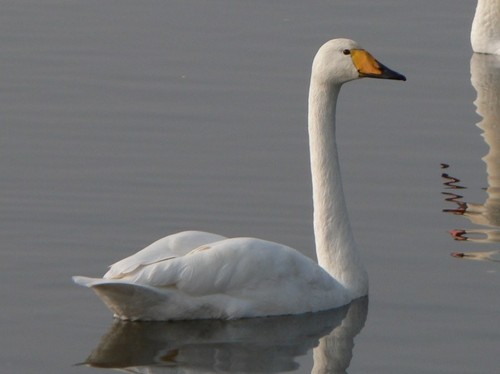
Whooper Swan
140-165 cm (55-65 in) long, 205-235 cm wingspan
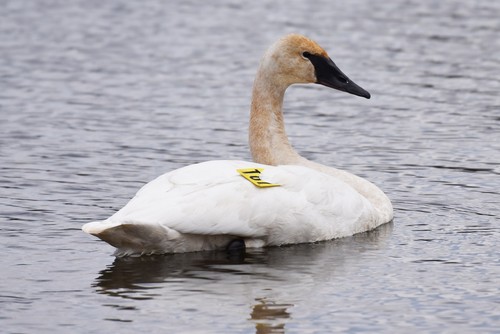
Trumpeter Swan
150-180 cm (59-71 in) long, up to 300 cm wingspan