
Greater White-fronted Goose Identification Guide
A medium-sized brown goose named for the white patch encircling the base of its bill, the Greater White-fronted Goose shows an orange bill and legs and bold black belly barring, often traveling in flocks with a distinctive high, laughing call.
Read the full Greater White-fronted Goose encyclopedia entry →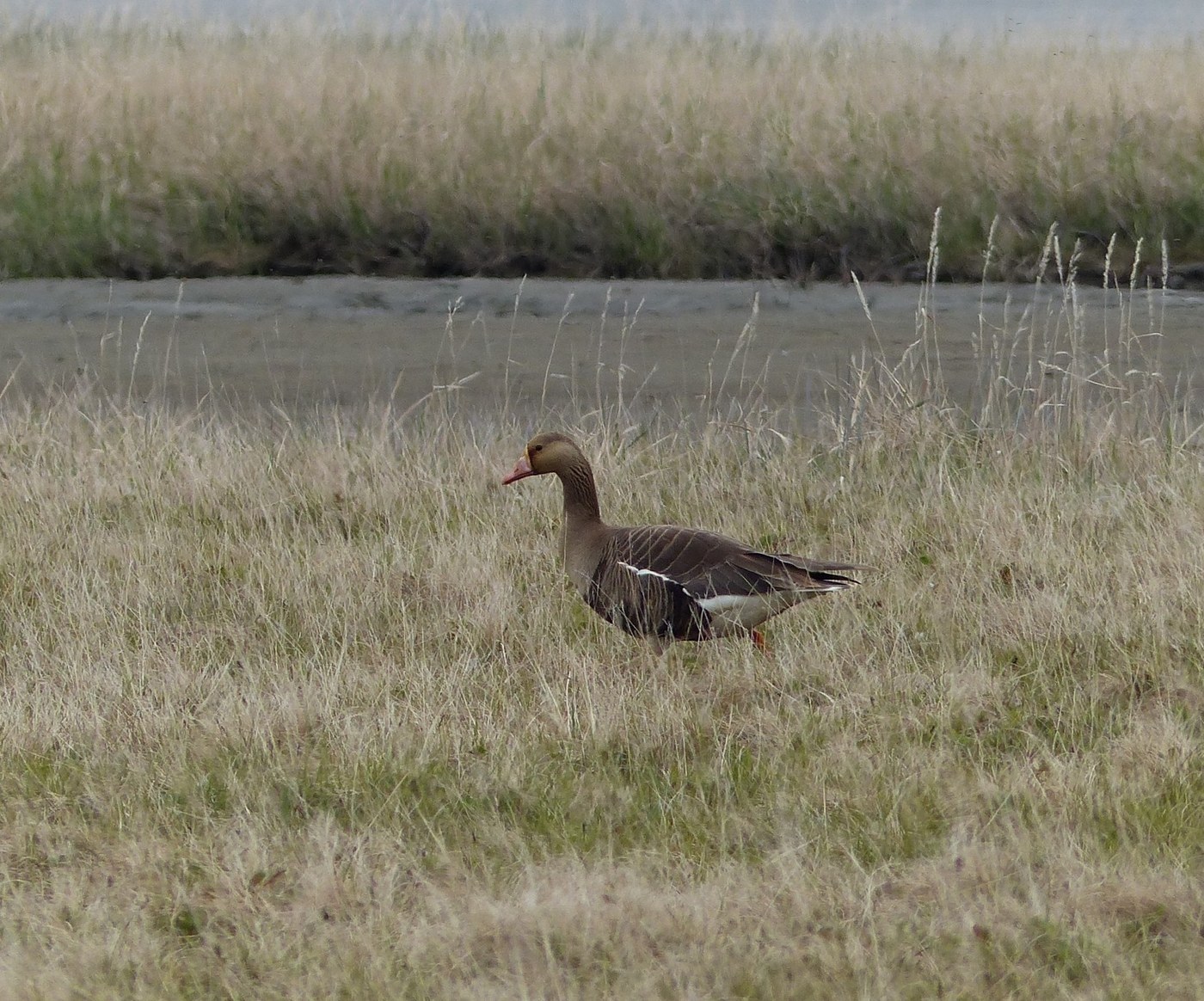
Key Field Marks
- Size & shape: A medium-sized goose, smaller and more slender than a Canada Goose, with a fairly small head and moderately long neck.
- Plumage: Warm grayish-brown overall with a barred/blotched black pattern on the belly (heavier and more extensive in older adults, sparse or absent in juveniles); white patch surrounds the base of the bill (giving the name "white-fronted"), absent in juveniles.
- Bill: Pink to orange, stubby, and conical.
- Legs: Bright orange.
- In flight: Shows a plain grayish-brown back and wings without strong contrast, dark tail with a white terminal band, and white U-shaped rump band; flocks often fly in loose lines or V's with a distinctive high, yelping call.
- Behavior: Highly social, forming large flocks, often mixed with other geese in winter, grazing in fields and wetland margins.
Separating It From Similar Species
- Domestic/wild Graylag-type geese are bulkier with a heavier orange or pink bill and different call; not usually a field problem in North America.
- Immature Canada or Cackling Geese lack the white face patch and black belly barring and instead show the characteristic black neck/head with white chinstrap.
- Bean Goose species (rare vagrants in North America) are darker and browner overall, lack the white front and belly barring, and have a longer, darker bill with an orange band.
- Juvenile White-fronted Geese lacking the white face and belly bars can be told from young Canada/Cackling Geese by the orange legs and bill and overall plainer brown plumage without a black head/neck.
Where & When to See It
- Habitat: Wetlands, wet grasslands, agricultural fields (grain stubble, pastures), and marshes; feeds by grazing on grasses, grain, and sedges.
- Range: Breeds on Arctic tundra across Alaska, northern Canada, and Eurasia; winters in the southern U.S. (California's Central Valley, Gulf Coast, Texas), Mexico, and parts of Europe and Asia.
- Season: A migrant and winter visitor through most of temperate North America, typically present from fall through early spring (roughly October–March), with breeding restricted to the Arctic summer.
Voice
- A high-pitched, laughing or yelping kah-lah-aluck or lyo-lyok, often given in flight and considered one of the more musical goose calls, frequently heard from migrating flocks overhead.
Frequently asked questions
How do you identify an adult Greater White-fronted Goose?
Look for a grayish-brown goose with a white patch around the base of a pink-orange bill, black blotchy barring on the belly, and bright orange legs.
How can you tell a juvenile White-fronted Goose from other geese?
Juveniles lack the white face patch and belly barring, but the orange bill and legs plus overall plain warm-brown plumage (without a dark head/neck) still separate them from young Canada or Cackling Geese.
What does a Greater White-fronted Goose sound like?
A distinctive high, laughing or yelping call, often transcribed as 'kah-lah-aluck,' frequently heard from flocks flying overhead during migration.
Where is the best place to see Greater White-fronted Geese in winter?
Large wintering concentrations occur in California's Central Valley, along the Gulf Coast and Texas, and in parts of Mexico, usually in agricultural fields and wetlands.