
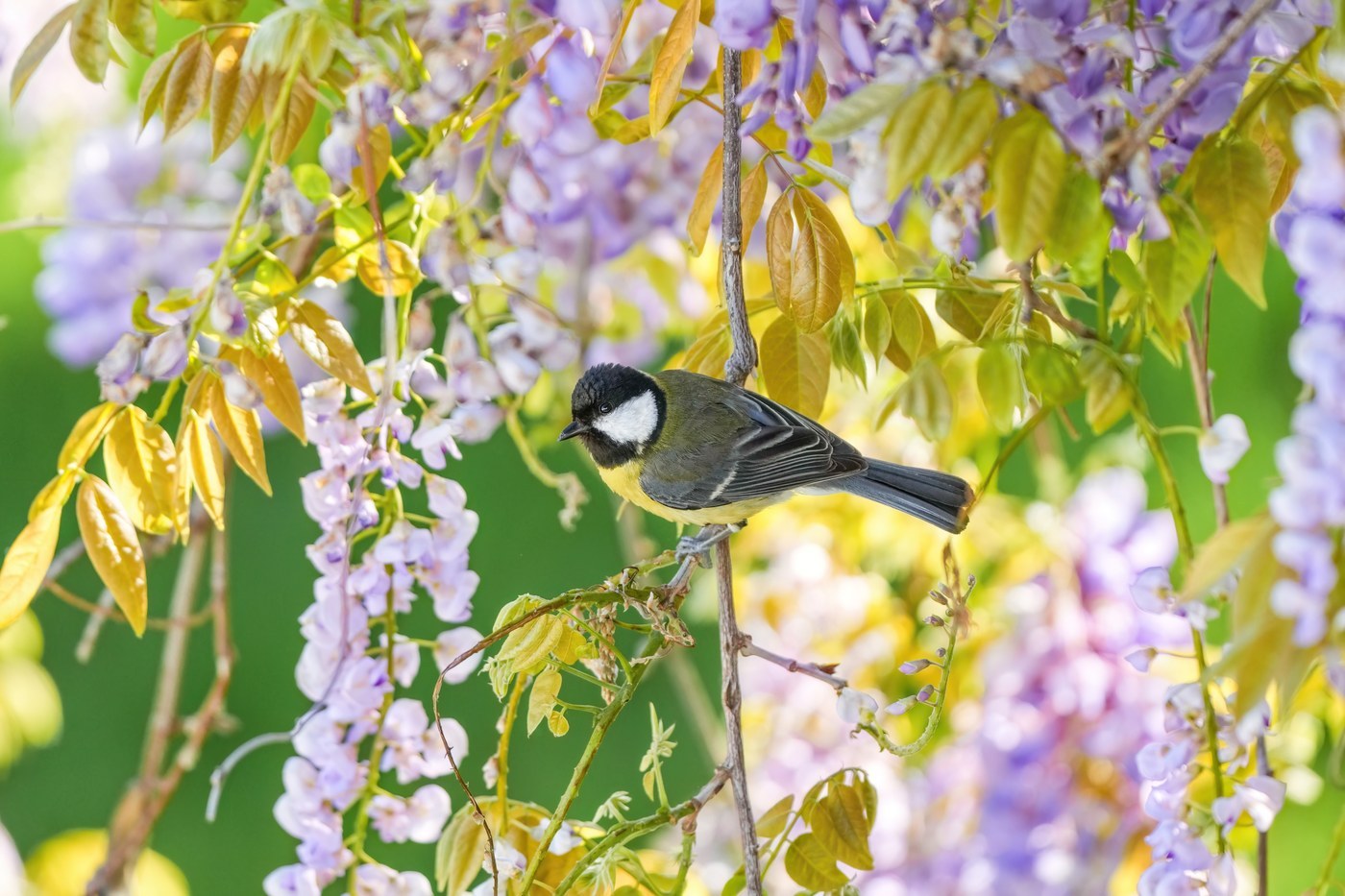
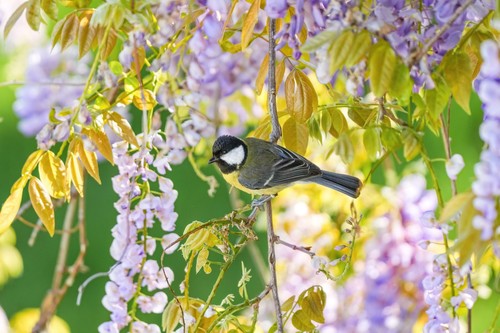
Great Tit
Parus major
The largest and most common European tit, with a glossy black head, white cheeks, and a bold black stripe down its yellow breast.
- Size
- 12.5-14 cm (5-5.5 in) long, 22-25 cm wingspan
- Habitat
- woodlands, hedgerows, parks, and gardens
- Type
- songbird
Spotted a bird like this?
Identify any bird from a photo, free.
Overview
The Great Tit is the largest of the European tits, with a glossy black head and throat, contrasting white cheek patches, olive-green back, and bright yellow underparts split by a broad black central stripe running from the throat to the belly. Males typically show a wider, bolder black stripe than females, particularly where it broadens at the belly.
One of the most intensively studied wild birds in ornithology, the Great Tit is a bold, adaptable species that thrives in woodlands as well as urban parks and gardens.
How to identify it
Key field marks
- Glossy black head and throat with large white cheek patches
- Bright yellow underparts with a broad black central stripe
- Olive-green back, blue-gray wings with a white wing bar
Similar species
- Blue Tit is smaller with a blue cap and no black belly stripe.
- Coal Tit lacks yellow underparts entirely, showing gray-buff coloring with a white nape spot.
- Marsh Tit and Willow Tit are smaller, plain brown-gray tits without yellow or a black belly stripe.
Habitat & range
Habitat
Inhabits deciduous and mixed woodlands, hedgerows, orchards, parks, and gardens, and readily adapts to urban environments.
Range
Widespread across Europe, North Africa, and much of temperate Asia.
Migration
Largely resident, though some northern populations may move short distances in severe winters.
Behavior & voice
Behavior
Bold and inquisitive, often the dominant species at bird feeders; forages on branches, tree trunks, and the ground, and readily investigates new food sources.
Voice
A loud, ringing "teacher-teacher-teacher" song, along with a wide and variable repertoire of other calls and phrases.
Feeding
Eats insects and spiders in the breeding season, switching to seeds, nuts, and berries in autumn and winter; frequently visits feeders for sunflower seeds and peanuts.
Nesting
Nests in tree cavities, walls, or nest boxes, building a cup of moss lined with hair and feathers; lays 5-12 white eggs speckled with red-brown.
Frequently asked questions
How do you identify a Great Tit?
Look for a glossy black head and throat, white cheeks, and bright yellow underparts split by a bold black central stripe.
Are Great Tits and Blue Tits related?
Yes, both belong to the tit family, but the Great Tit is larger with a black-and-white head and a black belly stripe, while the Blue Tit has a blue cap and plain yellow underparts.
What sounds does a Great Tit make?
Its most familiar song is a loud, ringing "teacher-teacher-teacher," though it has one of the most varied call repertoires of any European songbird.
Do Great Tits use nest boxes?
Yes, they readily nest in tree cavities, walls, and garden nest boxes with a suitable entrance hole.
Great Tit guides
In-depth guides for identifying, finding, and understanding Great Tit.
Other birds you may enjoy
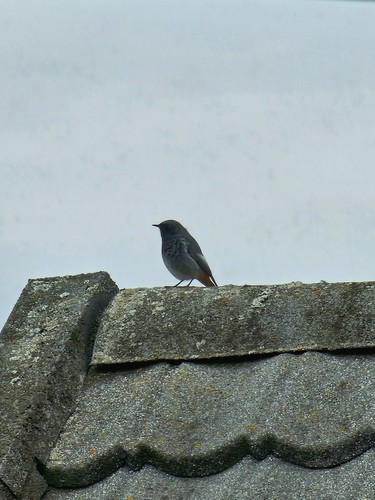
Black Redstart
13-14.5 cm (5.1-5.7 in) long, 23-26 cm wingspan
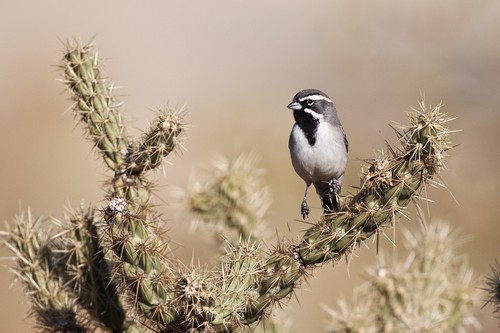
Black-throated Sparrow
12-14 cm (4.7-5.5 in) long, about 19-20 cm (7.5-8 in) wingspan
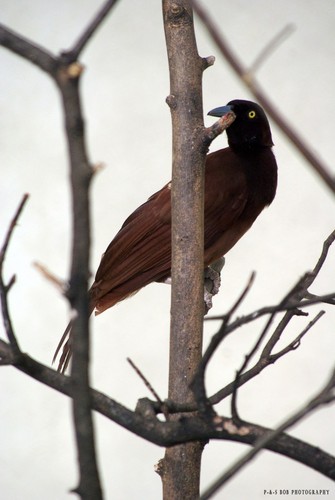
Greater Bird-of-paradise
Body about 43 cm; males with additional flank plumes up to 50 cm and long tail wires
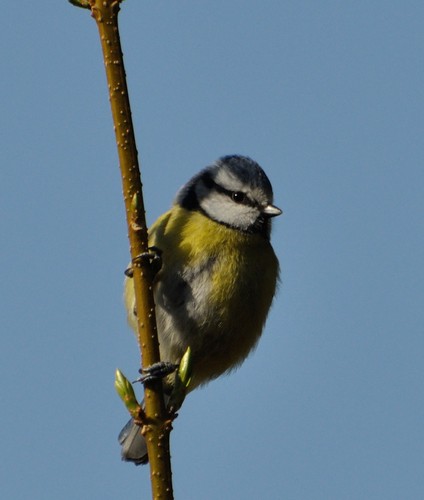
Blue Tit
11-12 cm (4.3-4.7 in) long, 17-20 cm wingspan
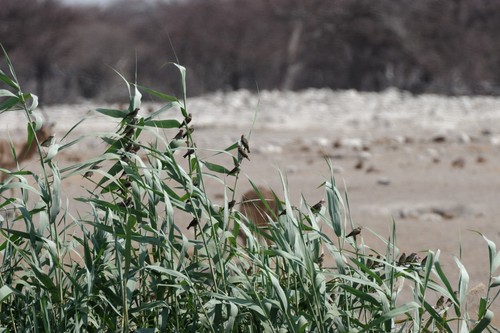
Red-billed Quelea
11.5–13 cm long, wingspan about 20–22 cm
White-plumed Antbird
13-14 cm (5-5.5 in) long
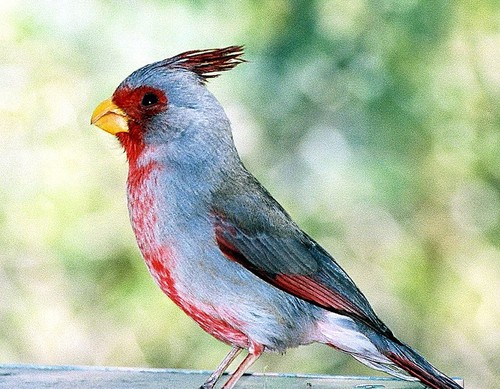
Pyrrhuloxia
19-22 cm (7.5-8.7 in) long, 30 cm wingspan
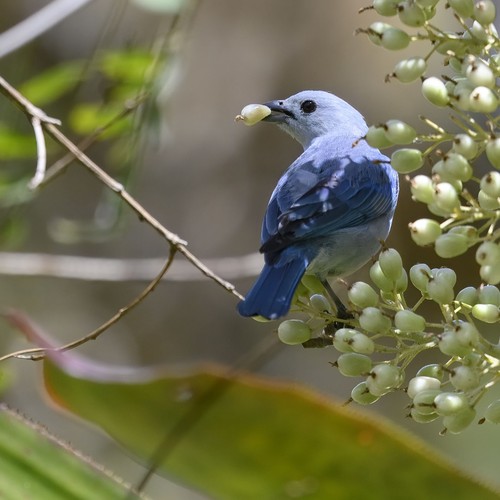
Blue-gray Tanager
16-18 cm (6-7 in) long
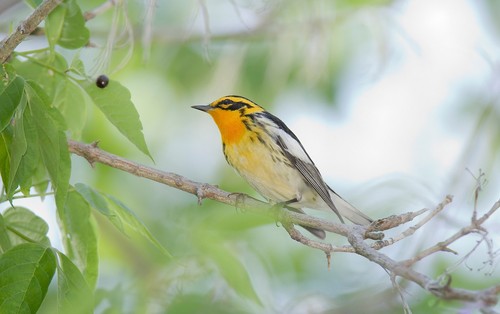
Blackburnian Warbler
11-13 cm (4.3-5.1 in) long, 20-22 cm wingspan
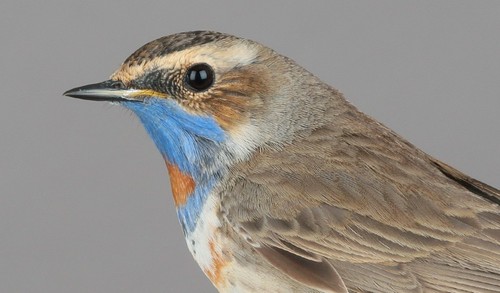
Bluethroat
13-14 cm (5.1-5.5 in) long, 20-22 cm wingspan
Eurasian Nuthatch
12-14.5 cm (4.7-5.7 in) long, 22.5-27 cm wingspan
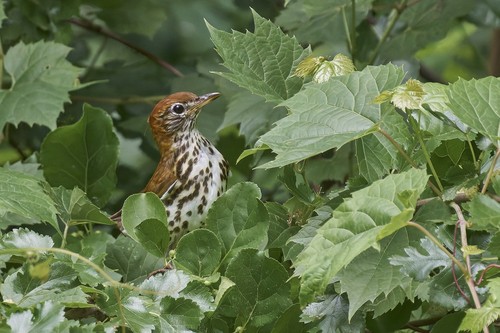
Wood Thrush
19-21 cm (7.5-8.3 in) long, about 33 cm (13 in) wingspan