
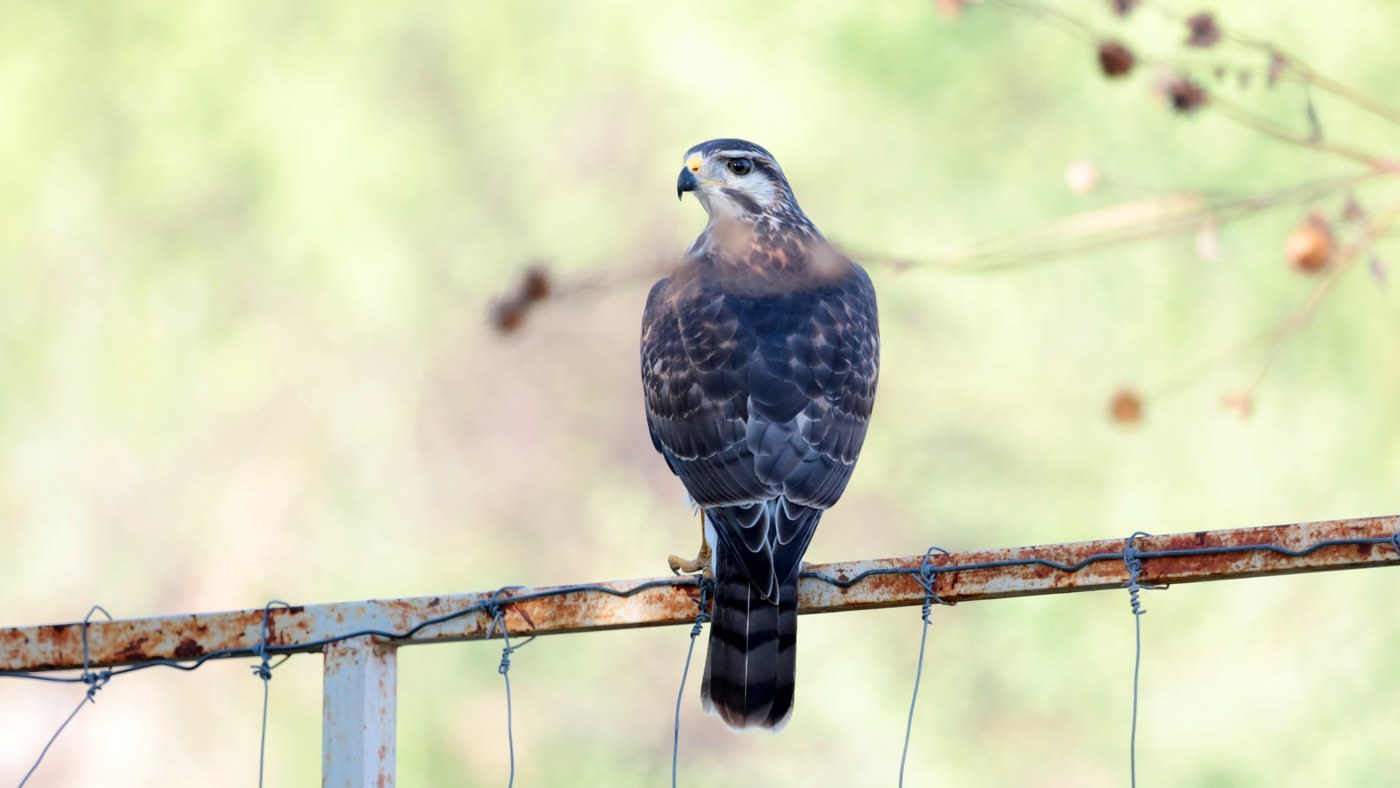
Gray Hawk
Buteo plagiatus
A compact, pale gray hawk of southwestern river woodlands, agile enough to chase lizards through dense cottonwood canopy.
- Size
- 41-46 cm (16-18 in) long, 76-90 cm (30-35 in) wingspan
- Habitat
- riparian woodlands and cottonwood groves along desert rivers
- Type
- raptor
Spotted a bird like this?
Identify any bird from a photo, free.
Overview
The Gray Hawk is a small, slender buteo with finely barred pale gray upperparts, crisp white underparts marked with fine gray barring, and a black tail crossed by two or three narrow white bands. Its build is more compact and accipiter-like than most buteos, an adaptation that helps it maneuver through the dense riparian canopy it favors.
Once considered part of a single wide-ranging species with the Gray-lined Hawk of South America, the northern Gray Hawk is now recognized as its own species, closely tied to the cottonwood- and mesquite-lined rivers of the borderlands.
How to identify it
Key Field Marks
- Finely barred pale gray back and hood contrasting with white, barred underparts
- Black tail with two or three narrow white bands, often fanned in flight
- Compact, relatively short-winged and long-tailed silhouette compared to other buteos
- Agile flight through wooded canopy rather than high open-country soaring
Similar Species
- Broad-winged Hawk: browner overall with a single broad white tail band, and prefers eastern forests rather than desert riparian corridors.
- Cooper's Hawk: has a similar compact shape but shows a dark cap, rufous barring on the breast, and lacks the Gray Hawk's clean gray-and-white pattern.
Habitat & range
Range
Gray Hawks breed in the southwestern United States, mainly southeastern Arizona and southern Texas, south through Mexico and Central America.
Habitat
They are closely tied to riparian woodland corridors, especially those lined with cottonwoods, willows, and mesquite along desert rivers and streams, habitat that has become increasingly scarce due to water diversion and development.
Behavior & voice
Hunting
Gray Hawks hunt by perching quietly within the canopy and making short, agile dashes after lizards, small mammals, and birds, relying on stealth and maneuverability rather than open-country soaring.
Voice
The call is a distinctive, loud, descending whistle, often rendered as a squealing "kree-kreer," frequently heard before the bird is seen in dense riparian growth.
Nesting
Nests are built in tall cottonwoods or other riparian trees, and pairs are often loyal to the same territory across years. Clutches typically contain two to three eggs.
Frequently asked questions
Where do Gray Hawks live in the United States?
They are found in riparian woodlands, especially cottonwood- and mesquite-lined rivers, in southeastern Arizona and southern Texas.
What do Gray Hawks eat?
Primarily lizards, along with small mammals and birds, caught with quick, agile dashes from a woodland perch.
How is a Gray Hawk different from a Broad-winged Hawk?
The Gray Hawk shows clean gray-and-white barring with two or three narrow white tail bands, while the Broad-winged Hawk is browner with a single broad tail band.
Gray Hawk guides
In-depth guides for identifying, finding, and understanding Gray Hawk.
Other birds you may enjoy
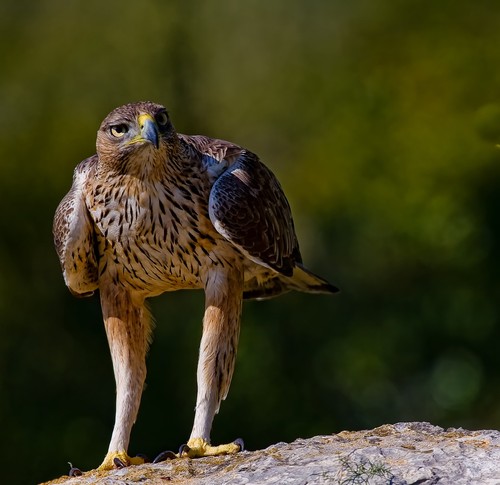
Bonelli's Eagle
Body 65–72 cm (26–28 in); wingspan 150–180 cm (59–71 in)
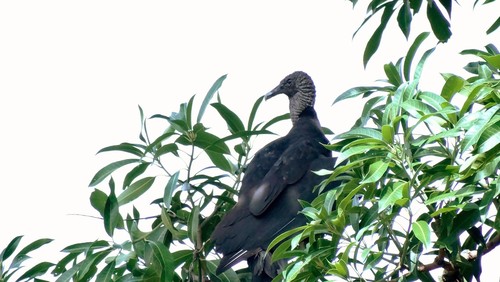
Black Vulture
56-68 cm (22-27 in) long, 137-165 cm wingspan
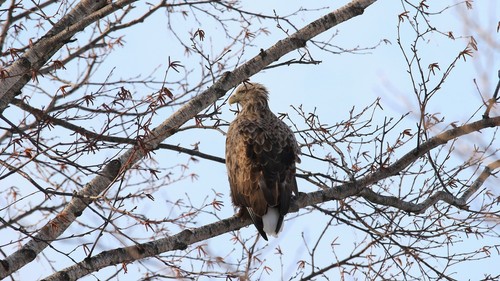
White-tailed Eagle
66-94 cm body length; wingspan 178-245 cm, among the largest eagles in the world
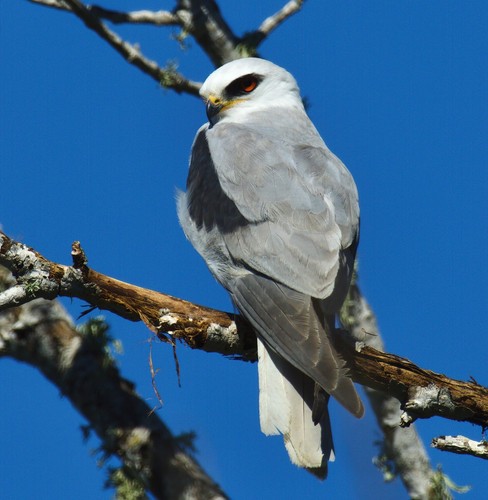
White-tailed Kite
35-43 cm (14-17 in) long, 88-102 cm (35-40 in) wingspan
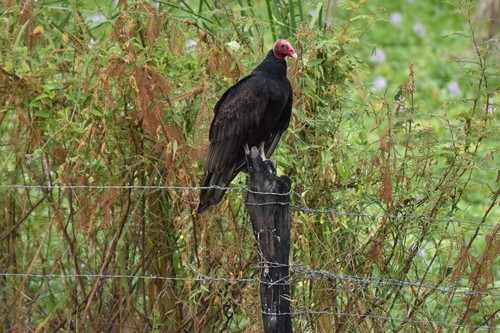
Turkey Vulture
64-81 cm (25-32 in) long, 160-183 cm wingspan
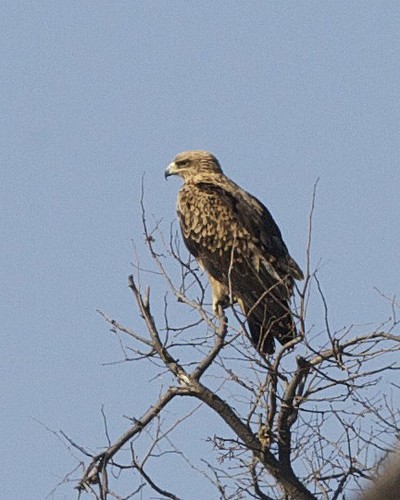
Tawny Eagle
62–75 cm long; wingspan 1.65–2.0 m
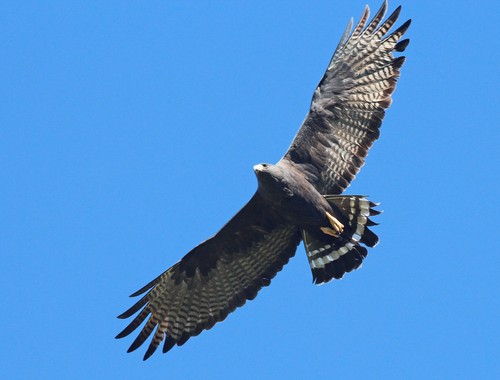
Zone-tailed Hawk
46-56 cm (18-22 in) long, 118-140 cm (46-55 in) wingspan
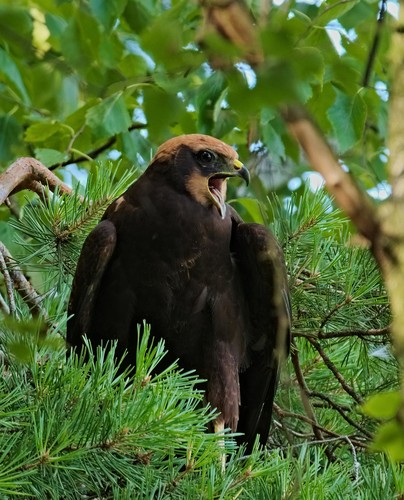
Western Marsh Harrier
Body 43-56 cm; wingspan 115-140 cm
Swallow-tailed Kite
48-68 cm (19-27 in) long including tail streamers, 112-136 cm (44-54 in) wingspan
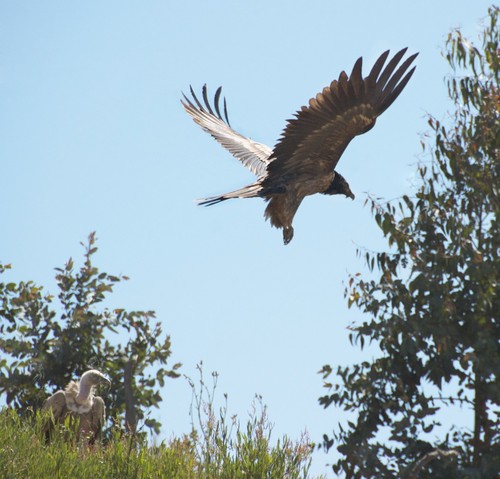
White-backed Vulture
78-98 cm long, wingspan 1.96-2.25 m
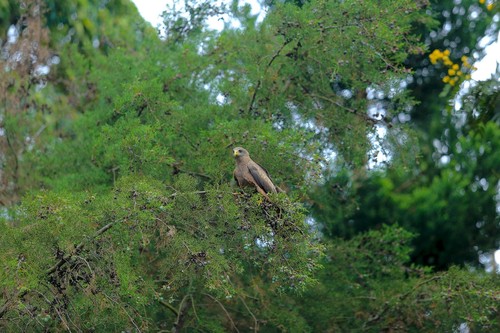
Yellow-billed Kite
55-60 cm long; wingspan 130-155 cm
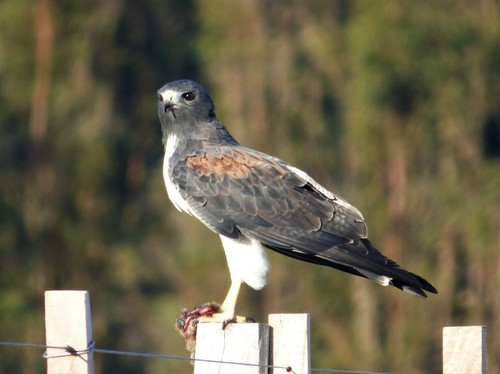
White-tailed Hawk
46-59 cm (18-23 in) long, 122-142 cm (48-56 in) wingspan