
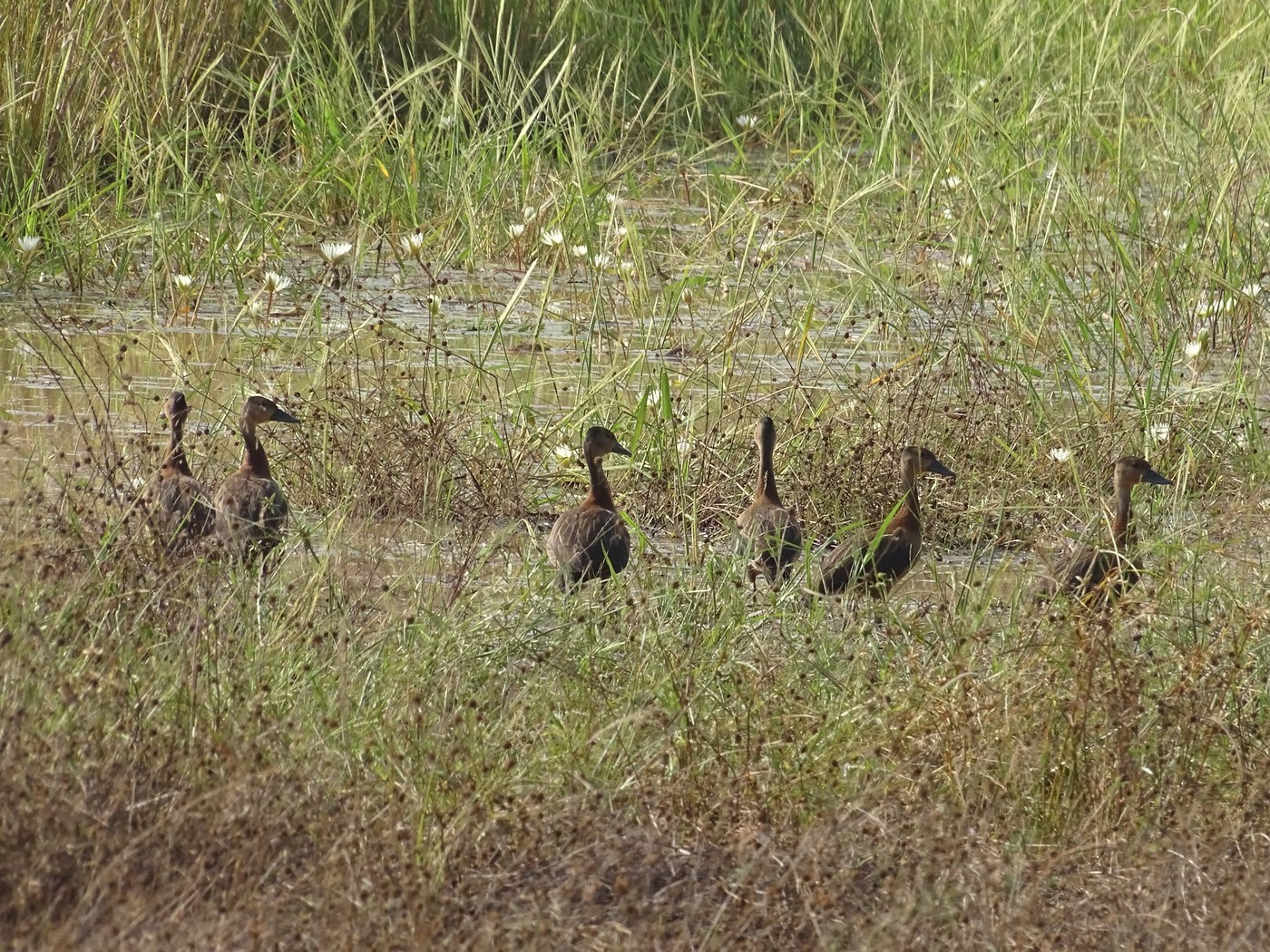
Fulvous Whistling-Duck
Dendrocygna bicolor
A long-necked, long-legged tawny duck with a whistling call, found in warm wetlands worldwide.
- Size
- 45-53 cm (18-21 in) long, 85-93 cm wingspan
- Habitat
- freshwater marshes, rice fields, shallow wetlands
- Type
- waterfowl
Spotted a bird like this?
Identify any bird from a photo, free.
Overview
The Fulvous Whistling-Duck is a long-necked, long-legged waterfowl with an overall tawny-orange (fulvous) plumage, a darker back, and pale buffy stripes along the flanks. Its upright posture, long neck, and dangling legs in flight give it a distinctive silhouette quite different from typical ducks, and its name comes from its frequently uttered whistling call.
Found in warm wetlands on several continents, including parts of the Americas, Africa, and southern Asia, this species often gathers in flocks on shallow marshes, flooded fields, and rice paddies.
How to identify it
Key field marks
- Overall warm tawny-orange (fulvous) body color with a darker brown back and crown
- Long neck and long legs that trail behind in flight
- Pale buffy-white stripes along the flanks
- Frequently gives a whistling call, both perched and in flight
Similar species
The Black-bellied Whistling-Duck has a gray face, bright pink bill, and a solidly black belly, quite different from the uniformly tawny Fulvous Whistling-Duck, which has a dark (not pink) bill and a pale, unmarked belly.
Habitat & range
Fulvous Whistling-Ducks inhabit freshwater marshes, shallow lakes, flooded fields, and rice paddies across a broad, disjunct range that includes parts of the southern United States, Mexico, Central and South America, sub-Saharan Africa, Madagascar, and South Asia. They favor dense marsh vegetation for cover and shallow water for feeding, and some populations are migratory or nomadic in response to water availability.
Behavior & voice
Behavior
Highly social, Fulvous Whistling-Ducks often gather in sizeable flocks, feeding and roosting together, and are frequently active at dusk and into the night.
Voice
Gives a distinctive, high, wheezy whistling call, often rendered as a two-note 'ki-WEE-ooo,' commonly heard from flying flocks.
Feeding
Mostly seeds and aquatic plant material, including rice and other grains, along with some aquatic invertebrates.
Nesting
Nests on the ground in dense marsh vegetation or occasionally over water; clutches are often large, sometimes as a result of multiple females laying in one nest, and both parents help care for the young.
Frequently asked questions
Why is it called a whistling-duck?
Whistling-ducks, including the Fulvous Whistling-Duck, are named for their frequent, distinctive whistling calls, unlike the quacks of typical ducks.
How do you tell Fulvous from Black-bellied Whistling-Duck?
Fulvous Whistling-Ducks are uniformly tawny-orange with a dark bill and pale belly, while Black-bellied Whistling-Ducks have a gray face, bright pink bill, and solid black belly.
Where are Fulvous Whistling-Ducks found?
They have a wide, scattered range including the southern United States, Mexico, Central and South America, sub-Saharan Africa, Madagascar, and parts of South Asia.
What do Fulvous Whistling-Ducks eat?
Mostly seeds and aquatic plant material, including rice and other grains, plus some invertebrates.
Fulvous Whistling-Duck guides
In-depth guides for identifying, finding, and understanding Fulvous Whistling-Duck.
Other birds you may enjoy
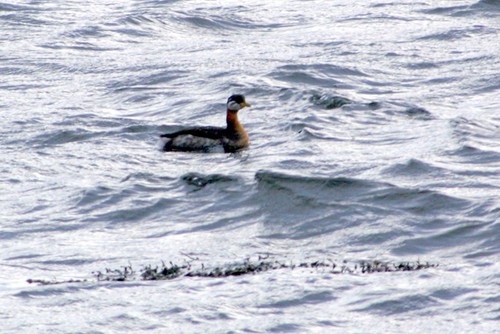
Red-necked Grebe
40-55 cm (16-22 in) long, 77-85 cm wingspan
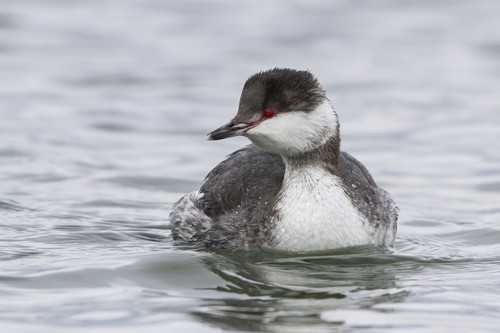
Horned Grebe
31-38 cm (12-15 in) long, 46-55 cm wingspan
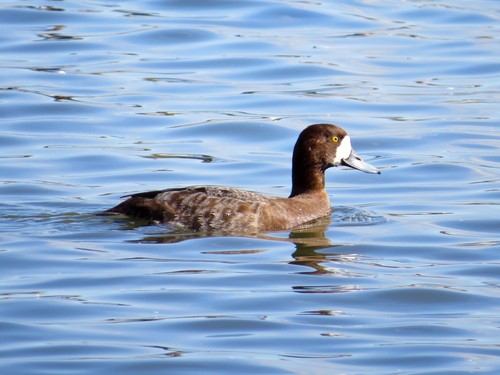
Greater Scaup
42-51 cm (16.5-20 in) long, 71-84 cm wingspan
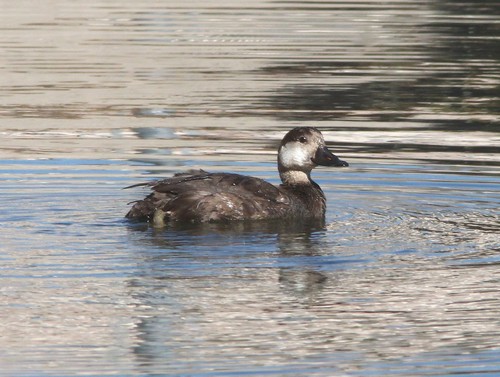
Black Scoter
43-54 cm (17-21 in) long, 79-90 cm wingspan
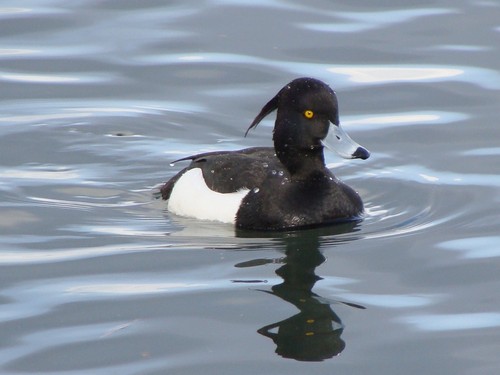
Tufted Duck
40-47 cm (16-18.5 in) long, 67-73 cm wingspan
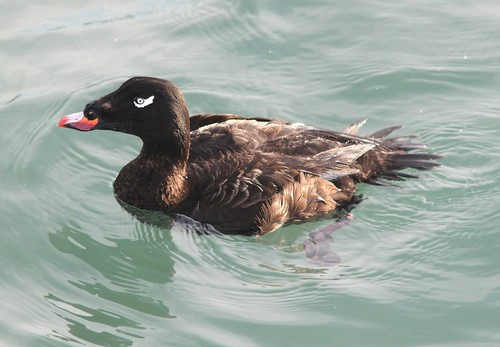
White-winged Scoter
48-58 cm (19-23 in) long, 86-99 cm wingspan
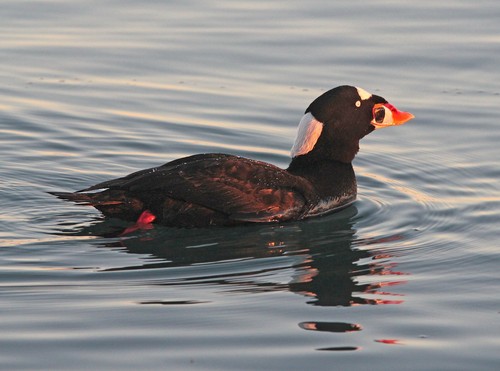
Surf Scoter
45-56 cm (18-22 in) long, 78-92 cm wingspan
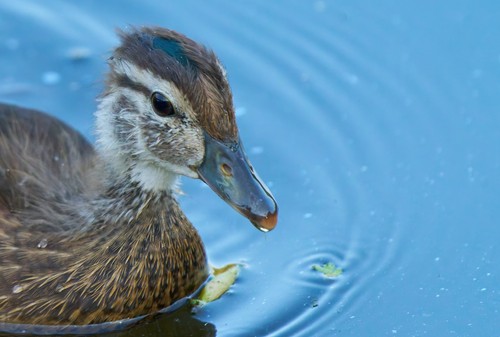
Wood Duck
47-54 cm (18.5-21 in) long, 66-73 cm wingspan
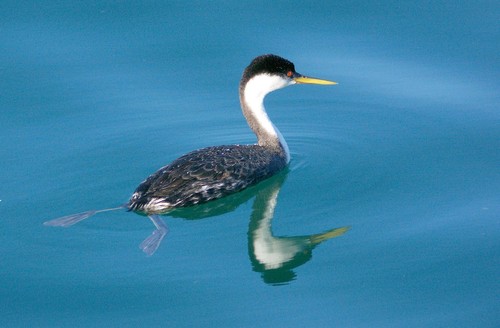
Western Grebe
56-74 cm (22-29 in) long, 79-102 cm wingspan
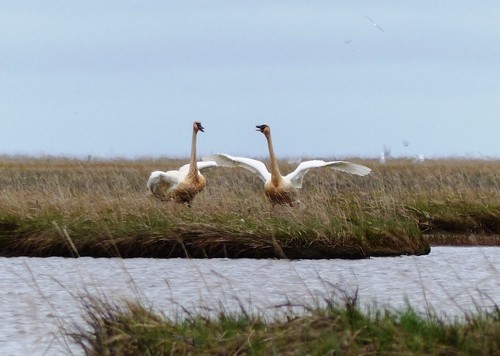
Tundra Swan
115-150 cm (45-59 in) long, about 180 cm wingspan
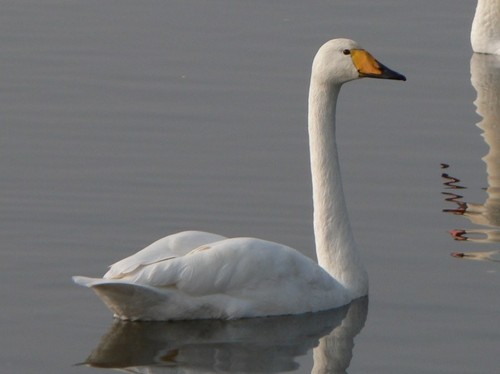
Whooper Swan
140-165 cm (55-65 in) long, 205-235 cm wingspan
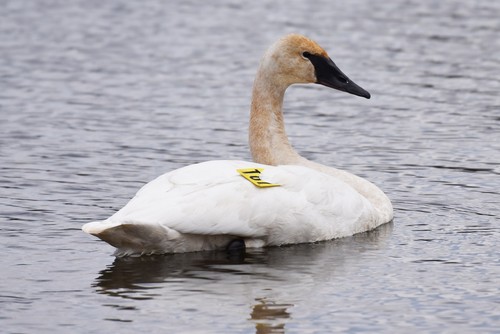
Trumpeter Swan
150-180 cm (59-71 in) long, up to 300 cm wingspan