
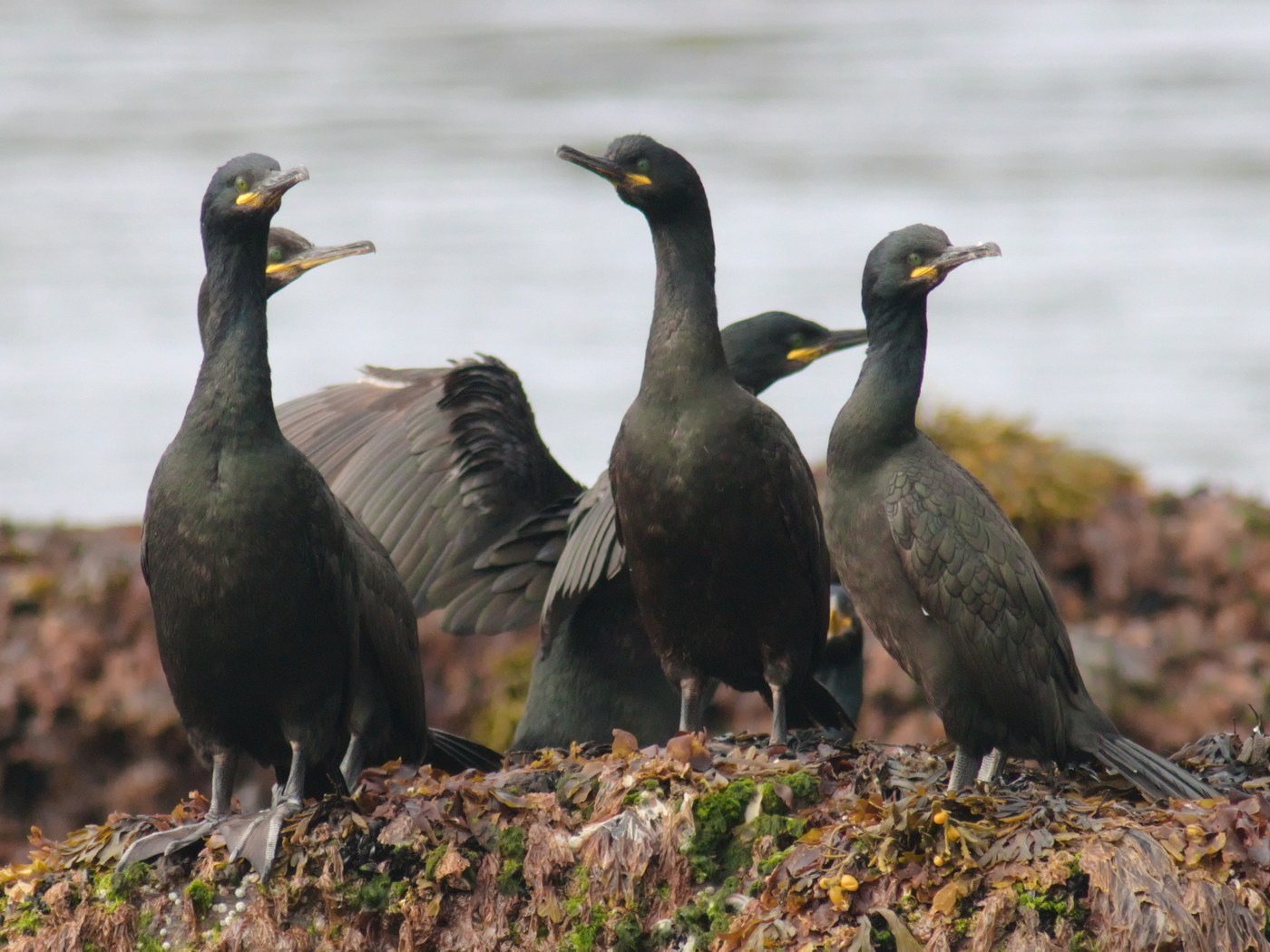
European Shag
Gulosus aristotelis
A sleek, dark green-black diving seabird of European rocky coasts, sporting a jaunty forward-curling crest in the breeding season.
- Size
- 68-78 cm (27-31 in) long, 95-110 cm wingspan
- Habitat
- rocky coastlines, sea cliffs, and offshore islands
- Type
- seabird
Spotted a bird like this?
Identify any bird from a photo, free.
Overview
The European Shag is a slender, entirely dark seabird with an oily bottle-green iridescence visible in good light. Breeding adults develop a distinctive quiff-like crest that curves forward from the crown, along with bright yellow skin at the base of a thin, hook-tipped bill. It is smaller and more streamlined than the Great Cormorant, with a steeper forehead and thinner neck.
Shags are true birds of the open, rocky coast, rarely straying inland or onto still freshwater, and are commonly seen standing upright on rocks and cliff ledges with wings outstretched to dry.
How to identify it
Key field marks
- Slim, all-dark plumage with a glossy green sheen
- Forward-curling crest present in breeding adults
- Thin bill with a hooked tip and yellow gape
- Steep forehead and slender neck, giving a more delicate profile than a cormorant
Similar species
- Great Cormorant is bulkier, has a flatter head, a white throat patch, and lacks a crest.
- Immature Shags are brownish and can be confused with young cormorants, but their slimmer bill and steeper forehead help distinguish them.
Habitat & range
Habitat
Exclusively coastal, favoring rocky shores, sea cliffs, and offshore islands with clear, relatively deep water for diving.
Range
Breeds along the coasts of western and southern Europe, North Africa, and into the Black Sea.
Migration
Mostly resident or short-distance disperser, with some northern populations moving south along the coast in winter.
Behavior & voice
Behavior
An accomplished diver capable of reaching considerable depths, often seen porpoising before submerging and resurfacing some distance away.
Voice
Generally silent, though it gives harsh clicking and hissing calls at breeding colonies.
Feeding
Hunts fish, especially sand eels, by pursuit-diving underwater, propelled by its feet.
Nesting
Nests on rocky ledges and in crevices along sea cliffs, building a bulky nest of seaweed and twigs; typically lays 3 pale blue eggs.
Frequently asked questions
What is the difference between a Shag and a Cormorant?
The European Shag is slimmer with a steeper forehead, thinner bill, breeding crest, and no white throat patch, while the Great Cormorant is bulkier with a flatter head and white cheek/throat patch.
Do Shags live on freshwater?
No, European Shags are strictly marine and are rarely found away from rocky coastal waters.
How deep can European Shags dive?
They can dive to depths of over 40 meters (130 feet) while pursuing fish underwater.
What does a breeding European Shag look like?
It shows glossy dark green plumage, a forward-curling crest on the crown, and bright yellow skin at the base of the bill.
European Shag guides
In-depth guides for identifying, finding, and understanding European Shag.
Other birds you may enjoy
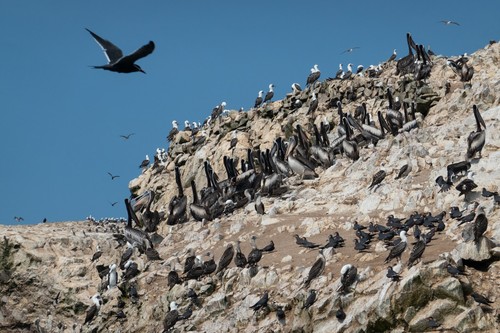
Peruvian Pelican
137-152 cm (54-60 in) long, up to 228 cm wingspan
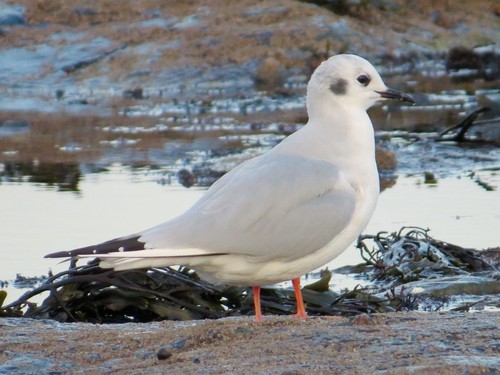
Bonaparte's Gull
28-33 cm (11-13 in) long, 76-84 cm wingspan
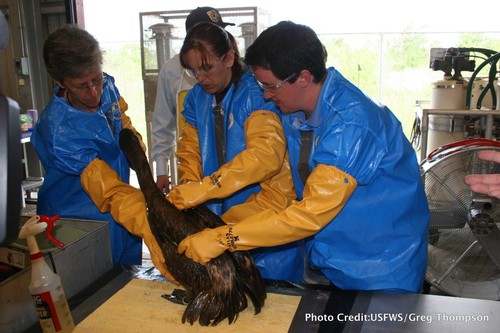
Brown Pelican
106-137 cm (42-54 in) long, 200-230 cm wingspan
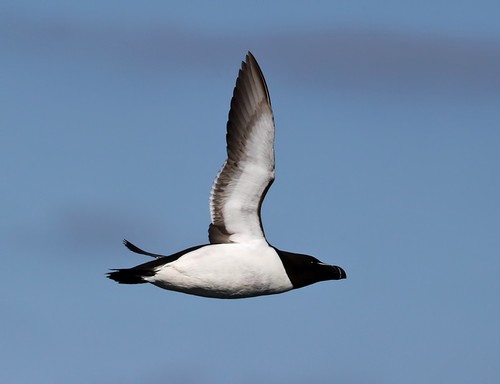
Razorbill
37-39 cm (15-15.5 in) long, 63-68 cm wingspan
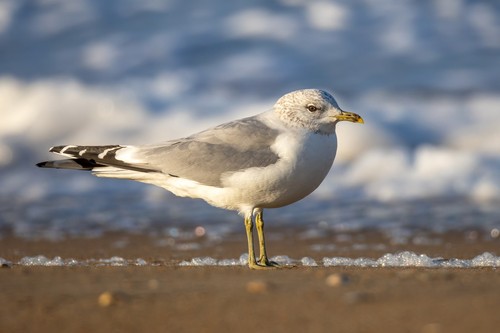
Common Gull
40-46 cm (16-18 in) long, 110-130 cm wingspan
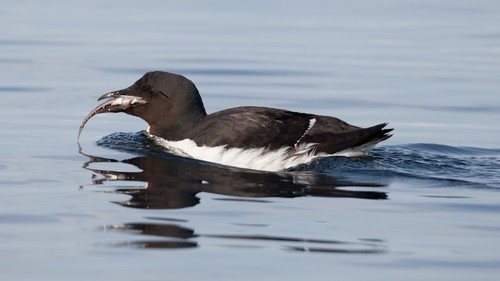
Thick-billed Murre
40-48 cm (16-19 in) long, 65-75 cm wingspan
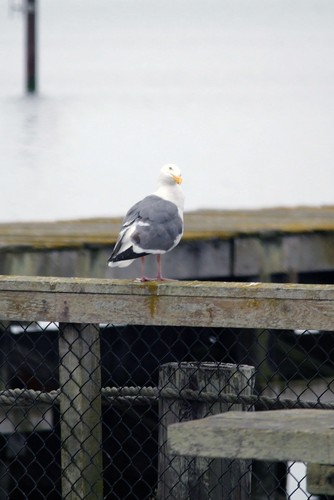
Western Gull
55-68 cm (22-27 in) long, 130-144 cm wingspan
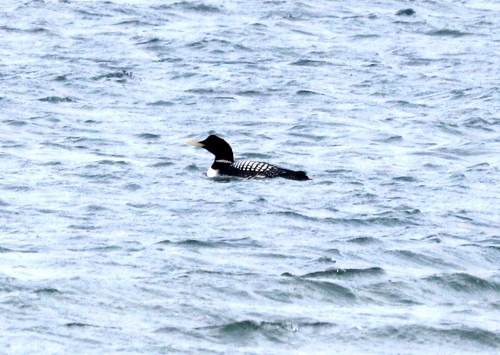
Yellow-billed Loon
76-97 cm (30-38 in) long, 135-152 cm wingspan
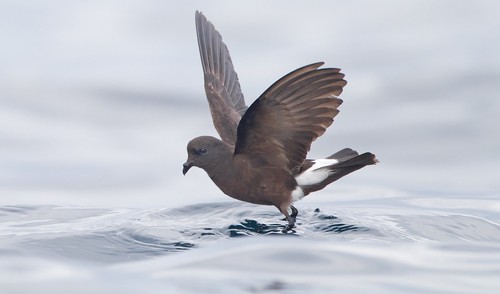
Wilson's Storm-Petrel
15-19 cm (6-7.5 in) long, wingspan 38-42 cm (15-16.5 in)
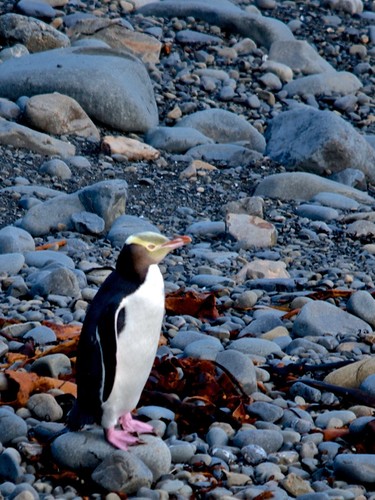
Yellow-eyed Penguin
62-79 cm (24-31 in) tall, 3-8.5 kg (6.6-18.7 lb)
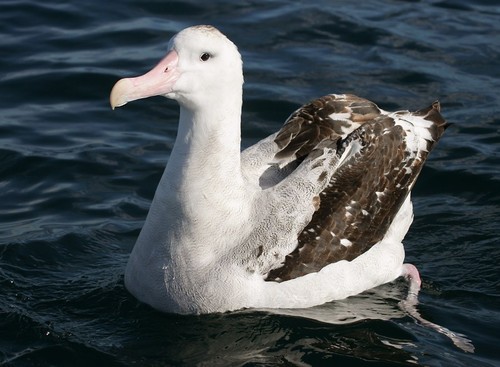
Wandering Albatross
107-135 cm (42-53 in) long, wingspan up to 3.5 m (11.5 ft)
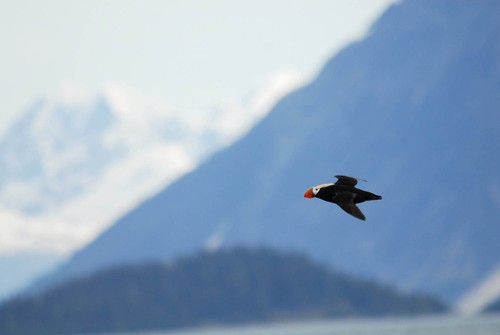
Tufted Puffin
35-41 cm (14-16 in) long, about 63-70 cm wingspan