
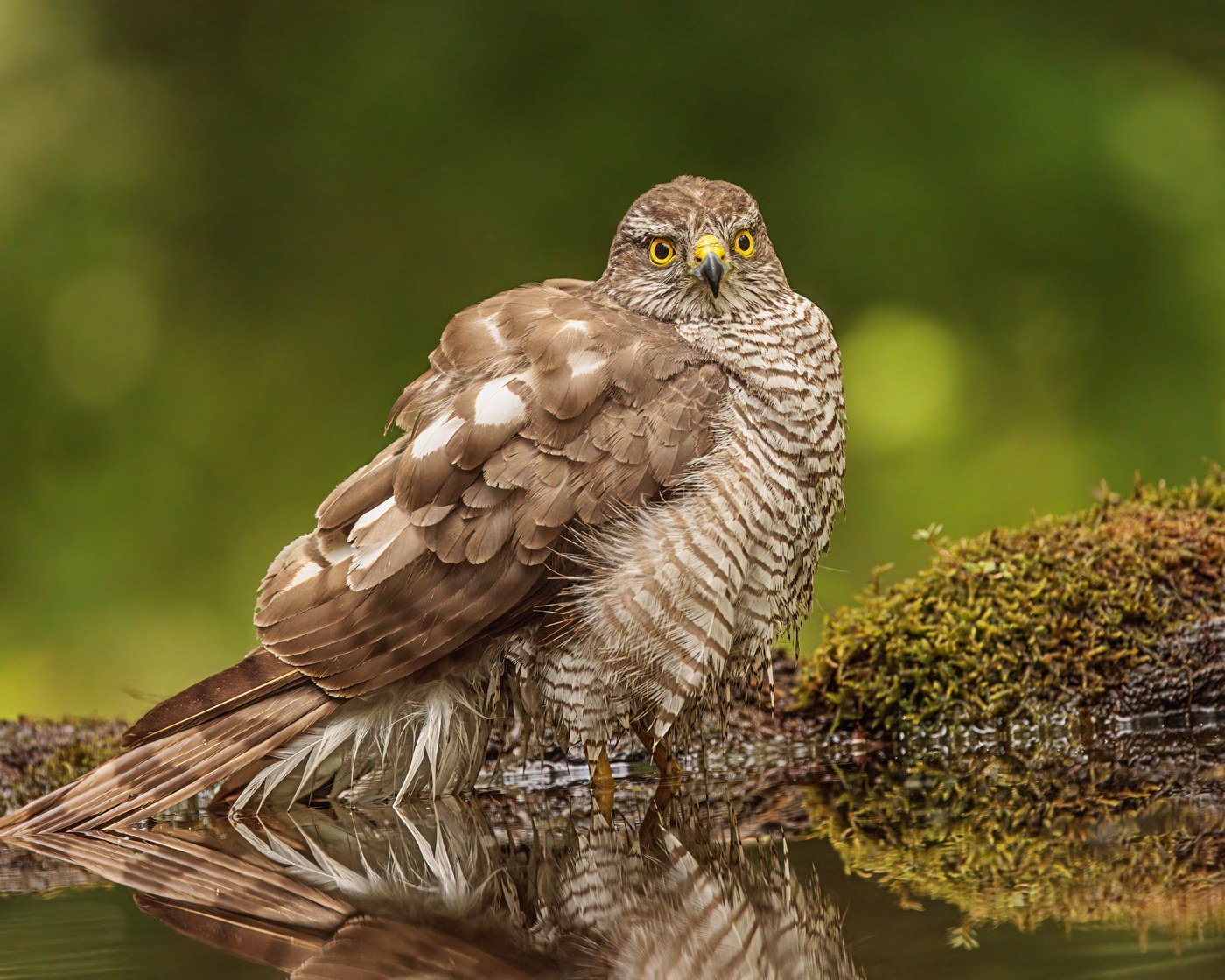
Eurasian Sparrowhawk
Accipiter nisus
A compact, agile woodland hawk with short rounded wings and a long tail, built for high-speed chases through trees.
- Size
- Body 28-38 cm; wingspan 55-70 cm (females notably larger than males)
- Habitat
- Woodlands, forest edges, farmland hedgerows, and increasingly gardens and urban parks
- Type
- raptor
Spotted a bird like this?
Identify any bird from a photo, free.
Overview
The Eurasian Sparrowhawk is a small, secretive Accipiter (true hawk) found across most of Europe, temperate Asia, and North Africa. It shows dramatic reversed sexual size dimorphism: females can be almost twice the mass of males, allowing the sexes to specialize on different prey sizes.
Appearance
- Adult males: blue-grey upperparts with fine orange-rufous barring below and orange cheeks.
- Adult females: browner-grey above with grey-brown barring below, larger and bulkier than males.
- Juveniles: brown above with coarse, chunky barring or spotting below.
- Bright yellow to orange eyes and long yellow legs with slender toes.
How to identify it
Key field marks
- Short, broad, rounded wings and a long, square-tipped tail with 4-5 dark bands
- Flight is a distinctive 'flap-flap-glide' low over hedges and through gaps in cover
- Small head barely projects beyond the wing in a soaring silhouette
- Yellow-orange eyes visible at close range
Similar species
- Eurasian Goshawk is much bulkier with a more prominent head/neck projection, broader wings, and a heavier, more powerful flight; adult goshawks show a bolder pale supercilium.
- Common Kestrel has longer, more pointed wings and habitually hovers, unlike the Sparrowhawk.
- Merlin is smaller and stockier still with pointed falcon wings and direct dashing flight rather than flap-glide.
Habitat & range
Habitat
Breeds in coniferous, deciduous, and mixed woodland, shelterbelts, and wooded farmland; hunts along woodland edges, hedgerows, and increasingly in suburban gardens where it ambushes birds at feeders.
Range
Widespread resident and partial migrant across Europe, North Africa, and temperate Asia to Japan. Northern and eastern populations move south in winter, while many western European birds are largely resident.
Migration
Scandinavian and other northern breeders migrate to southern and western Europe for winter; British and Irish birds are mostly sedentary.
Behavior & voice
Behavior
An ambush hunter that relies on surprise, flying low and fast along cover before flipping over a hedge or through trees to snatch a bird off guard. Also still-hunts from a concealed perch.
Voice
Mostly silent outside the breeding season. Near the nest gives a fast, chattering 'kew-kew-kew-kew' alarm call, and a softer 'peee-uu' contact call.
Feeding
Feeds almost exclusively on live birds caught on the wing, from tits and finches (taken mainly by smaller males) up to pigeons and thrushes (taken by larger females); plucks prey at a favored 'plucking post'.
Nesting & breeding
Builds a flat stick nest in a tree, often against the trunk in a conifer; lays 4-5 pale bluish-white eggs with red-brown blotches; female does almost all incubation while the male provisions her with food.
Frequently asked questions
How can I tell a male from a female Eurasian Sparrowhawk?
Males are smaller with blue-grey backs and orange-barred underparts and orange cheeks; females are larger, browner-grey above, with grey-brown barring below.
What is the difference between a Sparrowhawk and a Goshawk?
The Goshawk is much bulkier with broader wings, a more powerful direct flight, and a bigger head/neck projection; the Sparrowhawk is smaller, slimmer, and flies with quick flap-flap-glide bursts.
Do Eurasian Sparrowhawks visit gardens?
Yes, they regularly hunt around garden bird feeders and tables, ambushing small birds attracted there.
What does a Eurasian Sparrowhawk eat?
It eats almost exclusively small to medium-sized birds caught in fast, low-level pursuit flight.
Where do Eurasian Sparrowhawks nest?
They build a flat stick platform nest in woodland trees, often conifers, close to the trunk.
Eurasian Sparrowhawk guides
In-depth guides for identifying, finding, and understanding Eurasian Sparrowhawk.
Other birds you may enjoy
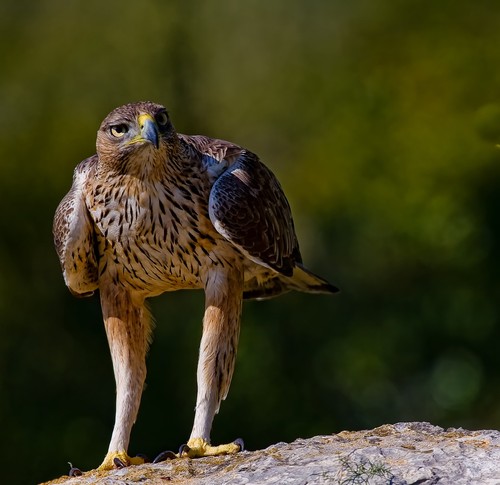
Bonelli's Eagle
Body 65–72 cm (26–28 in); wingspan 150–180 cm (59–71 in)
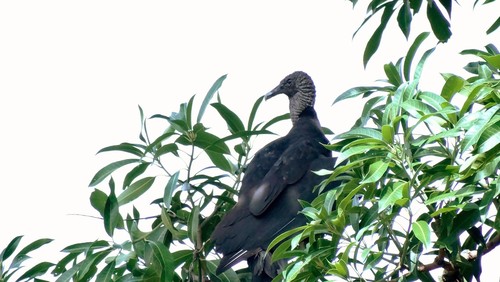
Black Vulture
56-68 cm (22-27 in) long, 137-165 cm wingspan
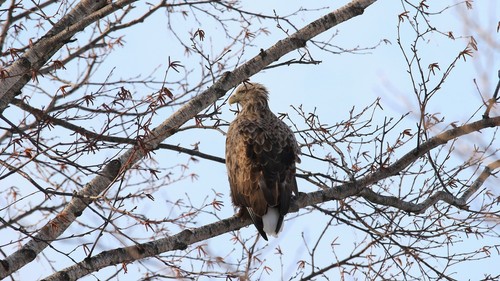
White-tailed Eagle
66-94 cm body length; wingspan 178-245 cm, among the largest eagles in the world
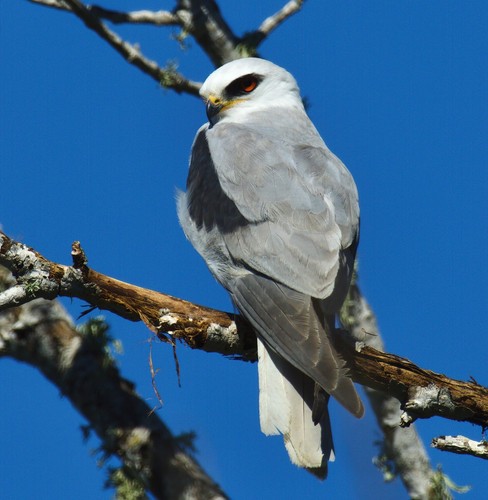
White-tailed Kite
35-43 cm (14-17 in) long, 88-102 cm (35-40 in) wingspan
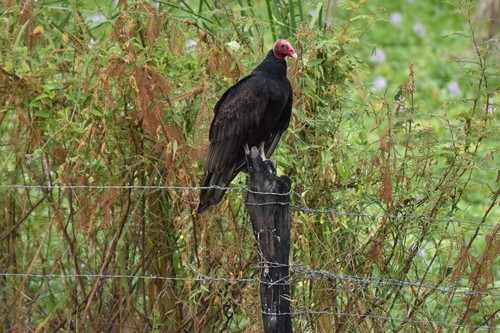
Turkey Vulture
64-81 cm (25-32 in) long, 160-183 cm wingspan
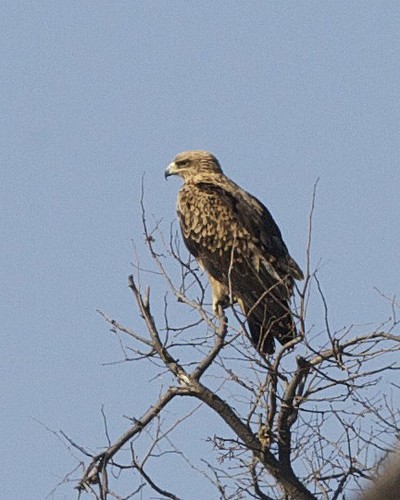
Tawny Eagle
62–75 cm long; wingspan 1.65–2.0 m
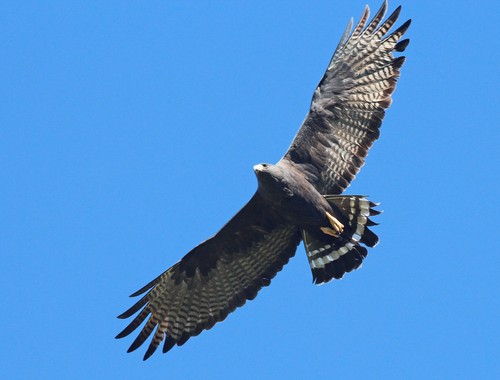
Zone-tailed Hawk
46-56 cm (18-22 in) long, 118-140 cm (46-55 in) wingspan
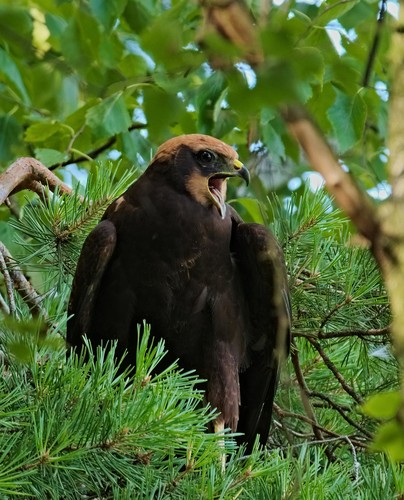
Western Marsh Harrier
Body 43-56 cm; wingspan 115-140 cm
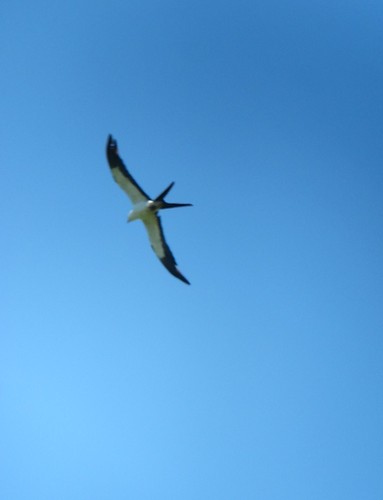
Swallow-tailed Kite
48-68 cm (19-27 in) long including tail streamers, 112-136 cm (44-54 in) wingspan
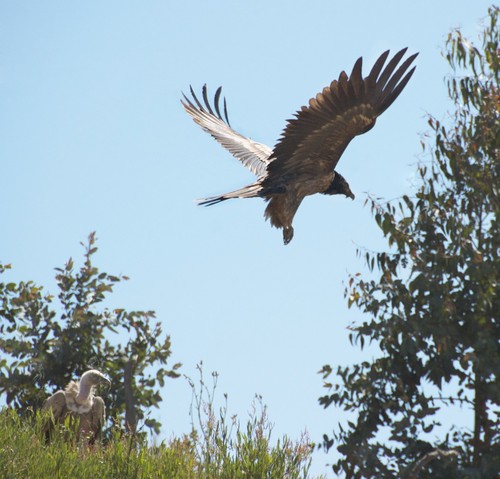
White-backed Vulture
78-98 cm long, wingspan 1.96-2.25 m
Yellow-billed Kite
55-60 cm long; wingspan 130-155 cm
White-tailed Hawk
46-59 cm (18-23 in) long, 122-142 cm (48-56 in) wingspan