
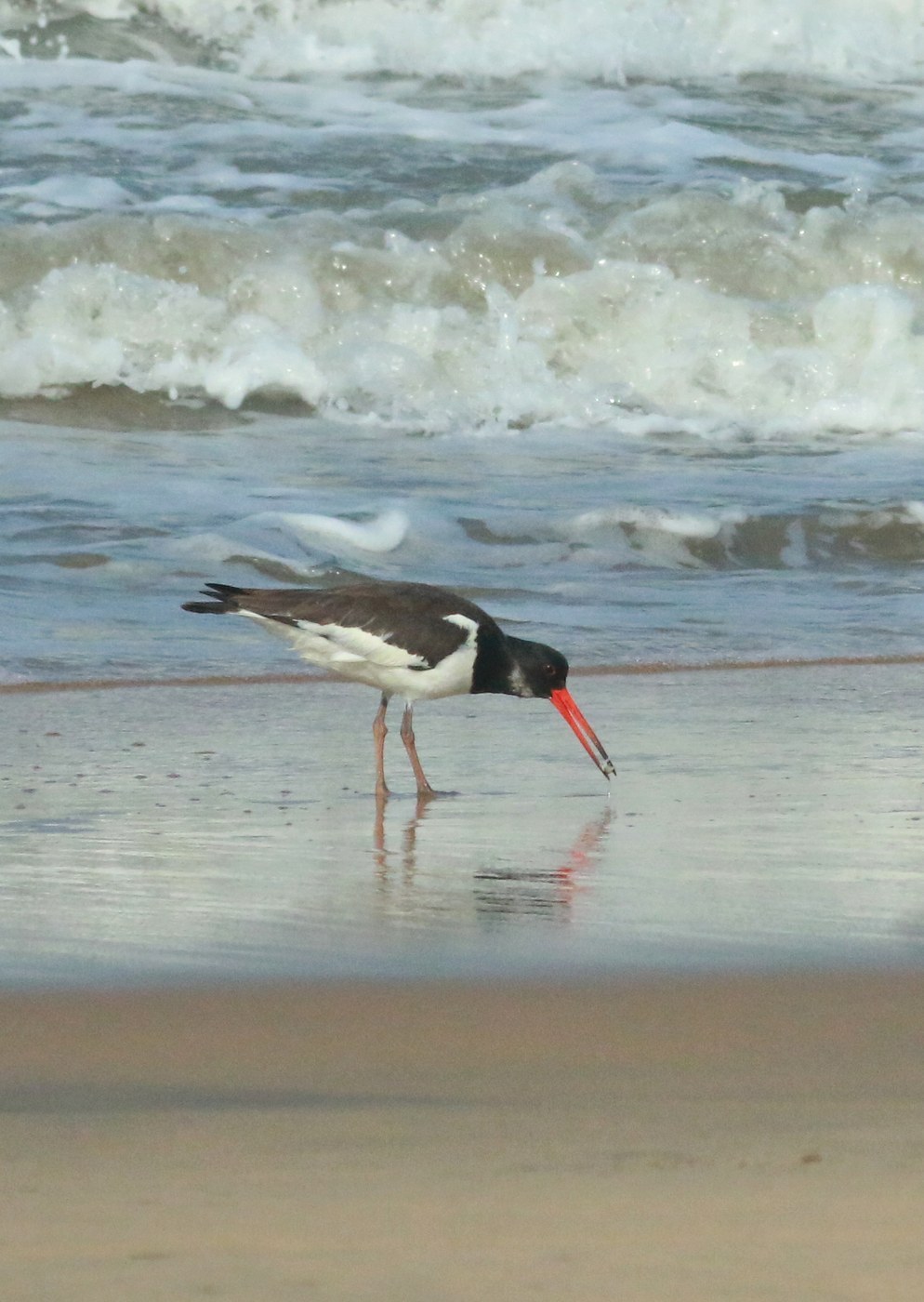
Eurasian Oystercatcher
Haematopus ostralegus
A boldly pied black-and-white shorebird with a long orange bill and pink legs, common on European coasts and estuaries.
- Size
- 40-45 cm (16-18 in) long, wingspan 80-86 cm
- Habitat
- coastal beaches, estuaries, mudflats, and increasingly inland farmland across Europe and Asia
- Type
- shorebird
Spotted a bird like this?
Identify any bird from a photo, free.
Overview
The Eurasian Oystercatcher is a large, striking shorebird with crisp black-and-white plumage: a black head, neck, and upperparts set sharply against a white belly and a bold white wing-stripe visible in flight. Its long, straight bill is a bright orange-red, and its legs are stout and pink.
One of the most familiar large shorebirds across European coastlines, it also increasingly breeds inland on farmland and riverbanks in parts of its range.
How to identify it
Key field marks
- Sharply defined black-and-white plumage
- White wing-stripe visible in flight
- Long, straight, bright orange bill
- Stout pink legs
- Red eye-ring
Similar species
The American Oystercatcher has brown, not black, upperparts and a less sharply pied pattern. The Black Oystercatcher is entirely black with no white.
Habitat & range
Habitat
Coastal beaches, rocky shores, estuaries, and mudflats, with increasing use of inland farmland and riverbanks for breeding in parts of its range.
Range and migration
Found across much of Europe and temperate Asia. Northern and inland populations migrate to milder coasts for winter, forming large wintering flocks on estuaries.
Behavior & voice
Behavior
Feeds on mussels, cockles, and other shellfish by either hammering open the shell or stabbing and twisting it open, with individuals often specializing in one technique; also probes inland fields for earthworms.
Voice
Loud, piping 'kleep-kleep' calls, often given during noisy communal displays known as piping.
Feeding
Mussels, cockles, other shellfish, and earthworms.
Nesting and breeding
Nests in a simple scrape on the ground, sometimes far from water on inland farmland or riverbanks.
Frequently asked questions
What does the Eurasian Oystercatcher eat, despite its name?
Mainly mussels, cockles, and other bivalve shellfish, plus earthworms when feeding on inland fields; it rarely eats actual oysters.
How does an oystercatcher open shellfish?
Individuals typically specialize as either 'hammerers,' smashing open the shell, or 'stabbers,' inserting the bill to sever the muscle before the shell can close.
What does the Eurasian Oystercatcher's call sound like?
A loud, piercing 'kleep-kleep' call, often given during noisy communal displays known as piping.
Where do Eurasian Oystercatchers spend the winter?
They gather in large flocks on estuaries and coastal mudflats across western Europe.
Is the Eurasian Oystercatcher endangered?
It's classified as Near Threatened due to population declines linked to shellfish harvesting pressure and habitat changes.
Eurasian Oystercatcher guides
In-depth guides for identifying, finding, and understanding Eurasian Oystercatcher.
Other birds you may enjoy
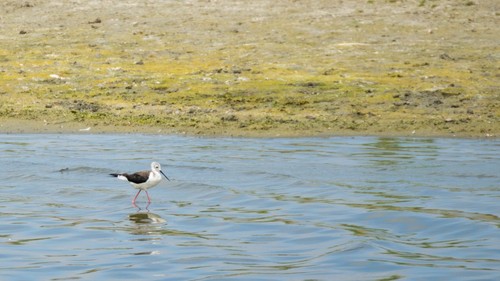
Black-winged Stilt
33-36 cm (13-14 in) long, wingspan 67-83 cm
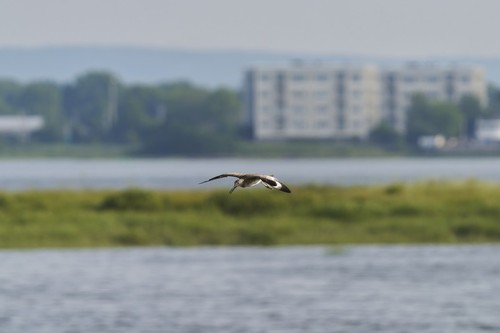
Willet
33-41 cm (13-16 in) long, 65-70 cm wingspan
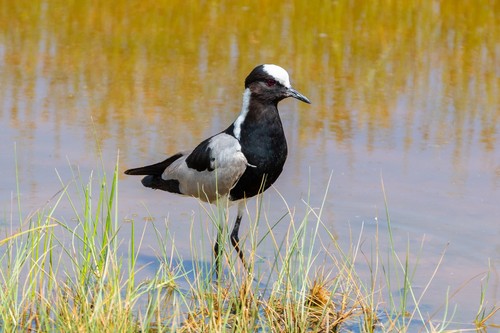
Blacksmith Lapwing
Body length about 30 cm; wingspan 55-65 cm
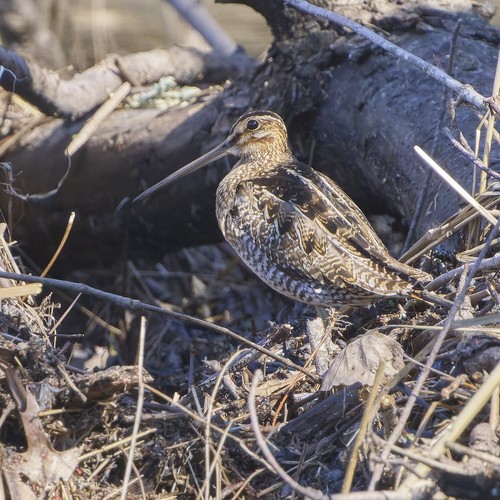
Wilson's Snipe
25-30 cm (10-12 in) long, 39-45 cm wingspan
Western Sandpiper
14-17 cm (5.5-6.7 in) long, 28-37 cm wingspan
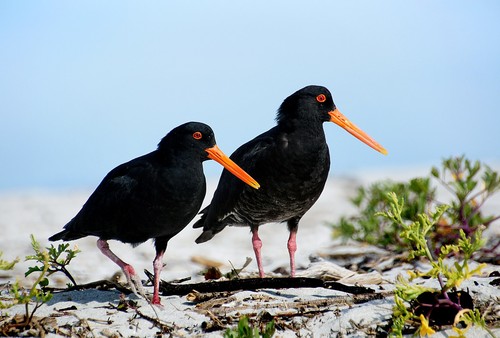
Variable Oystercatcher
46-49 cm (18-19 in) long
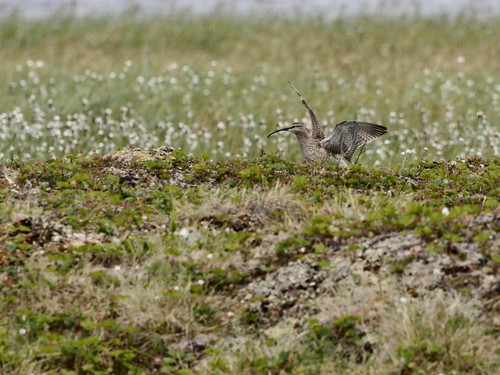
Whimbrel
40-46 cm (16-18 in) long, 76-89 cm wingspan
Wilson's Phalarope
22-24 cm (8.5-9.5 in) long, 37-43 cm wingspan
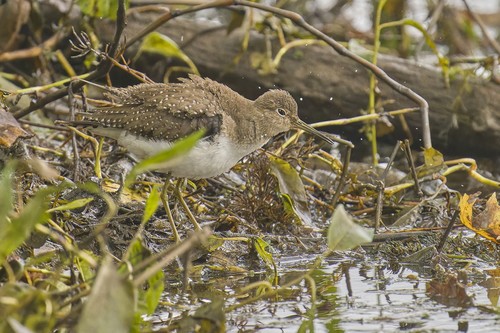
Solitary Sandpiper
19-23 cm (7.5-9 in) long, 50-56 cm wingspan
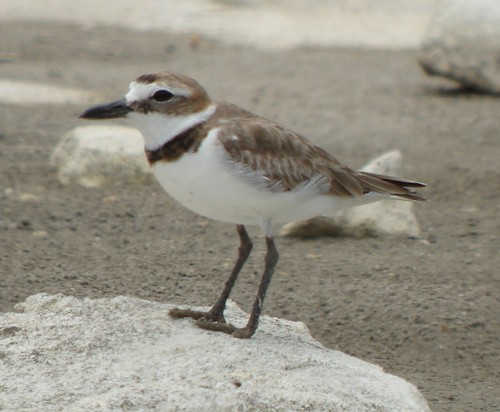
Wilson's Plover
17-19 cm (6.7-7.5 in) long, 45-50 cm wingspan
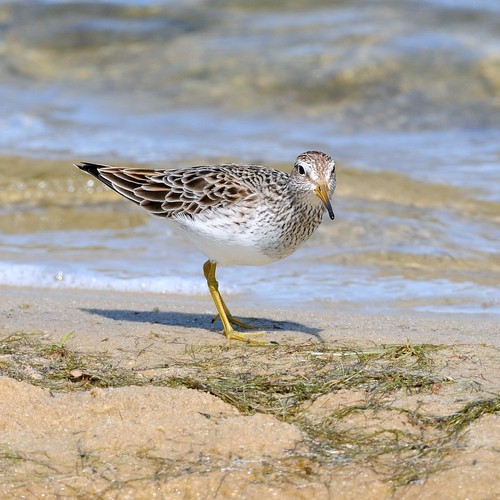
Pectoral Sandpiper
19-23 cm (7.5-9 in) long, 43-49 cm wingspan
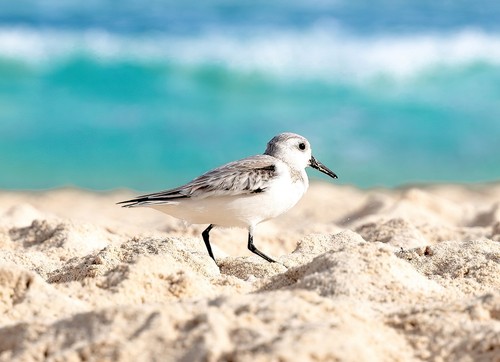
Sanderling
18-20 cm (7-8 in) long, 40-43 cm wingspan