
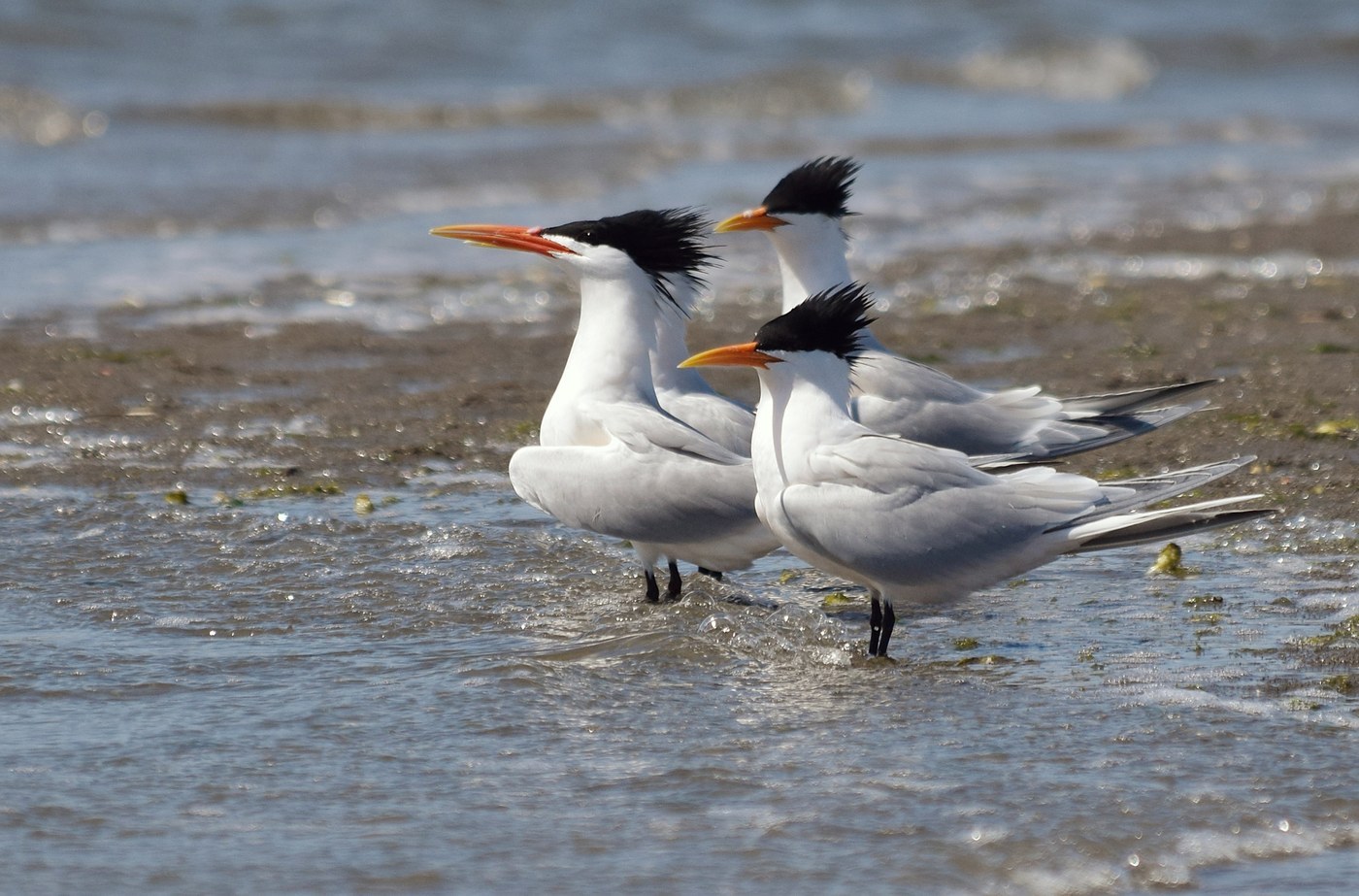
Elegant Tern
Thalasseus elegans
A slender crested tern with a long, drooping orange bill, concentrated in enormous colonies on just a handful of islands in the Gulf of California.
- Size
- 39-43 cm (15-17 in) long, 74-78 cm wingspan
- Habitat
- sandy beaches and estuaries along the Pacific coast
- Type
- seabird
Spotted a bird like this?
Identify any bird from a photo, free.
Overview
The Elegant Tern is a striking medium-large tern named for its slim, graceful build and shaggy black crest. Its breeding range is remarkably concentrated, with the vast majority of the world population nesting at just a few island colonies in the Gulf of California, Mexico.
Appearance
Adults have pale grey upperparts, white underparts often tinged with a soft pink blush, a shaggy black crest that can be raised or flattened, and a long, slender, distinctly drooping orange to orange-yellow bill.
How to identify it
Key field marks
- Long, thin, drooping orange-yellow bill
- Shaggy black crest, longer and more pronounced than in the similar Royal Tern
- Pale grey upperparts, white underparts with a possible pink flush
- Medium-large size, smaller and slimmer than the Royal Tern
Similar species
The Elegant Tern is very similar to the Royal Tern, but is smaller and slimmer with a thinner, more strongly drooped bill and a longer, shaggier crest. Royal Terns have a heavier, straighter orange bill and a shorter crest.
Habitat & range
Habitat and range
Elegant Terns breed almost entirely on a small number of islands in the Gulf of California, particularly Isla Rasa, with smaller colonies elsewhere along the Mexican Pacific coast. After breeding, birds disperse northward along the Pacific coast of the United States, particularly to California, before migrating south again to winter along the coasts of Central and South America, including Peru and Chile.
Because the global population is concentrated in so few breeding sites, the species is considered vulnerable to localized disturbances such as predation events, disease, or habitat disruption at its core colonies.
Behavior & voice
Behavior
Elegant Terns forage over nearshore waters, plunge-diving from moderate heights to catch small schooling fish such as anchovies and sardines. They are highly social, both while foraging and while roosting on beaches in large mixed flocks with other terns and gulls.
Voice
The call is a harsh, grating "kirrik" or rolling "korrick," similar to but distinguishable from the calls of Royal and Sandwich Terns.
Nesting and breeding
Elegant Terns nest in extremely dense colonies, sometimes with nests only a bill-length apart, laying a single egg in a shallow scrape on bare ground. Chicks form large creches shortly after hatching, a common strategy among crested terns to reduce individual predation risk.
Frequently asked questions
How do you tell an Elegant Tern from a Royal Tern?
Elegant Terns are smaller and slimmer, with a thinner, more strongly drooping bill and a longer, shaggier black crest than the heavier-billed Royal Tern.
Where do most Elegant Terns nest?
The vast majority of the world population breeds on just a few islands in Mexico's Gulf of California, especially Isla Rasa.
Why is the Elegant Tern Near Threatened?
Because its breeding population is so concentrated in a handful of colonies, it is highly vulnerable to localized threats like predation, disease outbreaks, or disturbance.
Where can Elegant Terns be seen outside the breeding season?
After breeding, many disperse north to the California coast before migrating south to winter along the Pacific coasts of Central and South America.
What do Elegant Terns eat?
Small schooling fish such as anchovies and sardines, caught by plunge-diving into nearshore waters.
Elegant Tern guides
In-depth guides for identifying, finding, and understanding Elegant Tern.
Other birds you may enjoy

Peruvian Pelican
137-152 cm (54-60 in) long, up to 228 cm wingspan
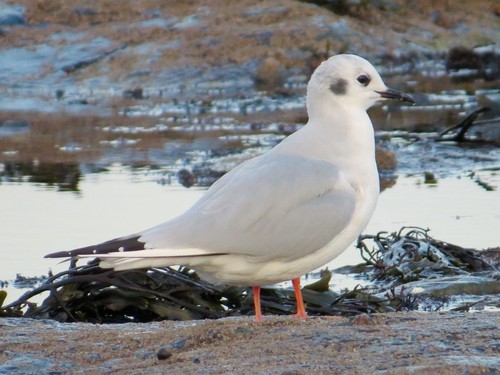
Bonaparte's Gull
28-33 cm (11-13 in) long, 76-84 cm wingspan
Brown Pelican
106-137 cm (42-54 in) long, 200-230 cm wingspan
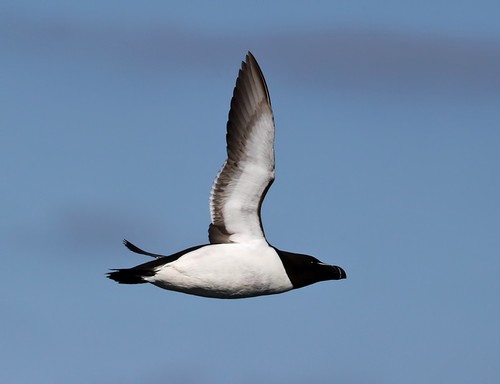
Razorbill
37-39 cm (15-15.5 in) long, 63-68 cm wingspan
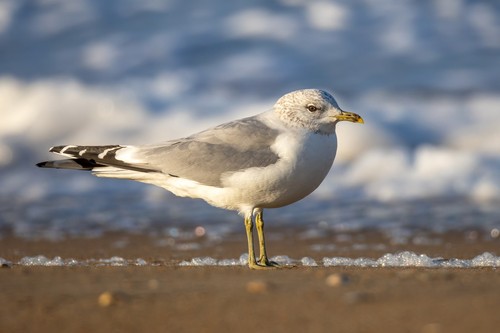
Common Gull
40-46 cm (16-18 in) long, 110-130 cm wingspan
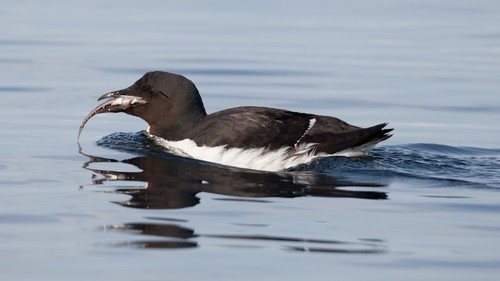
Thick-billed Murre
40-48 cm (16-19 in) long, 65-75 cm wingspan
Western Gull
55-68 cm (22-27 in) long, 130-144 cm wingspan
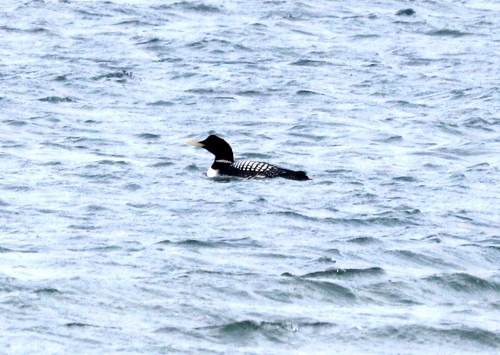
Yellow-billed Loon
76-97 cm (30-38 in) long, 135-152 cm wingspan
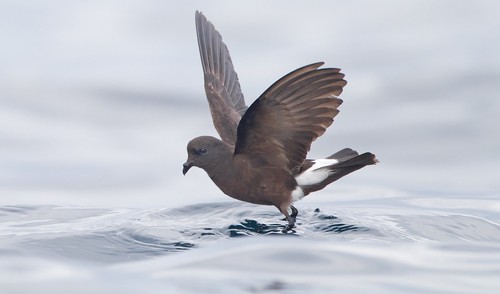
Wilson's Storm-Petrel
15-19 cm (6-7.5 in) long, wingspan 38-42 cm (15-16.5 in)

Yellow-eyed Penguin
62-79 cm (24-31 in) tall, 3-8.5 kg (6.6-18.7 lb)
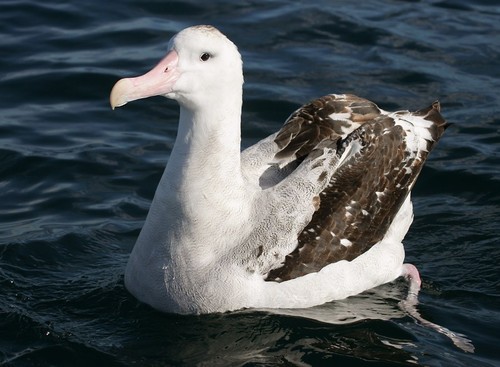
Wandering Albatross
107-135 cm (42-53 in) long, wingspan up to 3.5 m (11.5 ft)

Tufted Puffin
35-41 cm (14-16 in) long, about 63-70 cm wingspan