
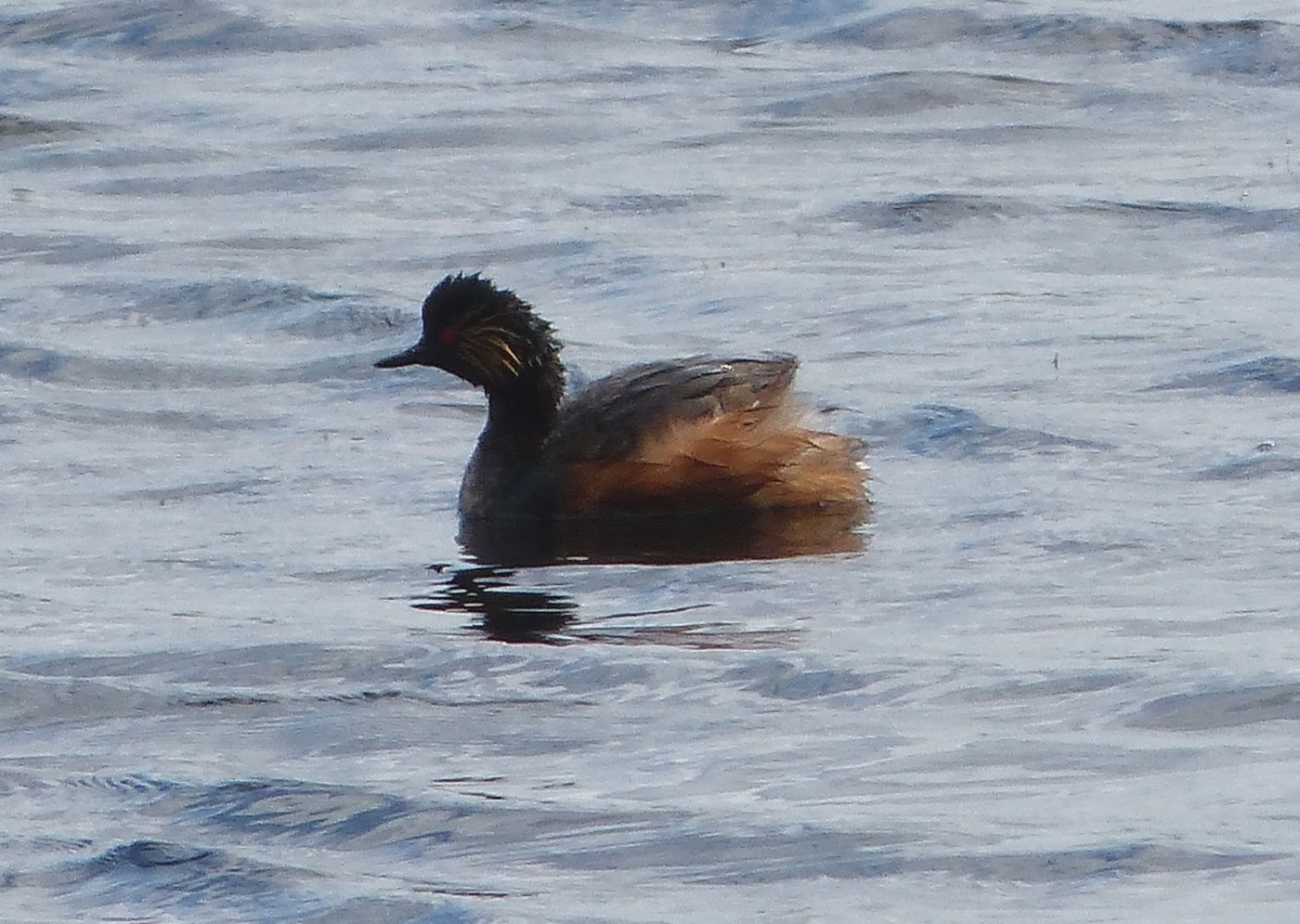
Eared Grebe
Podiceps nigricollis
The most numerous grebe in the world, known for its fan-shaped golden ear plumes and mass staging at hypersaline lakes.
- Size
- 28-35 cm (11-14 in) long, 40-47 cm wingspan
- Habitat
- shallow saline and freshwater lakes for breeding, hypersaline lakes in winter
- Type
- waterfowl
Spotted a bird like this?
Identify any bird from a photo, free.
Overview
The Eared Grebe, called the Black-necked Grebe in the Old World, is a small grebe with a black head and neck offset in breeding plumage by fan-shaped, golden-yellow ear plumes that splay outward behind bright red eyes. Its body appears fluffy and rounded, with a distinctly peaked crown and a thin, slightly upturned black bill. Non-breeding birds are duller grey and white but retain the peaked crown and upturned bill shape useful for identification.
It is believed to be the most abundant grebe species on Earth, with staggering numbers congregating at a handful of hypersaline lakes, such as Mono Lake and the Great Salt Lake in North America, to feed and molt before continuing migration.
How to identify it
Key field marks
- Breeding: black head and neck, fan-shaped golden ear plumes, red eyes, peaked crown
- Non-breeding: grey-black cap blending into a duskier face than the Horned Grebe, with a peaked crown and slightly upturned thin bill
- Slim overall shape compared to the flatter-headed Horned Grebe
Similar species
- Horned Grebe has a flatter crown and a sharper contrast between the dark cap and white cheeks in winter, plus a straighter bill.
- Pied-billed Grebe has a thick pale bill and lacks the peaked crown.
Habitat & range
Habitat
Breeds on shallow freshwater or slightly saline lakes and marshes; stages and winters in vast numbers on hypersaline lakes and coastal bays.
Range
Breeds across western North America and much of Eurasia and Africa; winters in the southwestern United States, Mexico, southern Europe, Africa, and Asia.
Migration
Undertakes remarkable migratory staging, with millions gathering at a few key hypersaline lakes to fatten up before continuing their journey, sometimes flying flightless-molt periods lasting weeks.
Behavior & voice
Behavior
Extremely gregarious outside the breeding season, forming enormous flocks numbering in the hundreds of thousands at key staging lakes, where individuals may nearly double their body weight before migrating onward in a single long flight.
Voice
Gives thin, high-pitched poo-eep calls and various chattering notes, mainly on breeding grounds.
Feeding
Feeds heavily on aquatic insects and, at hypersaline staging lakes, on enormous quantities of brine shrimp and brine flies.
Nesting
Breeds colonially, building a floating nest anchored to vegetation; typically lays 3-4 pale bluish eggs.
Frequently asked questions
Is the Eared Grebe the same as the Black-necked Grebe?
Yes, these are alternate names for the same species, Podiceps nigricollis, with "Eared Grebe" used mainly in North America and "Black-necked Grebe" in Europe.
Why do Eared Grebes gather at salt lakes?
They stage at hypersaline lakes like Mono Lake and the Great Salt Lake to feed intensively on brine shrimp and brine flies, building up fat reserves before continuing migration.
Is the Eared Grebe the most common grebe in the world?
Yes, it is generally considered the most numerous grebe species globally, with staging flocks sometimes numbering in the hundreds of thousands or more.
How can you tell an Eared Grebe from a Horned Grebe?
The Eared Grebe has a peaked crown and slightly upturned bill with a more blended dusky face in winter, while the Horned Grebe has a flatter crown and a sharply defined black-and-white face pattern.
Eared Grebe guides
In-depth guides for identifying, finding, and understanding Eared Grebe.
Other birds you may enjoy
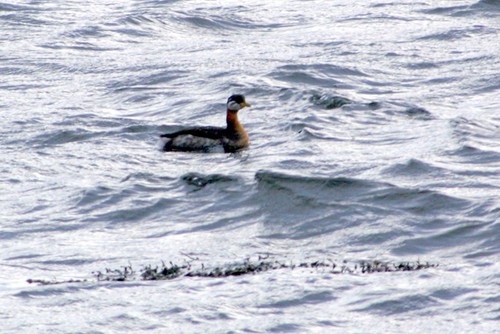
Red-necked Grebe
40-55 cm (16-22 in) long, 77-85 cm wingspan
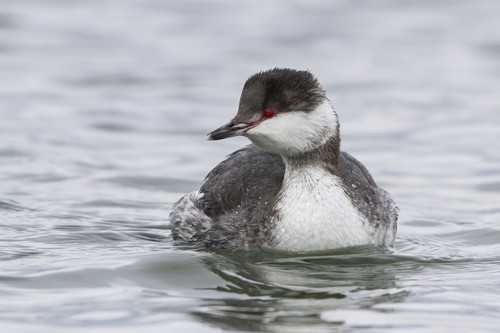
Horned Grebe
31-38 cm (12-15 in) long, 46-55 cm wingspan
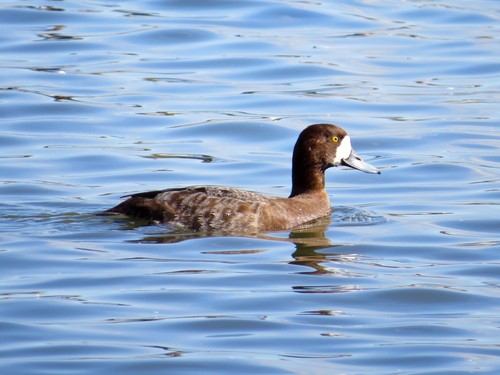
Greater Scaup
42-51 cm (16.5-20 in) long, 71-84 cm wingspan
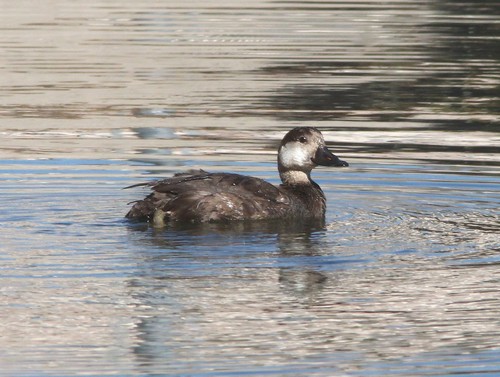
Black Scoter
43-54 cm (17-21 in) long, 79-90 cm wingspan
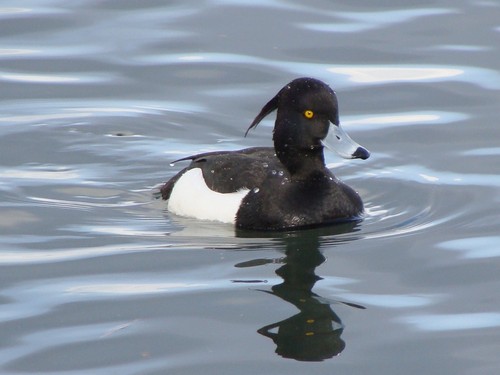
Tufted Duck
40-47 cm (16-18.5 in) long, 67-73 cm wingspan
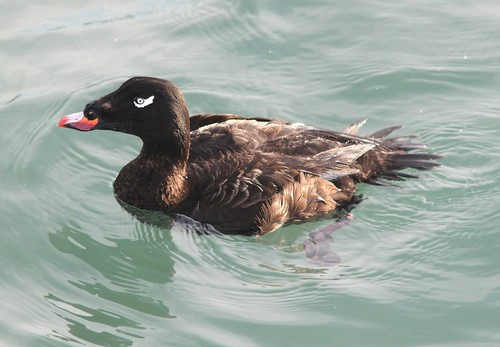
White-winged Scoter
48-58 cm (19-23 in) long, 86-99 cm wingspan
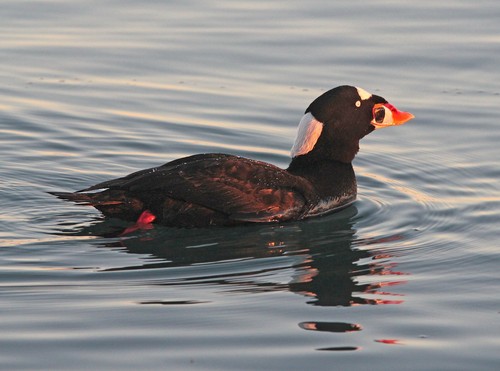
Surf Scoter
45-56 cm (18-22 in) long, 78-92 cm wingspan
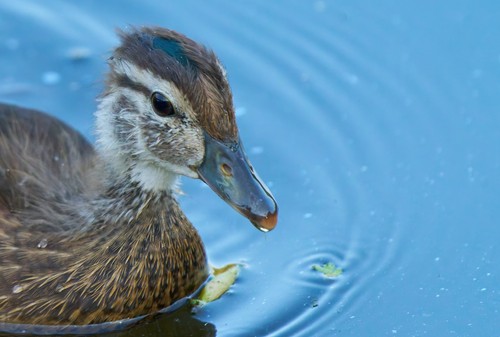
Wood Duck
47-54 cm (18.5-21 in) long, 66-73 cm wingspan
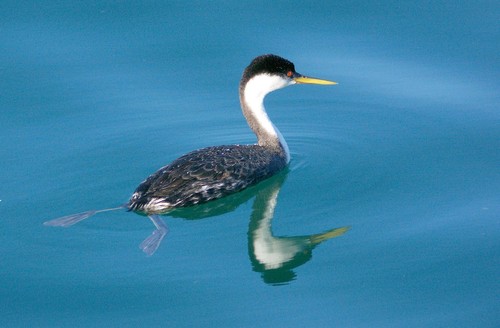
Western Grebe
56-74 cm (22-29 in) long, 79-102 cm wingspan
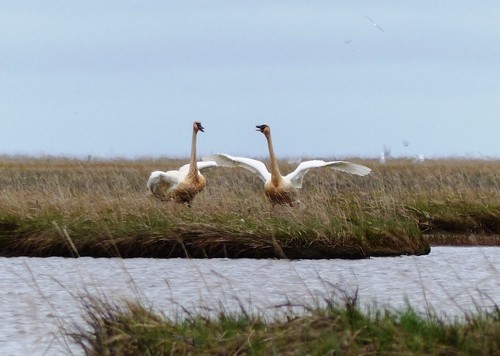
Tundra Swan
115-150 cm (45-59 in) long, about 180 cm wingspan
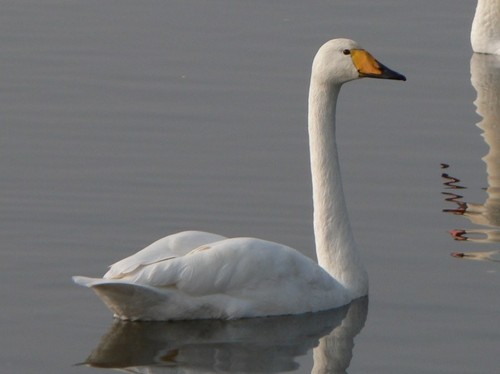
Whooper Swan
140-165 cm (55-65 in) long, 205-235 cm wingspan
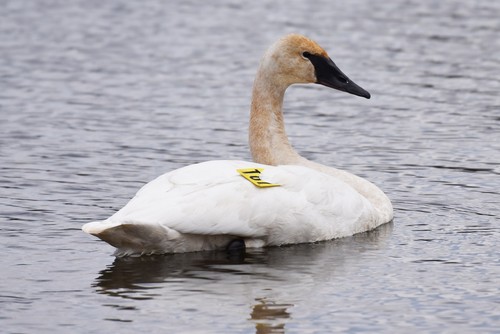
Trumpeter Swan
150-180 cm (59-71 in) long, up to 300 cm wingspan