
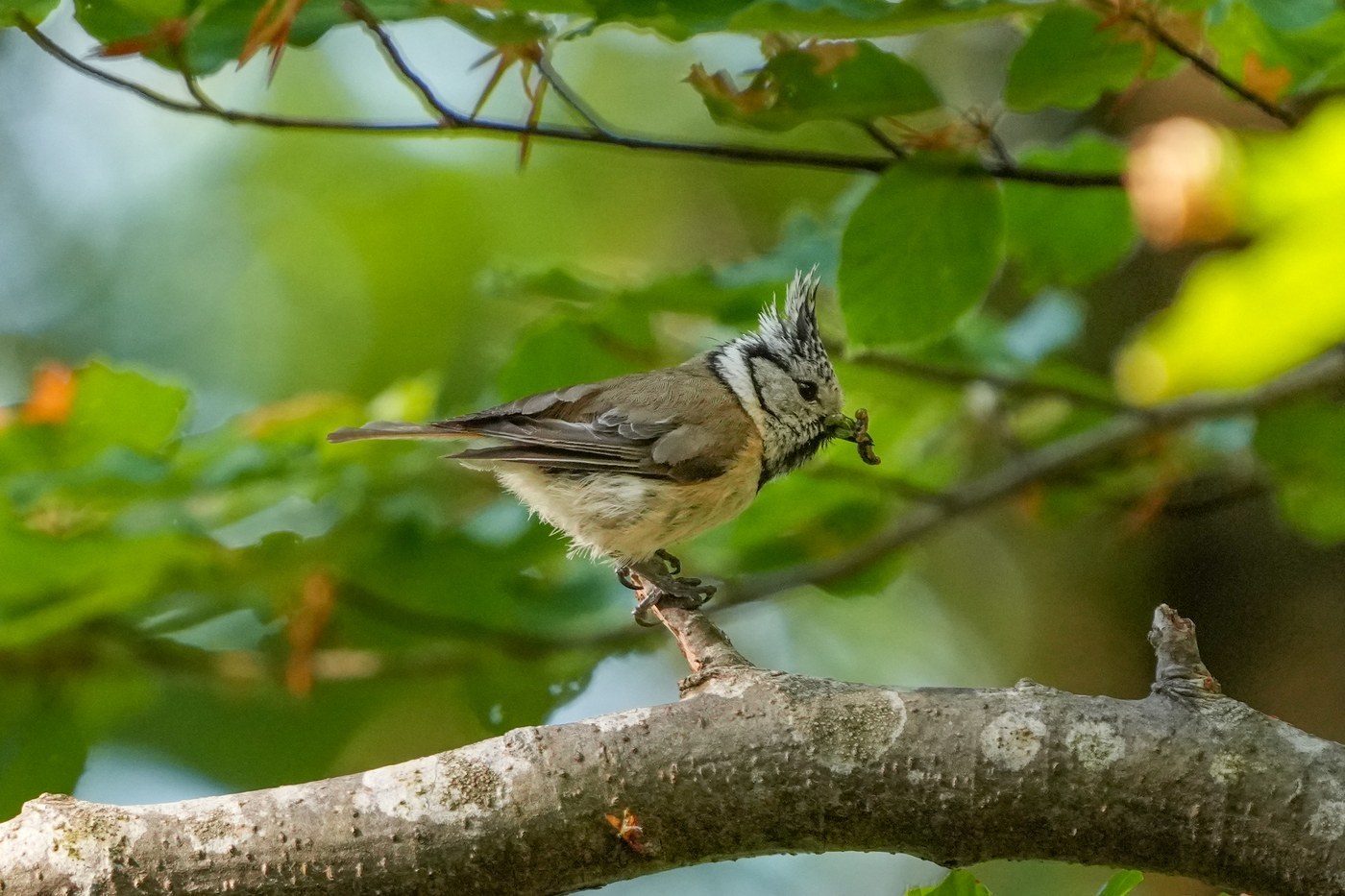
Crested Tit
Lophophanes cristatus
A distinctive small tit with a spiky black-and-white speckled crest, closely tied to mature coniferous forest.
- Size
- 11-12 cm (4.3-4.7 in) long, 17-20 cm wingspan
- Habitat
- coniferous woodlands, especially old pine forest
- Type
- songbird
Spotted a bird like this?
Identify any bird from a photo, free.
Overview
The Crested Tit is easily recognized by its pointed, speckled black-and-white crest, which it can raise or lower, along with a black-and-white face pattern featuring a curved black line through the eye and a black collar meeting a small black bib. The body is soft buff-brown above and pale below, without any yellow or blue in the plumage.
It is closely tied to ancient coniferous woodland, particularly native Scots pine forest, and is far more habitat-specific than most other European tits, making it a sought-after species for birdwatchers in areas like the Scottish Highlands.
How to identify it
Key field marks
- Pointed, speckled black-and-white crest, raised or lowered at will
- Black line curving through the eye and around the cheek
- Small black bib and black collar
- Plain buff-brown body, no yellow or blue
Similar species
- No other common European tit has a crest, making the Crested Tit unmistakable once the head pattern is seen well.
- At a distance or in poor light, its plain brown body could suggest a Marsh or Willow Tit, but the crest is diagnostic when visible.
Habitat & range
Habitat
Strongly tied to mature coniferous woodland, especially old native pine forest with standing dead wood for nesting.
Range
Found across much of continental Europe; in Britain restricted to native pinewoods of the Scottish Highlands.
Migration
Sedentary, rarely moving far from its home territory.
Behavior & voice
Behavior
Forages through conifer branches and trunks, often joining mixed tit flocks in winter; pairs are strongly territorial and remain together year-round in suitable habitat.
Voice
A distinctive purring, trilling call, often rendered as "chrrr-r-r-r-it," quite different from other tits; song is a soft warbling variation on the call.
Feeding
Eats insects and spiders gleaned from bark and needles in summer, switching to conifer seeds in winter, and regularly caches food.
Nesting
Excavates its own nest hole in soft, rotten wood, typically in a dead pine stump; lays 5-8 white eggs with fine red-brown speckling.
Frequently asked questions
How do you identify a Crested Tit?
Look for its pointed, speckled black-and-white crest along with a black-and-white face pattern, both unique among European tits.
Where can Crested Tits be found in Britain?
They are restricted to native pine forests of the Scottish Highlands, making them a specialty species for birdwatchers there.
What habitat does the Crested Tit need?
Mature coniferous woodland, especially old native pine forest with dead wood available for excavating nest holes.
Does the Crested Tit excavate its own nest hole?
Yes, like the Willow Tit, it excavates its own cavity in soft, rotten wood rather than using an existing hole.
Crested Tit guides
In-depth guides for identifying, finding, and understanding Crested Tit.
Other birds you may enjoy
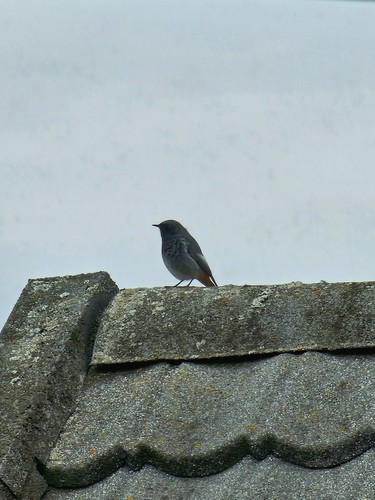
Black Redstart
13-14.5 cm (5.1-5.7 in) long, 23-26 cm wingspan
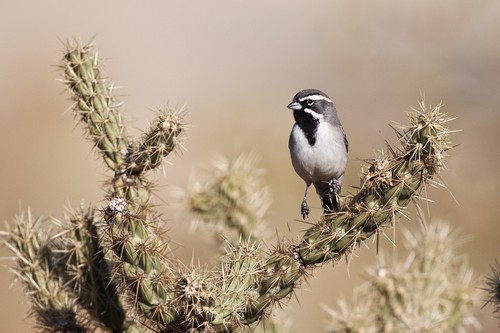
Black-throated Sparrow
12-14 cm (4.7-5.5 in) long, about 19-20 cm (7.5-8 in) wingspan
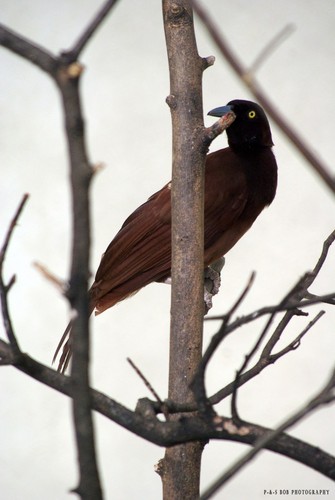
Greater Bird-of-paradise
Body about 43 cm; males with additional flank plumes up to 50 cm and long tail wires
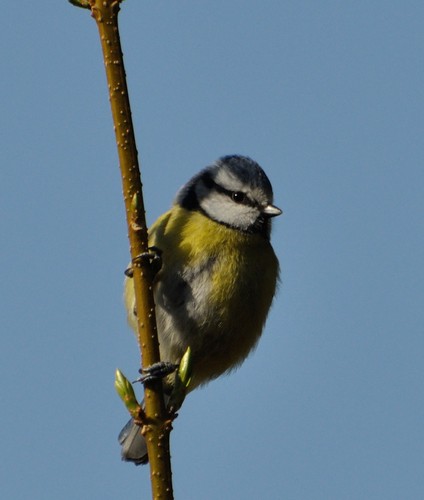
Blue Tit
11-12 cm (4.3-4.7 in) long, 17-20 cm wingspan
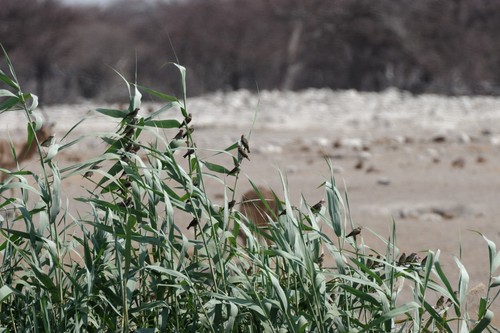
Red-billed Quelea
11.5–13 cm long, wingspan about 20–22 cm
White-plumed Antbird
13-14 cm (5-5.5 in) long
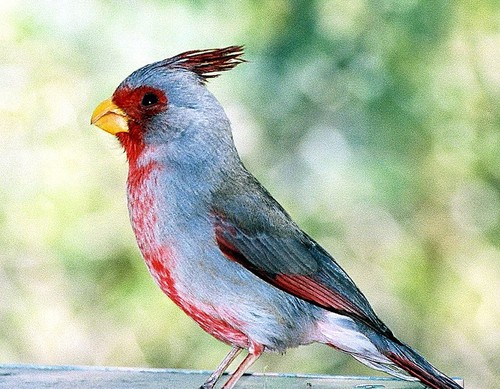
Pyrrhuloxia
19-22 cm (7.5-8.7 in) long, 30 cm wingspan
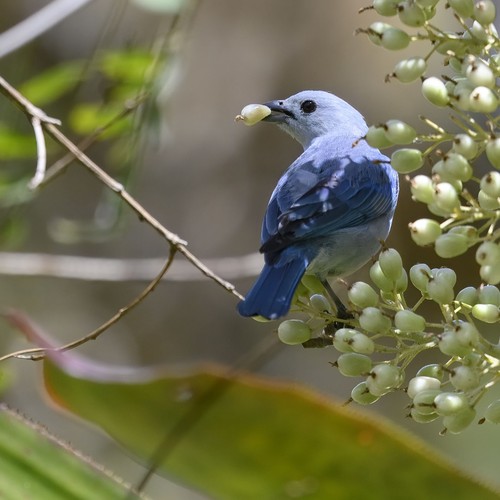
Blue-gray Tanager
16-18 cm (6-7 in) long
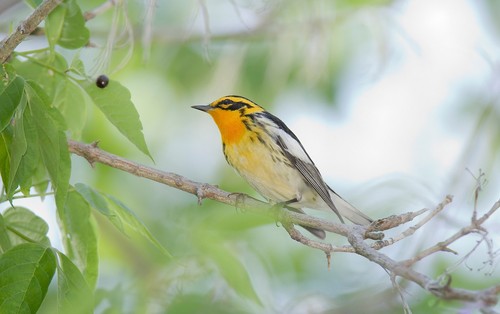
Blackburnian Warbler
11-13 cm (4.3-5.1 in) long, 20-22 cm wingspan
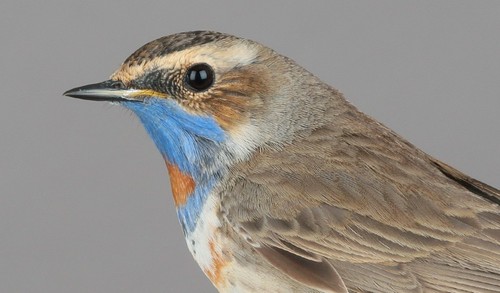
Bluethroat
13-14 cm (5.1-5.5 in) long, 20-22 cm wingspan
Eurasian Nuthatch
12-14.5 cm (4.7-5.7 in) long, 22.5-27 cm wingspan
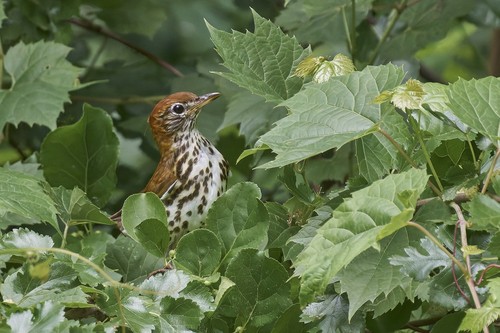
Wood Thrush
19-21 cm (7.5-8.3 in) long, about 33 cm (13 in) wingspan