
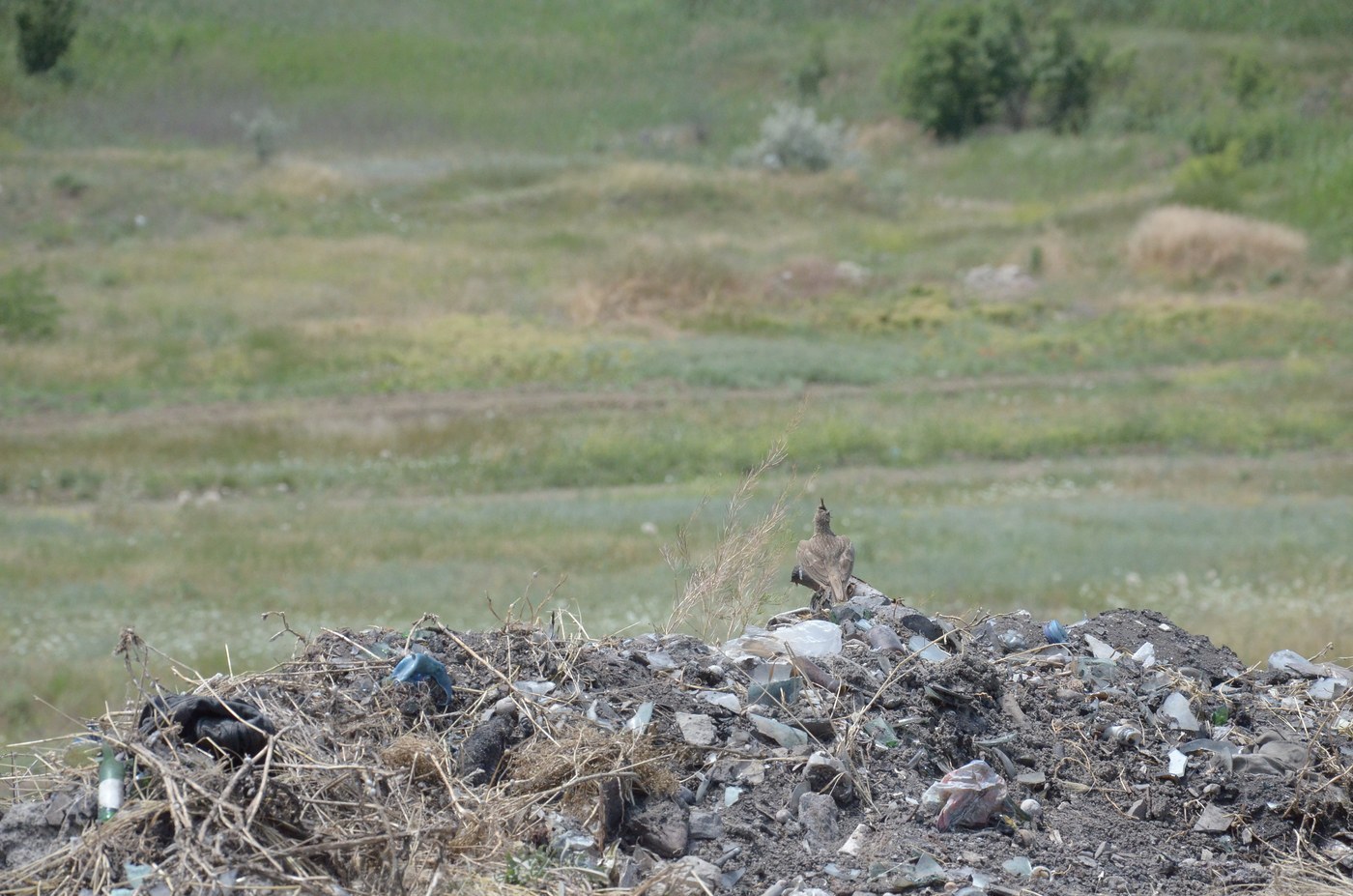
Crested Lark
Galerida cristata
A sandy-brown lark with a tall, spiky crest, often seen walking on bare ground and roadsides.
- Size
- 17-19 cm long; wingspan around 29-38 cm
- Habitat
- Bare open ground, wasteland, arid steppe, roadsides, and cultivated land, often near human settlement
- Type
- songbird
Spotted a bird like this?
Identify any bird from a photo, free.
Overview
The Crested Lark is a robust, sandy-colored lark readily identified by its tall, pointed crest, which is often held erect and visible even from a distance. Its plumage is warm buffy-brown above with streaking, and paler, lightly streaked underparts, giving it a fairly plain but distinctive overall look.
Compared to other larks, it has a relatively long, slightly decurved bill, useful for its varied diet of seeds and insects. The wings show a warm, rufous-orange tone in flight, particularly visible on the underwing and outer tail.
Sexes are alike in plumage, and the species shows a good deal of geographic variation in overall color tone across its wide range, from pale sandy birds in arid regions to darker, more richly colored birds elsewhere.
How to identify it
Key field marks
- Tall, narrow, upright crest, often the most obvious feature
- Sandy to grayish-brown streaked upperparts
- Long, slightly downcurved bill
- Warm rufous tones visible in the wings and outer tail in flight
- Confiding behavior, often close to roads, parking areas, and open ground near towns
Similar species
- Woodlark: much smaller, shorter-tailed, with a strong pale supercilium pattern and a shorter, less pointed crest.
- Eurasian Skylark: larger, longer-tailed, has a white wing trailing edge and white outer tail feathers, and a smaller, less obvious crest.
- Thekla Lark: very similar in appearance where ranges overlap in Iberia; Thekla Lark has a shorter bill, more spotted (versus streaked) breast markings, and grayer overall tone, with habitat generally more rocky/hilly than the Crested Lark's flat open ground.
Habitat & range
Habitat
Crested Larks favor open, often disturbed or barren ground, including wasteland, quarries, fallow fields, roadsides, airfields, and the edges of towns and villages, tolerating a good deal of human disturbance.
Range
The species has an extensive range across Europe, North Africa, and much of temperate Asia, from Iberia and France eastward through the Middle East to China, though it has declined or disappeared from parts of northwestern Europe in recent decades.
Migration
Most populations are non-migratory residents, staying in the same general area year-round.
Behavior & voice
Behavior
Crested Larks are usually seen alone or in pairs, walking steadily across bare ground while foraging, and are often notably tame around people, frequently found on roadsides, in parking lots, and around farm buildings.
Voice
The song is a fairly simple, melodious series of clear, fluty notes, often given from the ground, a low perch, or during a brief song flight. The common call is a distinctive, plaintive "dree-dree-oo" or similar rising whistle.
Feeding
They feed on seeds and insects gleaned from the ground, using the longer bill to probe soil and low vegetation more than many other larks.
Nesting and breeding
The nest is a simple ground scrape lined with fine grasses, typically placed in a slight depression in open, bare terrain. Clutches usually number 3-5 eggs, and the species may raise more than one brood in a season across its long breeding period.
Frequently asked questions
What makes the Crested Lark easy to identify?
Its tall, spiky, upright crest is the most distinctive feature, combined with sandy-brown streaked plumage and a habit of walking confidently on bare open ground near roads and settlements.
Where does the Crested Lark live?
It occupies open, often disturbed ground such as wasteland, fallow fields, and roadsides across Europe, North Africa, and much of temperate Asia.
How is Crested Lark different from Thekla Lark?
Thekla Lark has a shorter bill, more spotted breast streaking, and grayer tones, and tends to favor rockier, hillier terrain compared to the flatter ground preferred by Crested Lark.
Does the Crested Lark migrate?
No, most populations are resident and remain in the same area throughout the year.
What does a Crested Lark eat?
It eats a mix of seeds and insects foraged from bare or sparsely vegetated ground.
Crested Lark guides
In-depth guides for identifying, finding, and understanding Crested Lark.
Other birds you may enjoy

Black Redstart
13-14.5 cm (5.1-5.7 in) long, 23-26 cm wingspan

Black-throated Sparrow
12-14 cm (4.7-5.5 in) long, about 19-20 cm (7.5-8 in) wingspan

Greater Bird-of-paradise
Body about 43 cm; males with additional flank plumes up to 50 cm and long tail wires

Blue Tit
11-12 cm (4.3-4.7 in) long, 17-20 cm wingspan

Red-billed Quelea
11.5–13 cm long, wingspan about 20–22 cm
White-plumed Antbird
13-14 cm (5-5.5 in) long

Pyrrhuloxia
19-22 cm (7.5-8.7 in) long, 30 cm wingspan

Blue-gray Tanager
16-18 cm (6-7 in) long

Blackburnian Warbler
11-13 cm (4.3-5.1 in) long, 20-22 cm wingspan

Bluethroat
13-14 cm (5.1-5.5 in) long, 20-22 cm wingspan

Eurasian Nuthatch
12-14.5 cm (4.7-5.7 in) long, 22.5-27 cm wingspan

Wood Thrush
19-21 cm (7.5-8.3 in) long, about 33 cm (13 in) wingspan