
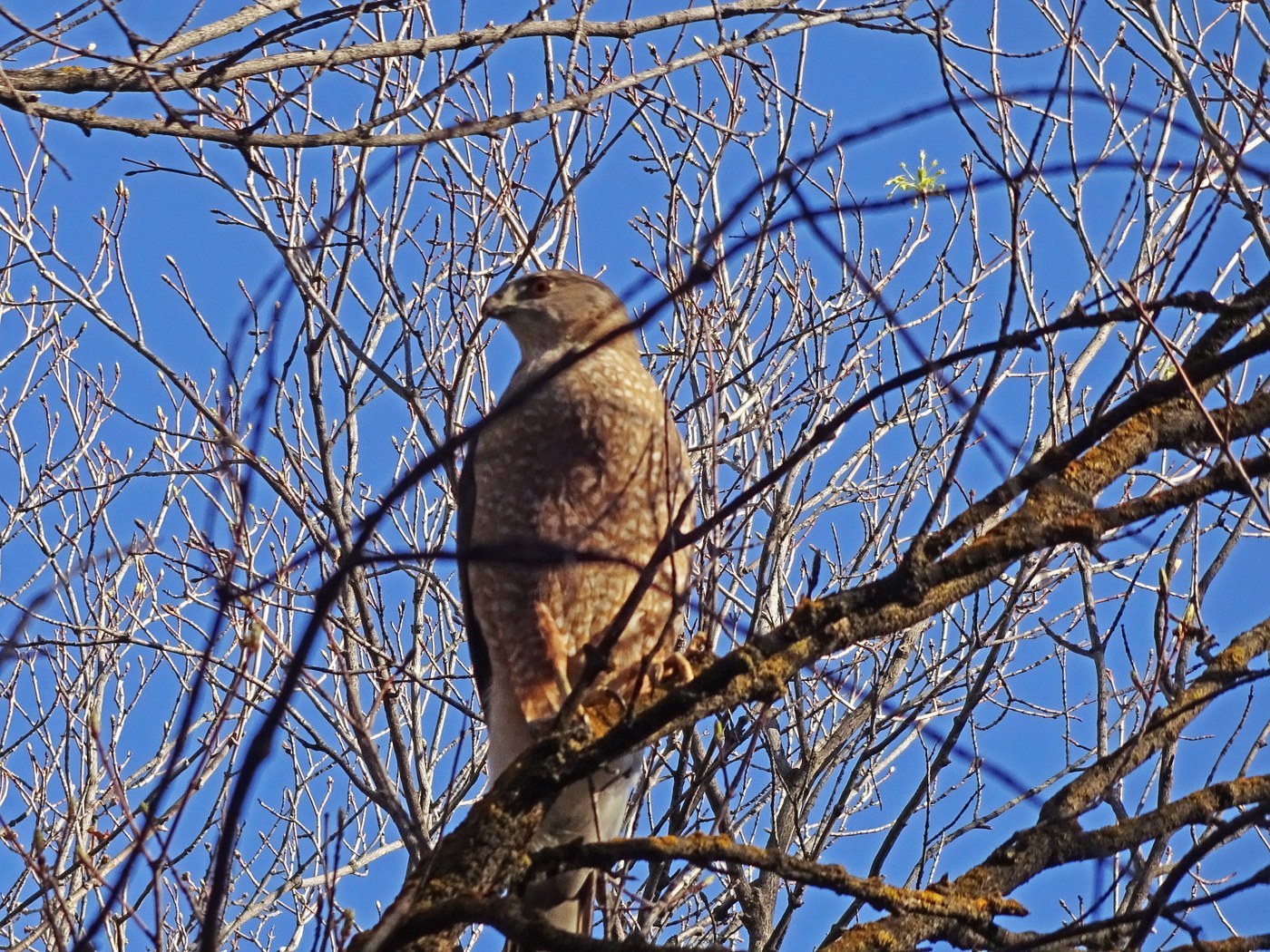
Cooper's Hawk
Accipiter cooperii
A medium-sized woodland hawk that has become a common backyard predator at bird feeders, agile enough to chase prey through dense cover.
- Size
- 35-46 cm (14-18 in) long, 62-90 cm (24-35 in) wingspan
- Habitat
- woodlands, forest edges, and increasingly suburban and urban areas
- Type
- raptor
Spotted a bird like this?
Identify any bird from a photo, free.
Overview
The Cooper's Hawk is a medium-sized accipiter built for high-speed pursuit through trees and brush, adept at ambushing other birds. Adults have a blue-gray back, fine rufous barring on the breast, and piercing red eyes; juveniles are brown above with coarse brown streaking on a whitish breast and pale yellow eyes.
Once primarily a forest species, Cooper's Hawks have adapted remarkably well to suburban and urban environments, where they commonly hunt songbirds visiting backyard feeders.
How to identify it
Key field marks
- Rounded tail with a broad white terminal band
- Adult: blue-gray back, rufous-barred underparts, red eyes
- Juvenile: brown above, coarse brown streaks on white breast, yellow eyes
- Relatively large, blocky head that projects noticeably forward in flight
- Flight style: several quick flaps followed by a glide
Similar species
Sharp-shinned Hawk is smaller and daintier, with a smaller head that barely projects past the wrist in flight, a squared or notched (not rounded) tail tip, and thinner legs; the two species are notoriously difficult to separate, especially at a distance or in flight. Northern Goshawk is much larger and bulkier with a bold pale eyebrow stripe.
Habitat & range
Habitat
Historically a bird of mature forest and woodland edge, Cooper's Hawk has increasingly colonized suburban neighborhoods and urban parks with mature trees, especially where bird feeders provide reliable prey.
Range
Breeds across most of the United States, southern Canada, and Mexico. Northern populations migrate south in winter, while many populations in temperate and southern regions are year-round residents, including an increasing number of urban breeders.
Behavior & voice
Behavior
A stealthy ambush hunter, Cooper's Hawk uses cover to approach prey unseen, then bursts out in a fast, agile chase, sometimes pursuing birds on foot through dense brush or even into water.
Voice
The alarm call is a fast, sharp "cack-cack-cack-cack," given near the nest; otherwise generally quiet away from the breeding season.
Feeding and nesting
Feeds mainly on medium-sized birds (robins, doves, jays) along with some small mammals such as chipmunks. Builds a bulky stick nest in a tree, often in a fork or on a horizontal branch, typically in denser cover than many other hawks choose.
Frequently asked questions
How do you tell a Cooper's Hawk from a Sharp-shinned Hawk?
Cooper's Hawk has a larger, more blocky head that projects well past the wrists in flight, a rounded tail tip, and a slower wingbeat; Sharp-shinned Hawk is smaller with a tiny head, squared tail tip, and quicker, snappier wingbeats. The distinction can still be tricky even for experienced birders.
Why are Cooper's Hawks common in suburbs now?
They have adapted to hunt songbirds concentrated at backyard bird feeders and nest in mature suburban trees, allowing populations to thrive in and around cities.
What do Cooper's Hawks eat?
Primarily medium-sized birds such as robins, doves, and jays, along with some small mammals like chipmunks and squirrels.
Are Cooper's Hawks dangerous to pets?
They occasionally take very small pets like tiny songbirds kept outdoors, but they are not a significant threat to cats or dogs; their normal prey is wild birds and small mammals.
What color are Cooper's Hawk eyes?
Juveniles have pale yellow eyes that gradually darken to orange and then deep red as adults age.
Cooper's Hawk guides
In-depth guides for identifying, finding, and understanding Cooper's Hawk.
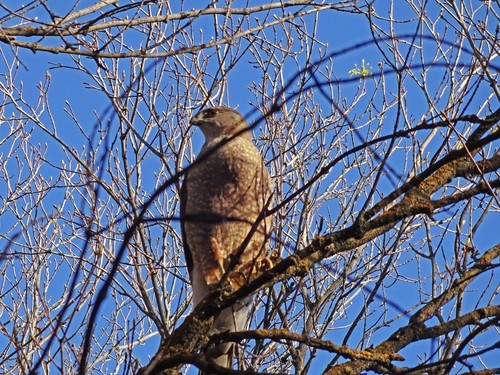
Cooper's Hawk identified by the community
Real birds identified with Bird Identifier.
Other birds you may enjoy
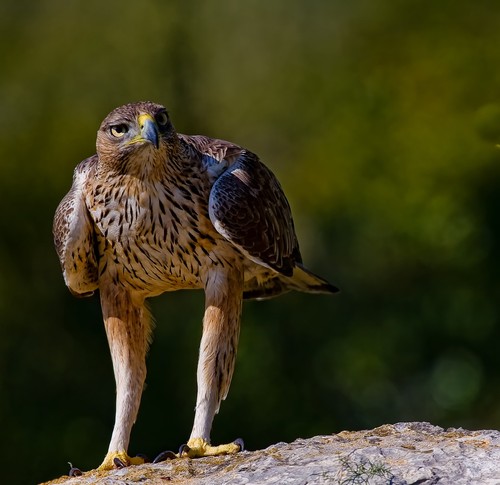
Bonelli's Eagle
Body 65–72 cm (26–28 in); wingspan 150–180 cm (59–71 in)
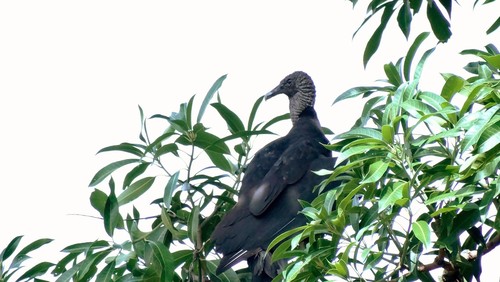
Black Vulture
56-68 cm (22-27 in) long, 137-165 cm wingspan
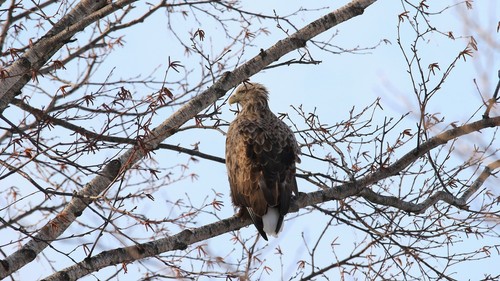
White-tailed Eagle
66-94 cm body length; wingspan 178-245 cm, among the largest eagles in the world
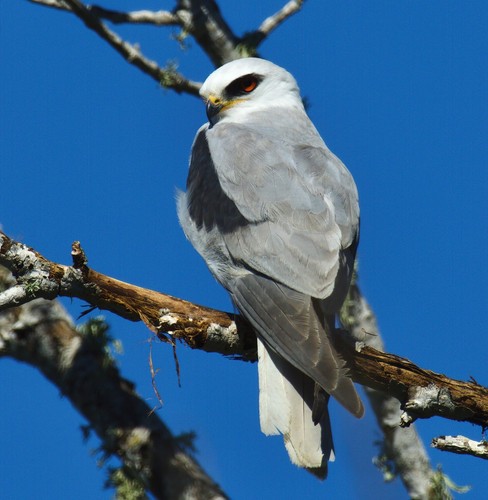
White-tailed Kite
35-43 cm (14-17 in) long, 88-102 cm (35-40 in) wingspan
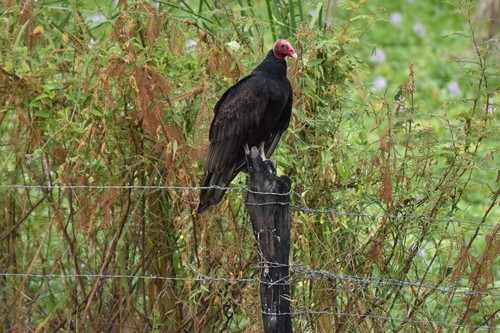
Turkey Vulture
64-81 cm (25-32 in) long, 160-183 cm wingspan
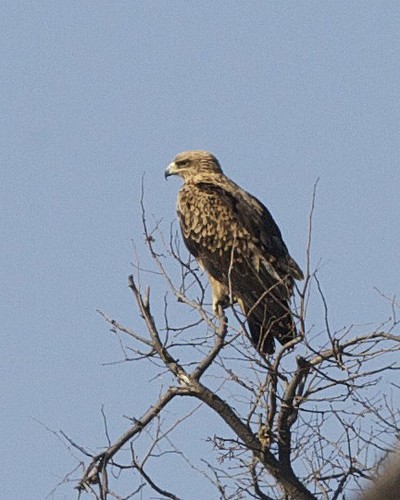
Tawny Eagle
62–75 cm long; wingspan 1.65–2.0 m
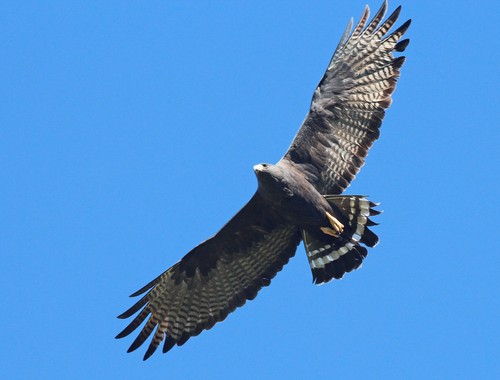
Zone-tailed Hawk
46-56 cm (18-22 in) long, 118-140 cm (46-55 in) wingspan
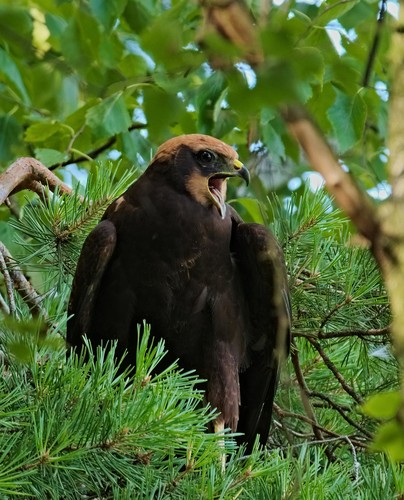
Western Marsh Harrier
Body 43-56 cm; wingspan 115-140 cm
Swallow-tailed Kite
48-68 cm (19-27 in) long including tail streamers, 112-136 cm (44-54 in) wingspan
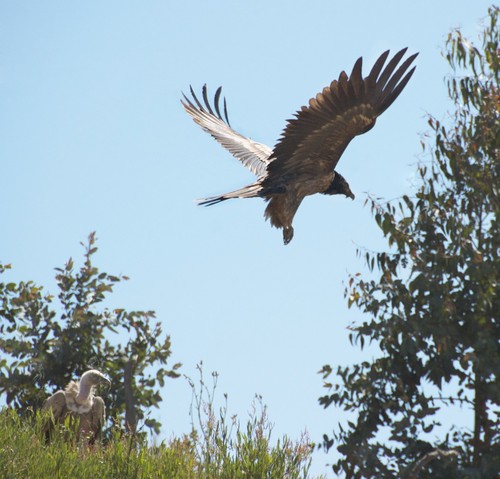
White-backed Vulture
78-98 cm long, wingspan 1.96-2.25 m
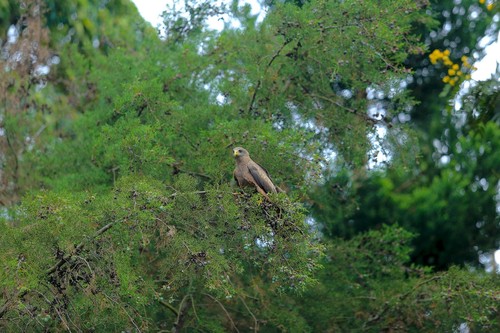
Yellow-billed Kite
55-60 cm long; wingspan 130-155 cm
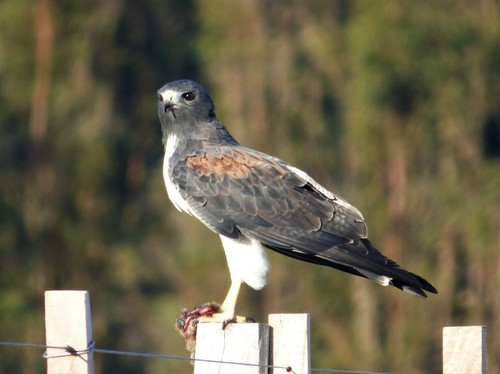
White-tailed Hawk
46-59 cm (18-23 in) long, 122-142 cm (48-56 in) wingspan