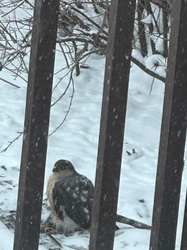
Cooper's Hawk Identification Guide
A crow-sized woodland accipiter with a rounded tail, dark cap, and red eyes as an adult, best separated from the similar Sharp-shinned Hawk by its larger head and rounded tail tip.
Read the full Cooper's Hawk encyclopedia entry →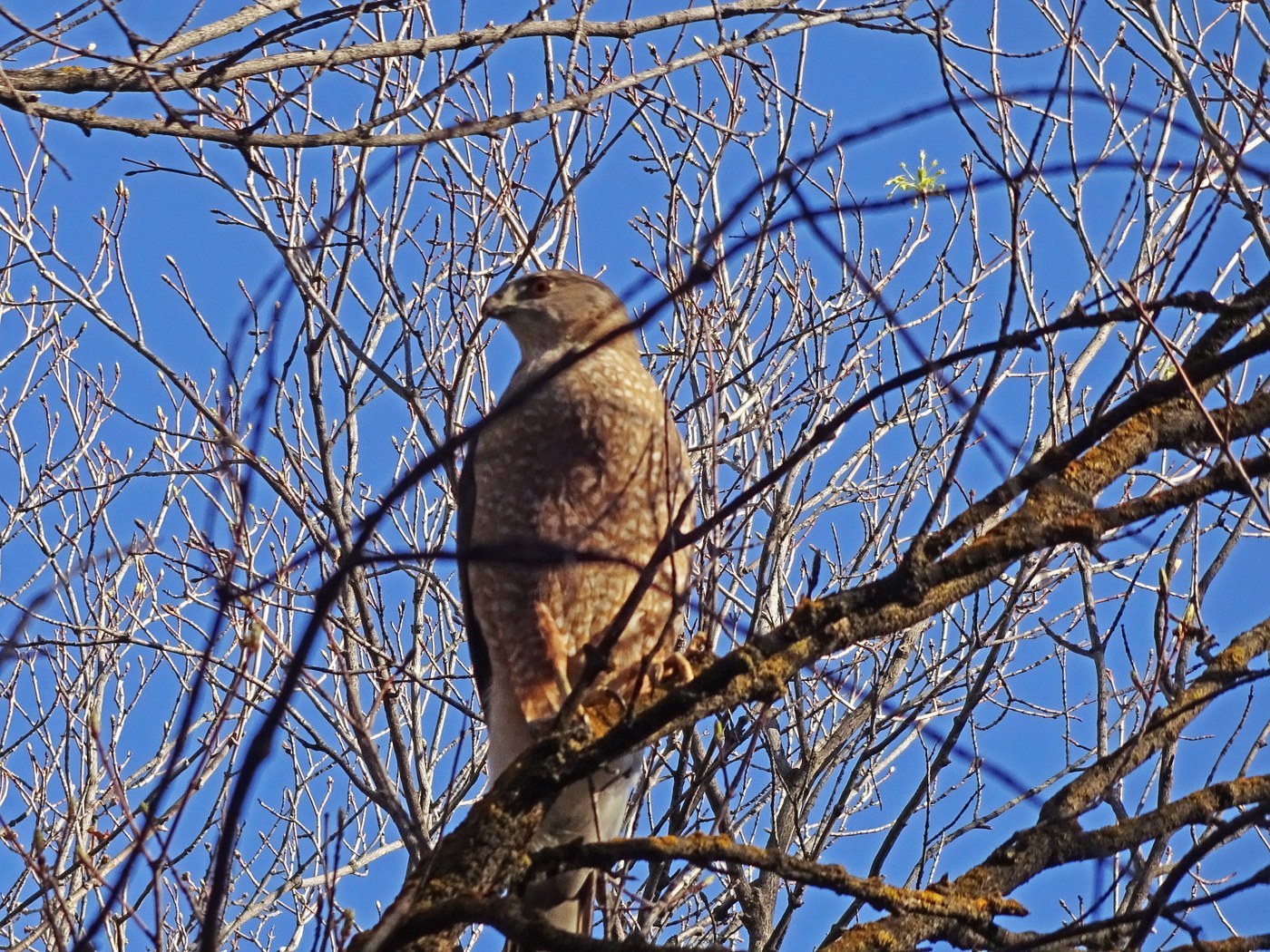
Key Field Marks
- Size & shape: A medium-sized accipiter, roughly crow-sized (35–46 cm), with females noticeably larger than males; broad shoulders, a fairly large head that projects prominently in front of the wings in flight, and a long, rounded tail.
- Adult plumage: Blue-gray upperparts, warm rufous barring on the underparts, red eyes, and a dark cap that contrasts with a paler nape.
- Juvenile plumage: Brown upperparts with fine streaking (not barring) on the underparts, and yellow eyes that darken with age.
- Tail: Long, with several dark bands and a distinct white terminal band; the tip appears rounded rather than square or notched.
- Flight style: Characteristic flap-flap-glide pattern; soars on flat wings held slightly forward at the wrist.
- Behavior: An ambush hunter of birds, often seen dashing low through vegetation or making sudden strikes at backyard feeders.
Separating It From Similar Species
- Sharp-shinned Hawk: Smaller and daintier overall, with a smaller head that barely projects past the wrists, thinner legs, and a squared or notched tail tip rather than rounded.
- Northern Goshawk: Much larger and bulkier with a heavier build, a bold pale supercilium (eyebrow), and finer, denser gray barring on the underparts as an adult.
- Red-shouldered/Red-tailed Hawk (buteos): Broader wings, shorter tails, and a soaring flight style with wings held in a shallow V or flat plane, quite different from the accipiter's flap-flap-glide.
Where & When to See It
- Habitat: Woodlands, forest edges, riparian corridors, and increasingly suburban and urban areas with mature trees, especially around bird feeders.
- Range: Breeds throughout most of the United States, southern Canada, and Mexico.
- Season: Northern populations migrate south in winter, while southern populations are largely resident year-round.
Voice
- A sharp, repeated "cak-cak-cak-cak" alarm call, usually given near the nest or when agitated; otherwise generally quiet away from breeding areas.
Frequently asked questions
How do I tell a Cooper's Hawk from a Sharp-shinned Hawk?
Cooper's Hawk is larger with a proportionally bigger head that projects well past the wings in flight and a rounded tail tip, while Sharp-shinned Hawk is smaller, has a head that barely projects, and shows a squared or notched tail tip.
What color are a Cooper's Hawk's eyes?
Juveniles have pale yellow eyes that gradually darken to orange and eventually deep red in older adults.
Why do Cooper's Hawks show up at backyard bird feeders?
They are agile bird-hunting specialists that use feeders as convenient hunting grounds, ambushing songbirds attracted to the seed.
How is a Cooper's Hawk different from a Northern Goshawk?
Northern Goshawk is considerably larger and bulkier with a bold pale eyebrow stripe and finer barring, while Cooper's Hawk is smaller with a plainer face and coarser rufous barring.
Is the Cooper's Hawk migratory?
Northern populations migrate south for winter, while many populations in the southern and western U.S. remain resident year-round.
Cooper's Hawk identified by the community
Recent Cooper's Hawk sightings identified with Bird Identifier.