
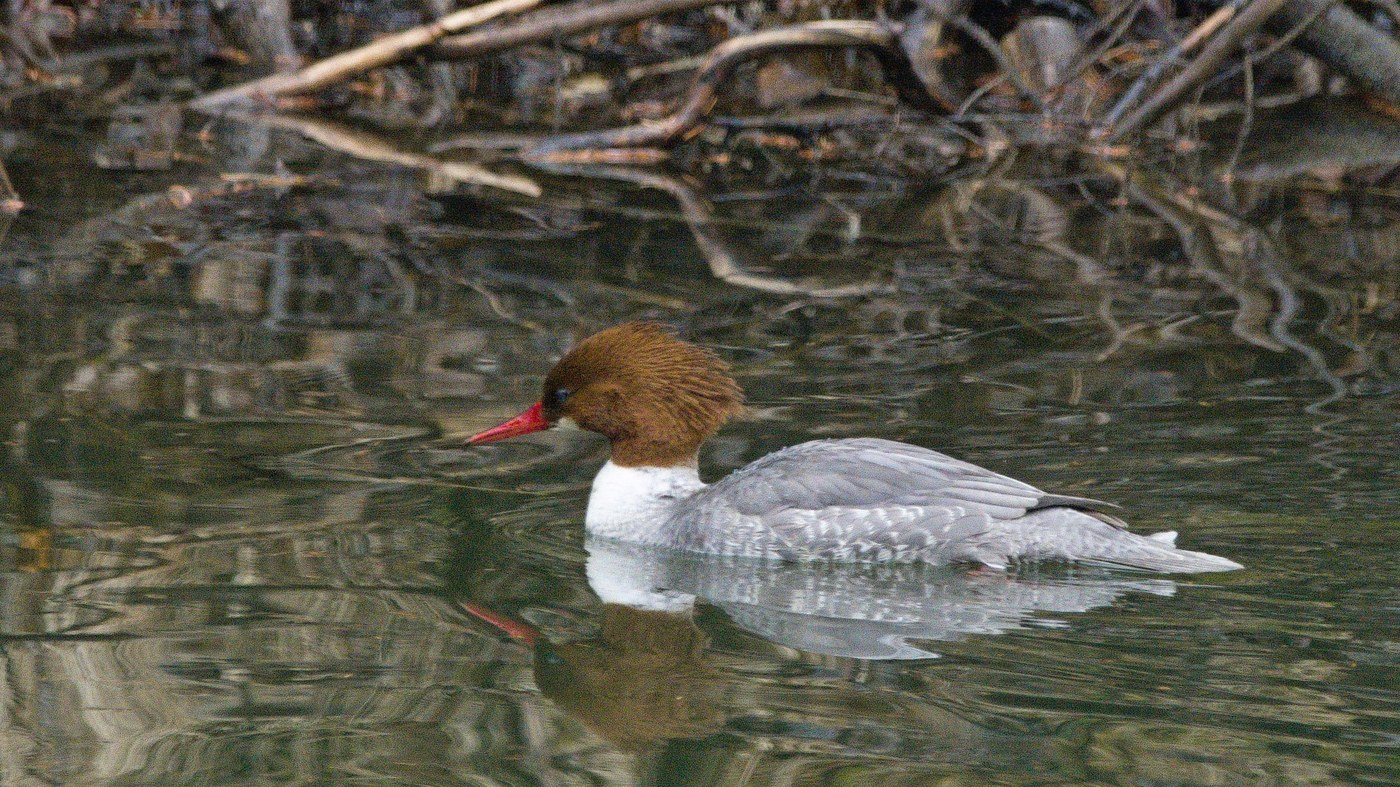
Common Merganser
Mergus merganser
A large, sleek fish-eating duck with a slender serrated bill, males strikingly clean white-bodied with a glossy dark green head.
- Size
- 58-72 cm (23-28 in) long, 78-97 cm wingspan
- Habitat
- rivers, large forested lakes, and reservoirs; winters on open lakes and rivers
- Type
- waterfowl
Spotted a bird like this?
Identify any bird from a photo, free.
Overview
The Common Merganser (known as the Goosander in Europe) is a large, streamlined fish-eating duck found on rivers and lakes across the Northern Hemisphere. Breeding males are strikingly clean-cut: a glossy dark green head, blood-red slender bill, white body often tinged with a soft peach blush, and a black back. Females and non-breeding males (in "eclipse" plumage) are gray-bodied with a rich cinnamon-red, shaggy crested head and a sharply demarcated white chin and throat. All mergansers have long, narrow bills lined with tooth-like serrations used to grip slippery fish, giving them the nickname "sawbills."
Common Mergansers are powerful swimmers and divers, riding low in the water and disappearing beneath the surface in pursuit of prey. In flight they appear long-bodied and fast, flying low over water in straight lines, often in single-file groups.
How to identify it
Key field marks
- Large size and long, slender, hook-tipped red-orange bill with fine serrations
- Breeding male: clean white body, glossy bottle-green head, black back, no crest visible
- Female/eclipse male: gray body, rusty-red shaggy crested head sharply set off from white throat and chin
- Straight, low flight profile with the head, neck, and body held in a horizontal line
Similar species
The Red-breasted Merganser is smaller and slimmer, with a shaggier double-pointed crest in both sexes and a scruffier appearance; breeding males show gray flanks and a rusty breast band, unlike the pure white flanks of the Common Merganser. The Hooded Merganser is much smaller with a fan-shaped, wobbly crest and a thinner black bill. Female Common Mergansers can be told from Red-breasted females by the more sharply defined white chin patch and heavier build.
Habitat & range
Common Mergansers breed along clear, fast-flowing rivers and large forested lakes across Canada, the northern United States, and much of Europe and Asia, nesting in tree cavities or nest boxes near water. In winter they move to open lakes, large rivers, and reservoirs, generally avoiding fully marine waters more than Red-breasted Mergansers do, though some use sheltered coastal bays. The species has a broad Holarctic range and is a familiar sight on wooded northern waterways year-round in parts of its range.
Behavior & voice
Behavior
Common Mergansers forage by diving, sometimes swimming with their heads submerged to spot fish before diving in pursuit. They often hunt cooperatively, with groups herding fish into shallows.
Voice
Generally quiet away from the breeding grounds; males give a low, harsh croaking call and females a rough "karr" or growling note, especially around nest sites.
Feeding
Almost entirely fish, supplemented with aquatic insects, crustaceans, and mollusks; ducklings feed heavily on invertebrates before switching to fish.
Nesting
Nests in tree cavities, sometimes far from water, or in nest boxes; females line the cavity with down. Clutches typically number 9-12 eggs, and ducklings leap from the nest cavity within a day or two of hatching to follow the female to water.
Frequently asked questions
How do you tell a Common Merganser from a Red-breasted Merganser?
Common Merganser males have clean white flanks and a smooth, low crest, while Red-breasted Merganser males show gray flanks, a rusty breast band, and a shaggier double crest; females of the two are similar but Common Merganser has a more sharply defined white chin patch.
What do Common Mergansers eat?
They are primarily fish specialists, using their serrated bills to grip slippery prey, and also take aquatic insects, crustaceans, and mollusks.
Where do Common Mergansers nest?
They nest in tree cavities near rivers and lakes, and readily use large nest boxes where natural cavities are scarce.
Are Common Mergansers found in salt water?
They mainly use fresh water year-round, though some winter on sheltered coastal bays; they are less marine than Red-breasted Mergansers.
Common Merganser guides
In-depth guides for identifying, finding, and understanding Common Merganser.
Other birds you may enjoy
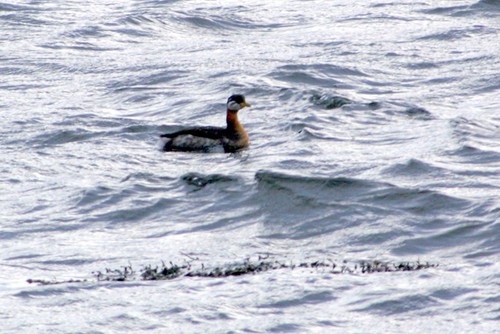
Red-necked Grebe
40-55 cm (16-22 in) long, 77-85 cm wingspan
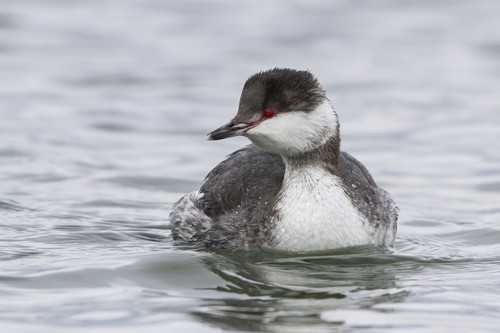
Horned Grebe
31-38 cm (12-15 in) long, 46-55 cm wingspan
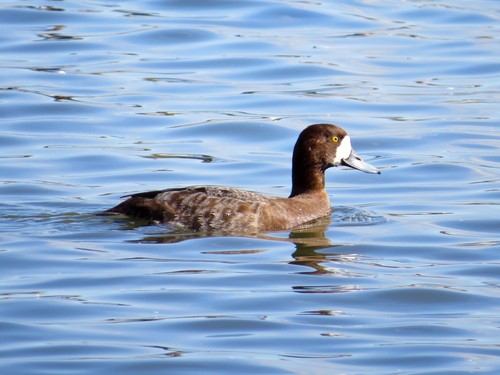
Greater Scaup
42-51 cm (16.5-20 in) long, 71-84 cm wingspan
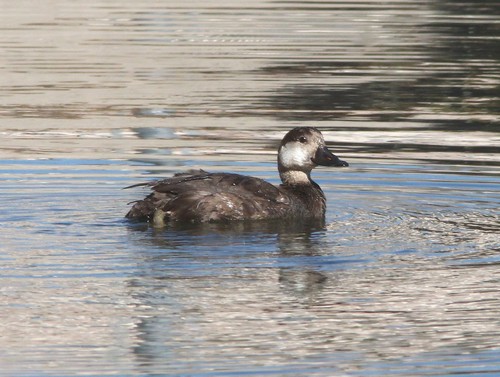
Black Scoter
43-54 cm (17-21 in) long, 79-90 cm wingspan
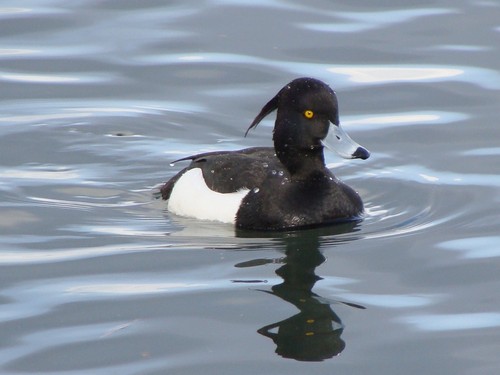
Tufted Duck
40-47 cm (16-18.5 in) long, 67-73 cm wingspan
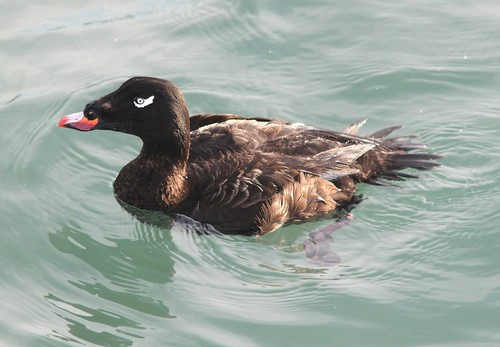
White-winged Scoter
48-58 cm (19-23 in) long, 86-99 cm wingspan
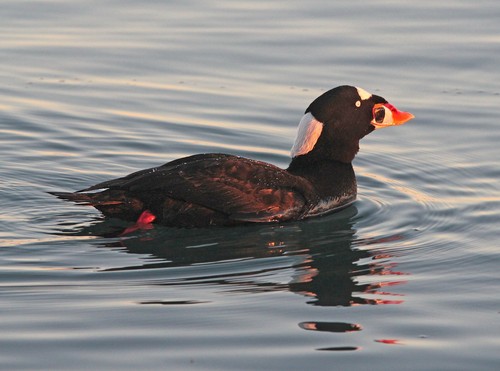
Surf Scoter
45-56 cm (18-22 in) long, 78-92 cm wingspan
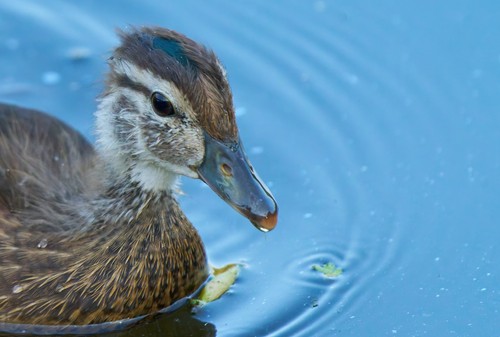
Wood Duck
47-54 cm (18.5-21 in) long, 66-73 cm wingspan
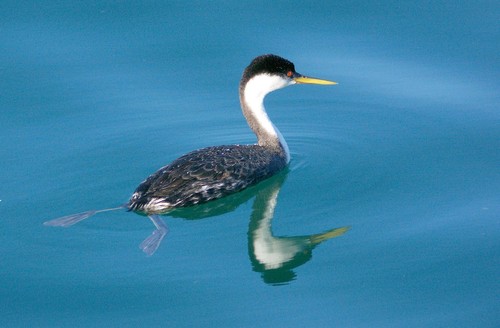
Western Grebe
56-74 cm (22-29 in) long, 79-102 cm wingspan
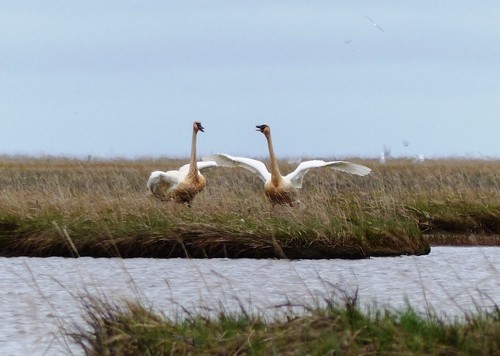
Tundra Swan
115-150 cm (45-59 in) long, about 180 cm wingspan
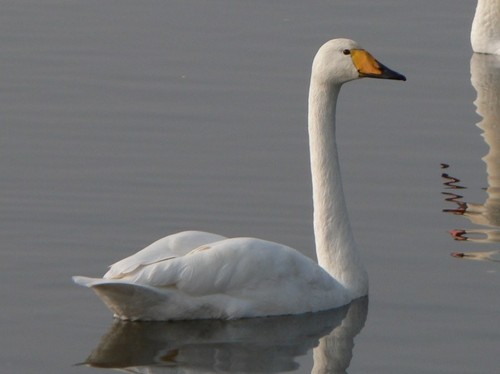
Whooper Swan
140-165 cm (55-65 in) long, 205-235 cm wingspan
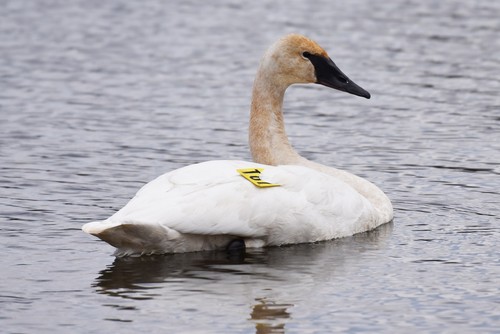
Trumpeter Swan
150-180 cm (59-71 in) long, up to 300 cm wingspan