
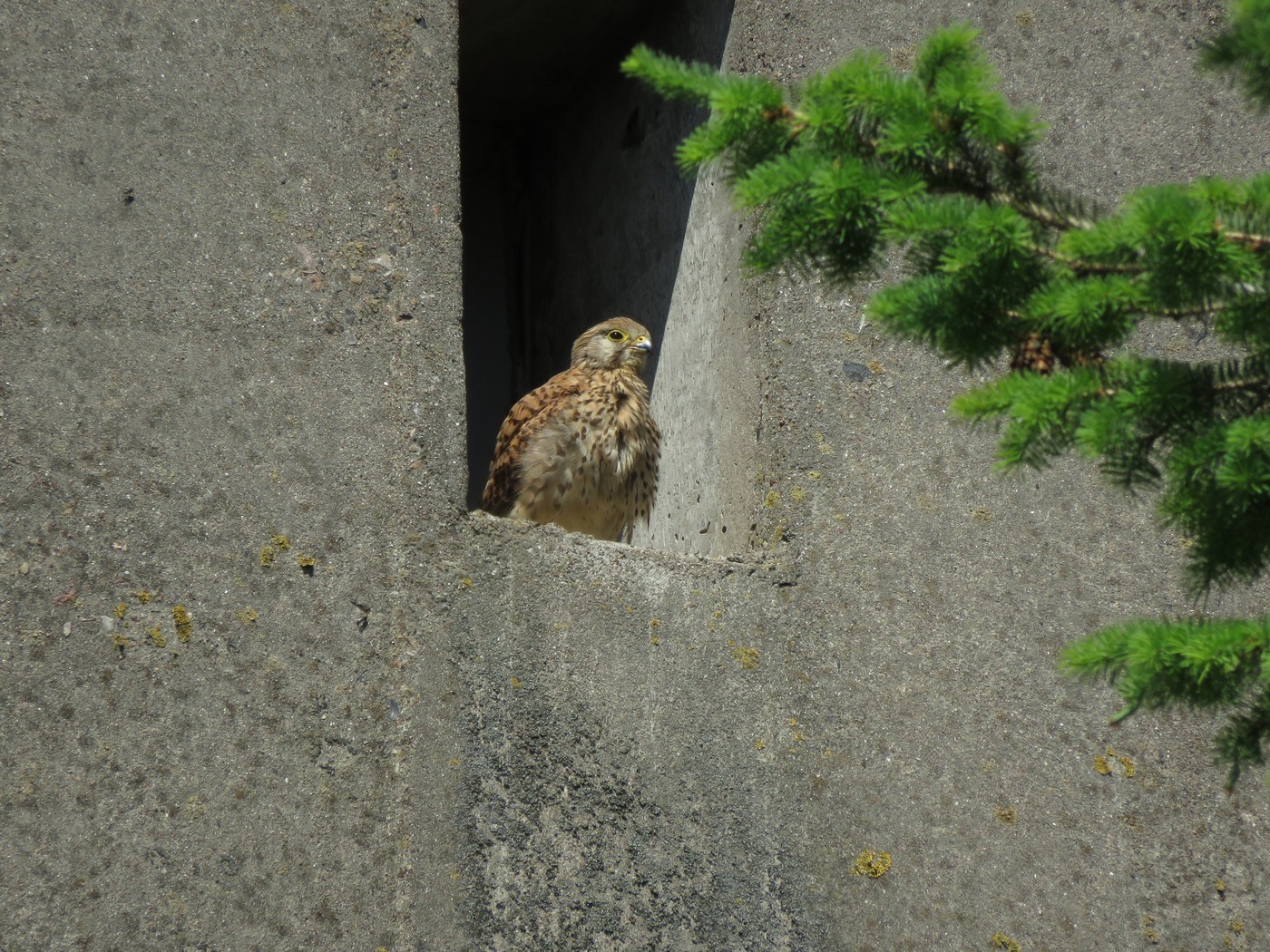
Common Kestrel
Falco tinnunculus
A familiar, russet-backed falcon best known for its ability to hover motionless in mid-air while scanning the ground for prey.
- Size
- Body 32-39 cm; wingspan 65-82 cm
- Habitat
- Open country, farmland, grassland, moorland, and urban areas including roadside verges
- Type
- raptor
Spotted a bird like this?
Identify any bird from a photo, free.
Overview
The Common Kestrel is a small, widespread falcon and one of the most familiar birds of prey across Europe, Asia, and Africa, frequently seen hovering over roadside verges and open fields.
Appearance
- Adult males: chestnut back and upperwing spotted with black, blue-grey head and tail, and a black terminal tail band.
- Adult females: chestnut-brown overall with dark barring on the back, wings, and tail (no grey head or tail).
- Both sexes: pointed wings, long tail, dark malar ('moustache') stripe, and buff underparts with dark streaking or spotting.
- Juveniles resemble females but with more diffuse markings.
How to identify it
Key field marks
- Frequent hovering flight with rapid wingbeats and a fanned tail while scanning the ground - the single most useful identification behavior
- Pointed wings and long tail typical of falcons
- Male shows a blue-grey head and tail contrasting with chestnut back; female is uniformly chestnut-brown with barring
- Often perches on wires, poles, and fence posts along roadsides
Similar species
- Common Hobby is darker and slimmer with longer, scythe-like wings, a short tail, and does not hover; shows rufous 'trousers' on adults.
- Merlin is smaller, stockier, and faster-flying with a direct dashing flight, rarely hovering.
- Lesser Kestrel is very similar but male lacks black spotting on the back and has blue-grey wing panels; typically more social, nesting in colonies.
Habitat & range
Habitat
Highly adaptable, using farmland, grassland, moorland, coastal cliffs, and urban and suburban areas; frequently hunts along road verges, motorway embankments, and field margins.
Range
One of the most widespread raptors in the Old World, breeding across nearly all of Europe, Asia, and Africa outside the driest deserts and densest forests.
Migration
Northern and eastern populations are migratory, wintering in southern Europe and Africa; many western and southern European populations are resident year-round.
Behavior & voice
Behavior
Famous for hunting by hovering, holding a fixed position in the air with rapid wingbeats and a fanned tail while scanning the ground below, then dropping steeply onto prey; also hunts from an elevated perch.
Voice
Gives a shrill, repeated 'kee-kee-kee' or 'kli-kli-kli' near the nest and during territorial encounters, sharper and higher-pitched than a Buzzard.
Feeding
Feeds mainly on small mammals, especially voles, located partly by their ultraviolet-reflecting urine trails, which kestrels can detect; also takes large insects, small birds, and occasionally reptiles or earthworms.
Nesting & breeding
Does not build its own nest; uses ledges, tree cavities, old crow nests, or nest boxes, including on buildings and bridges in urban areas; lays 3-6 eggs, and readily takes to purpose-built nest boxes.
Frequently asked questions
How can you tell a Common Kestrel is hunting?
It hovers in place with rapid wingbeats and a fanned tail, holding a fixed position in the air while scanning the ground for prey below.
What is the difference between a male and female Common Kestrel?
Males have a blue-grey head and tail contrasting with a chestnut back, while females are uniformly chestnut-brown with dark barring throughout.
What is the difference between a Kestrel and a Hobby?
The Kestrel hovers frequently and has a longer tail, while the Hobby is darker, has longer scythe-shaped wings, a shorter tail, and does not hover, instead hunting fast-flying prey on the wing.
Where do Common Kestrels nest?
They do not build their own nests, instead using ledges, tree holes, old nests of other birds, or nest boxes, including on buildings in urban areas.
How do Kestrels find voles in grass?
Kestrels can detect the ultraviolet-reflecting urine trails that voles leave in grass, helping them locate active runways.
Common Kestrel guides
In-depth guides for identifying, finding, and understanding Common Kestrel.
Other birds you may enjoy
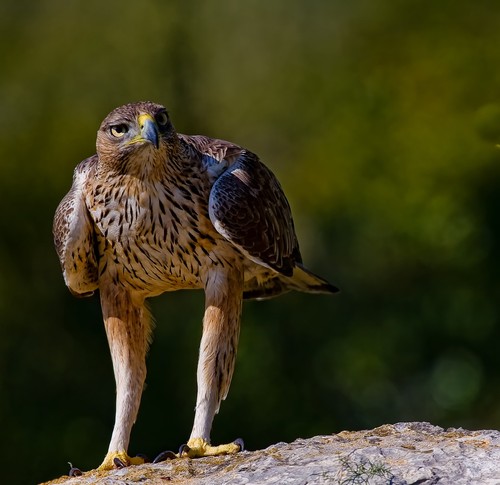
Bonelli's Eagle
Body 65–72 cm (26–28 in); wingspan 150–180 cm (59–71 in)
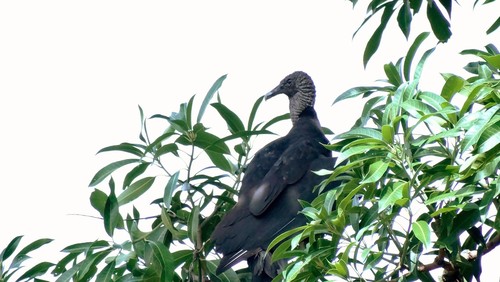
Black Vulture
56-68 cm (22-27 in) long, 137-165 cm wingspan
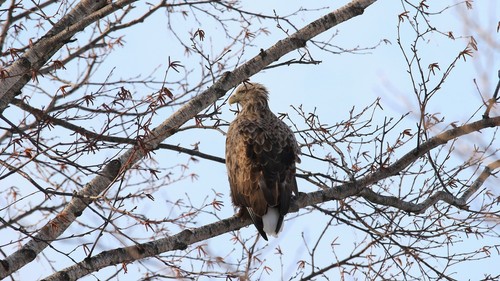
White-tailed Eagle
66-94 cm body length; wingspan 178-245 cm, among the largest eagles in the world
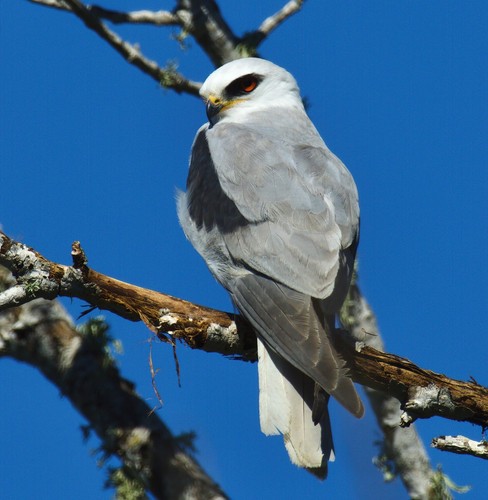
White-tailed Kite
35-43 cm (14-17 in) long, 88-102 cm (35-40 in) wingspan
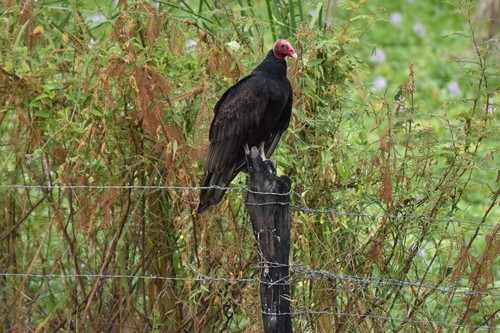
Turkey Vulture
64-81 cm (25-32 in) long, 160-183 cm wingspan
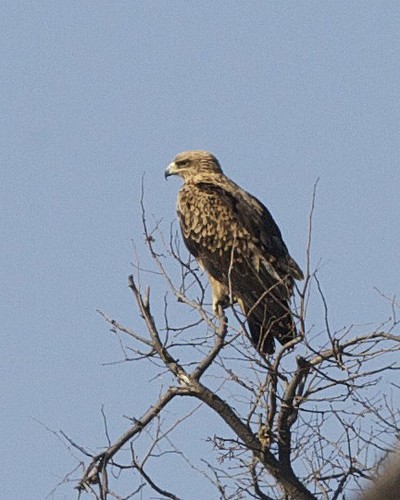
Tawny Eagle
62–75 cm long; wingspan 1.65–2.0 m
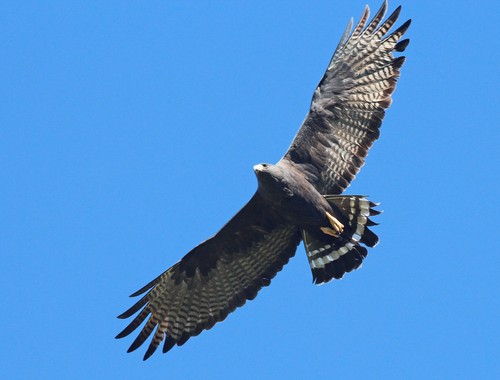
Zone-tailed Hawk
46-56 cm (18-22 in) long, 118-140 cm (46-55 in) wingspan
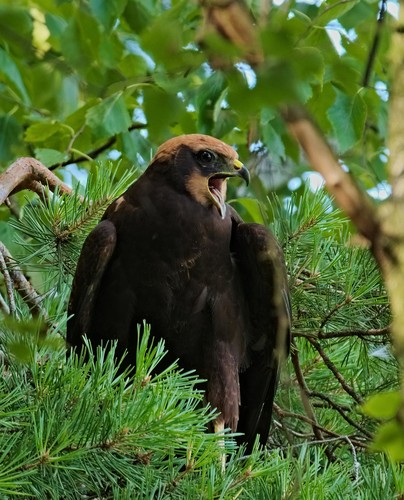
Western Marsh Harrier
Body 43-56 cm; wingspan 115-140 cm
Swallow-tailed Kite
48-68 cm (19-27 in) long including tail streamers, 112-136 cm (44-54 in) wingspan
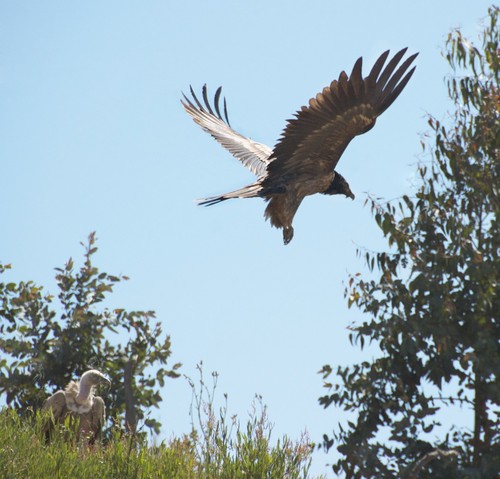
White-backed Vulture
78-98 cm long, wingspan 1.96-2.25 m
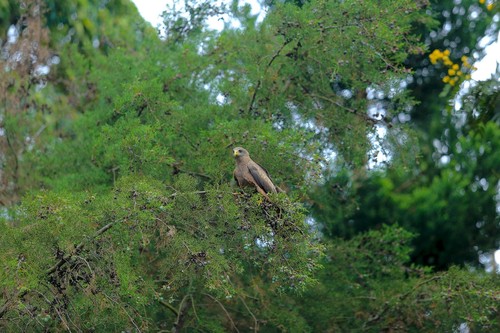
Yellow-billed Kite
55-60 cm long; wingspan 130-155 cm
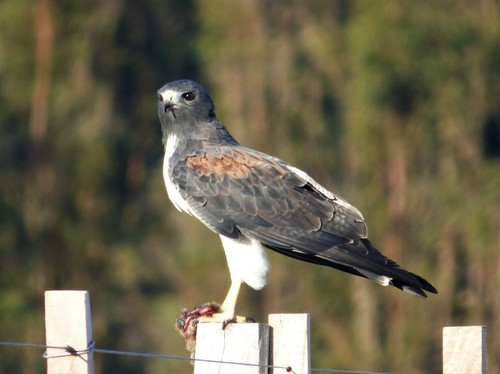
White-tailed Hawk
46-59 cm (18-23 in) long, 122-142 cm (48-56 in) wingspan