
Common Kestrel Identification Guide
A small, long-tailed Eurasian falcon known for its distinctive hovering flight while hunting over open ground.
Read the full Common Kestrel encyclopedia entry →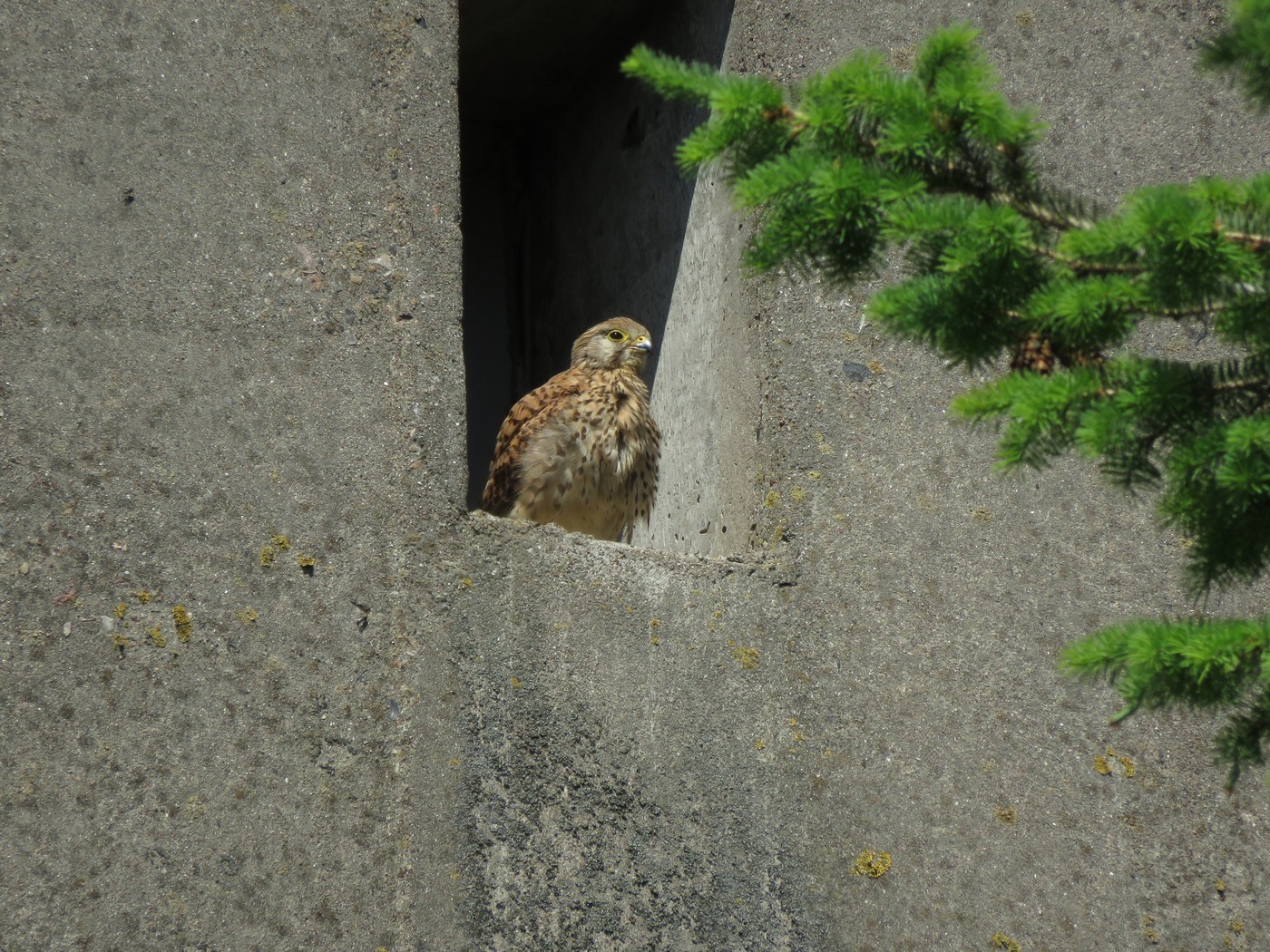
Key Field Marks
- Size & shape: A small falcon with long, pointed wings and a long tail, appearing slim and buoyant in flight.
- Plumage: Males have a blue-grey head and tail (tail with a single black subterminal band) and warm rufous-chestnut upperparts spotted with black; females and juveniles are rufous-brown overall with dark barring across the back, wings, and tail, lacking the male's grey head and tail.
- Face: Pale face with a dark "moustache" stripe below the eye, typical of falcons.
- Behavior: Best known for hunting on the wing by hovering with rapid wingbeats and a fanned tail while scanning the ground for prey, then dropping down in a controlled stoop — a highly diagnostic behavior rarely matched by other similarly sized raptors in its range.
- Perching habit: Frequently perches upright on wires, poles, and fence posts along roadsides and open country, bobbing its tail.
Separating from Similar Species
- Merlin: Smaller, stockier, faster, more direct flapping flight without hovering; Merlin has a less contrasty head pattern and shorter tail.
- Eurasian Hobby: Longer, scythe-like wings, dark slate-grey upperparts, rufous "trousers" on adults, and does not hover; hunts fast-flying insects and birds in open, agile flight.
- Lesser Kestrel (range overlap in southern Europe): Male Lesser Kestrel lacks the black spotting on the back and has blue-grey greater covert panels; females are very similar and best told by structure (shorter, more pointed wings) and voice.
- Sparrowhawk: Broader, rounded wings and long tail but flies with quick flap-flap-glide, lacking the kestrel's characteristic hover.
Where & When to See It
Common Kestrels are widespread residents and partial migrants across Europe, Asia, and Africa, found in open country, farmland, grassland, heath, and increasingly in cities where they hunt from tall buildings. Northern and eastern populations migrate south for winter, while many populations in milder climates are resident year-round. They are equally at home in rural and urban landscapes as long as open hunting ground is available.
Voice & Song Cues
The call is a shrill, repeated "kee-kee-kee" or "kli-kli-kli," typically given near the nest site or in alarm; it is higher-pitched and more rapid than the calls of larger falcons.
Frequently asked questions
What is the most distinctive behavior of the Common Kestrel?
Its habit of hovering in place with rapid wingbeats and a fanned tail while scanning the ground for prey is highly diagnostic and gives rise to old folk names like 'windhover.'
How do male and female Common Kestrels differ?
Males have a blue-grey head and tail with rufous, black-spotted upperparts, while females and juveniles are rufous-brown overall with dark barring and lack the grey head and tail.
How can I tell a Kestrel from a Merlin?
Kestrels regularly hover while hunting and have a longer tail and more buoyant flight, whereas Merlins fly fast and direct without hovering and look stockier and shorter-tailed.
Where do Common Kestrels nest?
They use cavities, ledges, old crow or magpie nests, cliff faces, and nest boxes, in habitats ranging from open farmland to city centers.
Do Common Kestrels migrate?
Northern and eastern populations are migratory, moving south for winter, while populations in milder regions such as western Europe are largely resident year-round.