
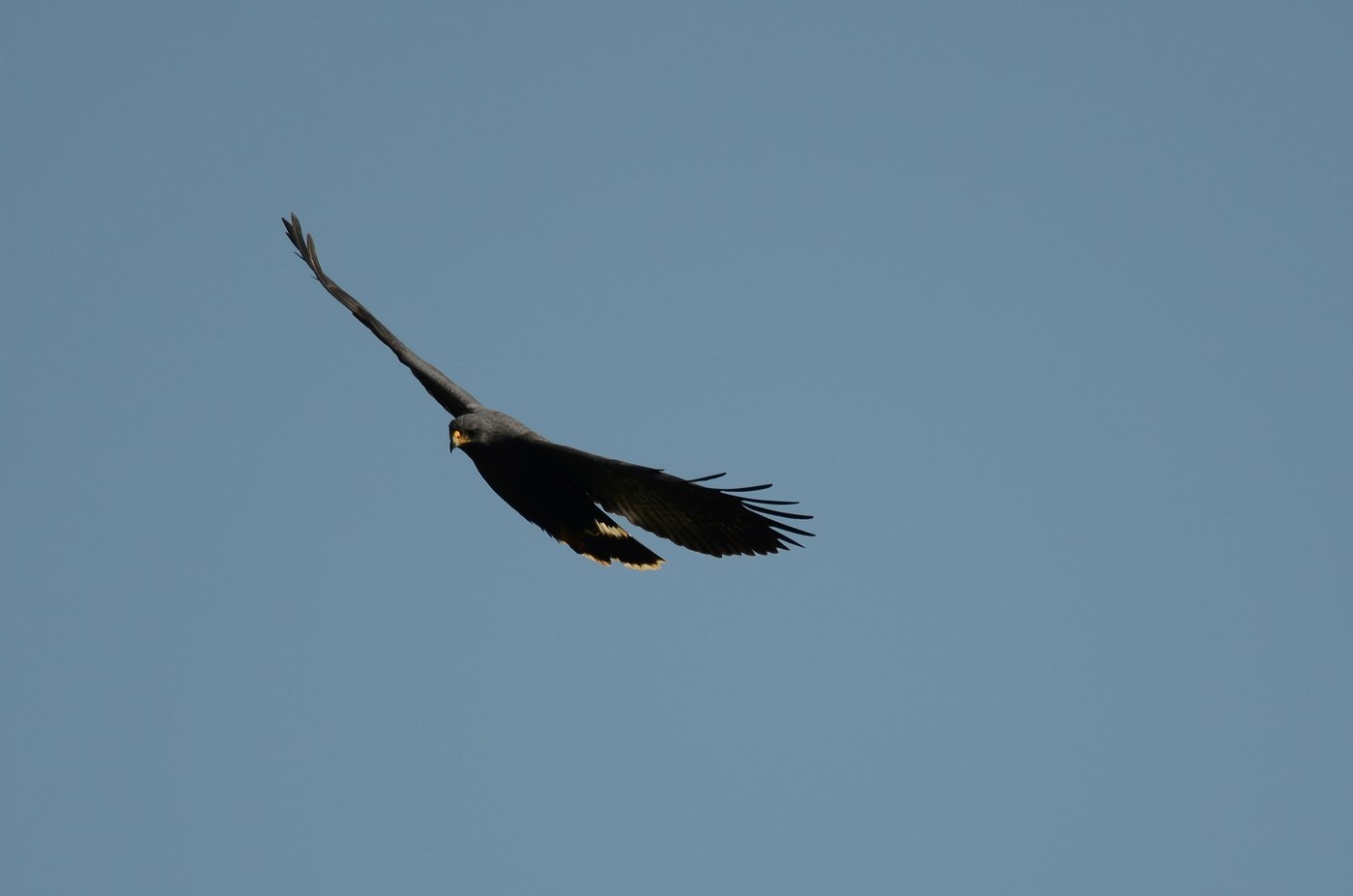
Common Black Hawk
Buteogallus anthracinus
A broad-winged, all-black hawk tightly tied to desert rivers, where it wades and forages for crabs and other aquatic prey.
- Size
- 43-53 cm (17-21 in) long, 112-127 cm (44-50 in) wingspan
- Habitat
- riparian woodlands along rivers and streams
- Type
- raptor
Spotted a bird like this?
Identify any bird from a photo, free.
Overview
The Common Black Hawk is a stocky, broad-winged raptor cloaked almost entirely in sooty black plumage, with long yellow legs and a yellow cere that stand out against the dark body. In flight, a single broad white band crosses the black tail, along with a narrow white tip, and the wings appear notably broad and rounded for a buteo-like hawk.
This species is unusually tied to water among North American raptors, rarely found far from the rivers and streams that supply its preferred prey of crabs, fish, and amphibians.
How to identify it
Key Field Marks
- Entirely sooty-black body, head, and underwing coverts
- Single broad white band across an otherwise black tail, plus a thin white tip
- Long yellow legs and yellow cere
- Broad, rounded wings, often soaring low over riparian corridors
Similar Species
- Zone-tailed Hawk: also blackish but shows multiple narrow tail bands and mimics vulture flight with a shallow V soaring posture; not tied as closely to water.
- Harris's Hawk: shows chestnut shoulder and leg patches, distinguishing it from the uniformly black Common Black Hawk.
Habitat & range
Range
In the United States, Common Black Hawks breed locally in Arizona, New Mexico, and Texas, with the range extending south through Mexico, Central America, and into northern South America.
Habitat
They are strongly associated with wooded rivers and streams, especially those lined with cottonwood and sycamore, and are rarely encountered away from permanent water.
Behavior & voice
Foraging
Common Black Hawks hunt by watching from a low riparian perch and dropping down to catch crabs, fish, frogs, and other aquatic or semi-aquatic prey, sometimes wading in shallow water to forage.
Voice
The call is a series of loud, high-pitched whistled notes, often described as a piercing scream, given in territorial defense or alarm.
Nesting
Nests are large stick platforms built in tall trees directly along the riverbank, frequently reused across years. Pairs are highly territorial along their stretch of river.
Frequently asked questions
Where do Common Black Hawks live?
They are tied closely to wooded rivers and streams in the southwestern United States (Arizona, New Mexico, Texas) south through Mexico and Central America.
What do Common Black Hawks eat?
Mostly crabs, fish, and amphibians found along riverbanks and in shallow water.
How can I tell a Common Black Hawk from a Zone-tailed Hawk?
The Common Black Hawk has a single broad white tail band and stays close to rivers, while the Zone-tailed Hawk shows several narrow tail bands and soars widely, mimicking vultures.
Common Black Hawk guides
In-depth guides for identifying, finding, and understanding Common Black Hawk.
Other birds you may enjoy
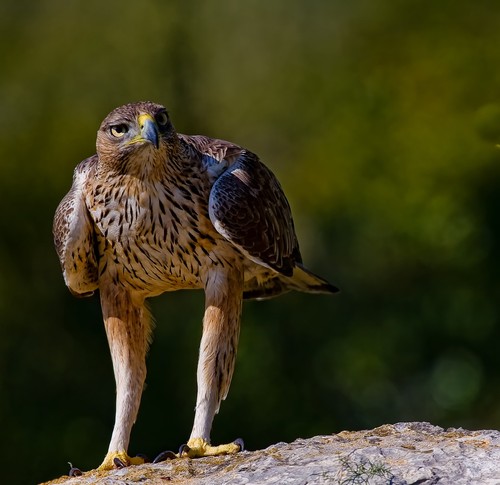
Bonelli's Eagle
Body 65–72 cm (26–28 in); wingspan 150–180 cm (59–71 in)
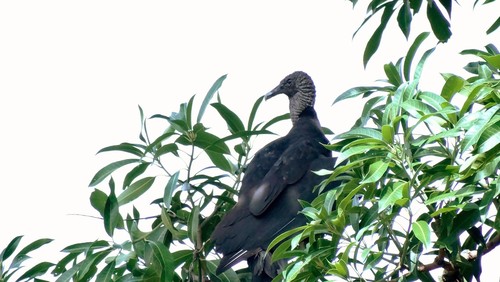
Black Vulture
56-68 cm (22-27 in) long, 137-165 cm wingspan
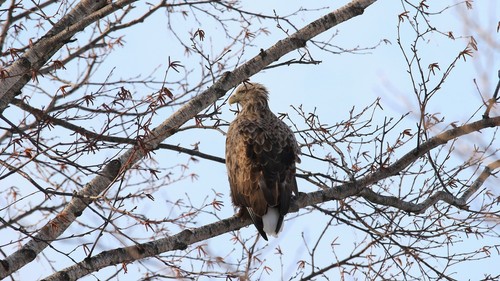
White-tailed Eagle
66-94 cm body length; wingspan 178-245 cm, among the largest eagles in the world
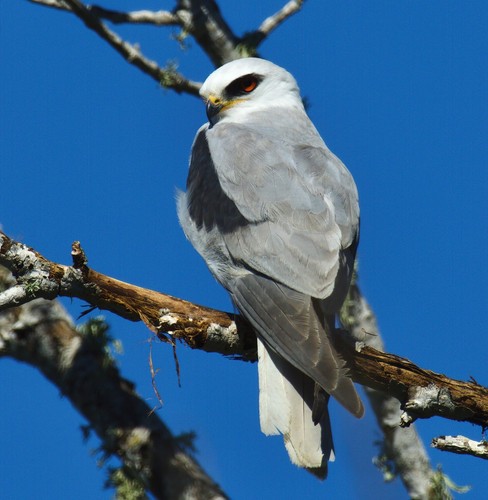
White-tailed Kite
35-43 cm (14-17 in) long, 88-102 cm (35-40 in) wingspan
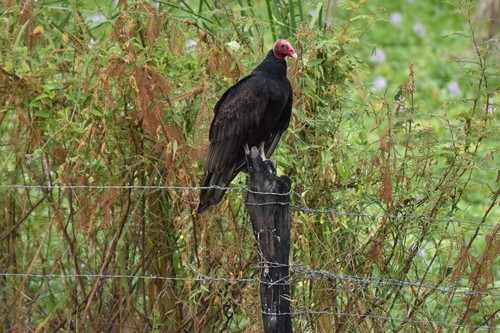
Turkey Vulture
64-81 cm (25-32 in) long, 160-183 cm wingspan
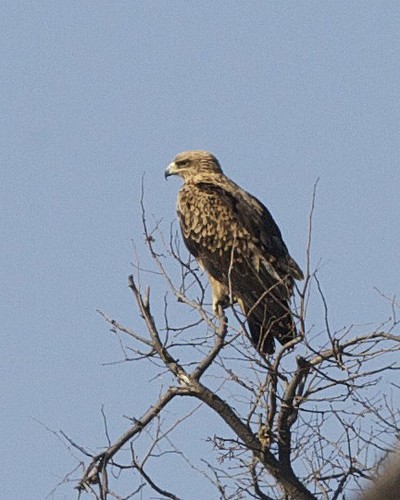
Tawny Eagle
62–75 cm long; wingspan 1.65–2.0 m
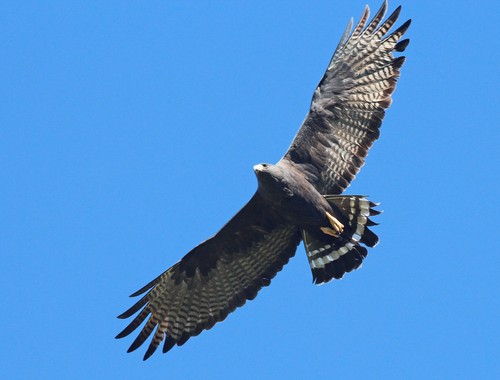
Zone-tailed Hawk
46-56 cm (18-22 in) long, 118-140 cm (46-55 in) wingspan
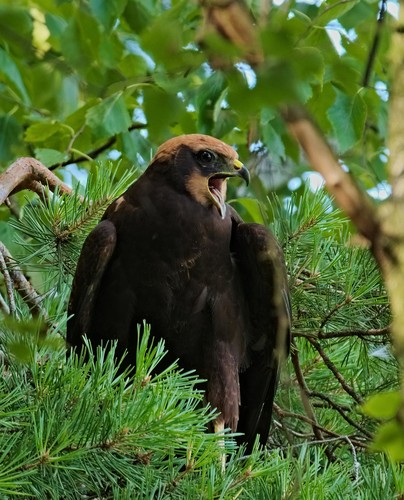
Western Marsh Harrier
Body 43-56 cm; wingspan 115-140 cm
Swallow-tailed Kite
48-68 cm (19-27 in) long including tail streamers, 112-136 cm (44-54 in) wingspan
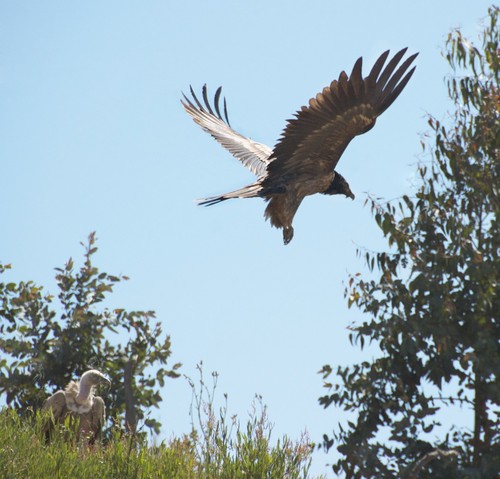
White-backed Vulture
78-98 cm long, wingspan 1.96-2.25 m
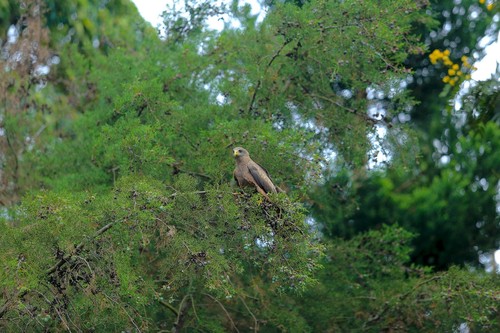
Yellow-billed Kite
55-60 cm long; wingspan 130-155 cm
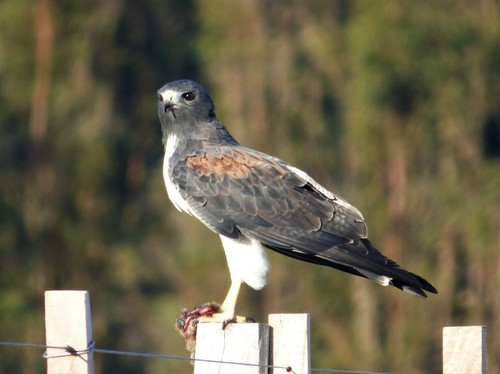
White-tailed Hawk
46-59 cm (18-23 in) long, 122-142 cm (48-56 in) wingspan