
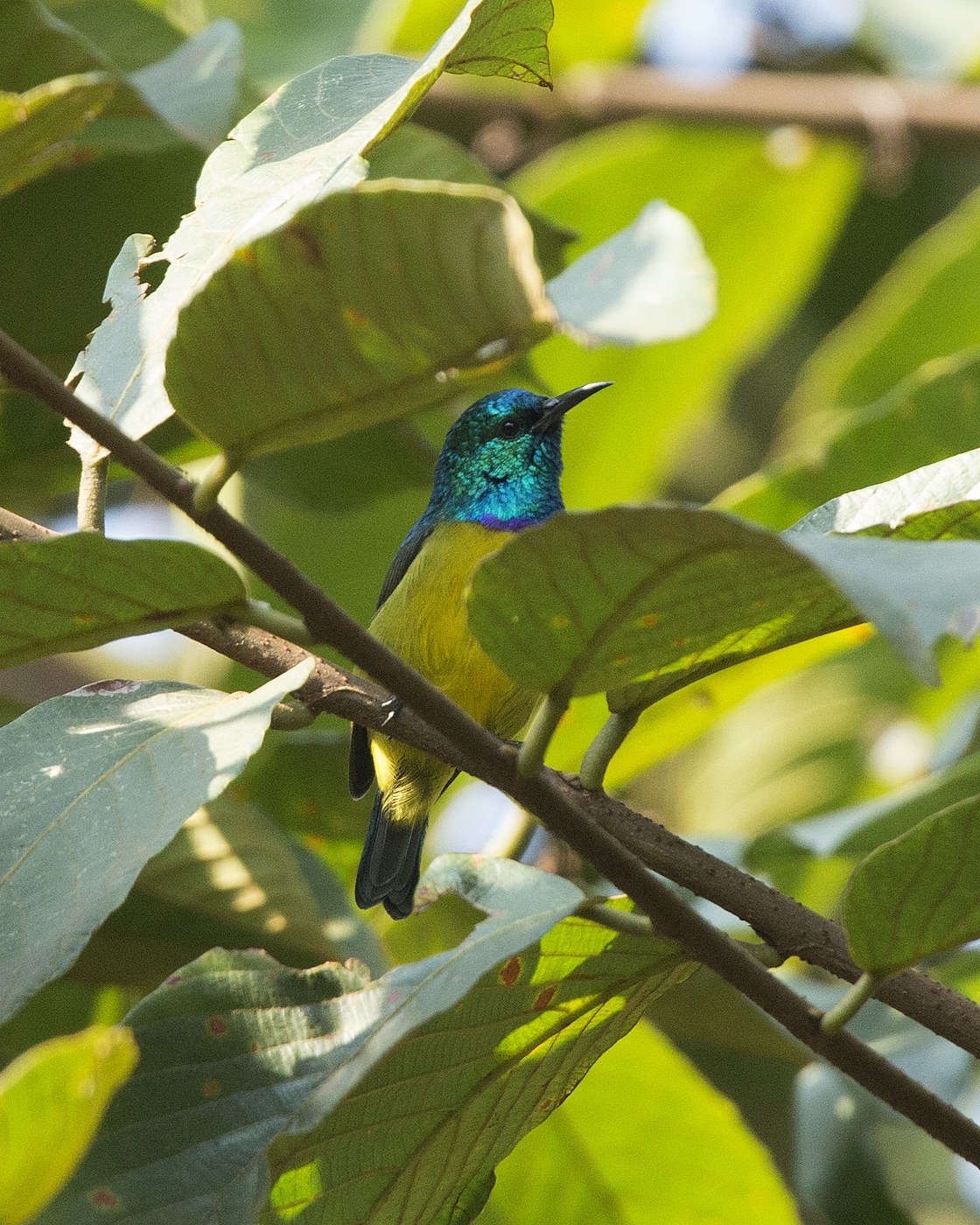
Collared Sunbird
Hedydipna collaris
A tiny, bright green sunbird of African forest edges, named for the narrow violet band the male wears across an otherwise yellow chest.
- Size
- About 10 cm long, one of the smaller sunbirds
- Habitat
- Forest edge, thickets, riverine woodland and gardens across sub-Saharan Africa
- Type
- songbird
Spotted a bird like this?
Identify any bird from a photo, free.
Overview
The Collared Sunbird is a diminutive, brightly plumaged bird found in forest and woodland habitats across much of sub-Saharan Africa. It is one of the most widespread and familiar sunbirds in gardens and forest-edge vegetation throughout its range.
Appearance
The male has glossy metallic green upperparts, a yellow belly, and a narrow, iridescent violet-blue band crossing the upper breast like a collar, which gives the species its name. The bill is notably short and only slightly curved compared with other sunbirds. Females lack the collar, appearing simply olive-green above and pale yellow below.
How to identify it
Key field marks
- Very small size and a short, only slightly decurved bill (shorter than most sunbirds)
- Male: bright green upperparts, yellow underparts, and a thin purple breast collar
- Female: plain olive-green above, pale yellow below, no collar
- Frequently forages within leafy cover rather than out on exposed flowers
Similar species
The short, straighter bill separates this species from most other sunbirds, which have longer, more strongly decurved bills. The male's narrow purple collar on a clean yellow breast is diagnostic and not shared by similarly sized species like the Variable Sunbird, which shows a broader, more blotched breast pattern. Females can be confused with female white-eyes or other small green sunbirds, but the short bill and habit of hovering near foliage help confirm identity.
Habitat & range
Habitat
This species favors forest edges, secondary growth, thickets, riverine woodland, and well-vegetated gardens, generally staying within or near cover rather than open savanna.
Range
It is broadly distributed across sub-Saharan Africa, from West Africa through the Congo Basin and East Africa south to parts of southern Africa, wherever suitable wooded habitat exists.
Migration
Collared Sunbirds are largely sedentary, though some populations shift locally in response to flowering cycles.
Behavior & voice
Behavior
Unlike many sunbirds that perch prominently on open flowering branches, the Collared Sunbird often forages actively within leafy cover, gleaning insects from foliage almost like a warbler, and frequently hovers briefly to pick prey or nectar from awkward positions.
Voice
The song is a rapid, high, twittering warble; calls include sharp, thin "tsip" or "tsee" notes given while foraging.
Feeding
It takes nectar from a wide variety of small flowers and gleans insects and spiders from leaves and bark crevices, making it more insectivorous in habits than some larger sunbirds.
Nesting
The nest is a small, oval, hanging structure woven from plant fibers, moss, and spider web, usually suspended from a slender twig or vine within dense cover. The female incubates the eggs, typically one to two per clutch.
Frequently asked questions
What makes the Collared Sunbird different from other sunbirds?
It has an unusually short, only slightly curved bill compared with other sunbirds, and males show a thin purple breast collar on an otherwise green-and-yellow body.
Where is the Collared Sunbird found?
It occurs widely across sub-Saharan Africa in forest edges, thickets, riverine woodland, and gardens.
What does the Collared Sunbird eat?
It feeds on nectar and also gleans small insects and spiders from foliage, more so than many other sunbirds.
How do you identify a female Collared Sunbird?
Females are plain olive-green above and pale yellow below, lacking the male's purple collar, but share the same short bill shape.
Collared Sunbird guides
In-depth guides for identifying, finding, and understanding Collared Sunbird.
Other birds you may enjoy
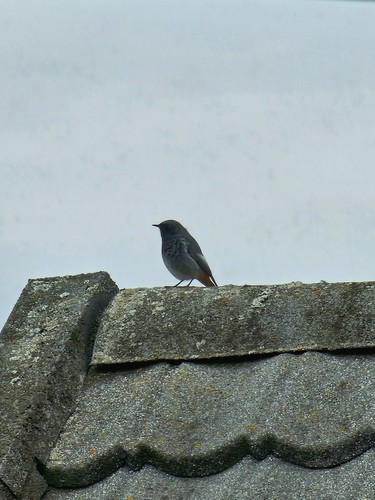
Black Redstart
13-14.5 cm (5.1-5.7 in) long, 23-26 cm wingspan
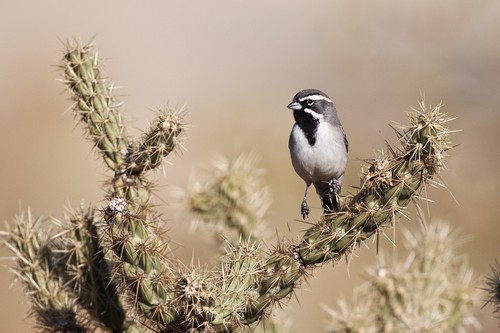
Black-throated Sparrow
12-14 cm (4.7-5.5 in) long, about 19-20 cm (7.5-8 in) wingspan
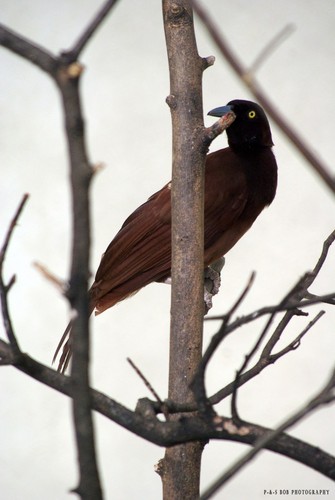
Greater Bird-of-paradise
Body about 43 cm; males with additional flank plumes up to 50 cm and long tail wires
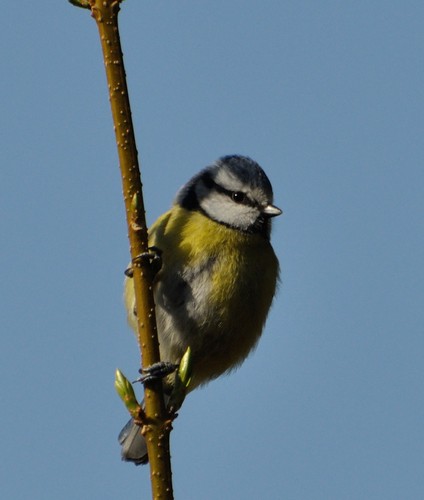
Blue Tit
11-12 cm (4.3-4.7 in) long, 17-20 cm wingspan
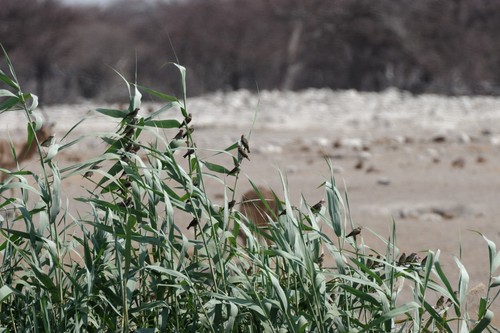
Red-billed Quelea
11.5–13 cm long, wingspan about 20–22 cm
White-plumed Antbird
13-14 cm (5-5.5 in) long
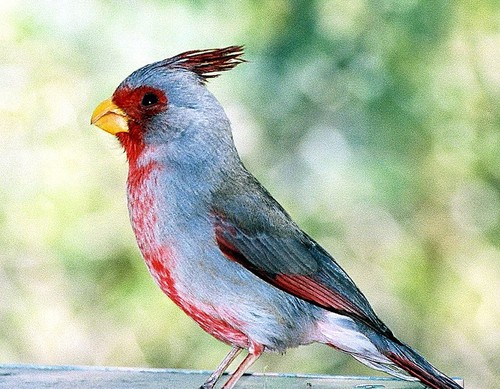
Pyrrhuloxia
19-22 cm (7.5-8.7 in) long, 30 cm wingspan
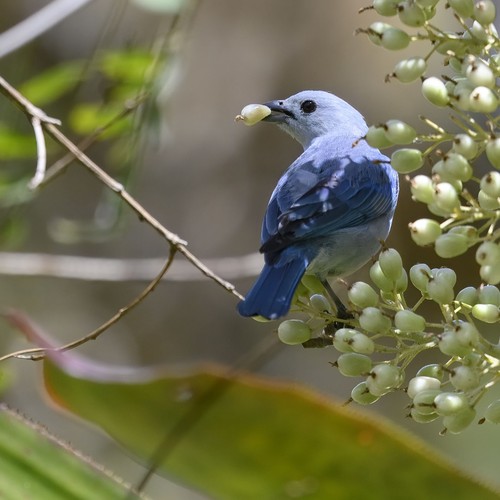
Blue-gray Tanager
16-18 cm (6-7 in) long
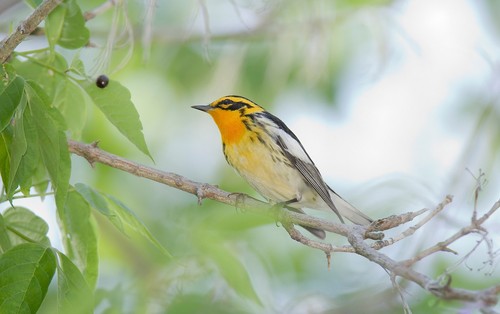
Blackburnian Warbler
11-13 cm (4.3-5.1 in) long, 20-22 cm wingspan
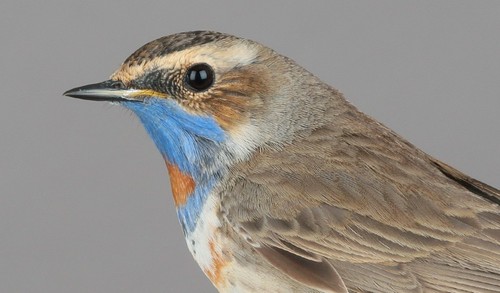
Bluethroat
13-14 cm (5.1-5.5 in) long, 20-22 cm wingspan
Eurasian Nuthatch
12-14.5 cm (4.7-5.7 in) long, 22.5-27 cm wingspan
Wood Thrush
19-21 cm (7.5-8.3 in) long, about 33 cm (13 in) wingspan