
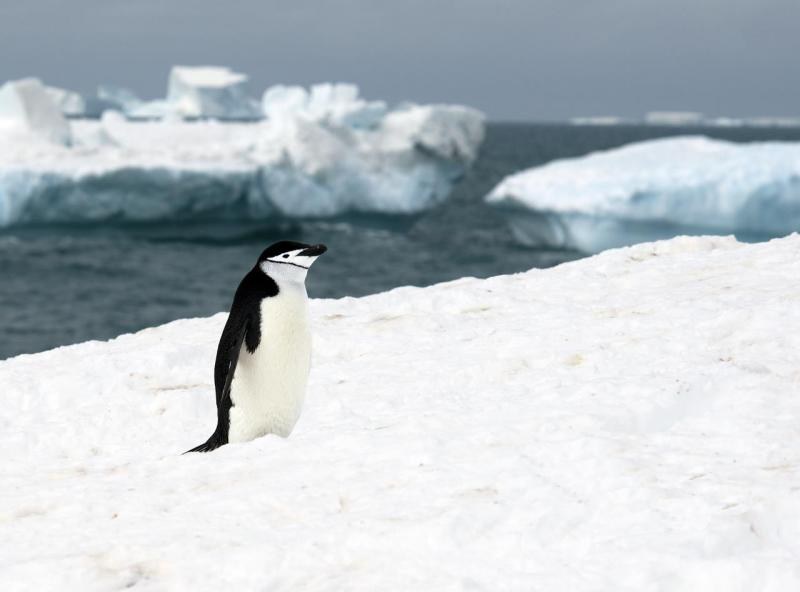
Chinstrap Penguin
Pygoscelis antarcticus
A small, feisty Antarctic penguin named for the thin black line running under its chin, giving it a helmet-strap appearance.
- Size
- 68-76 cm (27-30 in) tall, up to about 5.5 kg (12 lb)
- Habitat
- Antarctic Peninsula and sub-Antarctic islands with rocky coastlines
- Type
- seabird
Spotted a bird like this?
Identify any bird from a photo, free.
Overview
The Chinstrap Penguin is a small, energetic penguin easily identified by the narrow black line of feathers that runs beneath the chin from ear to ear, resembling the strap of a helmet, set against an otherwise white face and throat. Its head is black on top, its back is black, and its underparts are white, with a black bill and pinkish-red feet. It is considered one of the most numerous and widespread penguin species in the world, breeding in vast colonies on rocky, often steep terrain.
Known for its bold, sometimes aggressive temperament, it frequently nests alongside Adelie and Gentoo Penguins on Antarctic Peninsula islands.
How to identify it
Key field marks
- Thin black line running under the chin across an otherwise white face
- Black cap and back contrasting with white underparts
- Black bill, pinkish-red feet
Similar species
- Adelie Penguin has an entirely black head with a white eye-ring rather than a white face and chin strap.
- Gentoo Penguin has a white patch above the eye and an orange bill, quite different from the Chinstrap's white face and black chin line.
Habitat & range
Habitat
Breeds on rocky, often steep coastal slopes and cliffs of the Antarctic Peninsula and nearby sub-Antarctic islands.
Range
Found around the Antarctic Peninsula, South Sandwich Islands, South Orkney Islands, and South Shetland Islands.
Migration
Disperses into pack ice and open ocean waters outside the breeding season, returning to colonies each spring.
Behavior & voice
Behavior
Noted for its bold and often noisy, aggressive behavior at densely packed colonies, frequently squabbling over nest sites and territory with neighboring pairs.
Voice
Gives loud, harsh braying and screeching calls, especially during territorial disputes and courtship.
Feeding
Dives to catch krill and small fish, foraging both near the colony and farther offshore.
Nesting
Builds a nest of small stones on rocky ground, often on steep slopes; typically lays 2 eggs, with both parents sharing incubation duties.
Frequently asked questions
Why is it called the Chinstrap Penguin?
It is named for the narrow black line of feathers running under its chin from ear to ear, resembling the strap of a helmet.
How do you tell a Chinstrap Penguin from an Adelie Penguin?
The Chinstrap has a white face with a thin black chin line, while the Adelie Penguin has an entirely black head marked only by a white eye-ring.
Where do Chinstrap Penguins breed?
They breed on rocky, often steep coastal slopes around the Antarctic Peninsula and nearby sub-Antarctic islands such as the South Shetlands.
Are Chinstrap Penguins aggressive?
They have a reputation for being bold and combative at crowded breeding colonies, frequently disputing nest sites with neighboring birds.
Chinstrap Penguin guides
In-depth guides for identifying, finding, and understanding Chinstrap Penguin.
Other birds you may enjoy
Peruvian Pelican
137-152 cm (54-60 in) long, up to 228 cm wingspan
Bonaparte's Gull
28-33 cm (11-13 in) long, 76-84 cm wingspan
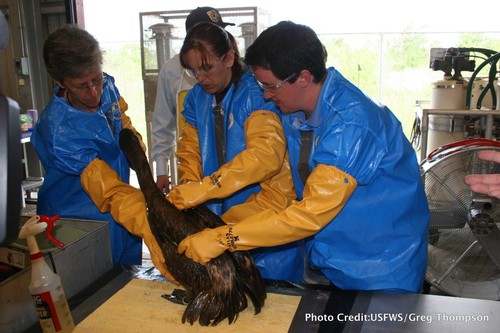
Brown Pelican
106-137 cm (42-54 in) long, 200-230 cm wingspan
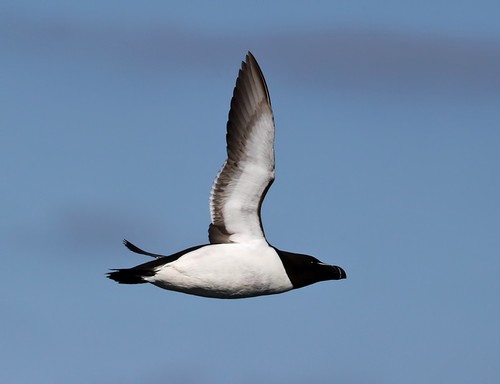
Razorbill
37-39 cm (15-15.5 in) long, 63-68 cm wingspan
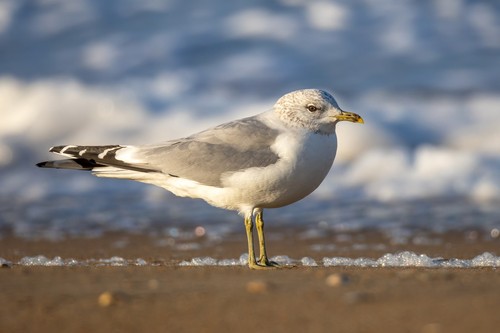
Common Gull
40-46 cm (16-18 in) long, 110-130 cm wingspan
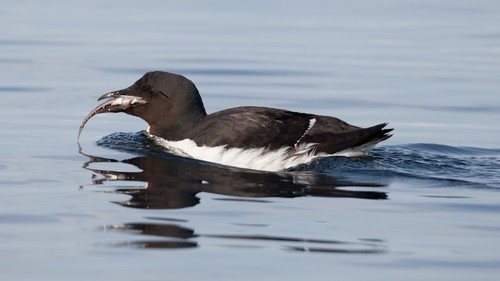
Thick-billed Murre
40-48 cm (16-19 in) long, 65-75 cm wingspan
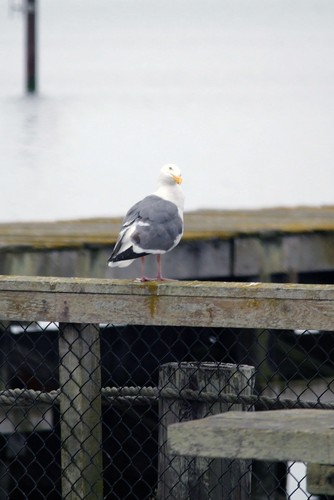
Western Gull
55-68 cm (22-27 in) long, 130-144 cm wingspan
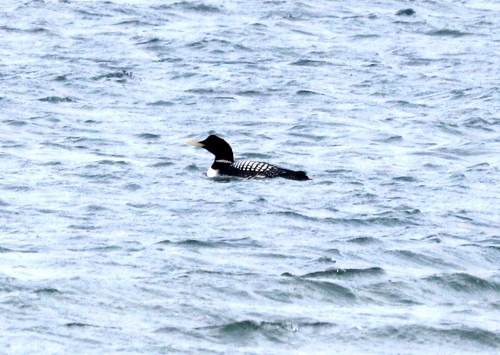
Yellow-billed Loon
76-97 cm (30-38 in) long, 135-152 cm wingspan
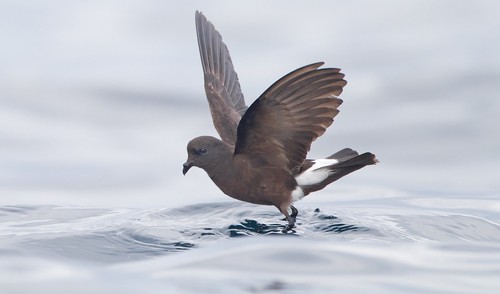
Wilson's Storm-Petrel
15-19 cm (6-7.5 in) long, wingspan 38-42 cm (15-16.5 in)
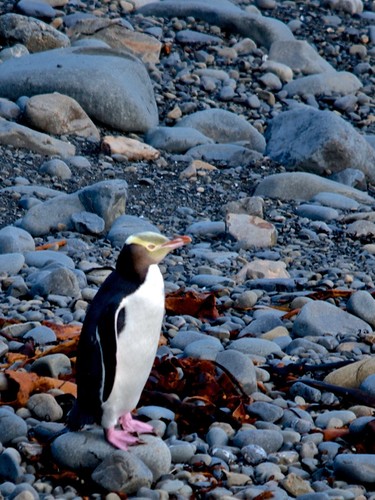
Yellow-eyed Penguin
62-79 cm (24-31 in) tall, 3-8.5 kg (6.6-18.7 lb)
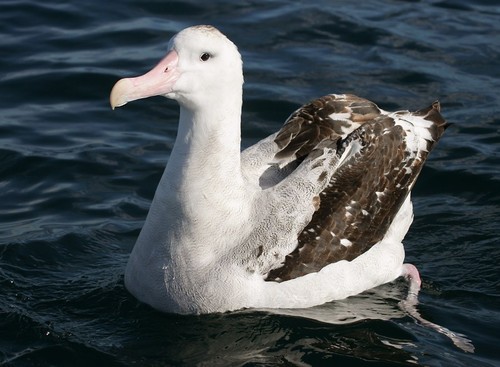
Wandering Albatross
107-135 cm (42-53 in) long, wingspan up to 3.5 m (11.5 ft)
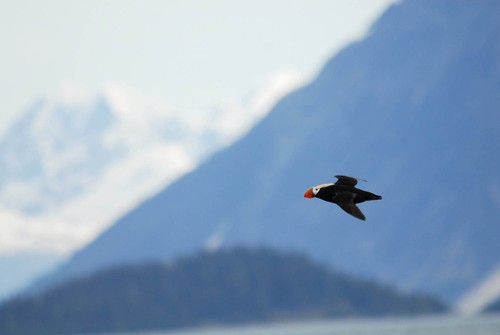
Tufted Puffin
35-41 cm (14-16 in) long, about 63-70 cm wingspan