
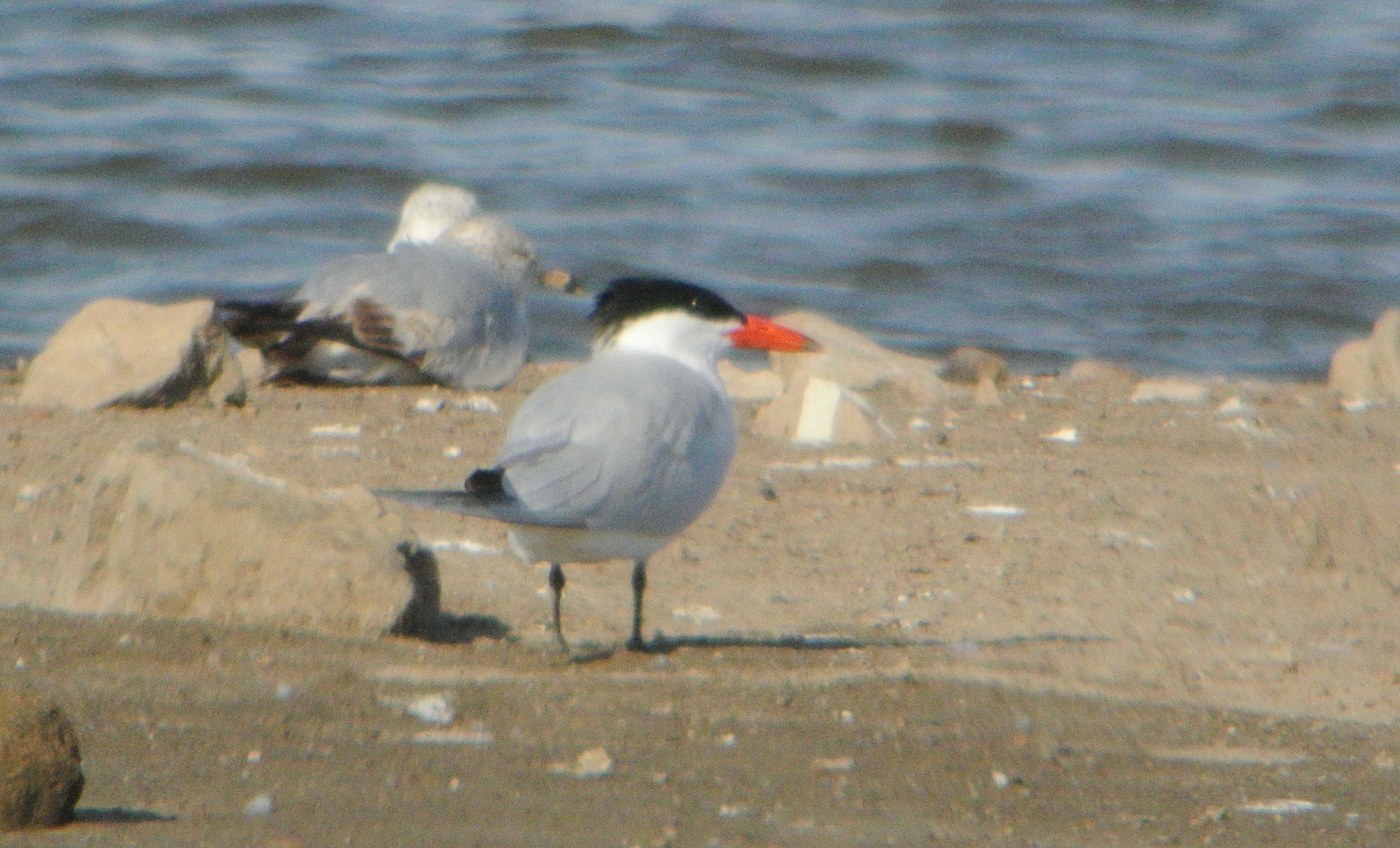
Caspian Tern
Hydroprogne caspia
The largest tern in the world, a gull-sized bird with a massive coral-red bill and a harsh, crow-like call, found on coasts and large lakes across every continent except Antarctica.
- Size
- 48-56 cm (19-22 in) long, 127-140 cm wingspan
- Habitat
- coasts, large lakes, and rivers worldwide
- Type
- seabird
Spotted a bird like this?
Identify any bird from a photo, free.
Overview
The Caspian Tern is the largest tern species on Earth, rivaling many gulls in bulk, with a thick, dagger-like coral-red to orange-red bill that is unmistakable even at a distance. Adults have a black cap, pale gray upperparts, white underparts, and black legs, giving them a powerful, almost gull-like silhouette compared to the more delicate build of smaller terns.
In flight, the wings show dusky, darker underside to the outer primaries, and the tail is only shallowly forked, unlike the deeply forked tails of many smaller terns. Its size, heavy bill, and harsh voice make it one of the more distinctive and easily recognized terns worldwide.
Found on every continent except Antarctica, the Caspian Tern nests colonially, often alongside other terns and gulls, on sandy or gravelly islands in lakes, rivers, and coastal waters.
How to identify it
Key field marks
- Massive size, largest tern in the world
- Thick, coral-red to orange-red bill with a dark tip
- Black cap and black legs
- Only shallowly forked tail
- Dark underside to the outer primaries in flight
Similar species
- Royal Tern: smaller and slimmer with a thinner orange bill lacking the dark tip, and a shaggier crest.
- Elegant Tern: notably smaller with a long, slender, drooping orange bill.
- Gulls: superficially similar in bulk but lack the tern's pointed bill and plunge-diving behavior.
Habitat & range
Habitat
Uses a wide variety of large waterbodies including ocean coastlines, estuaries, large lakes, and major rivers, nesting on open sandy, gravelly, or shelly islands and beaches.
Range and migration
One of the most widely distributed terns, breeding on every continent except Antarctica, including North America, Europe, Asia, Africa, and Australia. Northern populations are migratory, wintering along warmer coasts, while some populations in milder climates are largely resident.
Behavior & voice
Behavior
Caspian Terns are powerful, direct fliers, often seen patrolling over water before plunge-diving for fish, and are notably aggressive in defending nesting colonies against intruders and predators.
Voice
Gives a loud, harsh, crow-like "kraa-uh" call, quite unlike the higher, sharper calls of smaller terns.
Feeding
Feeds almost exclusively on fish, caught by hovering briefly and then plunge-diving from the air into the water.
Nesting and breeding
Nests colonially, often alongside other terns and gulls, on open ground with little vegetation on islands and beaches. Clutches typically contain one to three eggs, incubated by both parents for about three weeks.
Frequently asked questions
Is the Caspian Tern really the largest tern?
Yes, it is the largest tern species in the world, approaching the size of some gulls.
How do you tell a Caspian Tern from a Royal Tern?
Caspian Tern is larger with a thicker, more orange-red bill and a dark tip, while Royal Tern has a thinner, all-orange bill and a shaggier crest.
What does the Caspian Tern eat?
Primarily fish, caught by hovering over water and then plunge-diving to seize prey.
Where is the Caspian Tern found?
It breeds on every continent except Antarctica, using coastal areas, large lakes, and rivers worldwide.
Caspian Tern guides
In-depth guides for identifying, finding, and understanding Caspian Tern.
Other birds you may enjoy
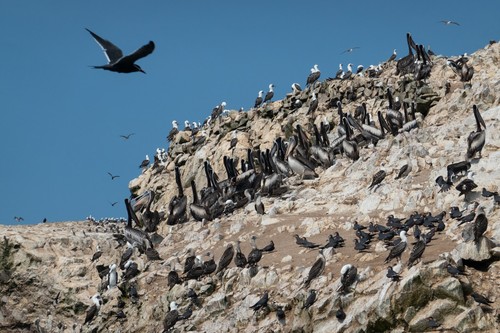
Peruvian Pelican
137-152 cm (54-60 in) long, up to 228 cm wingspan
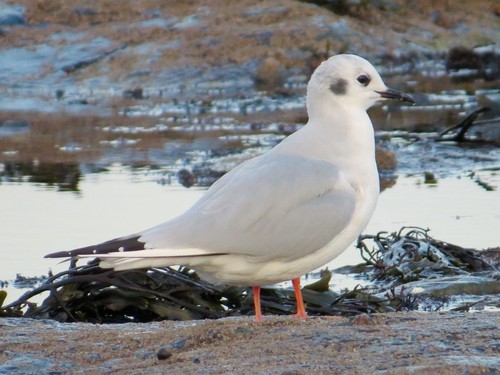
Bonaparte's Gull
28-33 cm (11-13 in) long, 76-84 cm wingspan
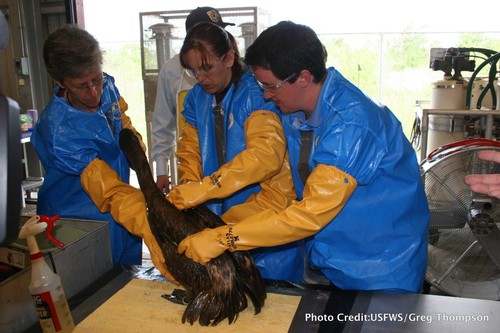
Brown Pelican
106-137 cm (42-54 in) long, 200-230 cm wingspan
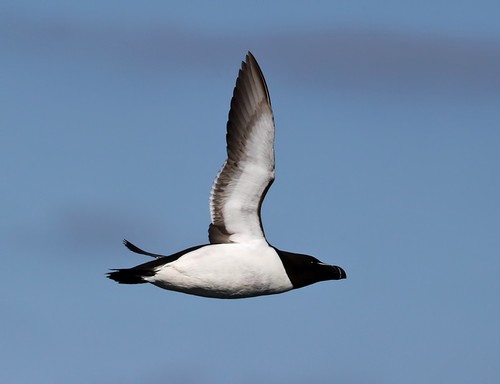
Razorbill
37-39 cm (15-15.5 in) long, 63-68 cm wingspan
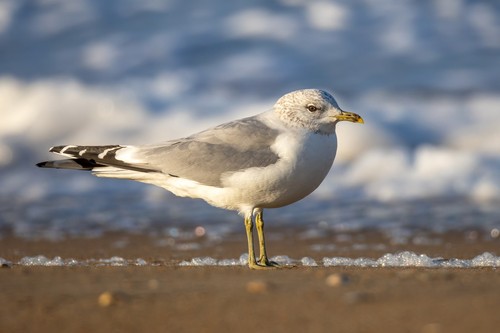
Common Gull
40-46 cm (16-18 in) long, 110-130 cm wingspan
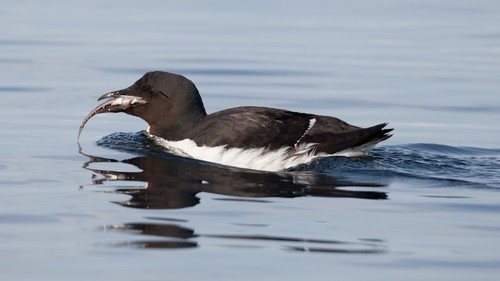
Thick-billed Murre
40-48 cm (16-19 in) long, 65-75 cm wingspan
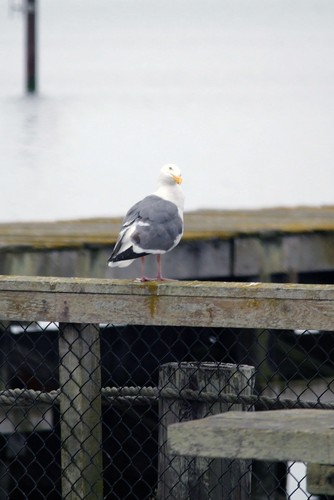
Western Gull
55-68 cm (22-27 in) long, 130-144 cm wingspan
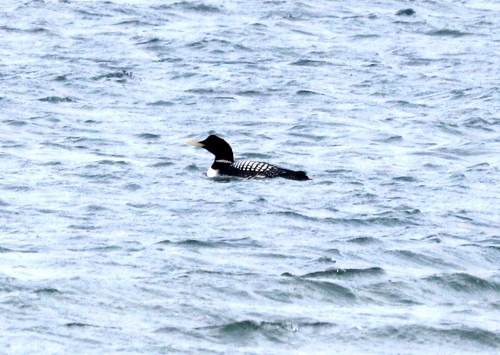
Yellow-billed Loon
76-97 cm (30-38 in) long, 135-152 cm wingspan
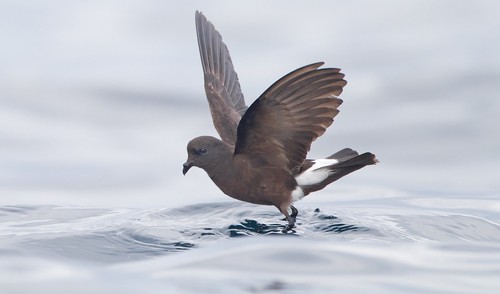
Wilson's Storm-Petrel
15-19 cm (6-7.5 in) long, wingspan 38-42 cm (15-16.5 in)
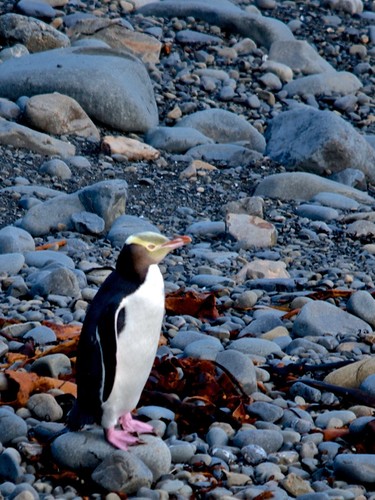
Yellow-eyed Penguin
62-79 cm (24-31 in) tall, 3-8.5 kg (6.6-18.7 lb)
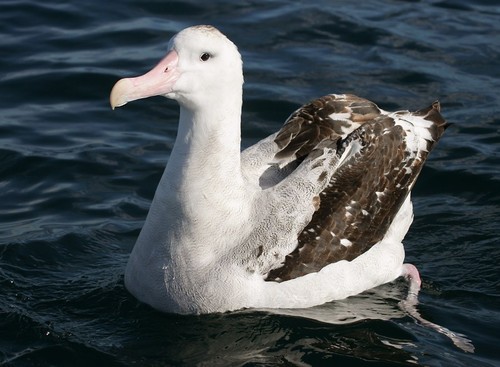
Wandering Albatross
107-135 cm (42-53 in) long, wingspan up to 3.5 m (11.5 ft)
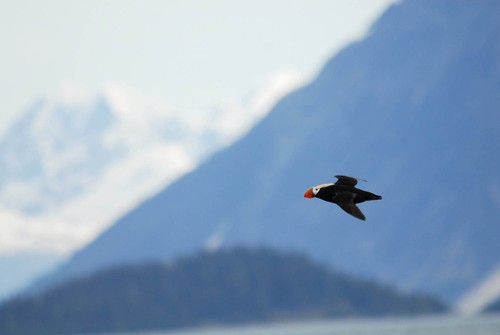
Tufted Puffin
35-41 cm (14-16 in) long, about 63-70 cm wingspan