
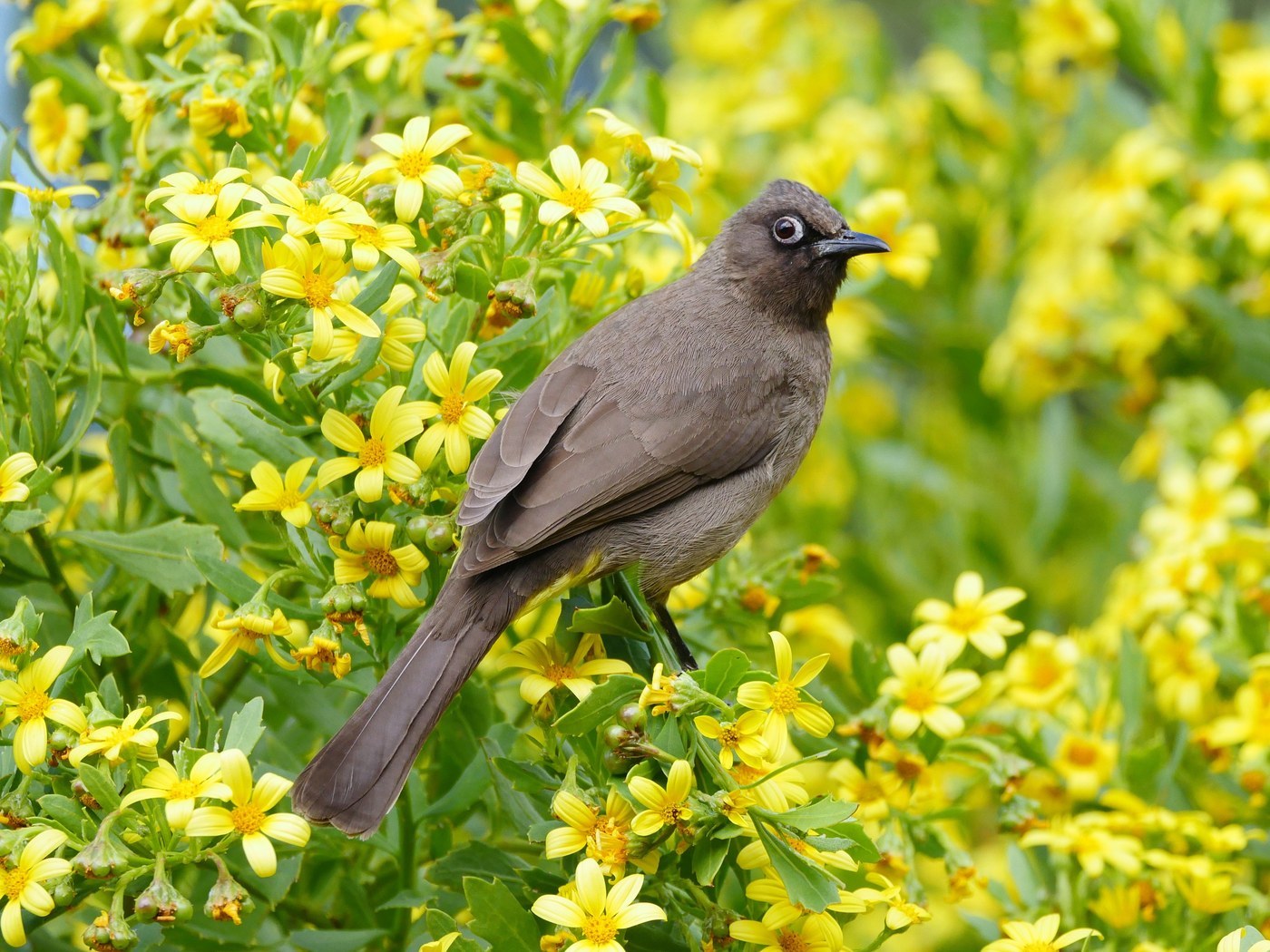
Cape Bulbul
Pycnonotus capensis
A dark, sociable songbird endemic to South Africa's Cape region, easily recognized by its conspicuous white eye-ring.
- Size
- About 19-20 cm long
- Habitat
- Fynbos, coastal scrub, and gardens of the Western and southern Cape, South Africa
- Type
- songbird
Spotted a bird like this?
Identify any bird from a photo, free.
Overview
The Cape Bulbul is a near-endemic songbird restricted to the fynbos and coastal habitats of South Africa's Western and southern Cape, where it is one of the most conspicuous and characteristic garden and scrubland birds.
Appearance
- Dark blackish-brown head and upperparts
- Distinctive bold white eye-ring, its most obvious field mark
- Dark olive-brown body
- Bright yellow undertail coverts (vent)
- Sexes look alike
How to identify it
Key field marks
- Dark, sooty head and body with a conspicuous white ring around the eye
- Yellow vent, shared with other bulbuls
- Often seen in pairs or small noisy groups in fynbos and gardens
Similar species
- Common/Dark-capped Bulbul lacks the white eye-ring, having a plain dark eye instead
- Red-eyed Bulbul of drier regions has a red (not white) eye-ring and does not overlap much in range
- The bold white eye-ring combined with restriction to the Cape region makes this species straightforward to identify
Habitat & range
Range
Endemic to South Africa, confined to the Western Cape and parts of the southern and Eastern Cape.
Habitat
Characteristic bird of fynbos, coastal scrub, and gardens; highly adaptable to suburban environments within its restricted range.
Migration
Resident and largely sedentary, with only local movements.
Behavior & voice
Voice
Cheerful, bubbling whistled calls typical of bulbuls, often given in duet or small chattering groups.
Feeding
Feeds on fruit, nectar from proteas and other fynbos flowers, and insects; an important pollinator and seed disperser within fynbos ecosystems.
Nesting and breeding
Builds a cup nest of twigs and grass in a shrub or hedge; typically lays 2–3 eggs, defending the nest vocally and actively.
Frequently asked questions
How do you identify a Cape Bulbul?
Look for a dark, sooty-headed bulbul with a bold white ring around the eye and a bright yellow vent, found only in South Africa's Cape region.
Is the Cape Bulbul found outside South Africa?
No, it is a near-endemic restricted to the Western and southern Cape of South Africa.
What does a Cape Bulbul eat?
Fruit, nectar (including from proteas and other fynbos flowers), and insects.
What distinguishes a Cape Bulbul from other bulbuls?
Its conspicuous white eye-ring, which other similar African bulbuls, such as the Dark-capped Bulbul, lack.
Cape Bulbul guides
In-depth guides for identifying, finding, and understanding Cape Bulbul.
Other birds you may enjoy
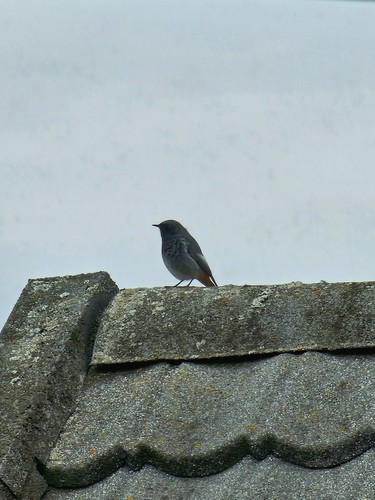
Black Redstart
13-14.5 cm (5.1-5.7 in) long, 23-26 cm wingspan
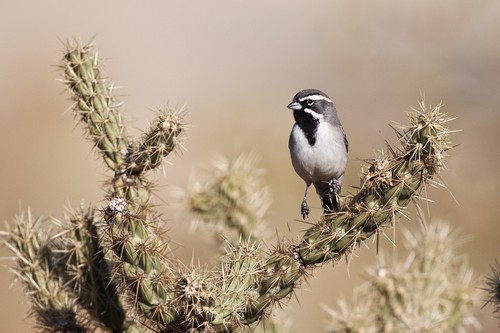
Black-throated Sparrow
12-14 cm (4.7-5.5 in) long, about 19-20 cm (7.5-8 in) wingspan
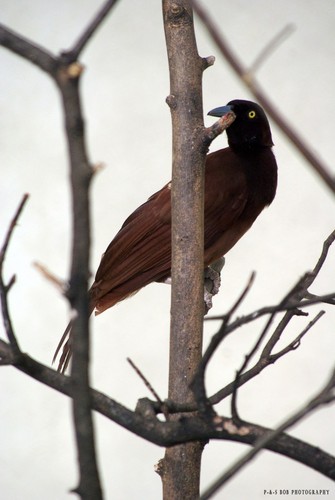
Greater Bird-of-paradise
Body about 43 cm; males with additional flank plumes up to 50 cm and long tail wires
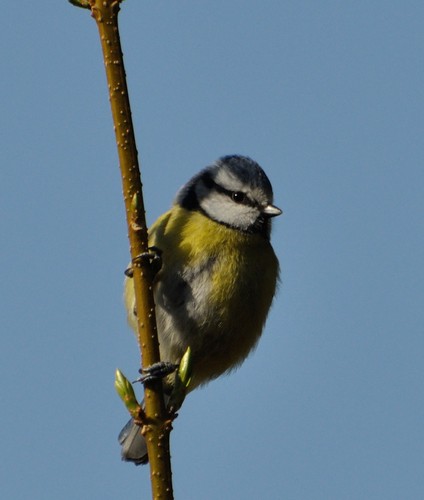
Blue Tit
11-12 cm (4.3-4.7 in) long, 17-20 cm wingspan
Red-billed Quelea
11.5–13 cm long, wingspan about 20–22 cm
White-plumed Antbird
13-14 cm (5-5.5 in) long
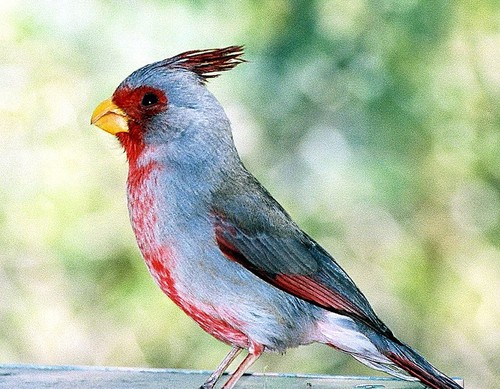
Pyrrhuloxia
19-22 cm (7.5-8.7 in) long, 30 cm wingspan
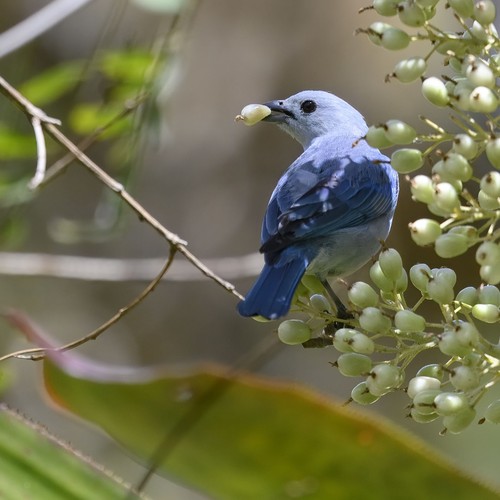
Blue-gray Tanager
16-18 cm (6-7 in) long
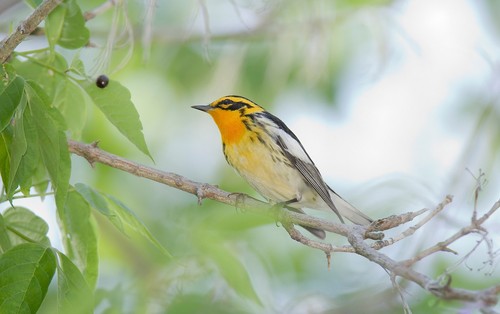
Blackburnian Warbler
11-13 cm (4.3-5.1 in) long, 20-22 cm wingspan
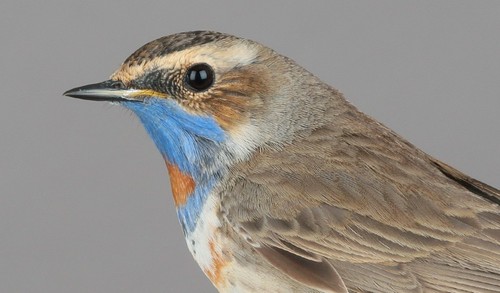
Bluethroat
13-14 cm (5.1-5.5 in) long, 20-22 cm wingspan
Eurasian Nuthatch
12-14.5 cm (4.7-5.7 in) long, 22.5-27 cm wingspan
Wood Thrush
19-21 cm (7.5-8.3 in) long, about 33 cm (13 in) wingspan